

 SkillClick
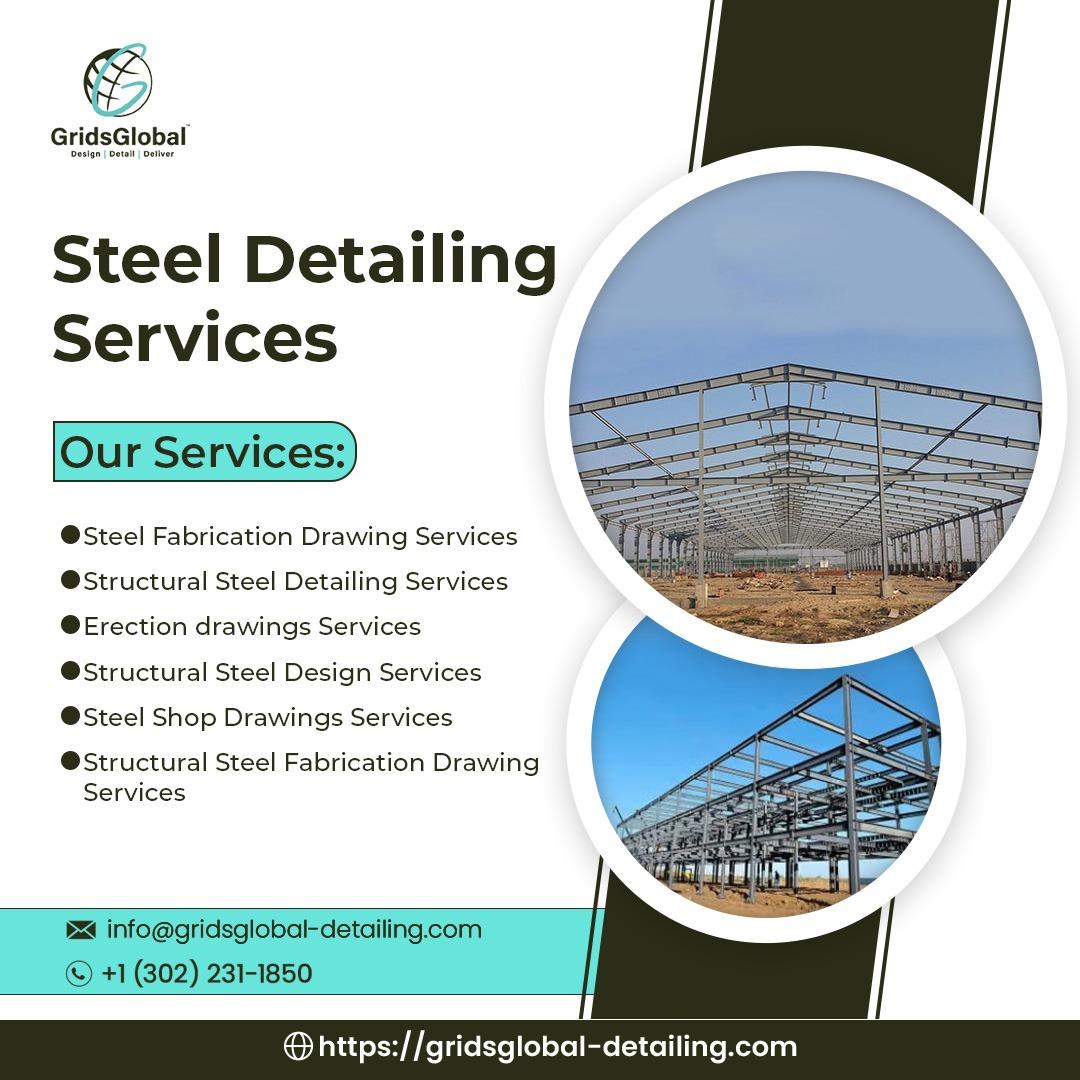
A data center frame is governed by an accord that most people never read. It is written at the connections. Each joint specifies how much load will be accepted, how much rotation will be tolerated, and what happens when forces reverse direction. Those terms determine whether the structure behaves as its designers calculated or drifts into unpredictable performance. In American data center construction, where facilities worth billions must open on compressed timelines, that accord carries direct financial weight. Structural Steel Connection Design Services broker and verify those terms before fabrication begins. At GridsGlobal Steel Detailing LLC, every project receives a coordinated three-dimensional model that resolves clashes, confirms dimensions, and documents material needs before the first shop drawing is issued.
A hyperscale data center consumes thousands of tons of fabricated steel. Its frame carries server racks, cooling plant, standby generation, and dense mechanical services. Every member must install correctly on the first lift. That reality is why Structural Steel Detailing Services have become central to data center delivery. Working with GridsGlobal Steel Detailing LLC gives project teams a coordinated model that eliminates spatial conflicts, validates every critical dimension, and produces complete material documentation before fabrication. Connection engineering receives the same attention, ensuring each joint safely transfers the concentrated loads these facilities generate.
Why the Accord Cannot Be Improvised
A beam can be sized perfectly and still fail its purpose if the joint that receives it cannot pass the load along. Connections are where stiffness, ductility, and tolerance meet. They decide whether a frame responds predictably under gravity, wind, and seismic demand. When a joint is under-analyzed, its capacity is undefined. When a joint is overbuilt without reason, it adds weight and cost to every member attached to it. The correct answer sits between those errors, and it requires engineering judgment that stock details cannot provide.
LOD 400 as the Enforcement Platform
Professional detailing teams build a BIM environment at LOD 400 in which every beam, column, brace, and plate sits in its true location. Each member receives an exact length. Each hole receives a defined diameter. Each weld preparation receives a specific profile. Nothing is left to interpretation.
Once the virtual assembly is complete, the team performs a full constructability review. They confirm that welding electrodes can physically reach every joint root. They verify that torque wrenches have adequate swing room to tighten each fastener. They check that framing members do not conflict with ductwork, cable trays, suppression piping, or architectural finishes. They also account for mill and fabrication tolerances so the frame assembles without shimming or forced fit-up. Catching these conditions in the model costs a few engineering hours. Catching them in the field costs days of labor and equipment standby that no data center schedule can absorb.
After every check clears, the validated geometry feeds directly into CNC beam lines, plate processors, and automated drill stations. Fabrication drawings carry exact cut lengths, hole coordinates, and weld callouts. Shop crews no longer interpret hand sketches or make judgment calls. Each member reaches the job site with a unique piece mark that matches the erection drawings. Field grinding, hole reaming, and corrective welding become rare exceptions instead of routine activities. More detail on this workflow is available through Structural Steel Detailing Services.
Connection Analysis as the Structural Half of the Accord
Connection analysis adds the structural half of the accord through Structural Steel Connection Design Services. Engineers assess prying action, block shear rupture, web crippling, bolt fatigue, and other failure modes. They establish plate thickness, stiffener layout, bolt spacing, and weld size for each joint. For teams wanting to avoid common errors, review Structural Steel Connection Design Services. For projects in seismic regions, Structural Steel Connection Design Services that include ductile detailing add resilience.
BOM and BOQ as the Financial Ledger
The coordinated model also produces a Bill of Material and a Bill of Quantity. The BOM lists every structural shape, plate, bolt, and consumable by piece mark. Procurement teams use it to time mill orders, avoid shortages, and prevent surplus stock. The BOQ isolates connection labor, weld length, fasteners, and testing. Together, these documents link design intent to procurement reality. When multiple fabricators serve one project, the BOM becomes the master tracking document that keeps every shipment aligned with erection sequence.
From Model to Shop Without Guesswork
After validation, data flows to CNC beam lines, plate processors, and drill stations. Fabrication drawings carry exact cut lengths, hole coordinates, and weld callouts. Shop crews no longer interpret sketches or make judgment calls. Each piece arrives with a unique mark that matches erection drawings. Field grinding, hole reaming, and corrective welding become rare exceptions rather than routines. This level of control protects both schedule and budget.
Why Early Coordination Protects Margins
Every field correction carries hidden costs. Cutting a beam that arrived too long, reaming a hole drilled off location, or adding a weld that belonged in the shop consumes time and labor. These fixes also create safety risks for crews working at height under schedule pressure. A validation strategy that combines 3D coordination, connection analysis, and complete material documentation removes these problems before they reach the field. Digital prototyping catches conflicts early. Connection engineering ensures joints perform as intended. BOM and BOQ data keep procurement aligned with fabrication reality. Together, they turn steel construction into a controlled and predictable process.
Engineering Discipline for Decades of Service
Data centers and other steel buildings must perform reliably for decades. They carry gravity loads, resist wind forces, and withstand seismic shaking in many regions. Achieving that performance requires discipline from the first day of detailing. By maintaining high standards in digital modeling, connection verification, and material quantification, project teams secure structures that perform without costly interventions. The upfront investment in thorough engineering pays back through fewer delays, lower rework costs, and a safer job site.
To discuss tailored constructability strategies, complete BOM compilation, BOQ structuring, and advanced model coordination for your next data center project, visit our contact us page.
Corporate Contact Information
United States Operations
GRIDSGLOBAL STEEL DETAILING LLC
Address: 1207 Delaware Ave, Unit 2877, Wilmington, DE 19806
Phone: +1 (302) 231-1850
Email: info@gridsglobal-detailing.com
Website: https://gridsglobal-detailing.com/