

 SkillClick
NetSuite for Media Industry India: A Complete Guide to Managing Revenue, Content Costs, and Business Growth
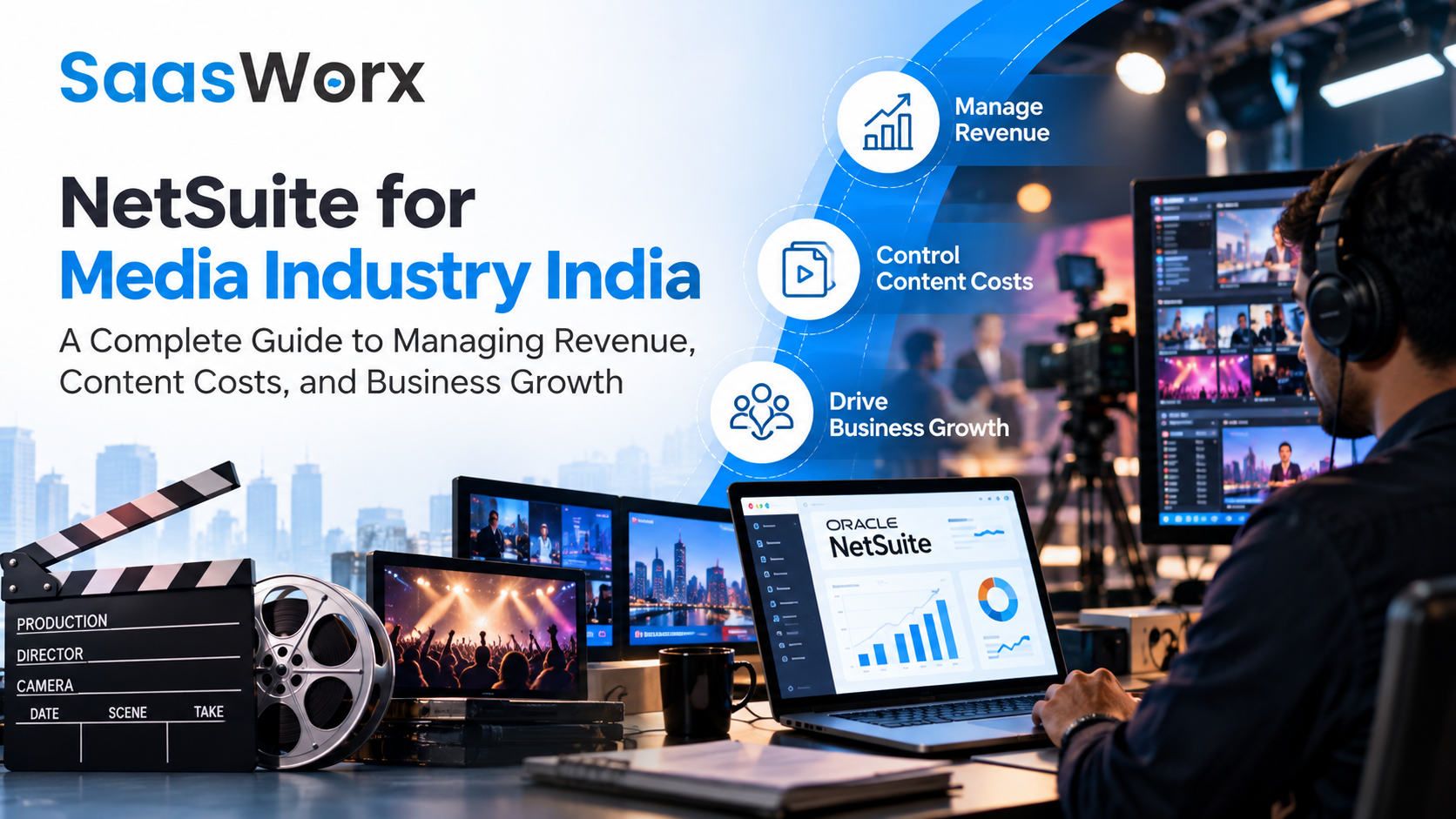
India’s media and entertainment industry is evolving rapidly. OTT platforms, digital publishers, advertising agencies, broadcasting companies, film production houses, and streaming businesses are introducing new ways to create, distribute, and monetize content. However, managing multiple revenue streams, production budgets, licensing agreements, royalties, and financial reporting can become increasingly complicated as businesses grow.
Traditional accounting software and spreadsheets may work for smaller operations, but they often struggle to provide a consolidated view of finances, project expenses, and profitability across multiple departments.
This is where NetSuite for Media Industry India becomes relevant. Oracle NetSuite is a cloud-based ERP platform that helps media and entertainment businesses integrate financial management, operational workflows, billing, and reporting within a unified system. With the right implementation strategy, organizations can improve financial visibility, reduce manual processes, and build a scalable foundation for growth.
Why India's Media Industry Needs Modern ERP Software
Media businesses operate differently from traditional product-based companies. A single organization may generate revenue through advertising, subscriptions, content licensing, syndication, sponsorships, and production services.
Each revenue stream has different billing requirements, contracts, costs, and reporting needs. Managing these activities through disconnected systems can create financial inaccuracies and operational delays.
For example, an OTT platform may receive subscription payments from thousands of customers while simultaneously generating advertising revenue and licensing content to other platforms. Meanwhile, its finance team must track content acquisition costs, technology expenses, marketing expenditure, and payments to content owners.
Without an integrated ERP system, consolidating this information becomes time-consuming.
A modern ERP solution helps media companies connect their financial and operational data. Instead of maintaining separate spreadsheets for every department, management can access a more consistent view of revenue, expenditure, outstanding payments, and business performance.
What Is NetSuite ERP for Media and Entertainment Companies?
NetSuite ERP is a cloud-based enterprise resource planning solution designed to bring essential business processes together. Depending on the modules, integrations, and configuration selected, it can support accounting, financial reporting, project management, billing, procurement, and business analytics.
For media and entertainment organizations, its value lies in connecting business operations with financial information.
A production manager can monitor project expenses, while the finance department tracks supplier payments and budget utilisation. Leadership can then review project profitability alongside the company's overall financial performance.
NetSuite can also support businesses operating across different locations, subsidiaries, and currencies through capabilities such as NetSuite OneWorld.
However, specialized activities such as detailed digital rights administration, audience analytics, ad-serving, and content delivery may require integrations or additional applications. Businesses should evaluate these requirements before selecting their ERP architecture.
Key Benefits of NetSuite for the Indian Media Industry
1. Centralized Financial Management
Media organizations often manage transactions across production teams, advertising departments, digital platforms, and distribution partners.
A centralized financial system helps bring accounts payable, accounts receivable, general ledger, budgeting, and financial reporting into a connected environment.
Finance teams can monitor outstanding invoices, review expenses, and prepare financial reports without repeatedly consolidating data from multiple sources.
For Indian businesses, the system configuration should also account for applicable GST requirements, tax reporting, statutory accounting practices, and other relevant compliance obligations. Local tax configuration and integrations may be necessary depending on the business model.
2. Better Advertising Revenue Management
Advertising is a major revenue source for television networks, digital publishers, streaming services, and media agencies.
Revenue can come from fixed advertising packages, campaign-based contracts, sponsorship agreements, or impression-based pricing models.
When campaign information and finance data are maintained separately, discrepancies can arise between booked advertising, delivered campaigns, invoices, and collections.
NetSuite can support financial workflows for advertising contracts, billing, receivables, and revenue reporting. Integrations with advertising platforms or campaign management systems can help transfer the required information into financial processes.
This gives management a clearer view of billed revenue, outstanding payments, and financial performance across advertising clients.
3. Subscription Billing for OTT and Digital Platforms
Subscription-based businesses must manage recurring payments, renewals, upgrades, cancellations, discounts, and different pricing plans.
As subscriber numbers increase, manually tracking these transactions becomes difficult.
NetSuite's subscription billing capabilities can support recurring billing processes and financial reporting. Businesses may also integrate specialist subscription management platforms to handle customer-facing subscription lifecycles and payment processing.
For an Indian OTT business, this can help finance teams monitor subscription revenue, outstanding payments, and the financial impact of different pricing models.
The exact setup depends on transaction volumes, payment gateways, billing complexity, and the applications already used by the company.
4. Production Budgeting and Project Cost Control
Film production houses, advertising agencies, and content studios regularly manage projects involving equipment rentals, locations, freelance professionals, editing, post-production, travel, and distribution.
When expenses are recorded late or spread across disconnected systems, projects can exceed their budgets before management identifies the problem.
NetSuite project accounting and financial reporting capabilities can help businesses organize project expenses, monitor budgets, and compare actual costs against planned expenditure.
For example, a production company managing several advertising campaigns can establish separate project budgets and track approved supplier costs against each project.
Managers can identify spending variations earlier and make informed decisions about resource allocation.
Detailed production scheduling and specialized creative workflows may still require dedicated production management tools integrated with the ERP.
5. Rights, Licensing, and Royalty Financial Tracking
Content ownership and licensing arrangements are important considerations for publishers, broadcasters, production houses, and digital streaming businesses.
A company may license a film for a specific period, distribute a programme across several regions, or pay creators based on agreed contractual terms.
These agreements create financial obligations that need to be tracked accurately.
NetSuite can support the accounting, contract-related financial records, and payment workflows associated with licensing and royalty arrangements. More advanced rights administration and royalty calculations may require a specialist application or customized integration.
By connecting these processes with financial reporting, companies can improve visibility into licensing expenses, payable amounts, and content-related profitability.
6. Real-Time Reporting and Business Intelligence
Business leaders need accurate financial information to make decisions about content investments, marketing budgets, distribution partnerships, and expansion.
NetSuite dashboards and SuiteAnalytics can provide reporting based on the data available in the configured system.
Media executives can use suitable reports to review revenue by business unit, project expenditure, customer receivables, and budget performance.
For example, management could compare the financial performance of different production projects or evaluate whether advertising collections are keeping pace with invoicing.
These reports are most useful when source systems are integrated correctly and financial data is maintained consistently.
How NetSuite Supports Different Media Businesses in India
OTT and Streaming Platforms
OTT businesses can use NetSuite to centralize financial reporting, manage recurring billing processes, track operating expenses, and evaluate revenue across business units. Integrations may connect subscription applications and payment systems with the ERP.
Television and Broadcasting Companies
Broadcasters can benefit from consolidated accounting, vendor payment management, advertising-related financial workflows, and reporting across channels or subsidiaries.
Film Production Houses
Production companies can use project accounting and budget tracking to monitor expenses, manage supplier payments, and evaluate the financial performance of individual projects.
Digital Publishing Companies
Digital publishers can centralize financial operations involving advertising clients, subscriptions, content licensing, and operating expenditure while integrating specialist publishing systems where required.
Advertising and Creative Agencies
Agencies can track project costs, client billing, vendor expenses, and profitability across multiple campaigns. This is particularly useful when managing several clients and delivery teams simultaneously.
Practical Example: An Indian Digital Media Company
Consider a hypothetical digital media company operating an OTT platform, a digital publication, and an advertising business.
Initially, each department maintains separate financial spreadsheets. The finance team spends considerable time reconciling subscription collections, advertising invoices, production costs, and supplier payments.
As the company expands, management struggles to understand which business unit generates the strongest margins.
After implementing a suitably configured NetSuite environment and integrating the necessary operational applications, the company can consolidate financial information across its business units.
The finance team can review receivables and expenditure more consistently, while leadership can compare financial performance across the OTT, publishing, and advertising operations.
The benefits depend on implementation quality, data accuracy, and integration coverage. This example illustrates a potential use case rather than a documented customer result.
Important Considerations Before Implementing NetSuite in India
Choosing an ERP system requires more than evaluating its features. Media businesses should first document their existing workflows and identify the processes that need improvement.
The implementation plan should define how advertising contracts, subscriptions, production budgets, licensing expenses, and financial transactions will be handled.
Companies should also review their existing CRM, payment gateway, subscription management, production management, and business intelligence applications.
Data migration is another important consideration. Historical financial records, customer information, vendor details, and outstanding transactions must be validated before moving into the new system.
Indian tax requirements, reporting expectations, access permissions, audit trails, and employee training should also be addressed during implementation.
Working with an experienced implementation partner such as SaasWorx Consulting can help businesses assess their requirements, plan integrations, configure workflows, and establish an appropriate roadmap for ERP adoption.
Conclusion
India's media and entertainment businesses are managing increasingly complex financial and operational requirements. Multiple revenue streams, production expenses, advertising contracts, subscription models, and licensing arrangements can make disconnected systems difficult to maintain.
NetSuite for Media Industry India offers a way to centralize financial management, improve project cost visibility, streamline billing processes, and strengthen business reporting.
The greatest value comes from aligning the ERP with the company's actual operating model rather than attempting to force every media workflow into a single application.
By identifying essential integrations, planning data migration carefully, and configuring financial processes correctly, media organizations can establish a more reliable foundation for operational efficiency and long-term growth.
- Managerial Effectiveness!
- Future and Predictions
- Motivatinal / Inspiring
- Fitness and Wellness
- Medical & Health
- Manufacturing
- Education
- Real-Estate
- Food Industry
- Hospitality
- Online Games
- Sports
- Home Services
- Civil Engineering
- Safety and Protection
- Software Products & Services
- Fashion and Jewellery
- Artificial Intelligence
- Entrepreneurship
- Mentoring & Guidance
- Marketing
- Networking
- HR & Recruiting
- Literature
- Shopping
- Career Management & Advancement