

 SkillClick
Legacy Application Modernization Services: A Practical Guide for Businesses
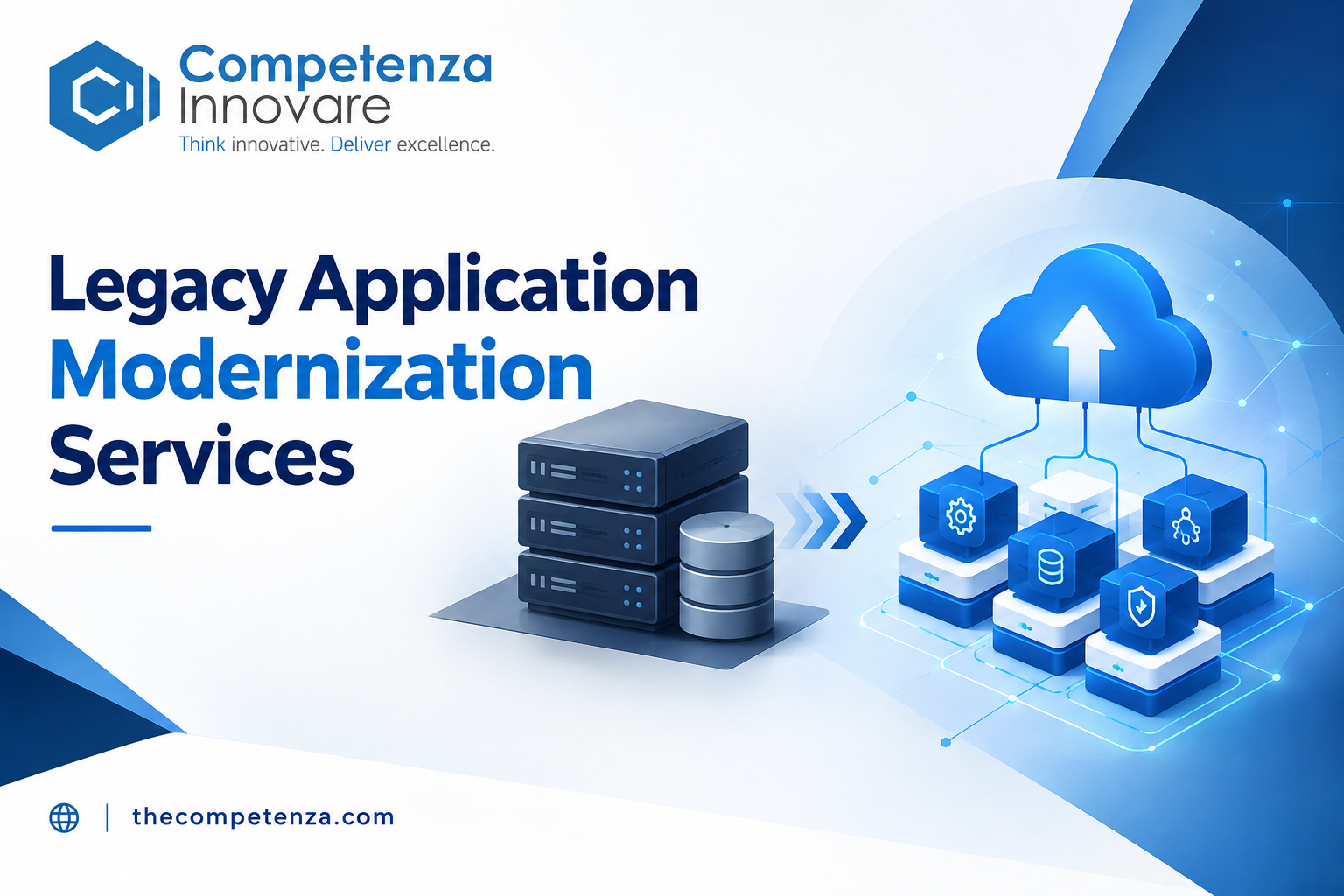
Modern businesses depend on software to manage daily operations, serve customers, process data, and support growth. However, many companies still use applications built years ago that are becoming difficult to maintain. These systems may work well for basic tasks, but they can struggle with modern integrations, growing workloads, security requirements, and changing customer expectations.
This is where legacy application modernization services can help. Modernization allows businesses to improve existing software, upgrade outdated technology, and make applications more reliable without necessarily rebuilding everything from scratch.
For organizations that want to improve performance while protecting their existing technology investments, understanding the modernization process is an important first step.
In this guide, we will explore what legacy application modernization means, why it matters, the different modernization approaches, common challenges, costs, and how to plan a successful project.
What Are Legacy Application Modernization Services?
Legacy application modernization services involve upgrading, improving, or transforming older software applications so they can meet current business and technical requirements.
A legacy application might run on outdated programming languages, depend on an older database, use unsupported frameworks, or operate on infrastructure that is difficult to scale. Over time, maintaining these systems can become expensive and time-consuming.
Modernization addresses these issues by improving the existing application or moving it to a more suitable architecture.
Depending on the business requirements, modernization may include:
-
Updating outdated application code and frameworks.
-
Migrating applications to cloud infrastructure.
-
Improving software security and performance.
-
Connecting legacy systems with modern APIs.
-
Replacing difficult-to-maintain components.
-
Moving toward microservices or modular architecture.
-
Improving user interfaces and customer experiences.
The goal is not simply to use newer technology. It is to make the application more useful, secure, maintainable, and aligned with long-term business objectives.
Why Do Businesses Need Legacy Software Modernization?
Older applications often become essential to business operations. Replacing them immediately may be risky, but continuing to use them without improvement can create other problems.
Here are some common reasons businesses consider modernization.
1. High Maintenance Costs
Legacy applications may require specialized developers who understand outdated programming languages or undocumented code. Even small changes can take considerable time when the original system is difficult to understand.
Modernization can simplify the codebase, improve documentation, and reduce the effort required for future maintenance.
2. Security and Compliance Concerns
Older software may depend on unsupported libraries, outdated operating systems, or components that no longer receive security updates. These weaknesses can increase business risk.
Legacy Application modernization can help organizations update dependencies, strengthen access controls, improve monitoring, and address known vulnerabilities. However, modernization alone does not guarantee security or regulatory compliance; ongoing maintenance remains necessary.
3. Limited Scalability
Some applications were designed for smaller workloads and cannot easily support growing numbers of users, transactions, or integrations.
Modern application architectures and suitable cloud infrastructure can make it easier to scale resources as demand changes.
4. Integration Problems
Businesses increasingly use CRM platforms, ERP systems, payment gateways, analytics tools, and third-party services. Legacy applications may not support the APIs or data formats these tools require.
Modernization can introduce integration layers, APIs, and improved data exchange processes without requiring every connected system to be replaced.
5. Poor User Experience
An outdated interface or slow workflow can frustrate employees and customers. Improving the application interface, simplifying navigation, and automating repetitive tasks can make the software easier to use.
These improvements can also help businesses get more value from systems they already rely on.
6 Main Approaches to Legacy Application Modernization
There is no single modernization strategy that works for every application. The right approach depends on the condition of the existing system, available budget, business priorities, and how much change the organization can manage.
These approaches align with commonly used application modernization strategies.
1. Application Rehosting
Rehosting, often called lift-and-shift migration, involves moving an existing application to new infrastructure, usually in the cloud, without making major changes to its code.
This approach can be useful when a company needs to replace aging servers or move away from an outdated data centre. It can also provide a foundation for future improvements.
However, rehosting does not automatically fix inefficient code, poor application design, or performance problems within the software itself.
2. Application Refactoring
Application refactoring improves the internal structure of software while preserving its existing functionality.
Developers may simplify complicated code, remove duplication, improve automated testing, and make the application easier to maintain.
This approach is suitable when the software still supports important business processes but has become difficult to update or extend.
3. Application Replatforming
Replatforming moves an application to a modern technology platform with selected changes to its underlying environment.
For example, a business might upgrade its database, move to managed cloud services, or adopt a newer application runtime without rebuilding the entire system.
It offers a practical middle ground for companies that want better performance and operational flexibility while retaining much of their existing software.
4. Application Re-Architecting
Re-architecting involves changing the fundamental design of an application. This might include separating tightly connected components, introducing modular services, or moving toward a microservices architecture where appropriate.
It can improve scalability and allow teams to develop and deploy individual components more independently. However, it also introduces complexity and requires careful planning, testing, and monitoring.
5. Complete Application Rebuilding
Sometimes, an application is so outdated that improving the existing code is no longer practical. In these cases, rebuilding the application with modern technologies may be the better long-term option.
A rebuild gives businesses greater freedom to redesign workflows, improve usability, and introduce new capabilities.
The main challenge is preserving important business rules, transferring historical data accurately, and ensuring that the replacement works reliably before the old system is retired.
Benefits of Legacy Application Modernization
A well-planned modernization project can improve both technical operations and everyday business performance.
Key benefits include:
-
Improved software performance: Updated architecture and optimized code can reduce bottlenecks and improve response times.
-
Better security: Modern dependencies, supported platforms, and stronger access controls can reduce exposure to known vulnerabilities.
-
Easier integration: APIs and modern interfaces can connect existing systems with business applications and third-party services.
-
Greater scalability: Suitable cloud platforms and modular designs can support changing workloads.
-
Simpler maintenance: Better code organization and testing can make future updates less risky.
-
Improved employee productivity: More reliable applications and streamlined workflows can reduce manual effort.
The results depend on the modernization approach, implementation quality, and the business problems being addressed. Companies should define measurable targets before development begins rather than assuming that newer technology will automatically deliver savings.
How to Plan a Successful Modernization Project
Modernizing an important business application requires more than choosing a programming language or cloud provider. A structured process helps reduce uncertainty and keeps the project connected to business needs.
Step 1: Assess the existing application. Review the application's architecture, code quality, infrastructure, security, dependencies, and performance. Speak with the people who use it daily to identify problems that may not be visible in technical documentation.
Step 2: Define business goals. Decide what the project should achieve. Examples include reducing maintenance effort, improving response times, supporting more users, or integrating with a new CRM or ERP platform.
Step 3: Select a suitable strategy. Compare rehosting, refactoring, replatforming, re-architecting, and rebuilding. Choose the least disruptive option that can realistically meet the required outcomes.
Step 4: Create a phased roadmap. Break the project into manageable stages. Start with components that offer clear value and can be changed without creating unnecessary risk for critical operations.
Step 5: Test and validate. Test business workflows, security, performance, integrations, and data accuracy. Where possible, compare the modernized application's results with those of the original system.
Step 6: Deploy and monitor. Use a controlled rollout, maintain appropriate backups, and prepare a rollback plan. Monitor application performance and resolve issues before expanding the rollout.
Step 7: Continue improving. Modernization should include ongoing maintenance, security updates, performance reviews, and feedback from users.
How Much Do Legacy Application Modernization Services Cost?
The cost of modernizing a legacy application varies significantly from one project to another. A straightforward infrastructure migration usually requires less effort than rebuilding a complex enterprise application with multiple databases and integrations.
Common cost factors include:
-
Size and complexity of the existing application.
-
Condition of the source code and documentation.
-
Number of databases, APIs, and third-party integrations.
-
Data migration and validation requirements.
-
Security, testing, and compliance needs.
-
Developer expertise and project duration.
-
Training, deployment, and post-launch support.
A business should request a technical assessment and a detailed project estimate before committing to a major modernization effort. The estimate should include testing, data migration, contingency planning, and support after launch.
It is also important to consider the total cost of ownership. A cheaper initial migration may not provide the best long-term value if the application remains difficult to maintain.
How to Choose the Right Application Modernization Partner
Choosing a suitable technology partner can make a significant difference to project planning and delivery.
Look for a partner that understands your business processes as well as your existing technology. They should be able to explain the benefits and risks of each modernization option rather than recommending a complete rebuild for every problem.
Before making a decision, consider the following:
-
Experience with legacy systems and application architecture.
-
Expertise in cloud platforms, databases, APIs, and modern development frameworks.
-
A clear approach to security, testing, and data migration.
-
Transparent project estimates, milestones, and communication.
-
A realistic strategy for minimizing business disruption.
-
Ongoing maintenance and technical support.
Ask potential partners how they would assess your current application, measure project success, and protect important business data during the transition.
A reliable modernization plan should be based on evidence, not simply on the popularity of a particular technology.
Final Thoughts
Legacy software does not always need to be replaced completely. With the right strategy, businesses can improve existing systems, reduce technical limitations, and prepare their applications for future growth without introducing unnecessary disruption.
The key is to understand what is holding the application back and choose an approach that supports genuine business needs.
Competenza Innovare helps businesses explore modern software solutions that align with their operational goals and long-term technology plans. By taking a practical approach to software improvement, organizations can make informed modernization decisions and build a stronger foundation for future innovation.
- Managerial Effectiveness!
- Future and Predictions
- Motivatinal / Inspiring
- Fitness and Wellness
- Medical & Health
- Manufacturing
- Educação
- Real-Estate
- Food Industry
- Hospitality
- Online Games
- Sports
- Home Services
- Civil Engineering
- Safety and Protection
- Software Products & Services
- Fashion and Jewellery
- Artificial Intelligence
- Entrepreneurship
- Mentoring & Guidance
- Marketing
- Networking
- HR & Recruiting
- Literature
- Shopping
- Career Management & Advancement