

 SkillClick
Outsourced Millwork Drafting Services: Benefits for US Contractors
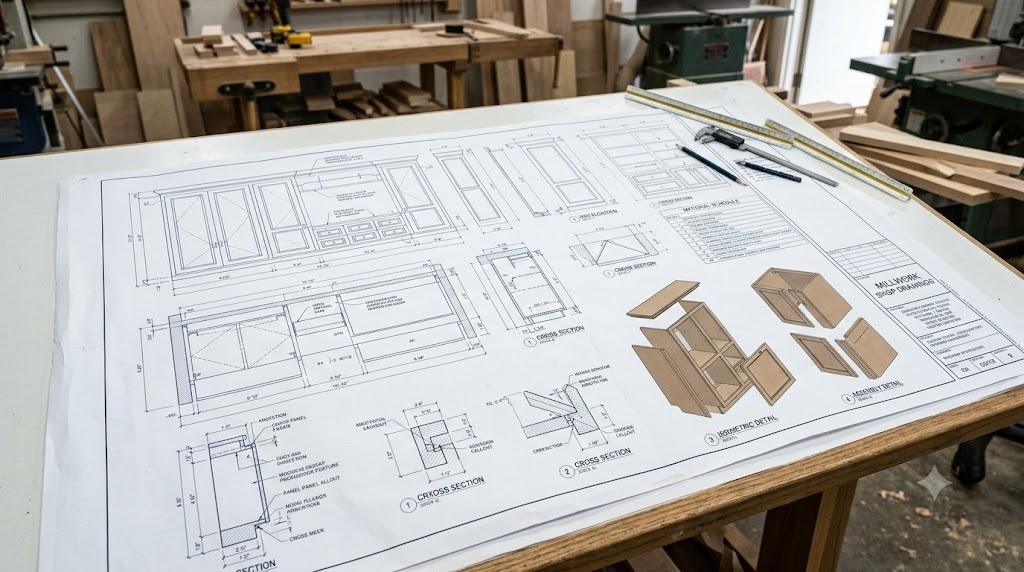
Millwork contractors in the United States must manage detailed fabrication requirements, tight construction schedules, material specifications, and coordination with other trades. From commercial cabinetry and reception desks to retail fixtures and hospitality interiors, every millwork component requires accurate documentation before fabrication begins. When internal drafting teams have limited capacity or projects require specialized detailing, keeping drawings on schedule can become a challenge.
Outsourced millwork drafting services provide US contractors with additional drafting support without requiring them to expand their in-house team for every project. By working with an external drafting partner, contractors can obtain detailed shop drawings, fabrication documentation, and installation details based on approved design documents and project specifications.
For contractors handling multiple projects, outsourcing can help manage fluctuating workloads, reduce drafting bottlenecks, and maintain consistent documentation throughout the project lifecycle.
What Are Outsourced Millwork Drafting Services?
Outsourced millwork drafting services involve hiring an external drafting team to prepare technical drawings for custom woodwork, cabinetry, casework, architectural millwork, and related interior components. The drafting team works from architectural drawings, design intent documents, specifications, approved submittals, field measurements, and other project information provided by the contractor.
The objective is to translate design requirements into clear technical documentation that supports fabrication, review, and installation.
Depending on project requirements, outsourced millwork drafting may include:
-
Millwork shop drawings: Detailed drawings showing dimensions, configurations, construction details, and component relationships.
-
Cabinet shop drawings: Cabinet elevations, sections, plans, door and drawer configurations, and internal layouts.
-
Commercial casework drawings: Technical documentation for office cabinetry, reception counters, storage units, and commercial interiors.
-
Custom millwork details: Drawings for feature walls, wall panels, built-in furniture, decorative woodwork, and specialty assemblies.
-
Material and hardware documentation: Specified materials, finishes, hardware locations, and relevant product references.
-
Installation details: Sections, mounting information, attachment details, and interface conditions where required.
-
Coordination drawings: Documentation that helps identify potential conflicts with architectural elements, electrical components, plumbing, and other trades.
The exact scope depends on the project's requirements, the available design information, and the contractor's fabrication standards.
Why Are US Contractors Outsourcing Millwork Drafting?
US contractors often work under fixed deadlines while coordinating architects, designers, subcontractors, suppliers, and fabrication teams. Drafting requirements can increase quickly when several projects move into the submittal or fabrication stage simultaneously.
Hiring additional full-time drafters may not be practical when workloads fluctuate. Outsourcing provides another way to manage these demands.
For example, a millwork contractor working on a hotel renovation may need detailed drawings for guest-room vanities, reception counters, corridor cabinetry, and custom wall panels at the same time. An external drafting team can handle an agreed portion of the documentation while the contractor's internal team focuses on project coordination, estimating, fabrication planning, or quality control.
Outsourcing is particularly useful when contractors need additional production capacity, specialized detailing support, or help managing drawing backlogs without committing to permanent staffing increases.
1. Manage Drafting Costs More Flexibly
Maintaining an in-house drafting team involves more than salaries. Contractors may also need to account for recruitment, software licenses, training, equipment, employee benefits, and ongoing workload management.
Outsourced millwork drafting services offer an alternative cost structure. Contractors can request support for specific projects, drawing packages, or defined periods of high demand.
This arrangement may be useful when:
-
Project workloads change from month to month.
-
Several drawing packages require attention at the same time.
-
A contractor needs specialist drafting support for a complex assembly.
-
Hiring another full-time employee would leave insufficient work during quieter periods.
-
Internal staff need temporary support to meet submission deadlines.
However, outsourcing does not automatically guarantee lower costs. The actual value depends on drawing complexity, revision frequency, communication requirements, turnaround expectations, and the quality of the initial project information.
Contractors should compare the complete cost of each option rather than evaluating drafting rates alone.
2. Handle More Projects Without Expanding the In-House Team
A contractor's internal drafting capacity can become a bottleneck when several projects enter the documentation stage together. Even an experienced team may struggle to complete every drawing package within the required timeframe.
An outsourced drafting partner can provide additional capacity when project demand increases.
For example, a commercial millwork contractor may be preparing shop drawings for a corporate office, a retail fit-out, and a restaurant renovation simultaneously. Rather than assigning every task to the same internal drafters, the contractor can outsource selected drawing packages or repetitive documentation tasks.
This approach can help the company distribute work more effectively and avoid delaying other project responsibilities.
The contractor retains control over project priorities, review procedures, fabrication decisions, and final approvals while the external team handles the agreed drafting scope.
3. Support Faster Shop Drawing Preparation
Shop drawing preparation involves interpreting design documents, establishing dimensions, detailing assemblies, identifying hardware requirements, and documenting construction conditions. These tasks require careful attention, particularly when the project includes custom components or multiple finish and material specifications.
An experienced external drafting team can support this process by preparing drawings according to an agreed scope, CAD standards, file structure, and submission schedule.
A structured workflow typically includes:
-
Reviewing architectural drawings and project specifications.
-
Identifying missing dimensions, unclear details, and coordination questions.
-
Preparing millwork plans, elevations, sections, and enlarged details.
-
Incorporating relevant material, finish, and hardware information.
-
Conducting an internal drawing review.
-
Delivering the drawing package for contractor review and submission.
-
Incorporating consolidated revisions as agreed.
This process can help contractors manage drawing production more systematically. Actual turnaround times depend on project complexity, the completeness of the source information, and the number of revisions required.
4. Improve Drawing Clarity Before Fabrication
Fabrication teams need drawings that clearly communicate how millwork components fit together. Incomplete dimensions, unclear sections, missing hardware information, or inconsistent material references can create questions during production.
Outsourced millwork drafting can help contractors produce more detailed and consistent documentation.
Depending on the project, drawings may identify:
-
Overall dimensions and component sizes.
-
Cabinet layouts and internal configurations.
-
Panel thicknesses and material specifications.
-
Door, drawer, and hardware locations.
-
Edge conditions, joints, and assembly details.
-
Finish references and exposed surfaces.
-
Wall attachment and installation requirements.
-
Interfaces with adjacent architectural elements.
Clear documentation helps fabricators understand the intended assembly and gives project teams a common reference during review.
The contractor must still verify critical dimensions, material selections, hardware specifications, and fabrication requirements before authorizing production. Drafting support improves communication, but it cannot replace appropriate technical review.
5. Reduce Avoidable Revisions and Rework
Changes are common in commercial millwork projects. Architects may revise dimensions, clients may select different finishes, and field conditions may differ from the original drawings.
Problems arise when these changes do not reach the drafting team or when drawings fail to communicate their implications clearly.
A disciplined outsourced drafting workflow can help manage revisions through consistent drawing references, revision notes, updated details, and documented review comments.
For example, a reception desk may require a revised countertop profile after the architect changes the finish specification. The drawing package may need corresponding updates to dimensions, material references, edge details, and adjacent components.
Coordinating these changes across the relevant sheets helps reduce the risk of teams working from inconsistent information.
Outsourcing alone will not eliminate rework. Contractors should establish a clear revision process, identify the latest approved information, and confirm which drawing version the fabrication team should use.
6. Access Specialized Millwork Drafting Capabilities
Different millwork projects require different levels of detailing. Standard cabinetry, custom reception counters, retail display fixtures, and hospitality millwork may involve distinct construction methods, hardware requirements, and coordination conditions.
An external drafting partner may provide experience across several project types, allowing contractors to obtain support for work that falls outside their internal team's usual scope.
Common applications include:
-
Commercial office casework and storage systems.
-
Retail display units and custom fixtures.
-
Hospitality reception desks and built-in furniture.
-
Restaurant cabinetry and service counters.
-
Custom wall panels and architectural woodwork.
-
Kitchen cabinetry and specialty millwork assemblies.
When evaluating a provider, contractors should review relevant sample drawings, drafting standards, software compatibility, and experience with comparable projects. Experience with one type of millwork does not automatically establish expertise in every other category.
7. Support Coordination With Other Construction Trades
Millwork rarely exists in isolation. Cabinets, counters, wall panels, and built-in fixtures must fit within the surrounding architectural and building systems.
For example, a vanity may need to coordinate with plumbing rough-ins, while a reception counter may require allowances for electrical outlets, data connections, and accessible work surfaces. Wall-mounted cabinetry may also depend on wall construction and suitable attachment conditions.
Millwork shop drawings can document relevant interfaces and highlight conditions that require confirmation from the project team.
An outsourced drafting team can help prepare coordinated plans, elevations, sections, and enlarged details based on the available information.
However, coordination depends on receiving current architectural backgrounds, relevant trade drawings, field dimensions, and project requirements. Contractors should assign responsibility for resolving conflicts and obtaining decisions from the appropriate design professionals.
8. Maintain Consistent Documentation Across Projects
Contractors handling multiple commercial projects may work with different architects, interior designers, fabrication teams, and project managers. Without a consistent documentation process, drawing packages can vary in formatting, annotation, revision tracking, and level of detail.
An outsourced drafting partner can follow established company standards to support more consistent deliverables.
These standards may cover:
-
Drawing sheet sizes and title blocks.
-
CAD layers, line types, and annotation conventions.
-
Dimensioning and notation practices.
-
Material and finish references.
-
Hardware schedules and detail references.
-
File naming and revision identification.
-
Drawing issue and review procedures.
Consistency is particularly valuable when several people need to interpret the same documents. Contractors should provide a clear drafting standard and review early deliverables before applying it across an entire project.
9. Work With Project-Specific Drafting Standards
US millwork contractors often require documentation in Imperial units, including feet and inches, and may need drawings aligned with project specifications, fabrication methods, and industry standards.
An outsourcing partner should be able to follow the contractor's required measurement conventions, CAD templates, annotation practices, and documentation procedures.
For projects that reference Architectural Woodwork Standards (AWS), contractors should identify the applicable edition and relevant requirements in the contract documents. The drafting team should use those requirements as a reference when preparing the agreed scope.
Standards compliance should not be assumed simply because a drawing package includes detailed dimensions. The contractor must confirm that the drawings, specified materials, construction methods, and fabrication requirements align with the applicable project criteria.
10. Adapt to Tight Project Schedules
Commercial construction schedules often involve overlapping milestones for design coordination, submittals, procurement, fabrication, and installation. Delays in one stage can affect the work that follows.
Outsourced drafting support can help contractors allocate additional resources to documentation when deadlines become demanding.
For effective scheduling, contractors should establish:
-
The required drawing package and level of detail.
-
The date for the initial submission.
-
The project information available at the start.
-
Expected review and revision periods.
-
The person responsible for answering technical questions.
-
The date when approved drawings are needed for fabrication.
A realistic schedule should account for review time and design changes rather than assuming that drafting is the only activity affecting delivery.
11. Keep Internal Teams Focused on Core Responsibilities
In-house teams often manage more than drawing production. Their responsibilities may include estimating, material procurement, vendor coordination, production planning, site measurements, installation scheduling, and client communication.
When drafting backlogs increase, these activities can compete for the same staff time.
Outsourcing selected documentation tasks allows internal personnel to focus on responsibilities that require their direct involvement.
For example, an internal project manager can coordinate site conditions and client decisions while an external drafting team prepares the corresponding millwork elevations and details. The project manager then reviews the deliverables before submission.
This arrangement works best when responsibilities are defined clearly and the contractor maintains ownership of technical decisions and project communication.
12. Support Scalable Documentation for Different Project Types
Not every millwork project requires the same drafting effort. A straightforward cabinet package may involve relatively limited detailing, while a hotel, hospital, retail rollout, or large commercial interior may require extensive coordination and multiple drawing revisions.
Outsourced services allow contractors to adjust the scope of drafting support according to project requirements.
A contractor may outsource a complete drawing package for one project, request help with complex custom details on another, or use external support to clear a temporary backlog.
This flexibility can be especially useful for businesses managing variable project volumes. The scope, turnaround time, review process, and deliverables should be agreed upon before work begins.
What Should US Contractors Look for in an Outsourced Millwork Drafting Partner?
Choosing a drafting partner involves more than comparing prices. The provider should understand the contractor's documentation requirements and follow a reliable process for handling technical information, revisions, and deliverables.
Relevant Project Experience
Review examples of commercial casework, cabinetry, custom millwork, or architectural woodwork drawings similar to your projects. Look for clear dimensions, readable sections, construction details, and coordinated references.
Familiarity With US Project Requirements
Confirm that the provider can work with Imperial dimensions, US construction documentation conventions, specified material references, and the standards identified in your project documents.
Clear Communication and Revision Management
Establish who will answer questions, consolidate review comments, approve changes, and communicate revised deadlines. Unclear communication can offset the benefits of additional drafting capacity.
Compatible Software and File Formats
Confirm whether the provider can deliver the required DWG, DXF, PDF, or other agreed formats. Establish file naming conventions, CAD standards, and version-control procedures before production starts.
Quality Control Procedures
Ask how drawings are checked before delivery. A structured review should address dimensions, annotations, references, consistency between sheets, and compliance with the agreed scope.
Transparent Pricing and Scope
Request a proposal that identifies deliverables, assumptions, revision allowances, turnaround expectations, and additional charges. This makes it easier to compare providers and manage project budgets.
Confidentiality and File Security
Contractors may share client drawings, pricing information, proprietary details, and project documents. Discuss confidentiality agreements, file access, secure transfer methods, and document-retention procedures where appropriate.
In-House vs. Outsourced Millwork Drafting: Which Is Better?
Both approaches can work well. The right choice depends on project volume, internal expertise, workload consistency, and the level of direct control required.
| Factor | In-house drafting | Outsourced drafting |
|---|---|---|
| Staffing | Requires internal employees | Adds external drafting capacity |
| Workload flexibility | Depends on available team capacity | Can be adjusted by project or scope |
| Project communication | Direct internal coordination | Requires a defined communication process |
| Technical oversight | Managed internally | Contractor must review external deliverables |
| Cost structure | Salaries, overhead, software, and training | Project fees or agreed service costs |
| Company standards | Established through internal procedures | Must be communicated and followed by the provider |
| Best suited for | Consistent workload and continuous internal coordination | Variable workload, overflow, or specialized support |
Many contractors use a hybrid model. They keep project management, critical technical decisions, fabrication approvals, and quality control in-house while outsourcing selected drafting tasks.
This approach preserves internal oversight while providing additional production capacity when needed.
Common Challenges in Outsourced Millwork Drafting
Outsourcing is not automatically successful. Poorly defined requirements or incomplete information can create additional revisions and coordination delays.
Incomplete project information: Missing dimensions, outdated backgrounds, or unclear specifications can prevent accurate detailing. Contractors should provide the latest available documents and identify outstanding decisions.
Unclear scope: If the agreement does not define the required drawings, schedules, formats, and revision allowances, the contractor and provider may have different expectations.
Slow feedback: External drafters may be unable to resolve design questions without timely responses from the contractor, architect, or other responsible parties.
Inconsistent drawing standards: Providers need access to the contractor's templates, annotation conventions, and file requirements before production begins.
Uncontrolled revisions: Changes to approved information should be tracked and communicated to everyone affected by them.
The solution is a documented workflow with clear responsibilities, agreed deliverables, scheduled reviews, and a consistent method for issuing revised drawings.
How Infallible Studio Supports Millwork Contractors
Infallible Studio provides outsourced drafting and documentation support for contractors and other AEC professionals who need additional capacity for technical drawing production.
Our millwork drafting services support commercial casework, cabinetry, custom fixtures, and architectural woodwork documentation based on the information and requirements supplied for each project.
Depending on the agreed scope, support may include:
-
Millwork plans, elevations, sections, and enlarged details.
-
Cabinet and commercial casework shop drawings.
-
Custom millwork and architectural woodwork details.
-
Material, finish, and hardware references.
-
Drawing revisions based on consolidated project comments.
-
CAD documentation prepared to agreed drawing standards.
We can work with project-specific documentation requirements, including Imperial dimensions and applicable standards identified in the contract documents.
Before starting, we review the available drawings, clarify the scope, and identify missing information that may affect the documentation process. This helps establish clear expectations for deliverables, revisions, and scheduling.
For US contractors managing multiple projects or facing drafting backlogs, outsourced support can provide a practical way to supplement internal resources without changing who controls the project.
Frequently Asked Questions
1. What are outsourced millwork drafting services?
Outsourced millwork drafting services involve hiring an external team to prepare technical drawings for cabinetry, casework, custom fixtures, and architectural woodwork. Deliverables may include plans, elevations, sections, construction details, and installation information based on the agreed project scope.
2. How can outsourcing benefit US millwork contractors?
Outsourcing can provide flexible drafting capacity, help manage workload fluctuations, support drawing production schedules, and give contractors access to specialized drafting capabilities without requiring permanent staffing increases.
3. Can outsourced drafters prepare fabrication-ready millwork shop drawings?
An outsourced drafting team can prepare detailed drawings intended to support fabrication. However, the contractor must confirm that the drawings contain the required dimensions, material information, hardware details, and construction requirements before approving them for production.
4. What information is required to start a millwork drafting project?
Typical inputs include architectural plans, elevations, sections, design details, specifications, finish schedules, hardware information, field measurements where available, and relevant trade drawings. The exact requirements depend on the project and the scope of work.
5. Do outsourced millwork drafting services support Imperial dimensions?
Providers can prepare drawings in feet and inches when the project requires Imperial units. Contractors should confirm the measurement conventions, dimensioning precision, and drawing standards before work begins.
6. Can outsourced drafting teams work with AWI requirements?
A drafting provider can work from applicable Architectural Woodwork Standards (AWS) requirements when those standards and the relevant project criteria are clearly identified. Contractors should verify the applicable edition and review the drawings for compliance with the contract documents.
7. Is outsourced drafting suitable for small millwork contractors?
Yes. Small contractors can outsource specific drawing packages or complex details when internal capacity is limited. Larger contractors may use external teams to manage peak workloads or support multiple concurrent projects.
8. How is outsourced millwork drafting priced?
Pricing may depend on drawing quantity, assembly complexity, available project information, revision requirements, turnaround time, and the agreed deliverables. Contractors should request a scope-based estimate rather than assuming every project has the same drafting cost.
9. Can outsourced drafting teams revise drawings after architect review?
Yes, revisions can be included in the agreed scope. Contractors should consolidate review comments, identify the latest approved information, and establish how additional design changes or revision rounds will be handled.
10. Should contractors outsource all millwork drafting or only part of it?
There is no single answer for every company. Contractors with consistent internal workloads may retain most drafting in-house and outsource overflow work. Others may outsource complete drawing packages while maintaining internal technical review, project coordination, and fabrication approval.
Conclusion
Outsourced millwork drafting services can help US contractors manage changing workloads, improve documentation consistency, access specialized drafting support, and coordinate drawing production with construction schedules.
The strongest results come from selecting a capable drafting partner, providing complete project information, defining deliverables clearly, and maintaining a structured review and revision process.
For contractors who need additional drafting capacity without expanding their permanent team, outsourcing can be a practical extension of their existing workflow.
Need millwork drafting support for an upcoming project? Contact Infallible Studio to discuss your drawing requirements, project documentation, and expected timeline.
- Managerial Effectiveness!
- Future and Predictions
- Motivatinal / Inspiring
- Fitness and Wellness
- Medical & Health
- Manufacturing
- Education
- Real-Estate
- Food Industry
- Hospitality
- Online Games
- Sports
- Home Services
- Civil Engineering
- Safety and Protection
- Software Products & Services
- Fashion and Jewellery
- Artificial Intelligence
- Entrepreneurship
- Mentoring & Guidance
- Marketing
- Networking
- HR & Recruiting
- Literature
- Shopping
- Career Management & Advancement