

 SkillClick
Regulatory Affairs Course in Pune: Benefits, Practical Training, Course Selection, and Career Development
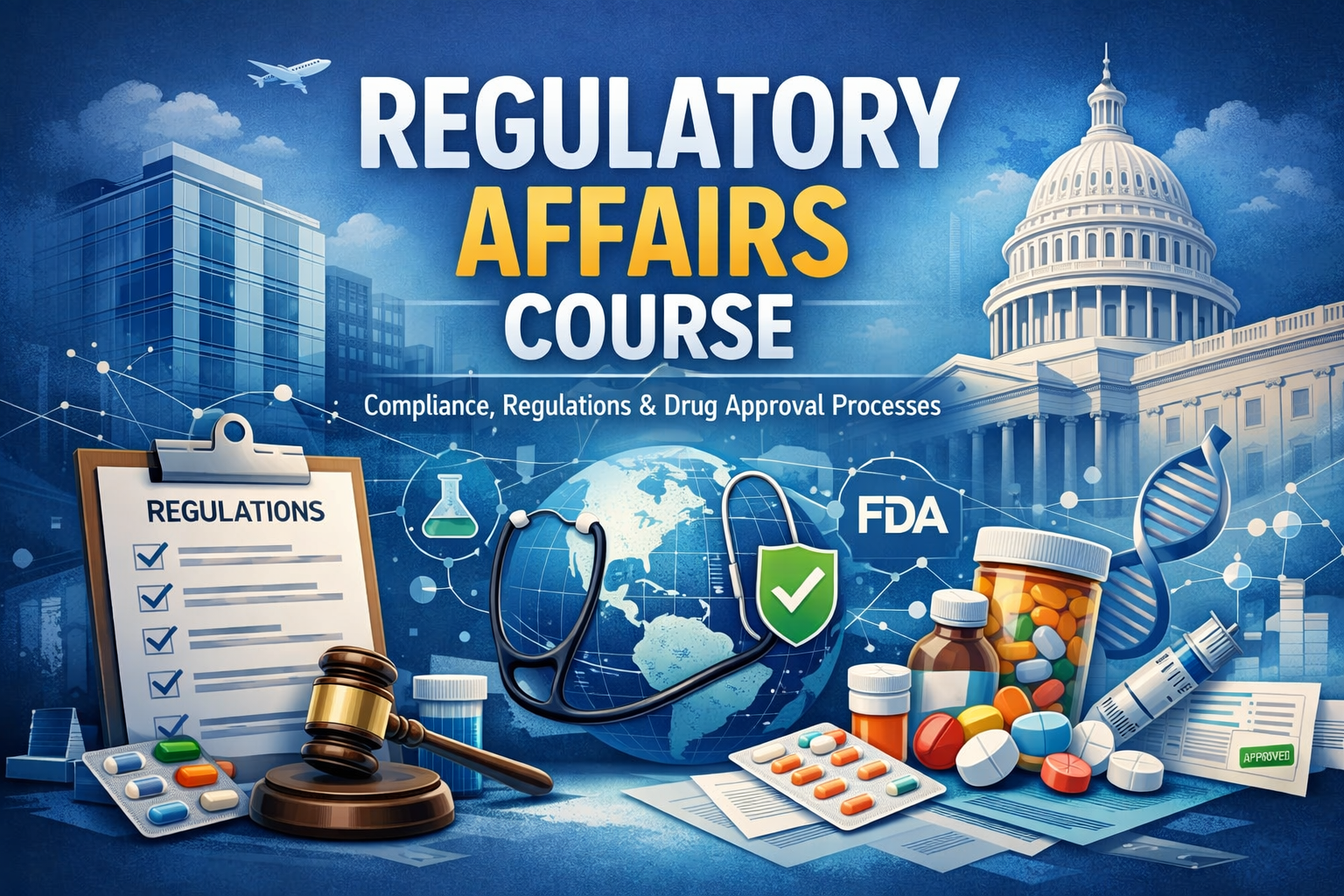
The pharmaceutical and healthcare industries must follow strict regulatory requirements to ensure that medicines, medical devices, and healthcare products meet established standards for quality, safety, and effectiveness. As pharmaceutical companies expand their product portfolios and enter international markets, regulatory compliance remains an essential part of product development and commercialization.
A regulatory affairs course helps students and professionals understand pharmaceutical regulations, product approval procedures, regulatory documentation, and compliance practices. For graduates in pharmacy, biotechnology, life sciences, and related disciplines, this specialized training can provide a foundation for exploring career opportunities in the pharmaceutical industry.
What Are Regulatory Affairs Courses?
Regulatory affairs courses are professional training programs designed to explain the rules, guidelines, and procedures governing pharmaceutical and healthcare products. These programs introduce learners to regulatory requirements throughout a product's lifecycle, from development and clinical evaluation to approval, manufacturing, and post-marketing activities.
Depending on the curriculum, students may learn about regulatory submissions, drug development, product registration, dossier preparation, labeling requirements, Good Manufacturing Practices (GMP), and regulatory compliance.
These courses can benefit fresh graduates who want to enter the pharmaceutical industry as well as working professionals who want to strengthen their understanding of regulatory processes.
Why Choose a Regulatory Affairs Course?
A regulatory affairs course can help learners develop specialized knowledge that connects scientific development with regulatory compliance. Regulatory professionals work with research, quality assurance, manufacturing, clinical operations, and other teams to help ensure that products meet applicable regulatory requirements.
A comprehensive program may cover:
- Pharmaceutical regulatory frameworks
- Drug development and approval procedures
- Regulatory documentation and submissions
- Common Technical Document (CTD) fundamentals
- Good Manufacturing Practices (GMP)
- Good Clinical Practice (GCP)
- Drug labeling and product information
- Regulatory guidelines and compliance
- Post-approval changes and lifecycle management
- Introduction to pharmacovigilance
- Medical device regulatory fundamentals
Practical assignments and case studies can help learners understand how these concepts are applied in pharmaceutical and healthcare organizations.
Drug Regulatory Affairs Course: What Will You Learn?
A drug regulatory affairs course focuses on the regulatory processes involved in developing, registering, and maintaining pharmaceutical products. It helps learners understand how companies prepare scientific and technical information for regulatory review.
Common learning areas include drug development stages, regulatory submission pathways, product registration, CTD structure, documentation standards, labeling requirements, and post-approval variations.
Students may also be introduced to regulatory authorities and frameworks such as the Central Drugs Standard Control Organisation (CDSCO) in India, the US Food and Drug Administration (FDA), and the European Medicines Agency (EMA).
Because regulatory requirements differ between countries and product categories, learners should select a course that clearly explains its geographic scope and the guidelines included in the syllabus.
Regulatory Affairs Course in Pune
Pune is an established educational and pharmaceutical hub, making a regulatory affairs course in Pune an option for graduates seeking specialized pharmaceutical training.
When comparing institutes in Pune, students should assess the course syllabus, faculty expertise, practical exposure, certification, learning format, and career guidance. Programs that include regulatory case studies, dossier-related exercises, and industry-oriented examples may help learners connect theoretical concepts with workplace responsibilities.
Candidates should also compare course duration, fees, admission requirements, and the type of support available after course completion.
Regulatory Affairs Course in India: Eligibility and Scope
A regulatory affairs course in India may be suitable for graduates in pharmacy, pharmaceutical sciences, biotechnology, microbiology, biochemistry, life sciences, and related healthcare disciplines. Eligibility requirements depend on the institute, course level, and certification offered.
India's pharmaceutical sector serves domestic and international markets, creating a need for organizations to understand applicable regulatory requirements across different jurisdictions. Training in regulatory documentation, product registration, and compliance can help learners prepare for relevant entry-level opportunities.
Before enrolling, candidates should verify eligibility requirements and confirm whether the course focuses on Indian regulations, international regulations, or both.
Career Opportunities After a Regulatory Affairs Course
Completing a regulatory affairs course can help learners explore career opportunities in pharmaceutical companies, biotechnology organizations, medical device businesses, contract research organizations, and regulatory consulting firms.
Depending on qualifications, practical knowledge, and experience, potential job roles include:
- Regulatory Affairs Associate
- Regulatory Affairs Executive
- Drug Regulatory Affairs Associate
- Regulatory Submission Specialist
- Regulatory Documentation Associate
- Regulatory Operations Associate
- Compliance Associate
- Regulatory Intelligence Analyst
Career progression may lead to senior regulatory positions, submission management, regulatory strategy, or product lifecycle management. Actual opportunities depend on employer requirements, technical skills, and professional experience.
How to Choose the Right Regulatory Affairs Course
Selecting an appropriate program requires more than comparing course fees. Consider the following factors before making a decision.
Curriculum: Check whether the program covers regulatory submissions, drug approval, CTD fundamentals, documentation, and compliance.
Practical training: Look for case studies, sample documentation exercises, and realistic regulatory scenarios.
Faculty expertise: Trainers with relevant industry experience can provide insights into regulatory workflows and employer expectations.
Certification: Verify the certificate awarded, the issuing organization, and the program's recognition.
Career assistance: Ask about resume preparation, interview training, job-search guidance, and placement assistance. Placement assistance should not be confused with a guaranteed job.
Future Scope of Regulatory Affairs
Regulatory affairs remains an important function as pharmaceutical companies develop new medicines, enter international markets, and manage evolving regulatory requirements. Professionals need to stay informed about changing guidelines, submission standards, product safety obligations, and compliance expectations.
A suitable regulatory affairs program can provide a starting point for developing these skills. Continued professional learning and practical industry experience are important for long-term career development.
A regulatory affairs course can help learners build foundational knowledge of pharmaceutical regulations, product approvals, regulatory submissions, and compliance procedures. Whether you are exploring a drug regulatory affairs course, a regulatory affairs course in Pune, or a regulatory affairs course in India, compare the curriculum, practical exposure, faculty experience, certification, and career support before enrolling.
Choosing training aligned with your educational background and career goals can help you prepare for opportunities in pharmaceutical regulatory affairs and related compliance functions.
- Managerial Effectiveness!
- Future and Predictions
- Motivatinal / Inspiring
- Fitness and Wellness
- Medical & Health
- Manufacturing
- Education
- Real-Estate
- Food Industry
- Hospitality
- Online Games
- Sports
- Home Services
- Civil Engineering
- Safety and Protection
- Software Products & Services
- Fashion and Jewellery
- Artificial Intelligence
- Entrepreneurship
- Mentoring & Guidance
- Marketing
- Networking
- HR & Recruiting
- Literature
- Shopping
- Career Management & Advancement