

 SkillClick
Hot Rolled Coil Price Trend Q3 2026: USA vs India
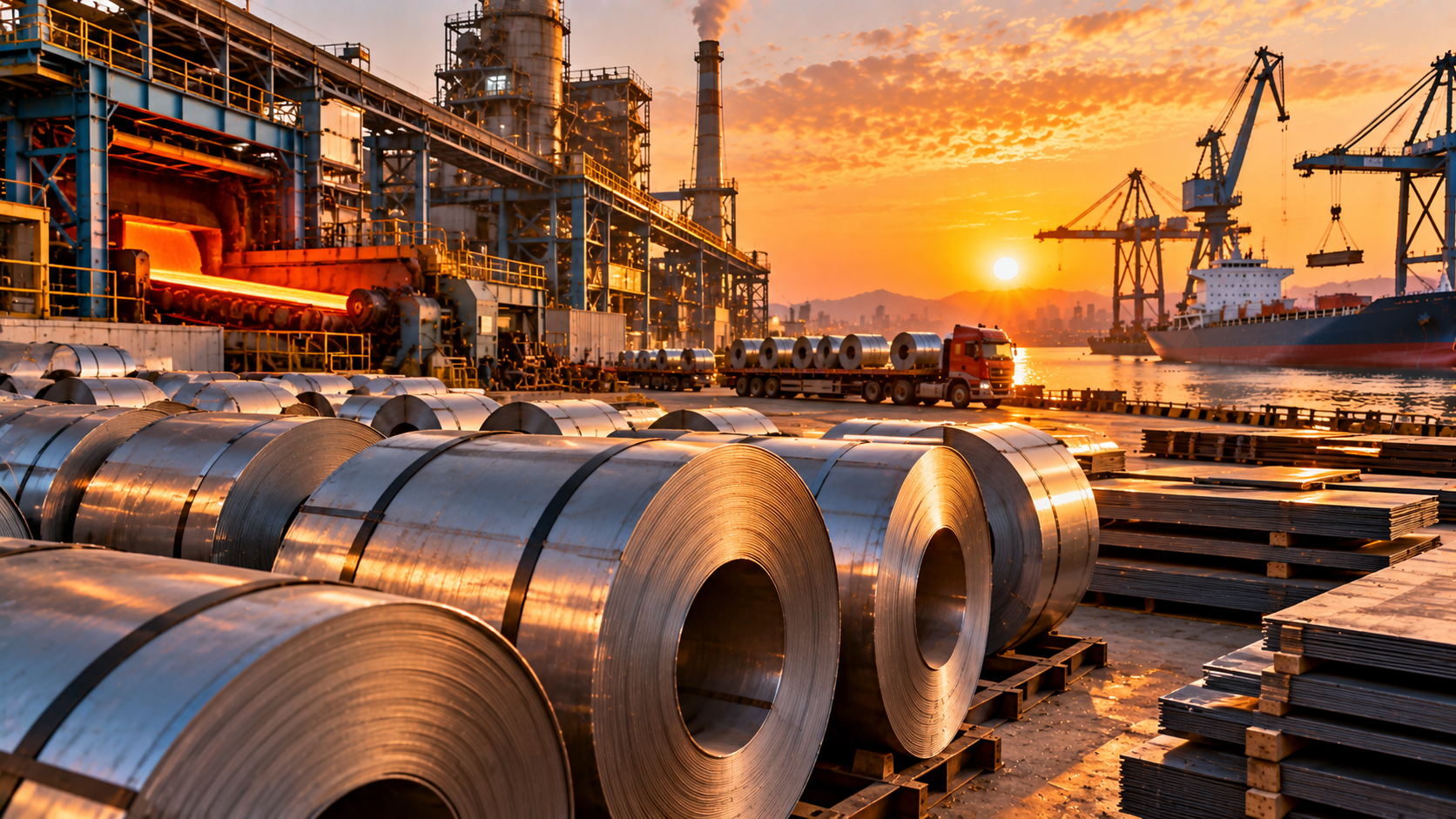
The hot rolled coil price trend for Q3 2026 has a number in it that's hard to ignore. As of August 2026, HRC in the USA is priced at USD 1,323.60 per metric ton on an FOB basis. India's FOB price sits at USD 644.86 per metric ton. That's not a small spread. It's more than double.
For anyone buying steel, or advising someone who does, that kind of gap raises a question right away. Is this just tariffs and trade policy at work, or is something deeper going on with production costs in each region? Hot rolled coil feeds into everything from auto manufacturing to pipelines to structural construction, so a move this size doesn't stay contained to one industry.
Current Hot Rolled Coil Prices: USA vs India
| Product | Region | Incoterm Basis | Price | Last Updated |
|---|---|---|---|---|
| Hot Rolled Coil | USA | FOB | USD 1,323.60/MT | August 2026 |
| Hot Rolled Coil | India | FOB | USD 644.86/MT | August 2026 |
Both figures are quoted FOB, which actually makes this comparison cleaner than most. No insurance or freight baked in on either side, no incoterm mismatch skewing the numbers. The USA figure is roughly 105% higher than India's. Not a rounding error. A structural difference.
A few quick notes before reading too much into the raw numbers:
- FOB pricing reflects the cost of goods loaded at the port of origin, before international freight.
- Both prices are August 2026 figures. Steel markets shift fast, so treat this as a snapshot, not a year-long baseline.
- The USA and India operate under very different domestic cost structures, trade protections, and energy input costs, all of which show up here.
Nearly two to one is a big gap for the same product category. Worth sitting with for a second before moving to the "why."
Why USA and India HRC Prices Differ So Much
A few forces explain most of that spread.
Energy and raw material costs. US steel producers face higher electricity and natural gas costs than Indian mills, and those costs flow straight into the price of every coil produced. India's lower input costs give its mills room to price more competitively, even on export terms.
Trade protections. The US steel industry operates behind tariffs and import restrictions that have kept domestic prices elevated for years. Protected markets tend to run higher, period. That's not unique to steel, and it's not new, but it's a real driver here.
Labor costs. Manufacturing labor in the USA costs significantly more than in India. For a labor-intensive process like hot rolling, that difference adds up across the full production run.
Export strategy. Indian steelmakers have leaned into export markets to offload excess capacity, often pricing aggressively to stay competitive against other low-cost exporters like China and Vietnam. US producers, by contrast, are largely serving domestic demand where prices don't face the same downward pressure.
Currency effects. A weaker rupee against the dollar makes Indian steel exports look even cheaper in dollar terms, which widens the gap further without India's actual production costs moving at all.
What Buyers Should Actually Do With This Data
So what does this mean if you're the one placing the order?
If landed cost is the priority, sourcing from India looks attractive on paper. But freight from India takes longer than domestic US shipments, and quality certifications, lead times, and minimum order quantities can differ meaningfully between suppliers. Cheaper FOB isn't automatically cheaper delivered.
For US-based manufacturers locked into domestic supply agreements, this spread is worth bringing up at the next contract renewal. It won't always translate into leverage, tariffs and logistics limit how much substitution is realistic, but it's useful context to have on hand.
Investors tracking the global steel trade should note that spreads this wide usually don't last forever. Either US prices come down as capacity utilization improves, or Indian prices rise as domestic demand absorbs more of the output currently going to export. Watching which direction moves first tells you something about where each market actually stands.
Quick Q&A: What People Keep Asking About This Spread
Does a 105% price gap mean Indian steel is lower quality?
Not necessarily. Price differences this large usually trace back to input costs, trade policy, and currency, not quality standards. Many Indian producers meet the same international certifications buyers require elsewhere.
Could this gap close by the end of Q3 2026?
Possible, but nothing in the current data points to a quick convergence. Tariff structures and energy cost differences are slow-moving. A short-term narrowing would more likely come from currency shifts than from either country's mills changing output.
Is USD 1,323.60/MT high by historical standards for US HRC?
That depends on which period you're comparing against, and this dataset only covers August 2026. What can be said is that it sits well above India's rate for the same month, and that protected domestic markets tend to run higher as a baseline.
Conclusion
The hot rolled coil price trend for Q3 2026 draws a sharp line between the USA at USD 1,323.60/MT FOB and India at USD 644.86/MT FOB, both as of August 2026. Energy costs, trade protections, labor, and currency all stack up to produce that gap. For procurement teams, steel buyers, and anyone advising on sourcing strategy, understanding why the spread exists matters just as much as knowing the raw numbers themselves.
FAQ Section
What is the current hot rolled coil price trend in the USA and India?
As of August 2026, US hot rolled coil is priced at USD 1,323.60/MT FOB, while India's rate sits at USD 644.86/MT FOB. The gap reflects differences in energy costs, trade protections, and labor expenses rather than product quality.
Why is hot rolled coil so much cheaper in India than the USA?
Lower energy and labor costs give Indian mills a real cost advantage. Add in an export-focused pricing strategy and a weaker currency against the dollar, and the combination pushes India's FOB rate well below what US producers can offer.
What factors drive hot rolled coil prices the most?
Energy costs, raw material inputs, trade tariffs, and currency movements matter most. Labor costs play a role too, especially in markets like the USA where manufacturing wages run high. Demand cycles in construction and auto manufacturing also shift prices over time.
How reliable is FOB pricing for comparing steel markets globally?
FOB pricing strips out freight and insurance, so it's genuinely one of the cleaner ways to compare production economics between countries. It still won't capture total landed cost though, so buyers need to factor in shipping, duties, and lead times separately before deciding.
What's the outlook for the USA-India HRC price gap in Q3 2026?
The spread is likely to persist through Q3 2026 given how structural the underlying cost differences are. A meaningful shift would probably come from currency movement or a change in US tariff policy rather than any quick adjustment in production costs on either side.
- Managerial Effectiveness!
- Future and Predictions
- Motivatinal / Inspiring
- Fitness and Wellness
- Medical & Health
- Manufacturing
- Education
- Real-Estate
- Food Industry
- Hospitality
- Online Games
- Sports
- Home Services
- Civil Engineering
- Safety and Protection
- Software Products & Services
- Fashion and Jewellery
- Artificial Intelligence
- Entrepreneurship
- Mentoring & Guidance
- Marketing
- Networking
- HR & Recruiting
- Literature
- Shopping
- Career Management & Advancement