

 SkillClick
Information Lifecycle Management for Fire Protection Technology and Connected Systems
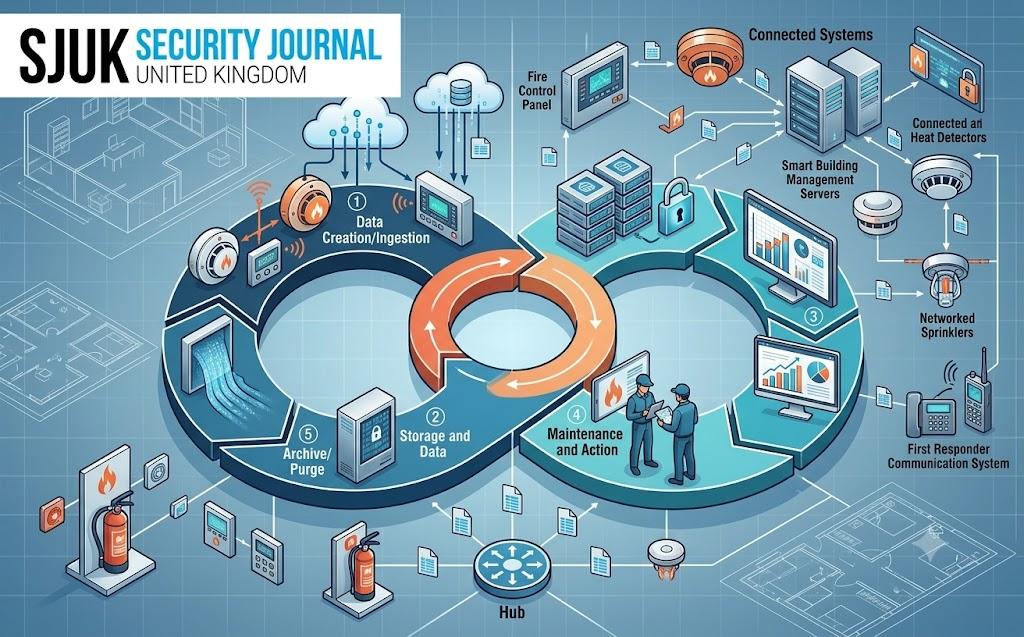
Fire protection technology is becoming increasingly connected. Modern buildings can include intelligent fire detection, addressable alarms, remote monitoring, connected sensors, automated suppression controls and integrated building management systems.
These technologies can generate valuable information, but they can also create large and complex data environments. Organisations need to determine what information should be collected, how it should be protected, how long it should remain available and when it can be removed. This is where information lifecycle management becomes increasingly important.
Understanding Connected Fire Safety Data
A connected fire protection system may generate information about alarms, faults, sensor conditions, system status, maintenance events and environmental conditions.
Some information may require immediate attention, while other data may be useful for long-term analysis.
Treating all information in exactly the same way can create inefficiencies.
Organisations should identify the purpose of each category of information and establish appropriate lifecycle rules.
Data From Intelligent Detection Systems
Modern detection systems can provide more detailed information than traditional alarm panels.
Events may include detector activations, faults, communication problems and environmental changes.
Historical records can help engineers identify recurring issues and investigate false alarms.
Information lifecycle management can define how event records are classified, retained and made available for analysis.
Remote Monitoring
Remote monitoring allows authorised personnel to observe fire protection systems without being physically present at the building.
This can improve response and maintenance planning.
However, remote monitoring also creates information security considerations. Access credentials, system configurations and operational data must be appropriately protected.
Information should be accessible to those who need it while remaining protected from unauthorised access.
Integrating Fire and Building Systems
Modern facilities may integrate fire protection systems with building management platforms.
This can create a broader operational picture but may also result in information being distributed across multiple systems.
A lifecycle strategy should identify where authoritative information resides and how records are synchronised.
Without these controls, organisations may struggle to determine which version of information is correct.
Managing Sensor Data
Connected sensors can generate continuous streams of data.
For some applications, storing every reading indefinitely may not provide significant value. Instead, organisations may retain summaries, alerts or selected historical information.
Retention should reflect operational requirements and analytical objectives.
This is a key principle of information lifecycle management: information should be retained because it has a defined purpose, not simply because storage capacity exists.
Cybersecurity and Information Protection
Connected fire safety systems can form part of a wider digital environment.
Security measures should include appropriate authentication, access control, network protection, monitoring and system updates.
Information security should be considered throughout the lifecycle.
For example, old system credentials should not remain active after personnel leave an organisation, and obsolete configurations should not remain accessible without justification.
Using Historical Data for Predictive Maintenance
Historical information can help organisations identify potential maintenance requirements.
If a component produces repeated faults before failure, analysis of historical records could help engineers identify warning patterns.
Predictive maintenance programmes therefore depend on high-quality historical information.
If records are incomplete or inconsistent, analytical results may be less reliable.
Managing Technology Changes
Fire protection systems are periodically upgraded or replaced.
When a new platform is introduced, organisations need to consider what happens to historical information stored in the old system.
Important records may need to be migrated, archived or converted into accessible formats.
This transition should be included within the information lifecycle management strategy.
Avoiding Technology-Driven Information Overload
More data does not automatically produce better decisions.
Fire safety professionals need information that is relevant, understandable and timely.
Organisations should therefore define which metrics and records support actual decisions.
Reducing unnecessary information can make important signals easier to identify.
Training Technical Teams
Technical employees should understand both the systems they operate and the information generated by those systems.
Training can cover data classification, access controls, record retention, system documentation and incident reporting.
Clear responsibilities reduce the possibility of important information being lost during staff changes or technology upgrades.
Building a Long-Term Information Strategy
Connected fire protection will continue to evolve. Artificial intelligence, advanced analytics, remote diagnostics and smart building technologies may create even more information.
Organisations should therefore develop lifecycle strategies that can adapt to new technologies.
For professionals seeking industry knowledge and developments, International Fire & Safety Journal provides a useful source of fire and safety information.
Ultimately, information lifecycle management enables organisations to manage technology-generated information in a deliberate and controlled way. It can improve the value of historical records, support maintenance decisions, strengthen information security and reduce unnecessary data retention.
As connected fire protection becomes more common, organisations that treat information as an operational asset will be better positioned to use technology effectively while maintaining control over the data it creates.
- Managerial Effectiveness!
- Future and Predictions
- Motivatinal / Inspiring
- Fitness and Wellness
- Medical & Health
- Manufacturing
- Education
- Real-Estate
- Food Industry
- Hospitality
- Online Games
- Sports
- Home Services
- Civil Engineering
- Safety and Protection
- Software Products & Services
- Fashion and Jewellery
- Artificial Intelligence
- Entrepreneurship
- Mentoring & Guidance
- Marketing
- Networking
- HR & Recruiting
- Literature
- Shopping
- Career Management & Advancement