

 SkillClick
Payroll Management Software: Simplifying Payroll With HR Software
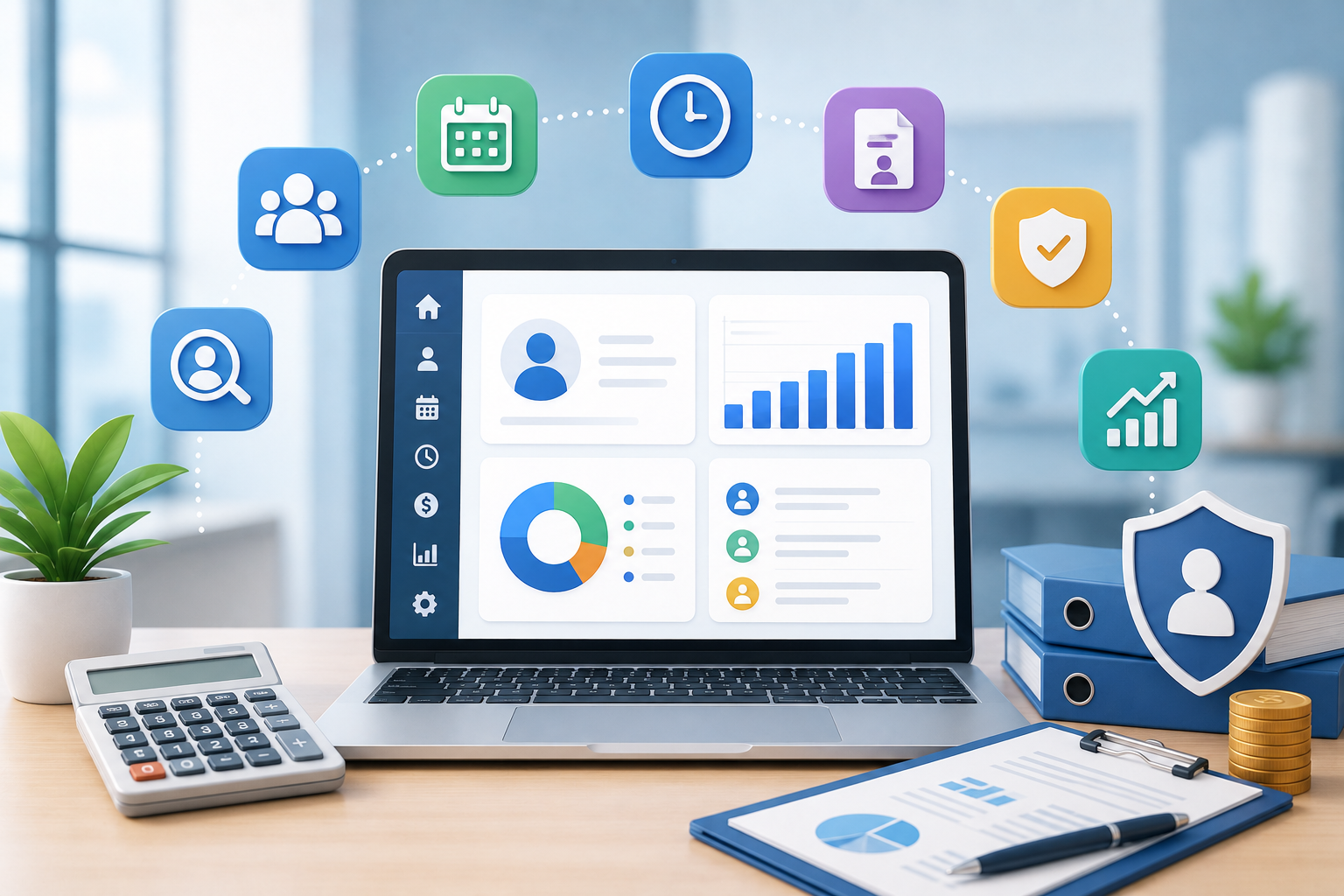
Managing employee salaries accurately and on time is an important responsibility for every organization. Payroll teams need to work with employee records, salary structures, attendance, leave, deductions, and statutory requirements every month. When these activities are handled manually, they can take considerable time and create opportunities for errors. Payroll Management Software helps businesses automate and organize these tasks through a centralized digital system.
When payroll is connected with HR Software, businesses can manage employee information, attendance, leave, payroll, and other HR activities within a more connected workflow.
What Is Payroll Management Software?
Payroll Management Software is a digital solution that helps organizations manage employee salary processing. It can store salary structures, calculate earnings and deductions, process payroll, generate salary slips, and maintain payroll records.
Modern payroll platforms can also connect payroll with attendance and leave management. This allows businesses to use relevant employee information during salary processing without repeatedly entering the same data.
Why Businesses Need Payroll Management Software
Payroll involves several recurring activities. HR and payroll teams may need to collect attendance data, check leave records, calculate salaries, apply deductions, prepare salary slips, and generate reports.
Manual payroll processes can become increasingly difficult as employee numbers grow.
A payroll system can help businesses:
-
Manage employee salary structures
-
Automate payroll calculations
-
Connect attendance with payroll
-
Manage leave-related adjustments
-
Calculate deductions
-
Generate salary slips
-
Maintain payroll records
-
Prepare payroll reports
-
Support statutory payroll processes
This can reduce repetitive administrative work and create a more consistent payroll workflow.
Key Features of Payroll Management Software
1. Employee Salary Management
Payroll software allows businesses to maintain employee salary structures and related information in one place. HR teams can update salary components when employees receive increments, promotions, or changes in compensation.
2. Attendance Integration
Attendance can directly affect payroll calculations. Integrated payroll systems can use working hours, attendance records, overtime, and other relevant information during payroll processing.
This reduces the need to manually transfer attendance data between different systems.
3. Leave Integration
Approved leave records may affect salary calculations depending on company policies. Connecting leave management with payroll allows relevant information to flow into the payroll process.
This can help reduce duplicate data entry and improve record consistency.
4. Automated Payroll Calculations
Payroll software can calculate salaries based on configured salary structures, attendance, leave, deductions, and other applicable components.
Automation helps HR teams reduce repetitive calculations and process monthly payroll more efficiently.
5. Salary Slip Generation
Employees can receive digital salary slips through an employee self-service portal or mobile application, depending on the platform.
This gives employees convenient access to their salary information and reduces manual document distribution.
6. Payroll Reports
Payroll reports can provide information about employee salaries, deductions, payroll costs, and other relevant data. HR and finance teams can use these reports for internal review and payroll administration.
How HR Software Supports Payroll
Payroll is closely connected with other HR activities. HR Software can provide a centralized platform where employee records, attendance, leave, payroll, recruitment, and other workforce processes are connected.
For example, when an employee joins the organization, their information can be added to the employee database. Attendance can then be recorded through the same platform, leave can be approved digitally, and relevant information can be used during payroll processing.
This connected approach can make HR administration more organized.
Benefits of Payroll Management Software
Saves Time
Automating recurring payroll activities can reduce the time HR teams spend on manual calculations and data entry.
Reduces Manual Errors
Centralized employee information and automated calculations can help minimize errors caused by repeated manual work.
Improves Employee Experience
Employees can access salary slips and other payroll information through self-service tools, depending on the software.
Supports Better Record Keeping
A centralized payroll system can maintain salary records, payroll history, and reports in an organized format.
Helps Businesses Scale
As employee numbers increase, payroll becomes more complex. Scalable software can help organizations manage additional employees and changing payroll requirements.
Payroll Compliance in India
Indian organizations may need to manage statutory payroll requirements such as Provident Fund (PF), Employees' State Insurance (ESI), and Tax Deducted at Source (TDS), depending on applicable rules and employee eligibility.
Some payroll platforms provide features to support these processes and generate relevant reports. Businesses should ensure that their payroll configuration is maintained according to current requirements and their specific circumstances.
Choosing the Right Payroll Software
Before selecting a payroll solution, businesses should consider their workforce size, payroll structure, HR processes, and future requirements.
Important features to evaluate include:
-
Employee management
-
Payroll automation
-
Salary structure management
-
Attendance integration
-
Leave management
-
Statutory payroll support
-
Salary slip generation
-
Employee self-service
-
Payroll reports
-
Mobile access
-
Data security
-
Role-based permissions
-
Integration capabilities
-
Customer support
-
Pricing and scalability
Ease of use is also important because HR teams, managers, and employees may interact with the system regularly.
Cloud-Based Payroll Management
Cloud-based payroll software allows authorized users to access payroll information through internet-connected devices. This can be useful for businesses with multiple offices, remote teams, or distributed employees.
A cloud-based HR and payroll platform can keep employee information, attendance, leave, and salary data connected while providing access according to user permissions.
Conclusion
Payroll Management Software can help businesses automate salary calculations, organize employee payroll information, manage deductions, generate salary slips, and maintain payroll records. When integrated with HR Software, payroll can become part of a broader workforce management system that connects employee records, attendance, leave, recruitment, and other HR processes.
Businesses should choose a solution based on their workforce size, payroll requirements, compliance needs, security standards, budget, and future growth. A scalable and user-friendly payroll system can help HR teams reduce repetitive work and manage payroll more efficiently.
- Managerial Effectiveness!
- Future and Predictions
- Motivatinal / Inspiring
- Fitness and Wellness
- Medical & Health
- Manufacturing
- Education
- Real-Estate
- Food Industry
- Hospitality
- Online Games
- Sports
- Home Services
- Civil Engineering
- Safety and Protection
- Software Products & Services
- Fashion and Jewellery
- Artificial Intelligence
- Entrepreneurship
- Mentoring & Guidance
- Marketing
- Networking
- HR & Recruiting
- Literature
- Shopping
- Career Management & Advancement