

 SkillClick
ACell PRP Treatment for Hair in Dubai Results and Realistic Expectations
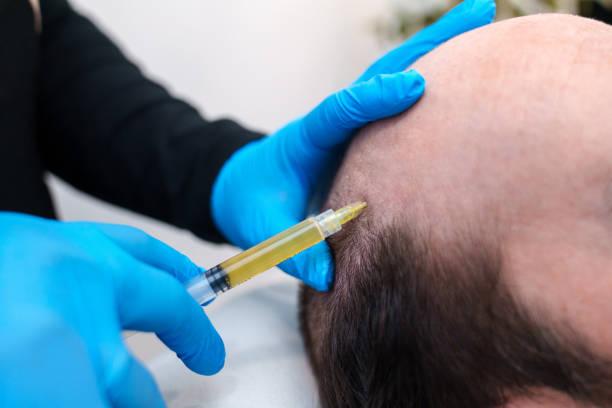
ACell PRP Treatment for Hair in Dubai combines platelet-rich plasma with an extracellular matrix product in an attempt to support the scalp's tissue environment. Although PRP alone has shown potential in some studies of pattern hair loss, the effectiveness and timeline of the ACell-plus-PRP combination have not been firmly established.
For patients considering this approach, understanding the difference between a possible improvement and a guaranteed result is essential.
Hair growth is gradual, and treatment outcomes depend on the underlying condition, remaining follicles, and individual response.
Why Hair Growth Takes Time
Hair follicles follow a natural growth cycle that includes active growth, transition, and resting phases.
A change in follicular activity does not necessarily become visible immediately.
Even when a treatment is associated with an improvement in hair density, the change may take time to become noticeable.
This is one reason hair restoration should be evaluated over a longer period rather than judged by daily shedding or short-term appearance.
What PRP Research Tells Us About Hair Growth
PRP has been studied as a potential treatment for androgenetic alopecia.
Some clinical studies and systematic reviews have reported improvements in hair density following PRP treatment. However, differences in preparation methods, treatment schedules, and study design make it difficult to predict an individual's response.
These findings relate to PRP and should not be interpreted as proof that ACell combined with PRP will produce the same outcomes.
More research is needed to establish the combination's effectiveness and optimal treatment protocol.
What Changes Might Patients Notice?
If a treatment is effective for an individual, changes may involve the appearance or measurable density of existing hair.
Possible observations include:
- A change in the appearance of hair thickness
- Improved coverage in selected thinning areas
- Changes in measurable hair density
- A difference in how visible the scalp appears under certain lighting
These outcomes are not guaranteed.
Changes in hair appearance can also be influenced by hairstyle, lighting, hair length, and natural fluctuations in shedding.
Standardized photographs and clinical measurements can help make progress assessments more consistent.
Understanding the Difference Between Hair Growth and Hair Restoration
Hair growth and hair restoration are not identical goals.
A patient may want to improve the thickness of existing hair, slow visible thinning, or restore coverage in an area with substantial hair loss.
An injection-based treatment may be discussed in relation to existing follicles, but it should not be assumed to recreate follicles that have been permanently lost.
When substantial coverage is needed, a clinician may discuss other options, including medical treatment or hair transplantation.
Why Results Differ Between Patients
Several factors can influence the outcome of hair restoration treatment.
The Underlying Diagnosis
Pattern hair loss, temporary shedding, and inflammatory scalp conditions have different causes.
A treatment that may be considered for one condition may be unsuitable for another.
The Condition of Existing Follicles
The amount of remaining follicular activity can affect what a treatment may reasonably achieve.
A thinning region with visible miniaturized hairs is different from a completely bald area.
Individual Biological Response
Patients can respond differently to the same treatment.
Age, medical history, hair-loss progression, and other individual factors may influence the overall treatment plan and observed changes.
The Treatment Protocol
PRP preparation methods, injection techniques, and treatment schedules vary across clinical studies.
For ACell combined with PRP, a standardized, well-established hair-restoration protocol has not been firmly established.
A Realistic Treatment and Monitoring Timeline
There is no validated universal timeline for ACell PRP hair restoration. A practical monitoring plan should be agreed upon with the treating clinician rather than based on a guaranteed number of weeks.
- Before treatment: Document the hair-loss pattern, examine the scalp, and establish baseline photographs or measurements.
- During treatment planning: Discuss the proposed preparation, injection approach, possible side effects, and the evidence supporting the procedure.
- Early follow-up: Review scalp comfort, healing, and any unexpected reactions. Do not interpret early shedding or temporary changes as definitive evidence of success or failure.
- Progress assessment: Compare standardized photographs and clinical measurements over an agreed period.
- Long-term review: Reassess whether the treatment appears useful and whether other options should be considered.
Common Patient Questions About Results
How quickly can hair density improve?
There is no reliable universal timeline for the ACell-plus-PRP combination. Research on PRP alone has used different follow-up periods, so those findings should not be treated as a confirmed schedule for the combined treatment.
Will the results last permanently?
Permanent results have not been established for ACell combined with PRP. Hair loss may continue to progress, and some patients may require ongoing management.
Can the treatment guarantee thicker hair?
No. Individual responses vary, and the available evidence does not support guaranteeing a particular degree of hair thickening or regrowth.
Tracking Progress Without Misleading Yourself
Patients can make follow-up more useful by keeping the assessment consistent.
Helpful practices include:
- Taking photographs under similar lighting
- Using the same camera angle and hair position
- Recording changes in shedding and scalp symptoms
- Attending scheduled clinical reviews
- Discussing any new medication or treatment with the clinician
This approach helps separate actual changes from differences in styling or lighting.
Long-Term Hair Health Beyond Injections
Hair restoration should account for the underlying cause of thinning.
For some patients, medical treatment may be appropriate. Others may need further investigation or a discussion about surgical restoration.
Healthy scalp-care habits can support comfort, but they should not be presented as a substitute for evidence-based treatment of a medical hair-loss condition.
Patients living in Dubai may also need to plan appointments around travel, outdoor activities, and their usual hair-care routine.
Final Thoughts on Results and Expectations
ACell PRP Treatment for Hair in Dubai is an emerging option in the wider field of regenerative hair restoration, but the combined treatment's effectiveness and long-term outcomes remain uncertain.
Patients should seek a clear diagnosis, understand the limitations of the available evidence, and agree on realistic goals before proceeding.
At Tajmeels Clinic, patients can explore hair restoration options and discuss an individualized approach based on their scalp condition, hair-loss pattern, and long-term goals.
- Managerial Effectiveness!
- Future and Predictions
- Motivatinal / Inspiring
- Fitness and Wellness
- Medical & Health
- Manufacturing
- Education
- Real-Estate
- Food Industry
- Hospitality
- Online Games
- Sports
- Home Services
- Civil Engineering
- Safety and Protection
- Software Products & Services
- Fashion and Jewellery
- Artificial Intelligence
- Entrepreneurship
- Mentoring & Guidance
- Marketing
- Networking
- HR & Recruiting
- Literature
- Shopping
- Career Management & Advancement