

 SkillClick
Why Do Some Paid Campaigns Look Unprofitable Before Customers Have Time to Convert?
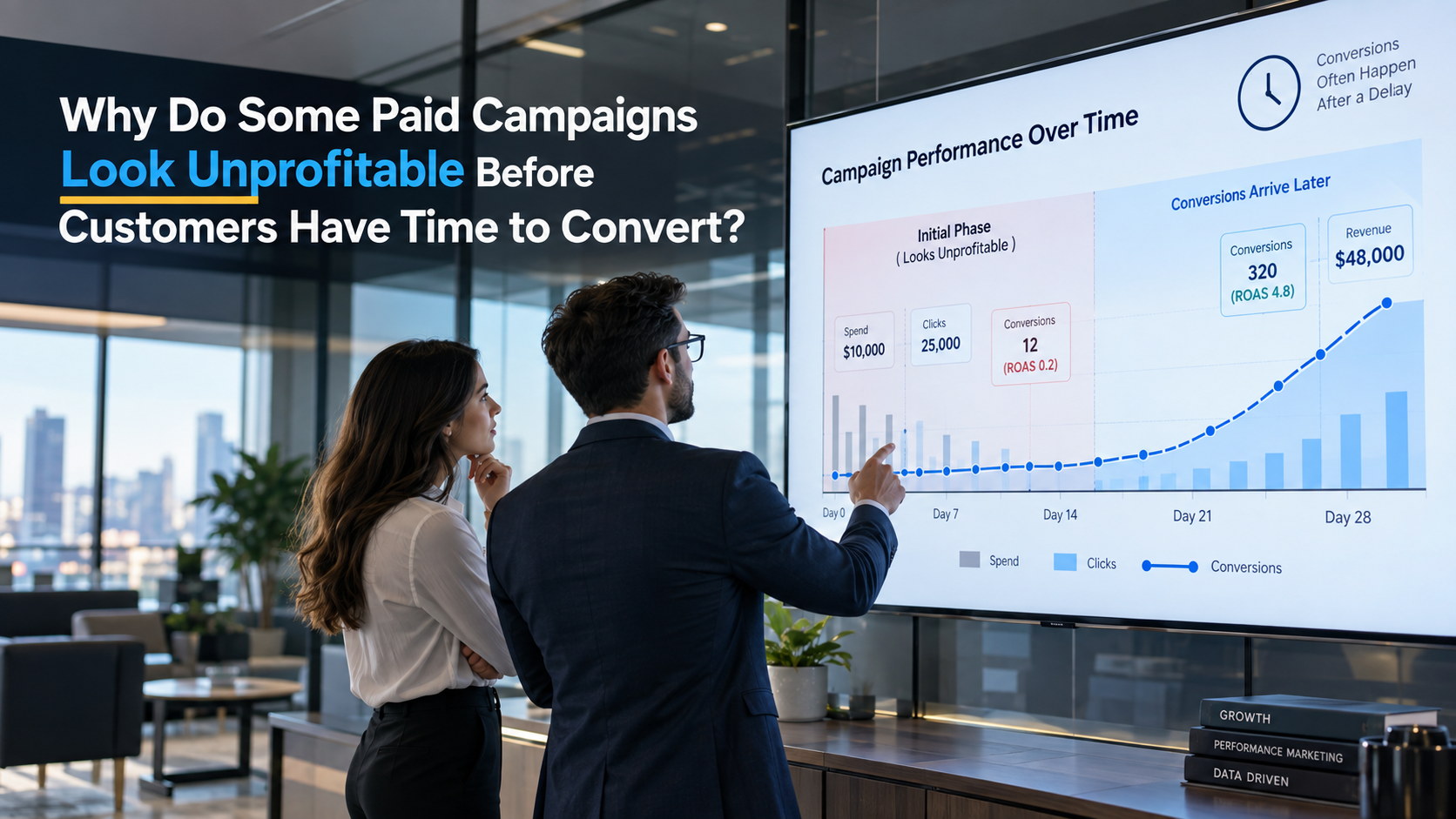
Paid advertising reports encourage businesses to evaluate performance quickly. A campaign is launched, data begins appearing, and the advertiser immediately compares spending with conversions.
This approach may work for products that customers purchase within minutes. It can be misleading for expensive, complex, or high-consideration offers that require research, comparison, internal approval, or several sales conversations.
Conversion lag in paid advertising is the delay between a person’s first interaction with an advertisement and the final conversion. Understanding this delay prevents businesses from pausing valuable campaigns before their results have fully developed.
What Is Conversion Lag in Paid Advertising?
Conversion lag is the time between an advertising interaction and the completion of a desired action.
The original interaction could be:
· An advertisement impression
· A video view
· A website visit
· A landing-page interaction
· A guide download
· A submitted enquiry
· A booked demonstration
The final conversion could be a purchase, subscription, signed contract, qualified appointment, or another meaningful business result.
For example, a user might click an advertisement on Monday, review the website again on Wednesday, discuss the decision with a colleague, and complete a purchase on Friday.
If the campaign is evaluated only on Monday or Tuesday, the original click appears unproductive even though it later contributes to revenue.
Why Do Some Customers Take Longer to Convert?
The amount of time required to make a decision usually depends on the risk, price, complexity, and urgency of the purchase.
Higher Prices
Customers usually spend more time evaluating expensive products or services. They may compare providers, request quotations, read reviews, or discuss the cost with other decision-makers.
Complex Offers
A product that requires implementation, training, integration, or customization needs more consideration than a simple purchase.
Multiple Decision-Makers
Business purchases may require approval from managers, finance teams, business owners, or technical specialists.
Limited Urgency
A person may be interested in the offer but have no immediate reason to act. The conversion may occur when the problem becomes more important.
Need for Trust
Customers may need repeated exposure, proof, or personal interaction before feeling confident enough to purchase.
A strong performance marketing strategy should account for the realistic customer decision process rather than expecting every click to generate an immediate result.
How Can Conversion Lag Make a Campaign Look Weak?
Suppose a business spends $1,000 during the first week of a campaign and records only two sales. The initial cost per sale may appear too high.
During the following two weeks, some of the people who clicked during week one return and purchase. The campaign may eventually generate eight sales from the original advertising period.
If the business judged performance immediately, it might have paused a campaign that was still producing results.
This problem is especially common when reports compare advertising spend and conversions from the same calendar period. Some conversions recorded this month may have originated from clicks in the previous month, while some clicks from this month may convert later.
Without recognizing this timing difference, campaign efficiency can appear better or worse than it really is.
What Is the Difference Between Conversion Lag and Sales Cycle?
Conversion lag and sales cycle are related but not identical.
Conversion lag usually refers to the delay between an advertising interaction and a tracked conversion. The sales cycle includes the complete process from initial interest to becoming a customer.
For a lead-generation business, a form submission may occur one day after the ad click, but the sale may happen six weeks later. The advertising platform sees a short conversion lag for the lead, while the business experiences a much longer sales cycle for the customer.
This distinction matters because a campaign may generate leads quickly while revenue takes considerably longer to appear.
How Can Businesses Measure Conversion Lag?
Advertising platforms, analytics systems, and customer relationship management tools may each provide different parts of the journey.
Businesses can begin by reviewing:
· Time from first website visit to conversion
· Time from lead submission to qualification
· Time from lead qualification to appointment
· Time from appointment to sale
· Number of interactions before purchase
· Time from first purchase to repeat purchase
· Differences between products or customer groups
Sales teams can also provide valuable context. They may know that one service usually closes within a week while another requires several months.
A full-funnel marketing approach connects these stages so campaign evaluation does not stop at the first tracked action.
Why Should Reporting Windows Match the Buying Journey?
A reporting window should give customers enough time to complete the expected action.
Evaluating a high-value consulting offer after two days may provide little useful information. Waiting several months to evaluate a low-cost, frequently purchased item may also be unnecessary.
The appropriate period depends on:
· Product or service price
· Purchase complexity
· Average sales-cycle length
· Conversion volume
· Customer urgency
· Required decision-makers
· Follow-up process
· Available historical data
Businesses should establish shorter windows for operational monitoring and longer windows for strategic evaluation.
Daily monitoring can identify technical issues or unusual cost changes. Weekly or monthly analysis may provide a more reliable view of conversions and revenue.
Can Conversion Lag Affect Budget Decisions?
Yes. Businesses may reduce budgets too early when recent campaign results appear weak, even though conversions are still developing.
The opposite problem can also occur. A campaign may look strong because it receives delayed conversions from an earlier period. Increasing the budget immediately could create unrealistic expectations about current performance.
Budget decisions should therefore consider:
· Mature conversion data
· Recent changes in spending
· Historical conversion delay
· Sales pipeline value
· Customer acquisition cost
· Cash-flow requirements
A campaign should not be protected indefinitely simply because some customers take longer to convert. Advertisers still need evidence that qualified prospects are progressing through the journey.
How Does Retargeting Support Longer Decision Cycles?
When customers need more time, retargeting can help the business remain visible during the evaluation process.
The message should change as the prospect gains more information.
Early retargeting may explain the main problem or benefit. Later advertisements might show:
· Customer testimonials
· Case studies
· Product demonstrations
· Frequently asked questions
· Comparisons
· Objection-handling content
· Implementation details
· A consultation or trial invitation
Displaying the same sales message repeatedly can create fatigue without answering the questions delaying the decision.
Retargeting should support the buying process rather than simply reminding people that the product exists.
How Can Creative Strategy Reduce Conversion Delay?
Creative cannot eliminate the natural decision time for every purchase, but it can remove unnecessary confusion.
Advertisements may shorten the journey by explaining:
· Who the offer is designed for
· What problem it solves
· How the process works
· What the customer receives
· Why the claims are credible
· What makes the solution different
· What happens after conversion
A customer who finds these answers early may move through the decision process more confidently.
However, aggressive urgency should not be used to force customers into a decision they are not ready to make. Pressure may increase short-term conversions while also increasing cancellations, refunds, or dissatisfaction.
How Can Sales Follow-Up Influence Conversion Lag?
Advertising may generate a qualified enquiry, but slow or inconsistent follow-up can extend the delay.
Businesses should review:
· How quickly new leads receive a response
· Whether the first message explains the next step
· How many follow-ups are attempted
· Whether each follow-up provides value
· How enquiries are assigned
· Whether appointment availability causes delays
· Which objections repeatedly slow the sale
If advertising creates demand but the sales process cannot respond effectively, campaign reporting may incorrectly suggest that the audience or creative is weak.
Which Metrics Should Be Reviewed Alongside Conversion Lag?
Conversion volume alone does not show whether delayed results are valuable.
Businesses should also monitor:
· Qualified lead rate
· Sales conversion rate
· Cost per acquired customer
· Average deal value
· Time to close
· Pipeline value
· Refund and cancellation rates
· Repeat purchase rate
· Revenue and profit
Historical campaign results can provide a useful benchmark for understanding how long similar customers normally take to convert.
How Can Businesses Avoid Premature Campaign Decisions?
A practical evaluation process can include:
1. Define the primary conversion.
2. Measure the normal delay before that conversion.
3. Separate recent data from mature data.
4. Track leads beyond the advertising platform.
5. Compare campaigns using equal evaluation periods.
6. Review lead quality and pipeline movement.
7. Make budget decisions only after enough data has developed.
Advertisers should still react quickly to broken tracking, incorrect targeting, or technical problems. The goal is not to delay every decision but to avoid judging incomplete performance as final performance.
Final Thoughts
Conversion lag in paid advertising explains why some campaigns appear unprofitable before customers have completed their decision process.
A realistic evaluation considers the time between the first click, lead submission, sales conversation, and final purchase. It also separates recent results from mature results and connects advertising data with sales outcomes.
Businesses that understand conversion delay can make more reliable budget decisions, build better retargeting journeys, and avoid pausing valuable campaigns before their full impact becomes visible.
Frequently Asked Questions
1. How long can conversion lag last?
It may last a few minutes, several days, or several months depending on the price, complexity, urgency, and sales process.
2. Is conversion lag the same as attribution?
No. Conversion lag measures the time before conversion, while attribution determines which marketing interactions receive credit.
3. Does a longer conversion lag mean the campaign is weak?
Not necessarily. High-value or complex purchases naturally require more time, but prospects should still show meaningful progress.
4. Can retargeting reduce conversion lag?
It can help by answering questions, providing evidence, and keeping the offer visible while customers consider their options.
5. When should a campaign with delayed conversions be paused?
It may need to be paused when mature data shows unsustainable acquisition costs, weak lead quality, poor pipeline progress, or insufficient revenue.
- Managerial Effectiveness!
- Future and Predictions
- Motivatinal / Inspiring
- Fitness and Wellness
- Medical & Health
- Manufacturing
- Education
- Real-Estate
- Food Industry
- Hospitality
- Online Games
- Sports
- Home Services
- Civil Engineering
- Safety and Protection
- Software Products & Services
- Fashion and Jewellery
- Artificial Intelligence
- Entrepreneurship
- Mentoring & Guidance
- Marketing
- Networking
- HR & Recruiting
- Literature
- Shopping
- Career Management & Advancement