

 SkillClick
The Invisible Foundation: How Structural Steel Detailing Services Are Reshaping American Data Center Construction
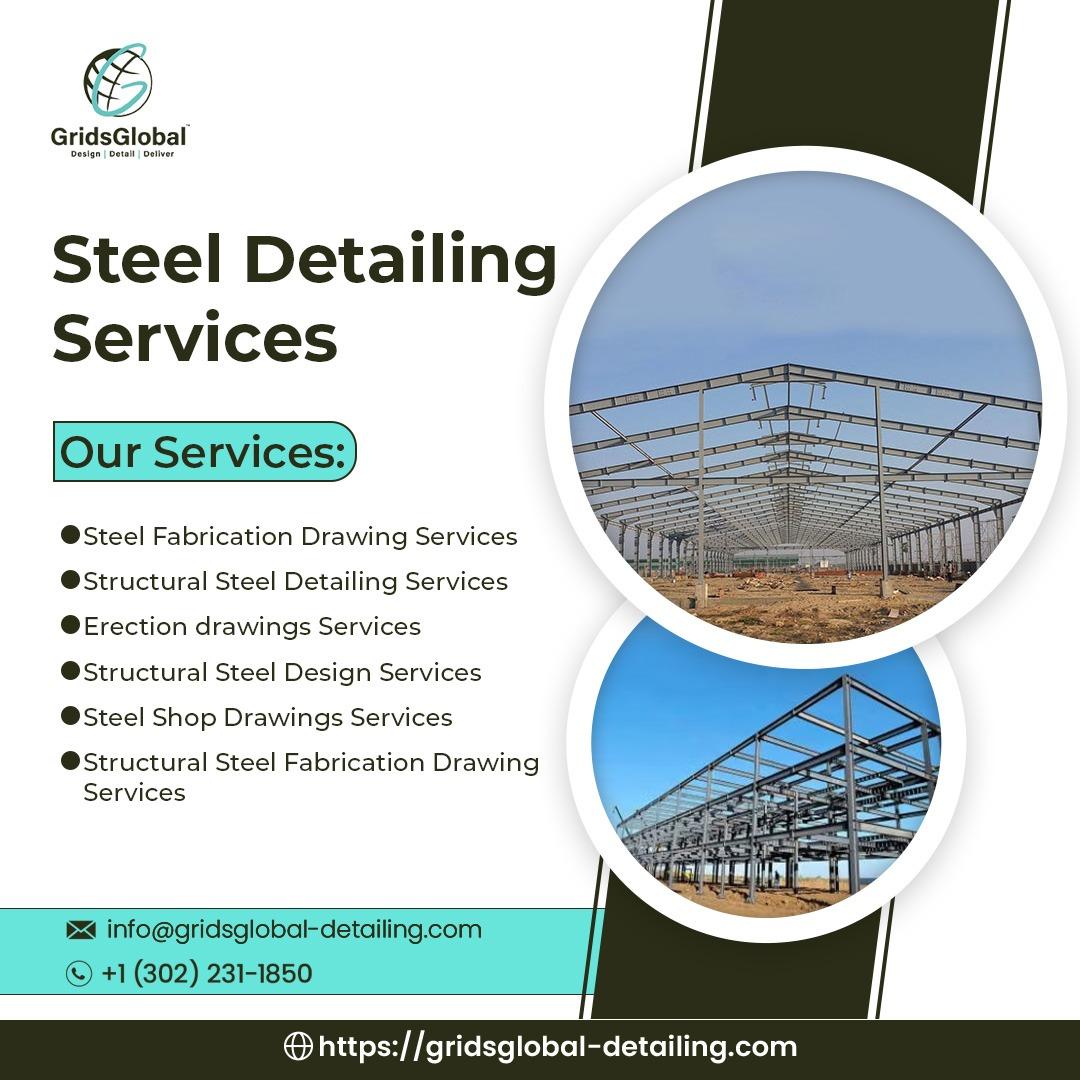
There is a quiet revolution happening in American construction, and it has nothing to do with what you see on site. The most important work now occurs in digital environments, where engineers construct entire buildings virtually before any physical steel is touched. This transformation has fundamentally altered how data centers are built, converting what was once a linear sequence into a coordinated digital workflow where every connection, every clearance, and every dimension is resolved before fabrication begins. Companies that have mastered this approach deliver projects on schedule and within budget. Those that have not find themselves struggling with rework, delays, and costs that spiral beyond projections. Data centers have evolved from specialized facilities into the primary engine driving structural steel demand across America. What was once a niche building category now dictates fabrication schedules from coast to coast. Project starts have reached unprecedented heights, eclipsing spending recorded during comparable periods in earlier years. Data centers that once occupied modest footprints now command billion-dollar budgets and stretch across hundreds of thousands of square feet. All-in greenfield costs throughout the United States and Canada have risen sharply per megawatt. These developments represent an immense volume of structural steel that must be detailed with unwavering precision before any fabrication begins.
A single hyperscale data center consumes thousands of tons of structural steel. These buildings demand substantially more steel than standard commercial structures of equivalent size because their frames must support server racks, cooling systems, backup generators, and extensive mechanical networks. Every ton must fit correctly on the first attempt. That necessity is why Structural Steel Detailing Services have become a cornerstone of modern data center delivery. Partnering with GridsGlobal Steel Detailing LLC provides a fully coordinated three-dimensional constructability model that eliminates spatial conflicts, validates every dimension, and produces complete material documentation before fabrication. The same level of technical scrutiny applies to Structural Steel Connection Design Services, ensuring each joint safely carries the heavy, concentrated loads these mission-critical facilities impose.
The American Steel Detailing Market and Data Center Demand
The U.S. structural steel market continues to expand, with projections indicating steady growth ahead. Data center work accounts for a significant portion of that expansion. Detailing rates for domestic projects span a wide range, reflecting the specialized expertise required for complex connection detailing, LOD 400 modeling, and multi-trade coordination.
Data center activity has dispersed well beyond traditional hubs. States throughout the Midwest and South have recorded billions in new starts. North Carolina stands as the only southern state to surpass the ten-billion-dollar threshold so far this year. Texas sits just below that mark yet remains among the most active markets nationally. Virginia and Ohio continue to attract substantial investment. The global development pipeline now represents trillions in capital, with hundreds of billions currently under construction and even more in planned or precommitted projects.
This pipeline collides with a persistent labor shortage. The structural steel industry requires hundreds of thousands of additional welders, and skilled labor gaps in mechanical, electrical, and plumbing trades compound cost pressures further. Many fabricators report detailing backlogs that delay steel release and erection. Consequently, detailing partners capable of delivering accurate work on compressed timelines without compromising quality have become highly sought after.
What Data Center Steel Detailing Actually Involves
Detailing a data center extends far beyond producing shop drawings for a warehouse or office building. The work encompasses BIM coordination across every structural discipline, creation of LOD 400 models that document each cope, weld preparation, and bolt hole, generation of fabrication drawings formatted for CNC equipment, erection sequencing aligned with crane availability, and complete material accounting through BOM and BOQ deliverables.
The scope also requires tight coordination with mechanical, electrical, and plumbing trades. Steel framing must leave room for cable trays, conduit banks, chilled water piping, and fire suppression lines. In hyperscale environments, LOD 300 coordination is no longer sufficient. When cable trays, ductwork, and chilled water piping collide in the field, projects pay twice: first in RFIs, then in rework, delays, and disrupted sequencing. LOD 400 BIM shifts coordination upstream, resolving clashes before steel is cut, hangers are placed, and crews mobilize. The standard is simple: if it is not spool-ready in BIM, it is not ready to build. Detailing teams also plan for raised access flooring, equipment support platforms, generator enclosures, and the expansion provisions owners routinely request.
Why Data Centers Present Detailing Challenges That Ordinary Projects Do Not
Data centers introduce conditions that general steel detailing never encounters. These facilities carry enormous concentrated loads from server racks, standby generators, and cooling plant equipment. Raised floor systems must support live loads far beyond standard office requirements, which demands heavier beams, deeper footings, and reinforced slab-on-grade. Roof structures must accommodate heavy air handling units, extensive conduit runs, and cable trays. Schedules are compressed to satisfy urgent market demand, which eliminates any allowance for field fixes.
Structural Steel Detailing Services for data centers must also address vibration isolation criteria, seismic bracing in high-risk zones, and security protocols that restrict site access during construction. Because hyperscale facilities contain thousands of distinct piece marks, every component must be tracked, shipped, and erected in exact sequence. A single coordination error ripples through the entire delivery chain.
How a Disciplined Detailing Workflow Prevents Costly Problems
Professional detailing teams tackle these obstacles through a structured digital process. They build a BIM environment at LOD 400 in which every beam, column, brace, and plate sits in its true location. Each member receives an exact length. Each hole receives a defined diameter. Each weld preparation receives a specific profile. Nothing is left to assumption.
After the virtual assembly is finished, the team conducts a full constructability review. They confirm that welding electrodes can physically reach every joint root. They verify that torque wrenches have adequate swing room to tighten each fastener. They check that framing members do not conflict with ductwork, cable trays, suppression piping, or architectural finishes. They also factor in mill and fabrication tolerances so the frame assembles without shimming or forced fit-up. Catching these conditions in the model costs a few engineering hours. Catching them in the field costs days of labor and equipment standby that no data center schedule can absorb.
Once every check clears, the validated geometry feeds directly into CNC beam lines, plate processors, and automated drill stations. Fabrication drawings carry exact cut lengths, hole coordinates, and weld callouts. Shop crews no longer interpret hand sketches or make judgment calls. Each member reaches the job site with a unique piece mark that matches the erection drawings. Field grinding, hole reaming, and corrective welding become rare exceptions instead of routine activities. Industry reports indicate that AI-assisted steel detailing accuracy now exceeds ninety-eight percent, while rework costs have dropped significantly compared with traditional techniques. More detail on this workflow is available through Structural Steel Detailing Services.
The Bill of Material That Keeps Procurement Aligned
The coordinated model automatically produces a comprehensive Bill of Material (BOM) once it earns final approval. This document catalogs every structural shape, plate thickness, bolt grade, anchor rod, and welding consumable by unique piece mark. Procurement teams rely on the BOM to time mill orders with precision. They know the exact tonnage of each beam size to order. They see the total plate weight required for stiffeners, base plates, and shear tabs. They purchase bolts and welding wire in correct quantities without overbuying. That discipline prevents material shortages that stall production and surplus stock that locks up working capital. When several fabricators contribute to one project, the BOM serves as the master tracking document that keeps every shipment aligned with the erection sequence.
Connection Analysis and the Bill of Quantity
Connection analysis adds further value through Structural Steel Connection Design Services. Engineers assess failure modes including prying action, block shear rupture, web crippling, and bolt fatigue. Operating within recognized design codes, they establish the exact end plate thickness, stiffener arrangement, bolt spacing, and fillet weld size required to keep the structure safe and serviceable.
The same analytical work also yields a Bill of Quantity (BOQ) dedicated to connections. The BOQ itemizes each connection type by unit count, fabrication hours, fastener quantity, weld length, and testing requirements. Estimators see precisely how many moment connections exist and what each one costs to fabricate. Project controllers use this data to build credible cash flow forecasts. For practical advice on avoiding frequent design mistakes, review Structural Steel Connection Design Services. For projects in high-seismic regions, Structural Steel Connection Design Services that include ductile detailing practices add an important layer of safety.
How BOM and BOQ Work Together as Financial Controls
The BOM and BOQ fulfill distinct yet complementary functions. The BOM quantifies raw materials for the entire frame. The BOQ quantifies labor and connection-specific consumables. Together, they bridge the gap between design intent and procurement reality. A fabricator can isolate a specific connection type, pull its material requirement from the BOM, and retrieve its labor estimate from the BOQ in one step. This integration trims waste, improves bid accuracy, and enables just-in-time deliveries that reduce on-site storage expenses.
Protecting Budgets Through Early Coordination
Every field correction carries hidden costs. Cutting a beam that arrived too long, reaming a hole drilled off location, or adding a weld that belonged in the shop consumes time and labor. These fixes also introduce safety hazards for crews working at height under schedule pressure. A comprehensive validation strategy that combines 3D coordination, connection analysis, and complete material documentation removes these problems before they reach the field. Digital prototyping surfaces geometric conflicts early. Connection engineering ensures joints perform as intended. BOM and BOQ data keep procurement aligned with fabrication reality. Together, they turn steel construction into a controlled and predictable process.
Engineering Discipline for Long-Term Asset Performance
Data centers and other steel buildings must perform reliably for decades. They carry gravity loads, resist wind forces, and withstand seismic shaking in many regions. Achieving that performance requires discipline from the very first day of detailing. By maintaining high standards in digital modeling, connection verification, and material quantification, project teams secure structures that perform without costly interventions. The upfront investment in thorough engineering pays back through fewer delays, lower rework costs, and a safer job site.
To discuss tailored constructability strategies, complete BOM compilation, BOQ structuring, and advanced model coordination for your next data center project, visit our contact us page.
Corporate Contact Information
United States Operations
GRIDSGLOBAL STEEL DETAILING LLC
Address: 1207 Delaware Ave, Unit 2877, Wilmington, DE 19806
Phone: +1 (302) 231-1850
Email: info@gridsglobal-detailing.com
Website: https://gridsglobal-detailing.com/
- Managerial Effectiveness!
- Future and Predictions
- Motivatinal / Inspiring
- Fitness and Wellness
- Medical & Health
- Manufacturing
- Education
- Real-Estate
- Food Industry
- Hospitality
- Online Games
- Sports
- Home Services
- Civil Engineering
- Safety and Protection
- Software Products & Services
- Fashion and Jewellery
- Artificial Intelligence
- Entrepreneurship
- Mentoring & Guidance
- Marketing
- Networking
- HR & Recruiting
- Literature
- Shopping
- Career Management & Advancement