

 SkillClick
HydraFacial Treatment in Dubai for Dehydrated Skin After Summer
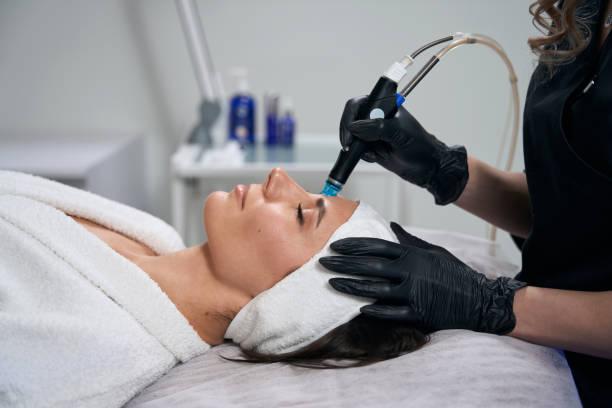
After a long Dubai summer, skin can look dull, tight or uneven even when the weather itself is humid. HydraFacial Treatment in Dubai combines controlled cleansing and exfoliation with extraction and hydration, making it a surface-focused option for skin that looks dehydrated and congested after prolonged environmental exposure.
The treatment does not replace medical care for eczema, dermatitis or severely damaged skin. It is better suited to patients whose skin has developed superficial dryness, dullness and buildup and who want a controlled professional treatment rather than aggressive resurfacing.
Why Skin Can Feel Dehydrated After a Dubai Summer
Humidity does not automatically mean well-hydrated skin.
Dubai's summer environment combines heat, intense sunlight, sweating, frequent cleansing and extensive air-conditioning. A person can spend time outdoors in humid conditions and then several hours inside an aggressively cooled office, vehicle, hotel or shopping centre.
The skin experiences repeated changes in its surroundings.
Sun exposure can contribute to cumulative skin damage, while low-humidity indoor air can increase moisture loss from the skin. The American Academy of Dermatology notes that low humidity can contribute to dry skin and recommends regular moisturizing and sun protection as part of management.
There is also the issue of summer skincare.
Some people increase the use of exfoliating acids, scrubs or strong cleansers because sweat and oil make the face feel unclean. If those products are used too aggressively, the result can be tightness, flaking or sensitivity.
Dehydration Is Not the Same as Dry Skin
These terms are often used interchangeably, but they are not identical.
Dehydration refers to insufficient water in the skin. Dry skin, meanwhile, can refer to a skin type or condition associated with reduced lipid content and impaired barrier function.
A person with oily or combination skin can therefore still experience dehydration.
That explains why someone may report both an oily T-zone and tight cheeks after summer.
What Happens to the Skin Surface After Summer?
The outermost epidermal layer, the stratum corneum, plays an important role in maintaining the skin barrier and limiting water loss.
When the surface becomes rough, irritated or excessively exfoliated, the skin may feel less comfortable and may appear dull.
Summer exposure can also leave behind a mixture of sunscreen residue, sweat, sebum, dead skin cells and environmental particles.
This does not mean the skin is “dirty” in a medical sense.
It means the surface may benefit from appropriate cleansing and controlled exfoliation.
The AAD warns that excessive exfoliation can damage the skin and recommends choosing an exfoliation method according to skin type and existing skincare products.
How HydraFacial Fits Into Post-Summer Skin Care
HydraFacial is designed as a multi-step, non-invasive treatment.
Its Vortex-Fusion system combines cleansing, exfoliation, extraction and hydration in one treatment sequence. The treatment can be customized according to individual skin concerns, with different tips and optional boosters available within the system.
Gentle Surface Cleansing
The first step removes surface impurities and prepares the skin.
For post-summer skin, this can be useful when sunscreen, sebum and environmental residue have accumulated over time.
The goal should not be aggressive stripping.
The skin's barrier is a functional structure, not an obstacle that needs to be removed. Over-cleansing can worsen discomfort in already dehydrated skin.
Controlled Exfoliation
After summer, patients sometimes assume that more exfoliation will restore their complexion faster.
That can backfire.
If the skin is already dry, peeling or irritated, adding aggressive exfoliation may increase sensitivity. The AAD specifically advises against over-exfoliating and notes that dry or sensitive skin can be more vulnerable to irritation.
A professionally controlled treatment allows exfoliation intensity to be considered in relation to the skin's condition.
Extraction When Congestion Is Present
Not every post-summer patient needs extraction.
If congestion is present, however, the HydraFacial system can incorporate device-assisted extraction as part of the treatment. Its Vortex-Fusion technology is designed to remove impurities while the treatment progresses.
This can be useful for patients whose summer skincare involved heavier sunscreen or who noticed increased T-zone congestion.
Hydration as the Finishing Stage
Hydration is particularly relevant after exfoliation.
HydraFacial's treatment sequence incorporates hydration rather than ending immediately after surface exfoliation. The manufacturer describes the process as simultaneously cleansing, exfoliating, extracting and hydrating the skin.
That makes the treatment different from a purely exfoliating procedure.
Still, professional hydration does not eliminate the need for daily moisturizer. Dermatologists recommend regular moisturizing for dry skin and note that creams or ointments can help retain moisture.
Can HydraFacial Restore Dehydrated Skin After Summer?
It can help improve the appearance and feel of superficially dehydrated skin, but expectations should remain realistic.
The treatment can remove accumulated surface debris and deliver hydrating solutions during the procedure. This can leave the skin looking smoother and more refreshed.
What it cannot do is permanently prevent water loss from the skin.
If a patient has a compromised barrier, ongoing irritation, eczema or another dermatological condition, the underlying cause needs to be addressed. The AAD notes that excessively dry skin can be associated with underlying skin conditions and may require individualized treatment.
This distinction protects patients from expecting a facial treatment to solve a medical problem.
Three Common Post-Summer Misunderstandings
“My skin is oily, so it cannot be dehydrated.”
It can.
Sebum and water are different components of the skin environment. Combination or oily skin can still feel tight or dehydrated.
“I should exfoliate heavily because my skin looks dull.”
More is not always better.
Excessive exfoliation can increase dryness and irritation. Dermatologists recommend selecting exfoliation according to skin type and existing products.
“Hydration means putting on a very heavy cream.”
Not necessarily.
The correct moisturizer depends on skin type and condition. For oily or congestion-prone skin, a non-comedogenic product may be more appropriate. For very dry skin, dermatologists often favor creams or ointments over lighter lotions.
HydraFacial Versus a Strong Post-Summer Peel
A chemical peel may be appropriate for certain pigmentation, texture or acne concerns, but the depth and formulation matter.
A HydraFacial generally approaches post-summer skin through combined cleansing, superficial exfoliation, extraction and hydration. A chemical peel, by contrast, uses a chemical agent to produce controlled exfoliation at a selected depth.
| Skin Situation | HydraFacial | Chemical Peel |
|---|---|---|
| Surface dehydration | Often relevant | Depends on peel and skin condition |
| Mild congestion | Can include extraction | Some peels can help, depending on formulation |
| Surface dullness | Common treatment goal | Common treatment goal |
| Pigmentation | May support overall appearance | Certain peels may specifically target pigmentation |
| Recovery | Usually minimal | Varies according to peel depth |
| Treatment intensity | Adjustable surface treatment | Ranges from superficial to deeper chemical exfoliation |
The choice should depend on the clinical objective rather than the assumption that a stronger peel will automatically provide a better result.
When Post-Summer Skin Should Not Be Exfoliated
This is one of the most important considerations.
If the skin is actively sunburned, cracked, inflamed or significantly irritated, routine exfoliation should be postponed. The AAD specifically advises against exfoliating sunburned skin and emphasizes avoiding damage from excessive exfoliation.
A patient who has recently returned from a beach holiday may therefore need skin recovery before treatment rather than immediate exfoliation.
The same applies after certain laser treatments, stronger peels or other procedures. Recent treatment history should be disclosed during consultation.
A Better Way to Approach Post-Summer Skin
Rather than asking, “How can I remove all the damage from summer?” patients should separate different concerns.
If the skin is dehydrated, hydration and barrier support may be priorities.
If pigmentation is the main concern, a pigmentation-specific treatment plan may be more appropriate.
If congestion dominates, cleansing and extraction may have a more relevant role.
If there is persistent inflammation, the patient may need dermatological assessment.
HydraFacial can be useful when several superficial concerns overlap, because the treatment combines several surface-level actions in one session.
How a Post-Summer HydraFacial Session May Be Planned
- Assessment: The provider checks hydration, surface texture, congestion, redness and sensitivity.
- Skincare review: Recent sun exposure, retinoids, acids, acne medication and previous procedures are discussed.
- Cleansing: Surface residue is removed before treatment progresses.
- Exfoliation: A controlled exfoliation stage removes superficial buildup.
- Extraction: If congestion is present, device-assisted extraction can be incorporated.
- Hydration: Hydrating solutions are applied as part of the treatment.
- Aftercare: The patient receives guidance about moisturizer, sunscreen and avoiding unnecessary irritation.
- Maintenance: Future treatment is considered according to the skin's response and ongoing needs.
What to Do After Treatment
Post-treatment skincare should remain simple.
Avoid immediately adding several strong exfoliating products simply because the skin feels smoother. The AAD advises that over-exfoliation can lead to irritation and recommends moisturizing after exfoliation.
Sun protection is especially important after any treatment that affects the skin surface.
The AAD recommends broad-spectrum, water-resistant SPF 30 or higher, along with shade and protective clothing when appropriate.
For Dubai residents, this is not just a holiday rule. Daily commuting, outdoor dining, driving and short periods outside all contribute to cumulative exposure.
How Long Does the Hydrated Look Last?
The visible post-treatment effect varies from person to person.
Skin condition, home skincare, environmental exposure and the underlying cause of dryness all influence how long the improvement remains noticeable.
Someone who continues spending long hours in air-conditioned environments without moisturizer may experience dryness again more quickly than someone with a consistent barrier-supportive routine.
This is why a HydraFacial should be viewed as part of skin maintenance rather than a permanent correction.
Building a Post-Summer Skin Routine
A sensible routine generally focuses on four fundamentals: gentle cleansing, appropriate hydration, sun protection and carefully selected active ingredients.
Patients with oily skin should not automatically choose harsh cleansers. Those with dry skin should not automatically increase exfoliation.
The AAD recommends fragrance-free skincare for dry or sensitive skin and emphasizes regular moisturization and sun protection.
Professional treatments work best when they complement rather than fight the daily routine.
When to Consider Professional Assessment
If dryness persists despite appropriate skincare, or if the skin is cracking, stinging, itching, inflamed or repeatedly peeling, a routine facial may not address the underlying problem.
The AAD recommends professional evaluation when excessive dryness does not improve or becomes painful, cracked, bleeding or highly irritating.
That is an important distinction between cosmetic dehydration and a medical skin condition.
Refreshing Skin After the Dubai Summer
Post-summer skin does not necessarily need an aggressive reset.
For patients experiencing superficial dehydration, dullness and mild congestion, a controlled treatment that combines exfoliation with hydration may be a practical option. HydraFacial's treatment system is specifically designed around that combination.
If you are considering HydraFacial for dehydrated skin after summer, the most useful first step is to have the skin assessed rather than choosing treatment intensity based solely on how dry or dull it looks.
At Tajmeels Clinic, HydraFacial can be incorporated into an individualized approach to skin maintenance, taking into account hydration, congestion, sensitivity and the patient's wider skincare routine.
The goal after summer is not simply to make the face look temporarily glossy. It is to restore a more comfortable, balanced-looking surface while protecting the skin from the environmental factors that caused the problem in the first place.
- Managerial Effectiveness!
- Future and Predictions
- Motivatinal / Inspiring
- Fitness and Wellness
- Medical & Health
- Manufacturing
- Education
- Real-Estate
- Food Industry
- Hospitality
- Online Games
- Sports
- Home Services
- Civil Engineering
- Safety and Protection
- Software Products & Services
- Fashion and Jewellery
- Artificial Intelligence
- Entrepreneurship
- Mentoring & Guidance
- Marketing
- Networking
- HR & Recruiting
- Literature
- Shopping
- Career Management & Advancement