

 SkillClick
Bio-Butanediol Production Cost Report: A Practical Guide for Investors
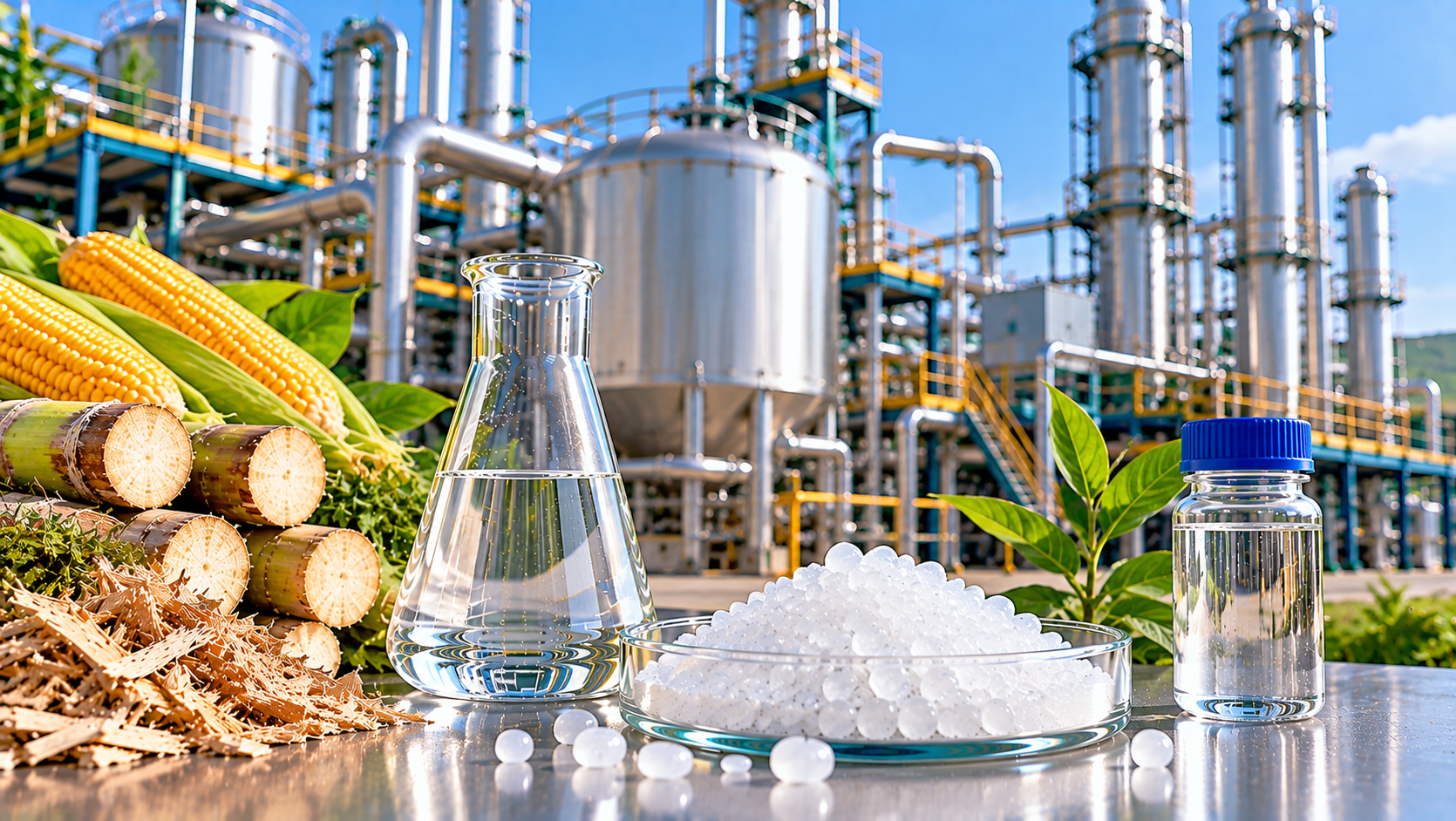
1,4-butanediol, BDO for short, is a genuinely important industrial chemical, used to make tetrahydrofuran, polybutylene terephthalate plastics, and polyurethanes, among other applications. Conventional BDO production runs through petrochemical routes, most commonly starting from maleic anhydride or acetylene-based chemistry. Bio-BDO takes a different path entirely, using fermentation of renewable sugars to produce the same target molecule through engineered microorganisms rather than petrochemical synthesis. On paper, it's an attractive substitution story. In practice, the cost structure underneath a bio-BDO plant looks quite different from its petrochemical counterpart, and that difference deserves careful scrutiny in any Bio-Butanediol Production Cost Report before capital gets committed.
Investors, business brokers, corporate advisers, and finance companies evaluating a bio-BDO facility need to treat this as a direct cost competition against an established petrochemical incumbent, not as a standalone green chemistry story that gets evaluated on its own terms. They also need to understand that fermentation-based BDO production is a genuinely newer industrial process than the decades-old petrochemical routes, which means technology risk and scale-up performance matter more here than they would in a more mature manufacturing category.
What a Production Cost Report Actually Covers
A complete cost report traces the full chain from renewable feedstock through to purified, industrial-grade 1,4-butanediol meeting the same specifications the petrochemical product has to hit for downstream polymer and solvent applications. That includes the fermentation process itself, the raw materials and feedstock consumed, the utilities required for fermentation and downstream purification, the infrastructure needed for large-scale bioprocessing, the fermentation vessels and separation equipment involved, the manpower needed to run and monitor the process, and the packaging and transportation requirements for a liquid industrial chemical product.
Why does a financial buyer need this level of granularity rather than a single blended cost figure? Because bio-BDO's cost drivers diverge sharply from the petrochemical benchmark it competes against, and a report needs to make that comparison explicit. Feedstock costs here track agricultural sugar markets rather than petrochemical maleic anhydride or acetylene pricing. Fermentation titer and downstream recovery efficiency drive purification cost in a way that has no real equivalent in a straightforward chemical synthesis process. A report that separates these categories lets an adviser see directly whether a specific bio-BDO plant's economics can genuinely compete with petrochemical production or whether it's relying on a sustainability premium that the market may or may not be willing to pay.
Good reports also benchmark a facility's fermentation titer, yield, and downstream recovery efficiency against both other bio-BDO producers and the petrochemical cost baseline, since that direct comparison is really the central question determining commercial viability here.
Raw Materials Required for Bio-Butanediol Production
The primary feedstock is a fermentable sugar source, typically glucose derived from corn starch, sugarcane, or other agricultural carbohydrate sources, which serves as the carbon feedstock that an engineered microorganism converts into 1,4-butanediol through its metabolic pathway. Unlike petrochemical BDO production, which relies on maleic anhydride, itself derived from benzene or butane, or acetylene-based chemistry, bio-BDO's feedstock economics are tied to agricultural commodity markets and sugar processing infrastructure instead.
Beyond the core sugar feedstock, fermentation requires nitrogen sources, typically ammonia or a suitable nitrogen salt, along with mineral nutrients and trace elements needed to support healthy, productive microbial growth throughout the fermentation cycle. Depending on the specific microorganism and process design used, supplemental growth factors or specific media components may be required, and these can represent a meaningful cost addition beyond the basic sugar and nitrogen inputs.
Process water, consumed extensively in both fermentation and downstream purification, along with materials for cell separation and product recovery from the fermentation broth, round out the input list. This agricultural commodity-based feedstock profile, rather than a petrochemical one, is exactly the distinction a Bio-Butanediol Production Cost Report needs to establish clearly, since it reframes the entire raw material risk conversation away from crude oil and benzene exposure and toward agricultural commodity and sugar processing exposure instead.
The Production Process, Industrially Speaking
Industrial bio-BDO production begins with cultivating an engineered microorganism, commonly a modified bacterial strain, in a fermentation vessel supplied with glucose and appropriate nutrients under carefully controlled temperature, pH, and oxygen conditions. The organism metabolizes the sugar feedstock through an engineered pathway that produces 1,4-butanediol directly, which is a meaningful process advantage over routes requiring a separate chemical conversion step after fermentation, since direct fermentation to the target molecule simplifies the overall production sequence.
Fermentation titer, the concentration of BDO achieved in the broth, is a critical process performance metric here, just as it is in other fermentation-based bio-chemical production. Low titer means processing a larger volume of dilute broth to recover the same amount of finished product, which directly drives up downstream purification energy and equipment cost. Achieving commercially competitive titers has been one of the central technical challenges in scaling bio-BDO production from pilot demonstration to full commercial volume, and it remains a key differentiator between bio-BDO producers with genuinely competitive economics and those still working through process optimization.
Following fermentation, the broth undergoes cell separation, followed by a series of purification steps, typically involving distillation and further refining, to isolate BDO from water, residual sugars, and other fermentation byproducts, ultimately achieving the purity specifications required for downstream applications like THF production or polybutylene terephthalate polymerization. Because these downstream applications have strict purity requirements regardless of the BDO's production origin, purification rigor here can't be compromised even though the starting process is biological rather than chemical.
Capital Investment and Plant Setup Cost Factors
Setting up a bio-BDO production facility requires substantial investment in fermentation vessel capacity along with the sterilization, aeration, and temperature control systems needed to maintain productive fermentation at commercial scale. This bioprocessing infrastructure differs meaningfully from what a petrochemical BDO plant built around maleic anhydride hydrogenation or acetylene chemistry would need, and scaling fermentation-based chemical production to full commercial volume has historically presented technical challenges that can translate into higher-than-anticipated capital costs during initial buildout.
Downstream separation and purification equipment represents another significant capital category, since recovering purified BDO from a dilute aqueous fermentation broth requires distillation and refining infrastructure sized appropriately for the titer and volume the fermentation process actually achieves. Engineering and design work needs to account for the biological process control systems fermentation requires, along with sterile operating conditions to prevent contamination that could compromise entire production batches, a consideration that a purely chemical synthesis process doesn't have to manage in the same way.
Working capital requirements are shaped by agricultural feedstock sourcing, and glucose availability and pricing can carry seasonal variation tied to harvest cycles and regional crop conditions, a genuinely different working capital planning dynamic than the more consistently available petrochemical feedstocks a conventional BDO plant would rely on.
Operating Cost Factors Once the Plant Is Running
Once operational, variable costs are driven by glucose feedstock consumption, nutrient inputs, and the energy required for fermentation temperature control and aeration, plus the often substantial energy demand of downstream distillation and purification needed to isolate BDO from fermentation broth. Fixed costs include facility overhead and a baseline operational staff, with bioprocess operators requiring training in biological process control that differs from what a conventional petrochemical plant operator would need.
Maintenance costs for fermentation equipment follow different patterns than conventional chemical processing equipment, with sterilization and cleaning protocols between fermentation batches representing a real, recurring cost and downtime consideration that a continuous petrochemical synthesis process generally avoids. Downstream distillation and purification equipment maintenance follows more familiar patterns similar to conventional chemical processing, though the specific equipment sizing and configuration needs to match the dilute nature of fermentation broth relative to a petrochemical process stream.
Financing and depreciation considerations reflect the relative novelty of commercial-scale fermentation-based BDO production compared to decades-mature petrochemical routes. Fermentation equipment has a less established secondary market than conventional BDO processing equipment, and a lender assessing collateral value needs to weigh that relative illiquidity alongside genuine questions about long-term technology positioning and competitiveness against the petrochemical incumbent.
What Pushes Costs Up or Down
Fermentation titer and yield are arguably the single most important cost factors specific to this route, since higher titer directly reduces the volume of broth requiring downstream processing per unit of finished BDO, and this metric alone can determine whether a bio-BDO plant achieves genuine cost parity with petrochemical production or remains meaningfully more expensive to operate. Feedstock pricing matters substantially too, and glucose costs track agricultural commodity markets, which move independently of the crude oil and benzene pricing that governs petrochemical BDO economics, meaning the two production routes can find themselves on opposite sides of a cost advantage depending on which set of commodity markets happens to be favorable at a given time.
Technology and process maturity carry outsized weight in this industry specifically, since fermentation-based BDO production is still a comparatively newer industrial process than the well-established petrochemical routes it competes against. A plant using a more mature, better-optimized fermentation strain and downstream recovery process holds a genuine cost advantage over one still working through scale-up challenges. Scale matters considerably as well, since spreading fixed capital and overhead costs over greater production volume is essential to competing credibly against an incumbent process that already benefits from decades of scale and process optimization.
Regional factors round out the picture. Access to reliable, cost-competitive sugar feedstock varies by region depending on local agricultural and sugar processing infrastructure, often favoring quite different plant locations than where a conventional petrochemical BDO facility would site itself near refining infrastructure. Isn't it worth asking, before valuing any bio-BDO facility, whether its specific fermentation technology has actually demonstrated the titer and yield needed to compete, rather than assuming the renewable feedstock story alone justifies the investment?
Frequently Asked Questions
Q: Can bio-BDO actually compete on cost with petrochemical BDO today?
It depends heavily on the specific fermentation technology, titer achieved, and prevailing feedstock market conditions on both sides. Some bio-BDO processes have reached genuine cost competitiveness under certain market conditions, while others still carry a premium tied to lower titers or higher purification costs, so this needs plant-specific evaluation rather than a blanket assumption either way.
Q: Why does fermentation titer matter so much to overall production economics?
Because low titer means a large volume of dilute broth has to be processed to recover a comparatively small amount of finished BDO, and that dilution drives up the energy and equipment cost of downstream distillation and purification substantially, making titer one of the most consequential performance metrics in the entire operation.
Q: How does bio-BDO's feedstock risk compare to petrochemical BDO's?
It's a genuinely different risk profile rather than simply safer or riskier. Bio-BDO trades exposure to crude oil, benzene, and butane pricing for exposure to agricultural sugar markets and harvest-cycle seasonality, so a buyer needs to think carefully about which feedstock risk profile fits their broader portfolio and outlook rather than assuming one is inherently more stable.
Q: Is technology risk a bigger factor in bio-BDO than in more established chemical manufacturing?
Yes, meaningfully so, since large-scale fermentation-based BDO production is considerably newer than the petrochemical routes it competes against, so a buyer needs to verify that a specific plant's fermentation technology has been proven reliably at full commercial scale rather than assuming pilot or demonstration-scale results will translate directly.
Q: What's a cost factor that's easy to underestimate when evaluating a bio-BDO facility?
Downstream distillation and purification energy cost. Because fermentation broth is inherently more dilute than a petrochemical synthesis stream, recovering purified BDO to meet downstream polymer and solvent specifications can require more energy-intensive separation than the finished product's relatively simple chemical structure might suggest at first glance.
Why This Report Matters When It's Time to Decide
A Bio-Butanediol Production Cost Report gives investors, brokers, advisers, and lenders a genuinely clear picture of a business competing head-to-head against a mature petrochemical incumbent, where fermentation titer, feedstock choice, and downstream recovery efficiency together determine whether the numbers actually work. This isn't a business where a renewable feedstock story alone justifies the valuation; the underlying process performance has to hold up against a real, well-established cost benchmark. A carefully built cost report replaces assumption with a specific, defensible picture of where the cost, the technology risk, and the competitive positioning genuinely sit, and that's exactly the foundation needed before any acquisition, financing, or valuation decision involving a bio-butanediol production facility.
- Managerial Effectiveness!
- Future and Predictions
- Motivatinal / Inspiring
- Fitness and Wellness
- Medical & Health
- Manufacturing
- Education
- Real-Estate
- Food Industry
- Hospitality
- Online Games
- Sports
- Home Services
- Civil Engineering
- Safety and Protection
- Software Products & Services
- Fashion and Jewellery
- Artificial Intelligence
- Entrepreneurship
- Mentoring & Guidance
- Marketing
- Networking
- HR & Recruiting
- Literature
- Shopping
- Career Management & Advancement