

 SkillClick
Pharmacovigilance Course: Step-by-Step Guide to Building a Career in Drug Safety and Pharmaceutical Research
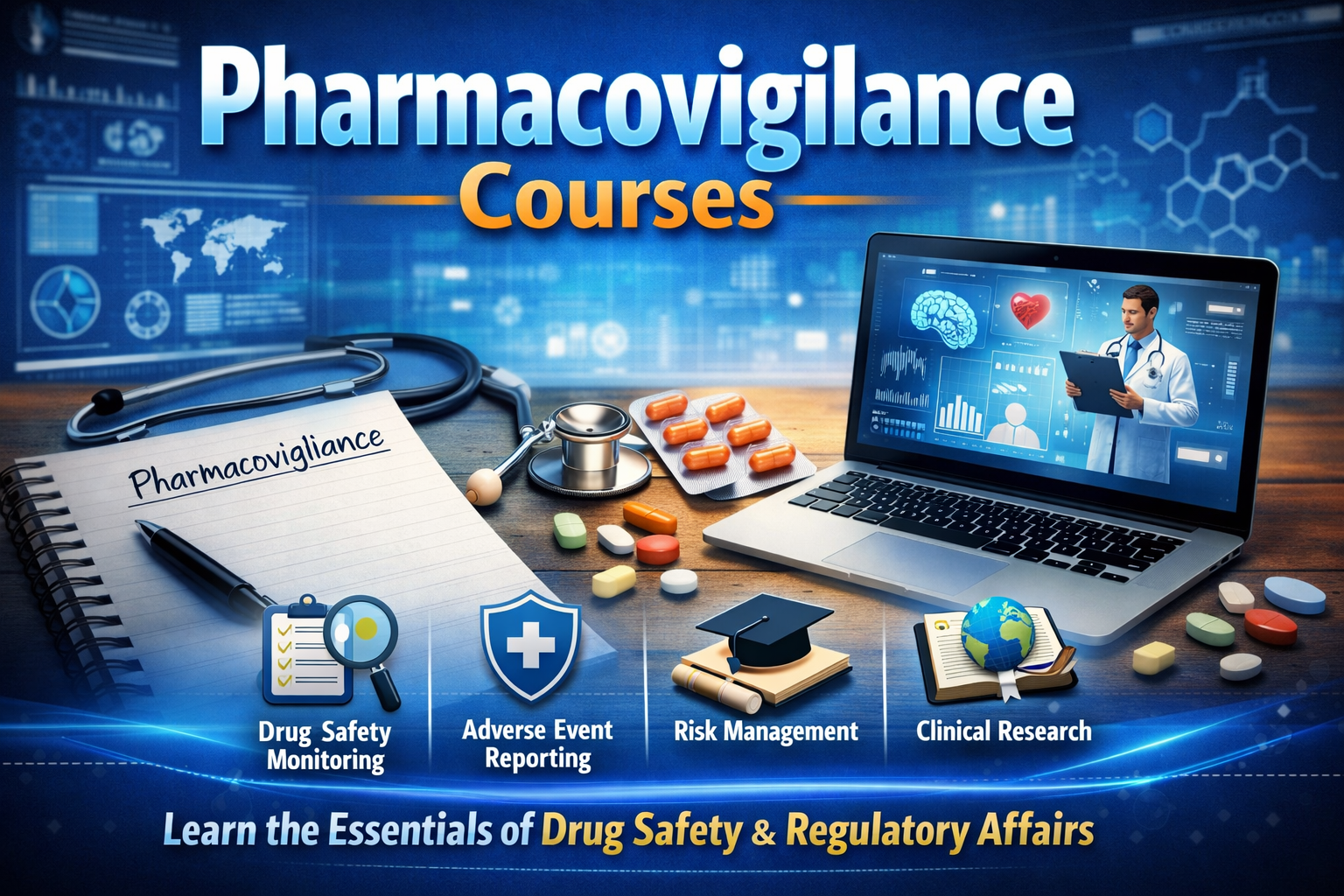
The pharmaceutical industry depends on effective drug safety systems to identify, evaluate, understand, and prevent adverse effects associated with medicines. As pharmaceutical products continue to reach larger and more diverse populations, pharmacovigilance has become an important area within healthcare and life sciences.
A pharmacovigilance course can help students and graduates develop an understanding of drug safety, adverse event reporting, safety data, regulatory requirements, and risk management. It can be a suitable career-oriented option for learners from pharmacy, life sciences, biotechnology, medicine, and related backgrounds who want to explore opportunities in drug safety.
What Is a Pharmacovigilance Course?
A pharmacovigilance course is a professional training program focused on the principles and practices used to monitor the safety of medicines. Pharmacovigilance involves collecting and evaluating safety information and supporting activities intended to identify and manage potential risks associated with pharmaceutical products.
Depending on the program, learners may study adverse drug reactions (ADRs), individual case safety reports (ICSRs), safety databases, case processing, signal detection, risk management, medical terminology, and regulatory requirements.
A well-structured course combines fundamental concepts with practical examples to help learners understand how drug safety activities are performed in the pharmaceutical and clinical research industries.
Why Choose a Pharmacovigilance Course?
A pharmacovigilance courses can provide specialized knowledge for graduates who want to enter the drug safety sector. Pharmaceutical companies, contract research organizations (CROs), and other healthcare organizations use pharmacovigilance processes to monitor and manage medicine-related safety information.
A typical course may introduce students to:
- Pharmacovigilance fundamentals
- Adverse drug reactions and adverse events
- Individual case safety reports
- Case processing and assessment
- Seriousness and expectedness
- Causality assessment
- Signal detection
- Aggregate safety reports
- Risk management
- Medical terminology
- Pharmacovigilance regulations and guidelines
- Good Pharmacovigilance Practices (GVP)
The exact syllabus varies between institutes, so students should review the course modules before enrolling.
Pharmacovigilance Course in Pune
Students searching for a pharmacovigilance course in Pune have access to different training formats, including classroom, online, and hybrid learning options. Pune is an important education and pharmaceutical hub, making it a practical location for learners interested in healthcare and life-science careers.
When comparing courses, students should consider the curriculum, trainer expertise, practical exposure, learning format, certification, career guidance, and placement support. Case-based learning can be particularly useful because it helps learners connect pharmacovigilance concepts with realistic drug-safety scenarios.
Pharmacovigilance Course With Placement in Pune
Many students specifically search for a pharmacovigilance course with placement in Pune because career support is an important consideration when beginning professional training.
Placement assistance may include resume preparation, interview guidance, mock interviews, job-search support, and access to relevant interview opportunities. However, learners should carefully check what an institute means by "placement assistance" and whether it refers to career support or guaranteed employment.
Before joining a program, ask about the placement process, interview preparation, industry connections, and support provided after course completion.
Pharmacovigilance Course With Placement: What to Look For
A pharmacovigilance course with placement can be evaluated using several factors beyond placement claims. Students should examine whether the program provides practical knowledge relevant to entry-level drug safety roles.
Important factors include:
Industry-oriented curriculum: The course should cover important pharmacovigilance concepts and workflows.
Practical training: Case studies and examples can help learners understand safety case processing and reporting.
Career preparation: Resume building, communication training, and interview preparation can help candidates prepare for recruitment processes.
Experienced trainers: Trainers with relevant industry knowledge can explain how pharmacovigilance activities are performed in professional settings.
Certification: A recognized course certificate can document completion of specialized training.
Pharmacovigilance Course Fee
The pharmacovigilance course fee varies depending on the institute, course duration, delivery format, curriculum, practical training, certification, and career-support services.
Students should avoid selecting a program based solely on price. Instead, compare what is included in the fee, such as study materials, practical sessions, assessments, certification, interview preparation, and placement assistance.
Institutes may also offer different fee structures for online and classroom programs. Prospective students should confirm the current fee directly with the training provider before enrollment.
Pharmacovigilance Certification and Career Benefits
A pharmacovigilance certification can demonstrate that a learner has completed structured training in drug safety concepts. Certification may be useful when presenting relevant training on a resume, although employers may also consider academic qualifications, practical skills, communication abilities, and relevant experience.
After completing pharmacovigilance training, learners may explore roles such as:
- Pharmacovigilance Associate
- Drug Safety Associate
- Safety Case Processing Associate
- Pharmacovigilance Executive
- Clinical Safety Associate
- Drug Safety Data Associate
- Medical Information Associate
Career requirements vary by employer and job role.
Who Can Enroll in a Pharmacovigilance Course?
Pharmacovigilance programs can be relevant to graduates from pharmacy, pharmaceutical sciences, biotechnology, life sciences, medicine, nursing, microbiology, biochemistry, and related healthcare disciplines.
Fresh graduates can use specialized training to develop industry knowledge, while working professionals may pursue pharmacovigilance education to expand their existing skill set.
Future Scope of Pharmacovigilance
Drug safety is an ongoing requirement throughout the lifecycle of a medicine. Safety information may continue to be collected and evaluated after a product reaches the market. This creates a need for professionals who understand safety reporting, data evaluation, documentation, and regulatory processes.
For candidates interested in healthcare and pharmaceutical careers, pharmacovigilance training can therefore provide a foundation for exploring the broader drug-safety ecosystem.
How to Choose the Right Pharmacovigilance Course
Before enrolling, compare the pharmacovigilance course syllabus, duration, training methodology, faculty, practical assignments, certification, course fee, and career support.
If you are specifically looking for a pharmacovigilance course in Pune, consider whether the program's schedule, location or online format, practical exposure, and placement assistance match your career goals.
A carefully selected training program can help learners build foundational knowledge and become better prepared to explore opportunities in pharmacovigilance and drug safety.
- Managerial Effectiveness!
- Future and Predictions
- Motivatinal / Inspiring
- Fitness and Wellness
- Medical & Health
- Manufacturing
- Education
- Real-Estate
- Food Industry
- Hospitality
- Online Games
- Sports
- Home Services
- Civil Engineering
- Safety and Protection
- Software Products & Services
- Fashion and Jewellery
- Artificial Intelligence
- Entrepreneurship
- Mentoring & Guidance
- Marketing
- Networking
- HR & Recruiting
- Literature
- Shopping
- Career Management & Advancement