

 SkillClick
Understanding Industrial Zones: How Zoning Shapes Modern Business and Manufacturing
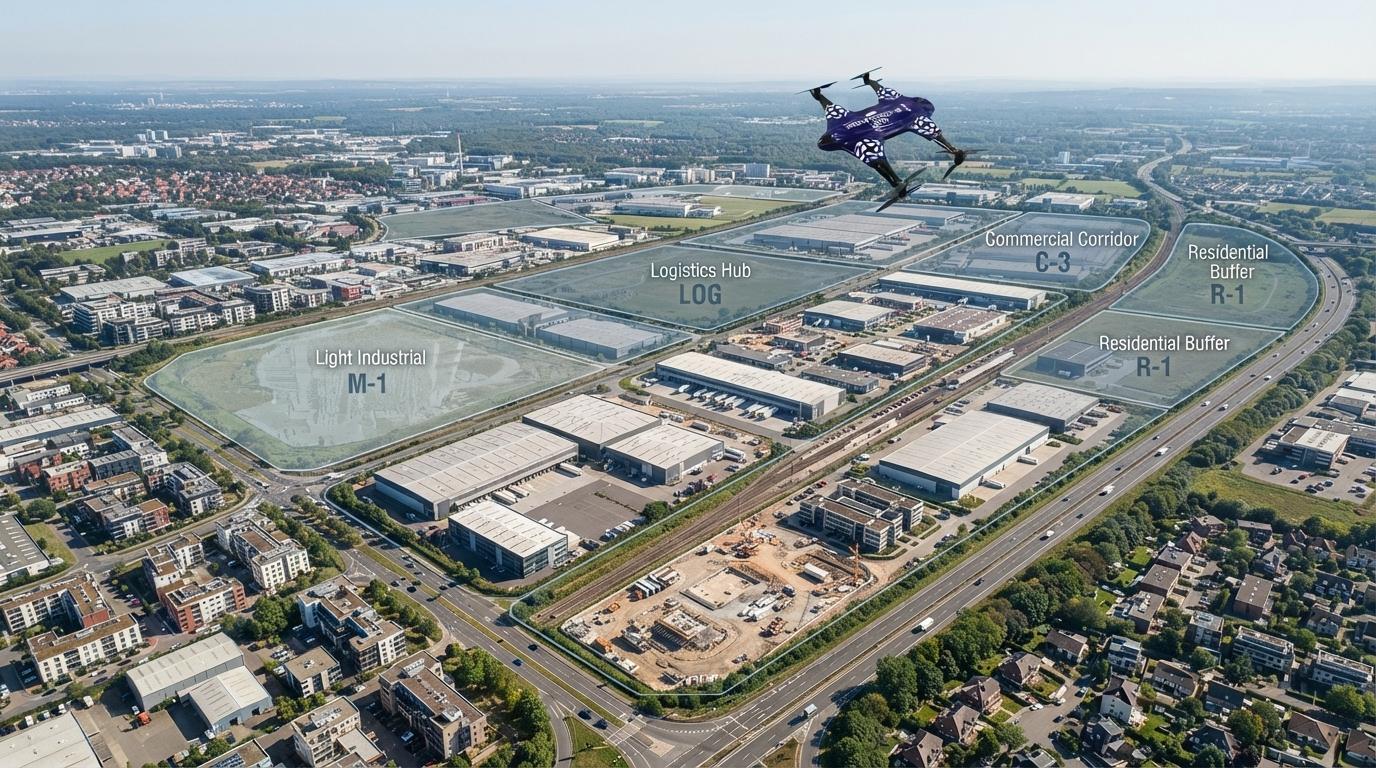
Walk through almost any growing city and you will find a mix of residential neighborhoods, shopping districts, offices, warehouses, construction sites, and manufacturing facilities. These uses do not appear randomly. Local governments use land-use planning and zoning to determine where different activities can take place and under what conditions.
Industrial zoning is an important part of that system. It helps municipalities designate land for manufacturing, warehousing, distribution, fabrication, and other business activities that may require specialized buildings, transportation access, utilities, or site infrastructure.
For business owners and property owners, understanding these classifications can be just as important as evaluating a building's size or location. For communities, industrial zoning can help address questions about traffic, noise, environmental impacts, and compatibility with nearby residential or commercial areas.
What Is an Industrial Zone?
An industrial zone is an area designated under a local zoning system for particular types of industrial or production-related activities. The industrial zone definition varies from one jurisdiction to another, but the underlying idea is straightforward: certain properties are reserved or regulated for uses that support manufacturing, logistics, storage, production, processing, or related operations.
In practical terms, the industrial zone meaning depends on the local zoning code. One municipality may divide industrial property into several districts, while another may use broader categories. A permitted use in one community may require a conditional-use approval, or may not be allowed at all, in another.
Industrial areas commonly accommodate:
- Manufacturing and assembly facilities
- Warehouses and distribution centers
- Production and fabrication businesses
- Industrial service operations
- Equipment and material storage
- Research, testing, or technology facilities
- Logistics and transportation-related activities
The designation does not necessarily mean that every industrial activity is permitted everywhere within the zone. Zoning regulations typically establish more specific rules about what a property can be used for, how buildings can be developed, and what operational standards must be met.
Why Do Cities Use Industrial Zoning?
Industrial activity is an important part of a local economy, but manufacturing and logistics can have different site requirements from offices, stores, or homes. A factory may need large electrical capacity, truck access, loading docks, specialized ventilation, substantial floor space, or outdoor storage.
Zoning gives municipalities a framework for organizing these activities geographically.
Separating certain industrial uses from residential areas can also help communities manage potential conflicts involving heavy truck traffic, noise, operating hours, emissions, lighting, and other site impacts. At the same time, industrial districts can be planned around infrastructure that businesses need, such as major roads, rail connections, utilities, and freight facilities.
How Industrial Zoning Supports Land-Use Planning
Industrial zoning is one component of broader land-use planning. Municipal planners generally have to consider how employment centers, housing, transportation networks, public services, and commercial properties fit together.
Well-planned industrial districts can provide locations for businesses without treating every industrial operation as though it has identical needs or impacts. That distinction becomes particularly important when a community is considering redevelopment, expansion, or changes in surrounding land uses.
Industrial Zones and Community Planning
Industrial districts can also influence how communities plan for long-term growth. An industrial park, for example, may be designed around shared roads, utilities, loading areas, and other infrastructure.
As cities grow, however, the relationship between industrial areas and surrounding neighborhoods can change. Land that was once on the edge of a community may eventually be surrounded by new development. Municipal planning may then involve questions about buffering, redevelopment, transportation capacity, and compatibility between neighboring uses.
What Are the Different Types of Industrial Zones?
There is no single national classification system for industrial zoning. Cities and counties establish their own zoning districts, definitions, development standards, and permitted-use lists.
That means the commonly used categories of light industrial and heavy industrial should be viewed as general concepts rather than universal legal definitions.
A zoning map may include several industrial districts, with each one allowing different combinations of manufacturing, warehousing, processing, assembly, storage, or other activities.
What Is Light Industrial Zoning?
Light industrial zoning generally refers to industrial activity considered relatively lower-impact compared with larger-scale or more intensive manufacturing and processing operations.
A light industry zone might accommodate activities such as:
- Assembly
- Small-scale manufacturing
- Electronics production
- Furniture fabrication
- Consumer-product production
- Certain warehouse operations
- Packaging and distribution
- Other relatively low-impact production activities
So, what is light industrial zoning in practical terms? It generally describes places where businesses can perform production or industrial work without the scale or intensity associated with some heavy industrial operations.
The distinction can involve factors such as the type of machinery used, energy consumption, material handling, traffic generation, noise, emissions, storage requirements, and the nature of the production process.
Importantly, "light" does not mean that an activity is automatically permitted near homes or that it has no environmental or operational impacts. Local codes determine the actual requirements.
What Is Heavy Industrial?
Heavy industrial zoning generally accommodates more intensive industrial operations that may require substantial land, machinery, utilities, transportation infrastructure, or specialized environmental controls.
Examples can include:
- Large-scale manufacturing
- Chemical processing
- Steel and metal production
- Oil and gas-related operations
- Mining-related activities
- Large machinery operations
- Certain processing facilities
- Other high-impact industrial uses
Heavy industrial facilities can have more complex site requirements because of their scale, materials, energy needs, transportation patterns, or operational characteristics.
The exact meaning of heavy industrial zoning remains jurisdiction-specific. A use classified as heavy industry in one community may fall under a different category elsewhere.
Light Industrial vs. Heavy Industrial: What's the Difference?
The difference between light vs. heavy industrial uses is usually a matter of scale, intensity, and potential site impacts rather than a simple list of business types.
|
Factor |
Light Industrial |
Heavy Industrial |
|
Operations |
Smaller-scale production or assembly |
Large-scale production or processing |
|
Machinery |
Generally less intensive |
May involve large or specialized machinery |
|
Energy needs |
Often moderate |
May be substantial |
|
Transportation |
Local deliveries and moderate freight activity |
Potentially high-volume freight movement |
|
Noise |
Often lower, depending on the use |
Can be higher depending on equipment and processes |
|
Emissions |
May be limited depending on the operation |
May require additional controls or approvals |
|
Storage |
Smaller inventories or enclosed storage |
May require substantial storage areas |
|
Site needs |
Often compatible with smaller industrial properties |
May require larger, specialized sites |
|
Surrounding uses |
Compatibility depends on local rules |
Often requires greater separation or controls |
These are broad planning distinctions, not universal rules. Local zoning ordinances ultimately determine how individual uses are classified and what standards apply.
How Businesses Determine the Right Industrial Zone
Choosing an industrial property should begin with the zoning code rather than the property's appearance or the fact that neighboring businesses appear industrial.
A company considering a site should review the applicable zoning district and its permitted-use table. It may also need to examine development standards, building regulations, fire requirements, environmental rules, parking standards, loading requirements, and permitting procedures.
Businesses should verify requirements with the appropriate local planning or zoning authority before purchasing, leasing, developing, or changing the use of industrial property.
This is especially important when an existing building is being converted to a new purpose. A warehouse, for example, may not automatically be approved for manufacturing simply because both activities occur in industrial areas.
Industrial Zones and Modern Technology
Technology is also changing how industrial properties are surveyed, operated, and maintained. Modern industrial facilities can generate large amounts of information about buildings, equipment, utilities, inventory, site conditions, and infrastructure.
Aerial mapping and unmanned aerial systems can supplement traditional site surveys and inspections by providing visual information from above. Depending on the project and applicable aviation and local requirements, drones may assist with tasks such as:
- Site mapping
- Roof and structure inspection
- Construction progress monitoring
- Infrastructure assessment
- Asset documentation
- Safety inspections
- Land surveys and visual data collection
For readers who want a broader overview of the subject, this resource on industrial zoning explained through light vs. heavy industrial zones provides additional context on industrial classifications and the potential role of aerial technology in industrial mapping and monitoring.
Drones do not replace zoning analysis, engineering inspections, surveys, or regulatory review. Their value is more practical: they can provide another source of site information that property managers, engineers, contractors, and facility teams can use alongside other data.
Challenges of Industrial Zoning
Industrial development involves more than identifying available land. Communities and businesses may need to consider several interconnected issues.
Traffic and Logistics
Manufacturing facilities and distribution centers can generate employee traffic, deliveries, freight movements, and loading activity. Road capacity and access to major transportation routes can therefore be important factors in industrial site planning.
Infrastructure Capacity
Industrial facilities may have significant requirements for electricity, water, wastewater, communications, roads, or other infrastructure. Existing infrastructure may need to be evaluated before a site is developed or expanded.
Environmental Impact
Different industrial uses can have different environmental considerations. Depending on the operation, planning may involve air emissions, wastewater, stormwater, waste handling, noise, hazardous materials, or other regulated activities.
Community Concerns
Residents and nearby businesses may have concerns about truck traffic, noise, lighting, operating hours, or changes to the character of an area. Local planning processes can provide mechanisms for addressing these issues through development standards, approvals, and operating conditions.
Changing Business Needs
Industrial property is rarely static. A manufacturer may add production lines, a warehouse may increase storage capacity, or a logistics company may change its vehicle fleet and operating patterns. Businesses should consider whether their zoning and permitting framework can accommodate foreseeable changes.
What Should Property Owners and Businesses Check Before Choosing an Industrial Property?
Before purchasing, leasing, or developing an industrial site, a practical review should include:
- Zoning classification: Confirm the property's current zoning district.
- Permitted uses: Determine whether the intended business activity is allowed.
- Conditional uses: Check whether special approval is required.
- Setbacks: Review required distances from property lines and other features.
- Building requirements: Examine height, floor-area, occupancy, fire, and construction standards.
- Parking: Confirm employee, visitor, and other parking requirements.
- Loading areas: Evaluate truck access, docks, turning space, and circulation.
- Environmental restrictions: Identify applicable environmental requirements or site constraints.
- Transportation access: Consider proximity to major roads, rail, ports, and other logistics connections.
- Utilities: Verify that electrical, water, sewer, communications, and other services meet operational needs.
- Future expansion: Consider whether the property can accommodate additional buildings, equipment, or storage.
- Local permitting: Identify planning, building, environmental, fire, and other approvals that may apply.
A zoning designation is only one part of due diligence. Site conditions, title matters, building condition, infrastructure, environmental assessments, and other property-specific factors may also affect whether a location is appropriate.
The Future of Industrial Areas
Industrial areas are evolving alongside the businesses that occupy them. Automation is changing factory layouts and production processes, while advanced manufacturing is creating demand for specialized facilities and reliable infrastructure.
Logistics operations are also becoming more data-driven. Warehouses and distribution centers increasingly rely on automation, digital inventory systems, sensors, robotics, and integrated transportation planning.
At the same time, cleaner technologies and more efficient equipment may influence how future industrial development is designed. Aerial inspection, digital mapping, remote monitoring, and other technologies can provide additional information for managing large sites and infrastructure.
These changes do not eliminate the need for zoning. Instead, they make careful land-use planning more important as municipalities work to accommodate new forms of manufacturing and logistics while considering surrounding communities and infrastructure.
Conclusion
Industrial zoning provides a framework for deciding where manufacturing, warehousing, distribution, processing, and other industrial activities can operate. It also helps communities address land-use compatibility, transportation, infrastructure, environmental considerations, and the relationship between industrial facilities and neighboring properties.
For businesses and property owners, understanding zoning before committing to an industrial site can prevent costly surprises. Reviewing the zoning classification, permitted uses, development standards, infrastructure, and permitting requirements gives decision-makers a clearer picture of what a property can realistically support.
- Managerial Effectiveness!
- Future and Predictions
- Motivatinal / Inspiring
- Fitness and Wellness
- Medical & Health
- Manufacturing
- Education
- Real-Estate
- Food Industry
- Hospitality
- Online Games
- Sports
- Home Services
- Civil Engineering
- Safety and Protection
- Software Products & Services
- Fashion and Jewellery
- Artificial Intelligence
- Entrepreneurship
- Mentoring & Guidance
- Marketing
- Networking
- HR & Recruiting
- Literature
- Shopping
- Career Management & Advancement