

 SkillClick
Hair Transplant in Al Ain for Dubai Residents With Busy Lifestyles
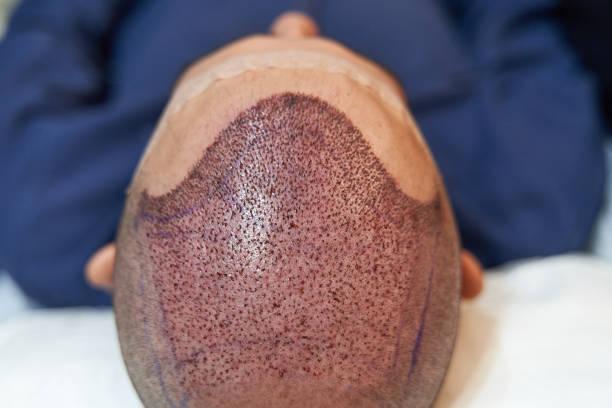
Hair Transplant in Al Ain restores thinning or lost hair by moving healthy follicular units from a suitable donor area into areas affected by hair loss. Modern techniques such as FUE and DHI allow the surgeon to control graft placement, direction, depth and hairline design so the transplanted hair integrates with the patient’s existing pattern.
For Dubai residents, the decision is not simply about choosing a technique. Daily exposure to strong sunlight, air-conditioned environments, frequent travel and demanding work schedules can make recovery planning just as important as the surgery itself.
How Hair Transplant in Al Ain Handles UAE Environment Challenges
A transplanted scalp needs protection during the early healing period. The newly implanted grafts are particularly vulnerable to unnecessary rubbing, scratching, excessive heat, direct sun exposure and strenuous activity.
This does not mean Dubai’s climate prevents successful transplantation. It means recovery has to be planned around the patient's lifestyle.
For someone travelling between Dubai and Al Ain, the practical priorities are straightforward: protect the recipient area, follow the washing instructions, avoid activities that increase sweating or physical strain, and attend scheduled follow-ups.
The basic clinical pathway looks like this:
Scalp & Donor Assessment
          ↓
Hairline + Graft Planning
          ↓
Local Anaesthesia
          ↓
Follicular Unit Extraction
          ↓
Graft Preparation
          ↓
Recipient-Site Design
          ↓
Precise Graft Placement
          ↓
Protected Healing
          ↓
Progressive Hair Growth
Tajmeels describes FUE and DHI as its principal hair-transplant approaches, with treatment planning based on the patient’s donor supply, affected area and desired restoration.
Sun Exposure Requires Practical Planning
Dubai and Al Ain receive intense sunlight for much of the year. After transplantation, patients are generally advised to protect the scalp from direct sun while the recipient area heals.
For a Dubai resident, that can mean planning indoor activities, using the recommended scalp protection and avoiding unnecessary outdoor exposure during the early recovery period.
Air Conditioning Is Not a Substitute for Scalp Care
Constant indoor air conditioning can make the skin feel dry, but the more important issue after transplantation is following the surgeon’s wound-care and washing instructions.
The scalp should not be treated like ordinary hair after surgery. The transplanted follicles need a protected environment while the surrounding tissue settles.
Travel Should Be Built Into the Recovery Plan
Frequent flights and business trips can make recovery harder to manage if they are scheduled immediately after surgery.
A better approach is to reserve sufficient recovery time, keep prescribed medication and aftercare products accessible, and avoid rushing back into demanding travel or exercise before the scalp has adequately healed.
How FUE, DHI and Non-Surgical Options Differ
Not every type of hair loss requires transplantation. The first clinical question is whether the patient needs new follicles or whether existing follicles can still be supported through medical treatment.
| Approach | Main Principle | Typical Use | Main Consideration |
|---|---|---|---|
| FUE | Individual follicular units are extracted and implanted | Pattern baldness, thinning areas and hairline restoration | Requires careful donor management |
| DHI | Extracted follicles are implanted using a specialized implanter | Precise placement and density-focused restoration | Requires appropriate donor supply and detailed planning |
| PRP | Patient’s platelet-rich plasma is used as a regenerative adjunct | Supporting existing hair and scalp health | Does not create new donor follicles |
| Medical Hair-Loss Therapy | Targets ongoing biological causes of thinning | Early or progressive hair loss | Requires diagnosis and continued management |
| Hair Transplantation | Moves viable follicles into deficient areas | Stable donor hair with suitable recipient areas | Requires surgery and a recovery period |
FUE removes individual follicular units rather than taking a linear strip of scalp. DHI uses a specialized implanter to place follicles with control over direction, angle and depth.
The important distinction is that technique should follow anatomy. A patient should not select FUE or DHI simply because one method sounds more advanced. Donor density, hair calibre, existing hair pattern, recipient size and long-term hair-loss progression all influence the surgical plan.
Clinical Execution and Graft Placement
A natural result begins before the first follicle is extracted.
During assessment, the surgeon evaluates the donor region and recipient scalp, studies the existing hairline and determines how many grafts can be used without unnecessarily depleting the donor area.
The objective is not simply to fill an empty space. It is to recreate the visual pattern of natural hair growth.
Natural Hairline Restoration
The frontal hairline is one of the most technically sensitive parts of transplantation because it frames the face.
A surgeon has to consider facial proportions, the patient’s age, existing hair characteristics and the direction in which individual hairs naturally emerge. The finest single-hair follicular units are often particularly useful around the leading edge, while denser grafting can be considered farther behind it.
FUE Hair Transplant in Al Ain
FUE involves extracting individual follicular units from the donor region before preparing them for implantation.
The extraction pattern matters. Removing too many grafts from a concentrated area can create visible donor thinning, so graft harvesting has to be distributed intelligently.
DHI Hair Transplant in Al Ain
DHI uses a specialized implanter pen to place follicles directly into the recipient area. The technique gives the surgeon control over the placement angle, direction and depth of each graft.
For patients researching hair restoration treatment in Al Ain, the more useful question is not simply “Which technique is better?” It is “Which technique fits my scalp anatomy, donor reserve and restoration objective?”
Why Graft Quality Matters
A graft is more than a single strand of hair. A follicular unit can contain one or several hair follicles, and the surgeon must preserve the viability of these units throughout extraction, handling and implantation.
The final appearance depends on graft survival as well as placement strategy. Density without correct direction can look unnatural, while excellent graft survival cannot compensate for a poorly designed hairline.
Real Patient Concerns and Clinical Realities
“I live in Dubai. Will travelling back after the procedure affect my recovery?”
Travel itself is not the main concern. The priority is protecting the scalp during the early healing period and following the surgeon’s specific instructions. Patients should plan transportation and travel around their postoperative restrictions rather than treating the procedure like a routine salon appointment.
“If I lose some transplanted hair after surgery, has the transplant failed?”
Temporary shedding can occur during the post-transplant growth cycle. The visible hair shaft may shed while the transplanted follicle remains in the scalp and later enters a new growth phase. New growth generally becomes more noticeable over the following months.
“Can the surgeon simply add as many grafts as possible for more density?”
Not necessarily. The donor area is a finite biological resource. A responsible surgical plan balances immediate density with donor preservation and the possibility of future hair loss.
This is particularly important for younger patients whose native hair may continue thinning after transplantation. UAE hair-transplant standards also note that medical therapy may be used alongside transplantation to help protect surrounding native hair.
Treatment Roadmap and Timeline
- Consultation and scalp assessment
The surgeon examines the donor and recipient areas, evaluates the pattern of hair loss and discusses the desired restoration. - Hairline and graft planning
The planned hairline, treatment zones and approximate graft requirements are mapped according to the patient’s anatomy and donor availability. - Anaesthesia and preparation
Local anaesthesia is used to keep the procedure comfortable while the donor and recipient areas are prepared. - Follicular extraction
Individual grafts are carefully harvested from the donor area using the selected transplantation approach. - Graft placement
Prepared follicles are positioned in the recipient area according to the planned density, angle, direction and depth. - Early healing
Redness, tenderness, mild swelling or crusting can occur during the initial recovery period. Patients should avoid touching, scratching or unnecessarily disturbing the recipient area. - Temporary shedding and new growth
Some transplanted hairs may shed before new growth begins. Early changes can appear within several months, while density continues developing over a longer period. - Long-term assessment
Hair maturation is gradual. Follow-up allows the clinical team to evaluate growth, scalp condition and the behaviour of surrounding native hair.
For patients with demanding Dubai schedules, the timeline should be considered before booking flights, major business events, sporting activities or extended outdoor commitments.
Long-Term Scalp Health and Hair Restoration
A successful transplant is not only about what happens on surgery day. The long-term result depends on donor preservation, appropriate graft placement, scalp care and management of ongoing hair loss.
Tajmeels Clinic states that follow-up and maintenance options such as PRP or laser-based hair-growth treatments may be considered where clinically appropriate to support hair density and scalp health.
For Dubai residents considering a carefully planned restoration journey, Tajmeels Clinic provides consultation-led aesthetic and hair-restoration care, with treatment planning based on the individual rather than applying the same grafting strategy to every patient.
The goal should remain straightforward: restore lost coverage while preserving the donor area and creating a hairline that continues to look appropriate as the patient ages.
- Managerial Effectiveness!
- Future and Predictions
- Motivatinal / Inspiring
- Fitness and Wellness
- Medical & Health
- Manufacturing
- Education
- Real-Estate
- Food Industry
- Hospitality
- Online Games
- Sports
- Home Services
- Civil Engineering
- Safety and Protection
- Software Products & Services
- Fashion and Jewellery
- Artificial Intelligence
- Entrepreneurship
- Mentoring & Guidance
- Marketing
- Networking
- HR & Recruiting
- Literature
- Shopping
- Career Management & Advancement