

 SkillClick
How Does a Radha Krishna Murti Reflect Traditional Indian Art and Devotion?
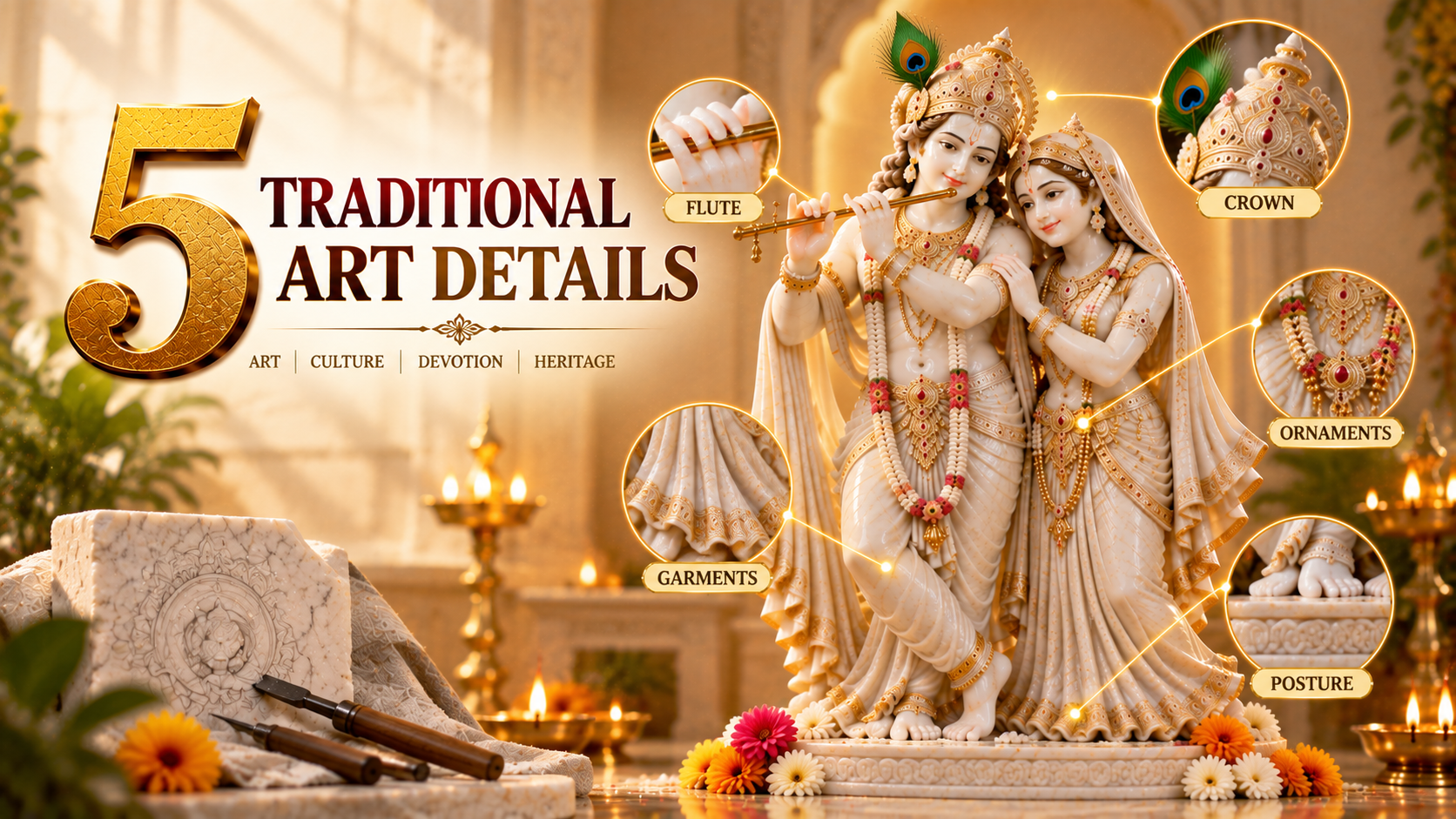
A beautifully crafted radha krishna murti brings together traditional Indian artistry and the devotional ideas associated with Radha and Krishna. Their graceful expressions, balanced postures, traditional clothing, jewellery, and recognizable attributes all contribute to the visual language of the sculpture.
For devotees, a Radha Krishna murti can represent love, devotion, harmony, and spiritual connection. From an artistic perspective, it also demonstrates how skilled artisans transform natural marble into detailed religious sculpture.
So, how does a Radha Krishna murti reflect traditional Indian art and devotion?
What Does a Radha Krishna Murti Represent?
Radha and Krishna are traditionally associated with divine love and devotion. Their representation can express a spiritual connection that goes beyond ordinary worldly relationships.
These ideas can be reflected through the way the two figures are positioned and the details included in their representation.
A traditional murti may communicate themes such as:
-
Divine love
-
Devotion
-
Harmony
-
Faith
-
Grace
-
Spiritual connection
The symbolism gives the sculpture its devotional context, while the artistic details give those ideas a physical form.
How Does Traditional Indian Art Influence the Design?
Traditional Indian sculpture places considerable attention on proportion, posture, expression, ornamentation, and symbolic attributes.
These principles can be seen in a Radha Krishna murti through:
-
Graceful body proportions
-
Calm facial expressions
-
Krishna's flute
-
Traditional clothing
-
Decorative jewellery
-
Krishna's crown
-
Floral motifs
-
Harmonious positioning of both figures
The combination of these elements helps create a sculpture that is recognizable while maintaining a traditional artistic character.
How Does the Relationship Between Radha and Krishna Appear in the Sculpture?
One of the most distinctive aspects of a Radha Krishna murti is the relationship between the two figures.
Their postures, facial directions, and positioning are generally designed to complement each other. Rather than appearing as two completely separate sculptures, they form one connected artistic composition.
The relative height, body proportions, and placement of their hands and faces all contribute to this visual relationship.
A balanced composition can communicate a sense of togetherness while allowing both figures to maintain their individual character.
What Role Does Krishna's Flute Play?
Krishna's flute is one of the most recognizable elements in his traditional representation.
It has both symbolic and artistic importance. From a sculptural perspective, the flute influences the position of Krishna's hands, arms, shoulders, and body.
The artisan must carefully balance these elements so that the flute appears naturally integrated into the figure.
Its size and position should complement Krishna's proportions rather than appear disconnected from the rest of the sculpture.
How Does Radha's Representation Add to the Composition?
Radha's presence complements Krishna's figure and contributes to the overall harmony of the sculpture.
Her facial expression, posture, clothing, and jewellery are carefully considered in relation to Krishna.
The way she is positioned can influence the overall balance of the murti. Her representation can also reinforce the devotional themes traditionally associated with Radha and Krishna.
Why Are Facial Expressions Important in Traditional Sculpture?
Facial expressions are among the most carefully observed elements of a religious sculpture.
The eyes, eyebrows, nose, lips, and facial contours can influence the character of the figures.
Traditional Radha Krishna representations often feature calm, graceful, and composed expressions.
When both faces are carefully carved and visually harmonious, they can contribute significantly to the peaceful character of the murti.
How Does Marble Support Traditional Indian Craftsmanship?
Marble provides artisans with a smooth natural material that can be shaped into highly detailed sculptures.
White marble is particularly appreciated for its clean appearance and ability to display fine carving.
Skilled artisans can use marble to create:
-
Detailed facial features
-
Hair patterns
-
Clothing folds
-
Jewellery
-
Crowns
-
Floral motifs
-
Decorative borders
The material provides the foundation, but the artisan's skill determines how effectively these details are brought to life.
Why Is Proportion Important?
Proportion is an important part of traditional sculptural design.
The head, torso, arms, hands, legs, clothing, and ornaments should appear visually balanced.
The relationship between Radha and Krishna is also important. Their figures should work together in terms of height, posture, and overall composition.
Carefully maintained proportions can make the sculpture appear natural and harmonious.
How Do Traditional Clothing Details Reflect Indian Art?
Clothing provides another opportunity to express traditional artistic details.
Although the sculpture is carved from solid marble, artisans can create the appearance of fabric through carefully carved:
-
Folds
-
Pleats
-
Borders
-
Drapery
-
Decorative patterns
These details can add movement and texture to the sculpture.
The clothing also helps distinguish the figures while keeping the overall design visually connected.
What Role Does Jewellery Play?
Jewellery adds both decorative richness and traditional character.
Radha and Krishna may be represented with necklaces, earrings, bracelets, crowns, and other ornaments.
Fine jewellery carving requires considerable precision because many of the details are small.
The ornaments should remain proportionate to the figures and complement their expressions and clothing rather than overwhelming the overall composition.
Why Is Krishna's Crown an Important Feature?
Krishna's crown is one of the most recognizable elements of his traditional visual representation.
It can include intricate patterns and decorative motifs depending on the artistic style.
The crown needs to be proportionate to Krishna's head and carefully integrated into the rest of the sculpture.
Well-executed crown details can demonstrate the artisan's precision and attention to traditional design.
How Do Floral Motifs Reflect Traditional Indian Decoration?
Floral patterns have an important place in Indian decorative art.
On a Radha Krishna murti, floral motifs may appear on clothing, jewellery, the base, or surrounding decorative elements.
They can soften the appearance of the marble and add visual depth.
The patterns should be carefully balanced so they enhance the figures rather than distract from their expressions and posture.
What Is the Importance of Handcrafted Marble Work?
Handcrafted marble sculpture allows artisans to focus on individual details throughout the creation process.
The artisan can carefully work on:
-
Facial expressions
-
Hands and fingers
-
Clothing
-
Jewellery
-
Hair
-
Flute
-
Crown
-
Decorative motifs
Small differences in carving and finishing can give each handcrafted murti its own character.
This combination of traditional design and individual craftsmanship is an important part of India's sculptural heritage.
How Can You Recognize Traditional Craftsmanship?
When evaluating a Radha Krishna murti, start with the overall composition before examining individual details.
Look for:
Balanced Facial Features
The eyes, eyebrows, lips, and facial proportions should appear harmonious.
Natural Body Proportions
The different parts of the body should maintain a visually balanced relationship.
Carefully Carved Hands
Hands and fingers require precision because of their small and delicate structure.
Detailed Clothing
Folds, borders, and decorative patterns should be clearly defined.
Fine Jewellery
Ornaments should be detailed while remaining proportionate.
Proper Flute Placement
The flute should fit naturally into Krishna's hands and posture.
Smooth Finishing
The marble should be carefully polished and free from obviously unfinished areas.
How Does the Murti Reflect Devotion?
The devotional aspect of a Radha Krishna murti is closely connected with its traditional representation.
The figures are not simply portrayed as decorative characters. Their forms and attributes communicate established religious and cultural ideas.
For devotees, the sculpture can become a visual focus during prayer and reflection.
Its presence in a home temple can also connect everyday worship with family traditions and cultural practices.
Can a Radha Krishna Murti Suit a Modern Home?
Traditional Indian art can work within both traditional and contemporary interiors.
A simple white marble murti with restrained decorative details can suit a minimalist prayer area. A more elaborate sculpture with detailed jewellery, clothing, and carving may complement a traditionally styled home temple.
The important factor is maintaining balance between the sculpture and its surroundings.
The size and level of decoration should suit the available space.
How Can the Murti Become a Focal Point in a Home Temple?
A well-crafted Radha Krishna murti can naturally become the centre of a devotional space.
Keeping the surrounding area clean and relatively uncluttered allows the sculpture to remain visually prominent.
Soft lighting can also highlight:
-
Facial expressions
-
Jewellery
-
Clothing details
-
Krishna's flute
-
Marble carving
-
Decorative motifs
This can make the craftsmanship easier to appreciate while maintaining a peaceful devotional environment.
How Should You Choose a Radha Krishna Murti?
When choosing a traditionally crafted murti, consider both its artistic details and devotional character.
A useful checklist includes:
-
Marble quality
-
Facial expressions
-
Body proportions
-
Radha and Krishna's posture
-
Flute placement
-
Clothing details
-
Jewellery
-
Krishna's crown
-
Carving precision
-
Surface finishing
-
Base stability
-
Overall composition
Looking at all these elements together can give you a better understanding of the sculpture's craftsmanship.
Does the Size of the Murti Matter?
Yes. The size should be appropriate for the intended devotional space.
A smaller home temple may be better suited to a compact murti, while a spacious pooja room can accommodate a larger composition.
There should be sufficient space around the sculpture for worship, cleaning, and maintenance.
Choosing the size according to the surrounding space can also help preserve the visual balance of the temple.
How Should You Maintain a Marble Radha Krishna Murti?
Regular maintenance can help preserve the appearance of the marble and its intricate details.
Use a soft, clean cloth for routine dusting. Areas such as jewellery, clothing patterns, facial features, and the flute should be cleaned gently.
Avoid abrasive materials and harsh chemicals that may affect the polished surface.
Keeping the surrounding devotional area clean also helps maintain the overall presentation of the murti.
Why Do Art and Devotion Work Together in This Form?
A Radha Krishna murti demonstrates how artistic craftsmanship can give physical form to devotional ideas.
The symbolism provides the meaning behind the representation. Traditional Indian artistic principles shape the expressions, proportions, clothing, and posture. Skilled craftsmanship then transforms these concepts into a detailed marble sculpture.
The result is a form of art that can be appreciated both for its visual beauty and its devotional significance.
Conclusion
A Radha Krishna murti reflects traditional Indian art and devotion through the careful combination of symbolism, artistic composition, and skilled craftsmanship. Radha and Krishna's harmonious positioning, peaceful expressions, traditional clothing, jewellery, Krishna's flute and crown, and detailed marble carving all contribute to the character of the sculpture.
For devotees, these elements can represent love, devotion, harmony, and spiritual connection. For those interested in traditional Indian art, they also demonstrate the precision and creativity involved in transforming marble into a meaningful religious sculpture.
For families looking for traditionally handcrafted religious sculptures, Marble Murti Manufacturers in Jaipur can be considered for marble idols created with attention to traditional artistic details and skilled craftsmanship.
Frequently Asked Questions
1. How does a Radha Krishna murti reflect traditional Indian art?
It incorporates traditional elements such as graceful proportions, peaceful expressions, symbolic attributes, traditional clothing, jewellery, floral motifs, and detailed marble carving.
2. What does a Radha Krishna murti represent?
It is traditionally associated with divine love, devotion, harmony, faith, and spiritual connection.
3. Why is Krishna's flute important in the design?
The flute is one of Krishna's recognizable attributes and also influences his hand and body positioning, making it both a symbolic and artistic element.
4. Why are facial expressions important in a Radha Krishna murti?
Facial expressions influence the character and mood of the sculpture. Calm and graceful expressions can contribute to its peaceful devotional appearance.
5. What should I look for in a traditionally crafted Radha Krishna murti?
Look at the marble quality, facial features, proportions, posture, clothing, jewellery, flute placement, crown, carving precision, finishing, and overall composition.
6. How should I care for a marble Radha Krishna murti?
Dust it regularly with a soft cloth and clean intricate areas gently. Avoid abrasive materials and harsh chemicals that could affect the polished marble surface.
- Managerial Effectiveness!
- Future and Predictions
- Motivatinal / Inspiring
- Fitness and Wellness
- Medical & Health
- Manufacturing
- Education
- Real-Estate
- Food Industry
- Hospitality
- Online Games
- Sports
- Home Services
- Civil Engineering
- Safety and Protection
- Software Products & Services
- Fashion and Jewellery
- Artificial Intelligence
- Entrepreneurship
- Mentoring & Guidance
- Marketing
- Networking
- HR & Recruiting
- Literature
- Shopping
- Career Management & Advancement