

 SkillClick
How to Choose SMT Equipment Suppliers in India: 12 Checks
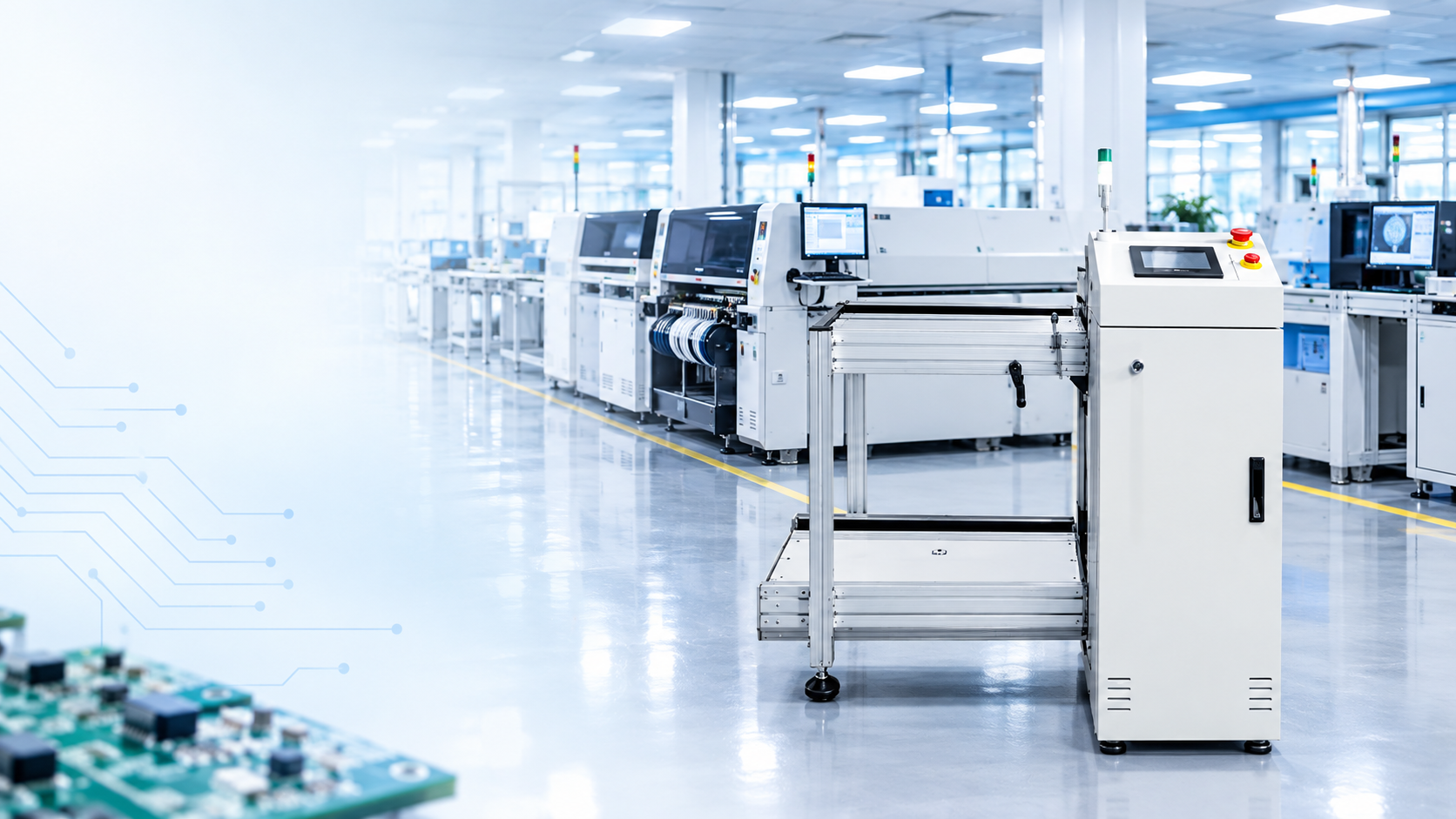
Twelve checks. That's what stands between a smooth SMT line rollout and six months of chasing spare parts through a broker who's stopped answering calls. Buyers evaluating SMT Equipment in India usually start with price and specs, which is fine — until it's the only thing they check. Most deals that go sideways don't fail on the machine. They fail on everything around it: documentation, support, and a supplier who disappears after the wire transfer clears.
This checklist covers what actually predicts a good supplier relationship, not just a good quote.
Specification: The Technical Checks
Before touching commercial terms, get the hardware right.
Checks 1–4: Machine-Level Verification
-
Placement accuracy under load — rated specs assume ideal conditions; ask for accuracy figures at actual production speed, not benchmark speed
-
Reflow zone count vs. conveyor tolerance — a 10-zone oven means nothing if conveyor speed drifts more than 2%
-
Feeder compatibility — confirm the machine accepts your existing feeder inventory, not just the supplier's proprietary line
-
AOI camera resolution — sub-15-micron defect detection is standard on decent lines; anything less is a false economy on fine-pitch boards
Here's the detail buyers skip most often: software licensing terms. Some SMT Equipment Manufactures in India bundle programming software that locks to the original hardware — meaning if you resell the machine, the buyer needs a new license. Ask before you sign, not after resale falls through.
Objective: 8 More Checks Before You Commit
5. Certification paperwork, verified independently. A bad answer is a PDF with no verifiable number. A good answer lets you call the certifying body directly.
6. Spare parts inventory location. If parts ship from overseas with no local stock, your "urgent replacement" is actually a six-week wait.
7. Export documentation history. Ask which countries, ask since when. "We export internationally" without specifics is a red flag dressed as a selling point.
8. Defect resolution policy in writing. A supplier who says they'll "sort it out when it happens" doesn't have a policy — they have a stalling tactic.
9. Installation and commissioning support. Bad suppliers treat this as optional. Machines that aren't properly commissioned fail faster, and the warranty conversation gets ugly fast.
10. Payment terms flexibility. Rigid 100% advance with no milestone structure signals a supplier who doesn't expect repeat business.
11. Reference buyers at your order volume. Not their biggest client — someone closer to your actual scale.
12. Response time on technical queries. Email a specific spec question before you buy anything. How fast — and how specifically — they answer tells you more than their brochure ever will.
Benefits: What Getting This Right Actually Protects
Working through these checks isn't paperwork for its own sake.
It protects your production schedule, first — verified spare parts availability means downtime measured in days, not weeks. It protects your margin, since suppliers with transparent SMT Equipment Suppliers in India pricing rarely hide costs in "installation" or "calibration" line items added later. It protects your compliance position too, because ISO-certified sourcing holds up under buyer audits without scrambling for documentation. Working with established SMT Equipment Dealers also gives you leverage on custom configurations that a single-machine purchase from an importer won't. And it protects the relationship itself — suppliers who pass these checks tend to be the ones who pick up the phone eighteen months later when something needs recalibrating.
None of this shows up on a spec sheet. It shows up in year two.
Availability: Where These Suppliers Actually Operate
SMT Equipment Traders in India cluster around electronics manufacturing belts — Noida, Pune, Chennai, Bangalore. That clustering isn't accidental.
Component distributors, calibration technicians, and spare parts depots follow the same geography. A supplier based near these hubs can turn around an urgent part in days. One operating three states away quotes the same lead time on paper, right up until something actually breaks and the real distance shows.
About Us
We've built IMTronics around the checklist above, mostly because we got burned by suppliers who failed half of it before we became one ourselves. We stopped stocking a particular feeder brand in 2023 after our own technicians flagged recurring calibration drift on three separate installations. We switched suppliers within that quarter. That's the kind of decision a business only makes when it's actually accountable to the buyers using the equipment daily.
Our clients span wholesalers building regional stock to brand owners running in-house assembly — and every one of them gets the same documentation, without having to ask twice.
CTA: Request Your Line Assessment
Send your current production volume, board specs, and target placement speed, and we'll come back within 24 hours with a configuration that fits — not the most expensive one that fits our margin. MOQ varies by machine category; ask directly and we'll give you the actual number.
Conclusion
Twelve checks feels like a lot until the alternative is discovering supplier gaps mid-production. Choosing among SMT Equipment Manufactures in India rewards buyers who ask uncomfortable questions early. As the industry keeps scaling, the checklist above is only going to matter more, not less.
FAQs
1. How many of these 12 checks are actually deal-breakers?
Realistically, four or five — certification, spare parts location, defect policy, and export documentation. The rest matter, but those four predict most of the problems we've seen.
2. Do SMT Equipment wholesalers typically pass all 12 checks?
The established ones, mostly. Smaller resellers often fail on spare parts location and defect policy specifically — worth checking those two first.
3. What's a reasonable response time from SMT Equipment Dealers in India on technical queries?
Under 24 hours for a straightforward spec question. Anything longer on something simple suggests slower support once you're an existing customer, not a prospect.
4. Can SMT Equipment Suppliers accommodate custom line configurations?
Most can, though customization extends lead time — usually by 2–4 weeks beyond a standard order. We won't promise a timeline we haven't confirmed with our own floor first.
5. Are SMT Equipment Traders able to provide financing or flexible payment terms?
Some do, typically milestone-based rather than full financing. Terms vary enough by supplier that it's worth asking directly rather than assuming.
6. What certifications matter most for SMT Equipment Manufactures in India?
ISO 9001 first. CE marking matters if you're re-exporting finished electronics — verify the certificate number with the issuing body rather than taking the document at face value.
7. How do I verify a supplier's export claims before signing?
Ask for shipping documentation or customs references from at least two different countries. Vague claims about "global reach" without specifics usually mean the export history is thinner than presented.
- Managerial Effectiveness!
- Future and Predictions
- Motivatinal / Inspiring
- Fitness and Wellness
- Medical & Health
- Manufacturing
- Education
- Real-Estate
- Food Industry
- Hospitality
- Online Games
- Sports
- Home Services
- Civil Engineering
- Safety and Protection
- Software Products & Services
- Fashion and Jewellery
- Artificial Intelligence
- Entrepreneurship
- Mentoring & Guidance
- Marketing
- Networking
- HR & Recruiting
- Literature
- Shopping
- Career Management & Advancement