

 SkillClick
Uranium Hexafluoride Production Cost Report: A Practical Guide for Investors, Brokers
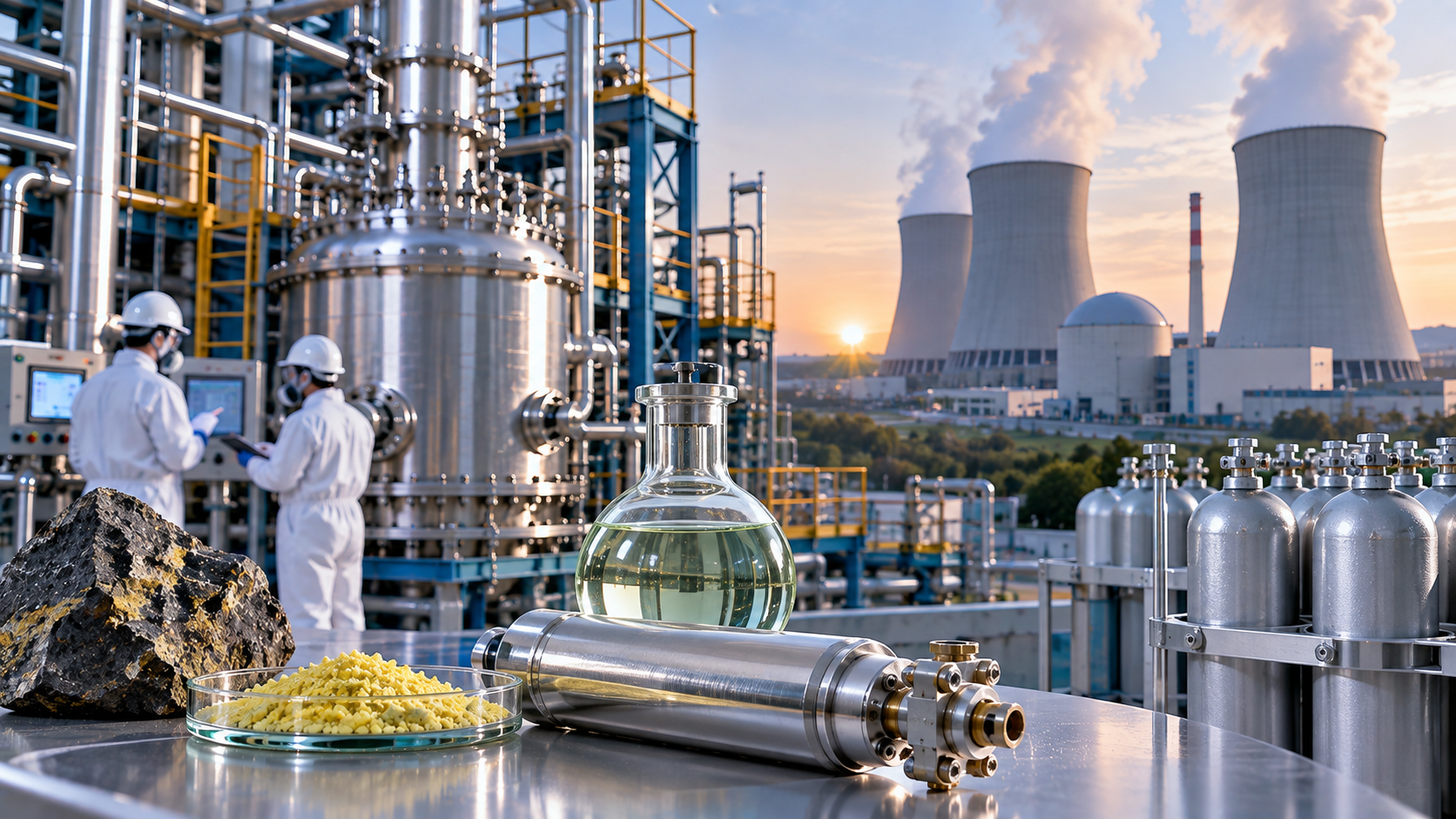
Uranium hexafluoride, known throughout the nuclear industry simply as "hex," occupies a genuinely unique position in the chemical manufacturing world. It's the compound that has to exist before uranium can be enriched, since gaseous diffusion and centrifuge enrichment technologies both require uranium in this specific gaseous chemical form. There's no substitute product, no alternative feedstock chemistry competing for the same market, and only a handful of commercial conversion facilities operating globally, in Canada, China, France, Russia, and the United States. For investors, business brokers, corporate advisers, and finance companies looking at this asset class, the economics captured in a Uranium Hexafluoride Production Cost Report matter enormously, precisely because this market behaves so differently from a typical specialty chemical business.
What makes UF6 conversion unusual as an investment target isn't really the chemistry, which is well established and understood. It's the combination of extreme regulatory oversight, a genuinely concentrated global supplier base, and a feedstock, uranium oxide concentrate, that carries its own separate mining and geopolitical risk profile layered on top of the conversion economics themselves.
Why Cost Data Matters to This Audience
Investors evaluating a UF6 conversion facility need to understand that this is one of the more concentrated commercial chemical markets in existence, with licensed conversion capacity spread across a small number of facilities worldwide. That concentration means plant-level cost position matters enormously for competitiveness, but it also means the addressable customer base, nuclear utilities and enrichment operators, is itself fairly small and long-term contract driven, which changes how revenue and cost need to be modeled together compared to a typical commodity chemical.
Business brokers handling any transaction involving conversion assets, which are rare given how few exist globally, need cost data that accounts for the nuclear regulatory licensing burden baked permanently into the fixed cost structure. This isn't a business where a buyer can simply walk in and start production. Licensing, security requirements, and regulatory compliance costs are substantial and ongoing, and any valuation exercise needs to treat them as structural rather than incidental.
Finance companies underwriting debt against this kind of facility face a genuinely specialized risk profile. Feedstock cost exposure runs through uranium mining markets, which carry their own supply concentration and geopolitical risk, quite separate from the conversion process's own operating economics. A lender modeling this asset needs both layers analyzed independently rather than folded into a single generic raw material line.
What a Production Cost Report Actually Covers
A thorough cost report for uranium hexafluoride traces the process from uranium oxide feedstock through the full conversion sequence to finished, cylinder-packaged UF6 ready for enrichment feed. It covers process flow and material balance across each conversion stage, quantifying uranium oxide, hydrogen, and fluorine consumption per kilogram of uranium converted to hexafluoride form, along with byproduct streams like the oxygen or water generated at various stages.
Utilities receive significant attention given how energy-intensive high-temperature reduction and fluorination reactions are, along with the specialized handling required for anhydrous hydrogen fluoride and elemental fluorine, both of which are highly reactive and corrosive. Infrastructure and machinery needs cover the specialized kilns and fluidized bed reactors used for reduction and hydrofluorination, the fluorination and distillation systems needed to reach the purity levels enrichment feed requires, commercial processes now achieve purity exceeding 99.99 percent, and the licensed, security-hardened facility infrastructure that nuclear regulatory frameworks mandate.
Manpower requirements reflect the highly specialized nuclear materials handling, radiation safety, and process engineering expertise this industry demands, a workforce cost structure unlike almost any other chemical manufacturing sector. Packaging and transportation cover the specialized cylinders and regulatory-compliant logistics needed to move a radioactive, chemically hazardous material, and a full capital and operating cost breakdown, spanning land and site cost, licensed facility construction, equipment, working capital, variable and fixed costs, financing charges, and depreciation, completes the picture.
Raw Materials Required for Uranium Hexafluoride Production
The primary raw material for UF6 production is uranium oxide concentrate, commonly known as yellowcake, which arrives at a conversion facility as U3O8 or a related uranium oxide form following uranium ore mining and initial milling. This feedstock still contains impurities and, depending on its specific chemical form and specific surface area, may require additional pretreatment to achieve reactivity suitable for efficient downstream conversion chemistry, since some yellowcake feedstocks have historically shown insufficient reactivity for the reduction and hydrofluorination steps that follow.
Hydrogen gas is required for the reduction step that converts higher uranium oxides down to uranium dioxide, and anhydrous hydrogen fluoride is the key reagent for the subsequent hydrofluorination step that converts uranium dioxide into uranium tetrafluoride. The final conversion from UF4 to UF6 requires either elemental fluorine gas, the traditional and still most widely used commercial approach, or in some documented alternative processes, other fluorinating agents or oxidation-based methods that specifically avoid the cost and hazard profile associated with large-scale elemental fluorine handling.
Elemental fluorine in particular carries meaningful cost and safety weight in this raw material list, since it's expensive to generate at scale and presents genuine corrosion and toxicity hazards that require specialized handling infrastructure throughout the plant. This is precisely why alternative process research has explored routes to UF6 that avoid elemental fluorine altogether, an area of particular interest for facilities or nations without established fluorine generating capacity of their own.
Industrial Production Process for Uranium Hexafluoride
Commercial UF6 production runs through what's generally described as a dry conversion process, though wet process variants also exist for parts of the sequence. The process begins with uranium oxide concentrate, which, depending on its source, may first go through purification via solvent extraction and calcination to produce a more consistent, purer oxide form suitable for the reduction chemistry ahead.
The purified or as-received uranium oxide is then reduced in a kiln using hydrogen gas, converting the higher oxide, whether U3O8 or UO3, into uranium dioxide, UO2, releasing water vapor as a byproduct. This reduced oxide then moves into a second reaction stage where it's treated with gaseous hydrogen fluoride, converting UO2 into uranium tetrafluoride, UF4, again releasing water as a byproduct. Getting the oxygen-to-uranium ratio right at this stage matters more than it might seem. A ratio significantly above 2.00 in the uranium dioxide feedstock causes formation of uranyl fluoride as a contaminant during fluorination, so process control at the reduction stage has real downstream purity implications.
The final and most technically demanding step converts uranium tetrafluoride into uranium hexafluoride, typically by feeding UF4 into a fluidized bed reactor or flame tower along with gaseous elemental fluorine, driving the reaction that produces UF6 gas, which is then condensed and further purified, often through pressure distillation, to reach the extremely high purity required for enrichment feed. Some documented alternative processes have explored replacing elemental fluorine fluorination with oxidation-based routes using dry air or oxygen at high temperature, or fluorination approaches using recyclable catalysts and ammonium fluoride, specifically to reduce dependency on expensive, hazardous elemental fluorine generation. Modern commercial facilities, including those using integrated dry fluoride volatility conversion technology, report achieving UF6 purity exceeding 99.99 percent through this kind of controlled, multi-stage sequence of sizing, reduction, hydrofluorination, fluorination, and final distillation.
Capital Investment and Plant Setup Cost Factors
Setting up a uranium hexafluoride conversion facility requires capital planning unlike almost any other chemical manufacturing project, primarily because of the nuclear regulatory licensing burden layered on top of standard process engineering costs. Land and site costs need to account for security-hardened facility design, appropriate buffer zones given the hazardous and radioactive materials involved, and proximity to reliable uranium oxide feedstock supply chains and enrichment customer logistics.
Equipment costs center on specialized kilns for the reduction and hydrofluorination stages, fluidized bed reactors or flame towers for the fluorination step, and distillation systems for final purification, all built to handle highly corrosive and reactive process streams, particularly anhydrous hydrogen fluoride and elemental fluorine. Engineering and licensing costs run dramatically higher than for a comparable conventional chemical facility given the extensive nuclear regulatory approval process, radiation safety systems, and security infrastructure that licensing authorities require before a facility can even begin operation.
Working capital needs to account for uranium oxide feedstock inventory, which itself represents a substantial financial commitment given uranium's commodity value, along with the specialized cylinders needed for UF6 storage and transport. Given how concentrated the global supplier base for conversion services is, a facility's long-term supply and offtake contract structure deserves as much attention in working capital planning as the physical feedstock inventory itself.
Operating Cost Factors and Ongoing Profitability
Variable costs are driven by uranium oxide feedstock cost, which ties directly to global uranium mining markets and their own supply concentration and pricing cycles, along with hydrogen, hydrogen fluoride, and fluorine consumption for the conversion reactions themselves. Fluorine in particular carries meaningful cost weight given the expense of generating it at industrial scale, which is part of why alternative fluorine-free conversion routes have drawn ongoing research interest.
Fixed costs cover labor for a highly specialized nuclear materials workforce, radiation safety and security personnel, and the substantial ongoing cost of maintaining nuclear regulatory licensing and compliance, a fixed cost category that simply doesn't exist in comparable form for most conventional chemical manufacturing. Maintenance costs also run higher than average given the corrosive nature of the process streams involved, particularly around equipment handling hydrogen fluoride and fluorine.
Financing costs and depreciation follow patterns typical of highly capital-intensive, long-lived industrial infrastructure, and given how few conversion facilities exist globally and how long their licensing and construction timelines run, an investor or lender should expect this asset class to carry a genuinely different risk and return profile than a typical specialty chemical investment, with correspondingly different financing structures and covenant expectations.
What Pushes Uranium Hexafluoride Production Costs Up or Down
Feedstock pricing tied to uranium oxide markets sits at the center of cost variability, and because global uranium mining supply is itself concentrated among a relatively small number of major producing countries and companies, geopolitical developments in those regions can move UF6 conversion economics meaningfully even without any change at the conversion facility itself.
Process technology and purity efficiency matter substantially too. Facilities running more advanced, integrated conversion technology, achieving very high purity with fewer processing losses and better fluorine or reagent utilization, hold a real cost advantage over older or less optimized conversion routes. The choice between traditional elemental fluorine-based fluorination and alternative fluorine-conserving process variants also shapes cost differently depending on regional fluorine generation infrastructure and cost.
Scale offers meaningful fixed-cost dilution given how capital-intensive and licensing-heavy this industry is, which is part of why global conversion capacity concentrates among a small number of larger facilities rather than being spread across many smaller plants. Regional factors, particularly the nuclear regulatory environment, licensing timelines, and government policy toward nuclear fuel cycle infrastructure, shape long-term cost competitiveness here more decisively than they would for almost any conventional chemical manufacturing business.
Frequently Asked Questions
Why is the global market for uranium hexafluoride conversion so much more concentrated than for typical specialty chemicals?
Mainly because of the enormous regulatory licensing burden and capital intensity involved, combined with a customer base, nuclear utilities and enrichment operators, that's itself relatively small and contract-driven rather than a broad commodity market. These factors together mean only a handful of facilities operate commercially worldwide.
How much does uranium oxide feedstock pricing actually affect conversion plant economics?
Substantially, since it's the dominant variable cost input and ties directly to global uranium mining supply and pricing, which carries its own separate concentration and geopolitical risk profile. A conversion facility's margin can move meaningfully based on uranium market conditions well outside its own operational control.
Why does licensing cost deserve special attention in a UF6 production cost report compared to a conventional chemical plant?
Because nuclear regulatory compliance represents a substantial, permanent fixed cost category that simply has no equivalent in most conventional chemical manufacturing. Security infrastructure, radiation safety systems, and ongoing regulatory oversight costs are structural to this business rather than a one-time setup expense.
Do alternative fluorine-free conversion routes actually get used commercially, or are they just research concepts?
Documented research into fluorine-conserving and fluorine-free conversion routes exists specifically because elemental fluorine is expensive to generate at scale and carries real corrosion and toxicity hazards. While the traditional elemental fluorine fluorination route remains the most widely used commercial approach, interest in alternatives is genuine, particularly for facilities or countries without established fluorine generation infrastructure.
Is scale a bigger factor in UF6 conversion economics than in typical chemical manufacturing?
Generally yes, given how capital-intensive and licensing-heavy the industry is. The fixed costs tied to regulatory compliance and specialized infrastructure dilute more effectively across larger production volumes, which is a meaningful part of why global conversion capacity is concentrated among a relatively small number of larger facilities rather than distributed across many smaller ones.
Why This Report Matters for the Final Decision
Uranium hexafluoride conversion sits at a genuinely unusual intersection of well-understood industrial chemistry and an extraordinarily concentrated, tightly regulated global market. A Uranium Hexafluoride Production Cost Report gives investors, brokers, advisers, and lenders the process-level and regulatory-level clarity needed to understand how feedstock exposure, conversion technology, and licensing costs together shape a facility's true competitive position. Tracing uranium oxide through reduction, hydrofluorination, and fluorination down to a real cost per kilogram of finished UF6 requires accounting for factors that simply don't exist in most other chemical sectors, and that's exactly why this kind of analysis needs to be done with real rigor rather than treated as just another specialty chemical cost model.
- Managerial Effectiveness!
- Future and Predictions
- Motivatinal / Inspiring
- Fitness and Wellness
- Medical & Health
- Manufacturing
- Education
- Real-Estate
- Food Industry
- Hospitality
- Online Games
- Sports
- Home Services
- Civil Engineering
- Safety and Protection
- Software Products & Services
- Fashion and Jewellery
- Artificial Intelligence
- Entrepreneurship
- Mentoring & Guidance
- Marketing
- Networking
- HR & Recruiting
- Literature
- Shopping
- Career Management & Advancement