

 SkillClick
Ammonium Carbamate Production Cost: A Guide for Investors and Corporate Advisers
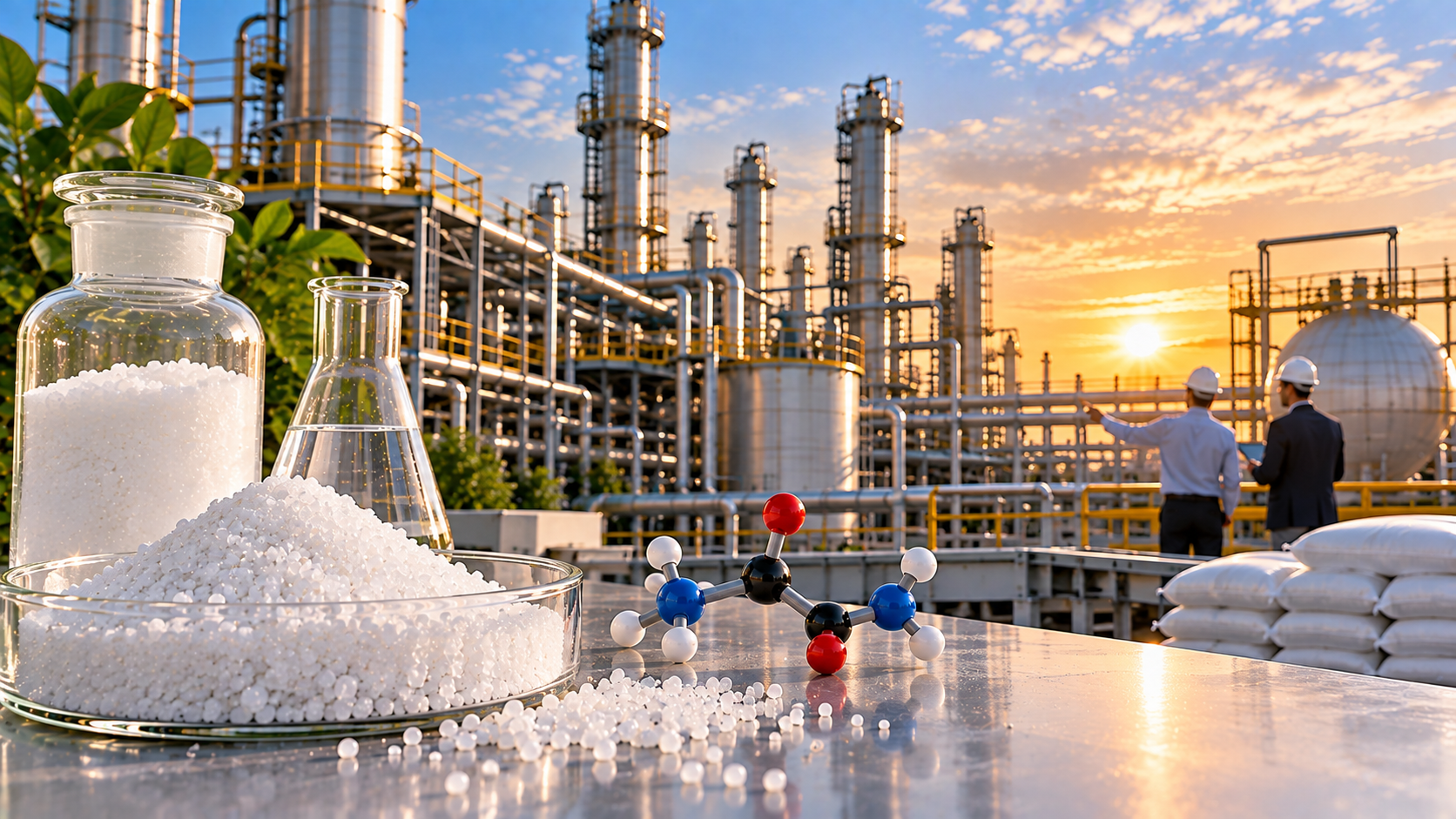
Ammonium carbamate isn't a chemical most people outside the industry have heard of, but it plays an outsized role in one of the largest chemical value chains on the planet. It's the key intermediate formed on the way to urea, which means it sits quietly at the heart of nitrogen fertilizer production feeding global agriculture. For investors and corporate advisers evaluating a plant in this space, that positioning matters. Ammonium carbamate demand is tied less to its own standalone market and more to the broader urea and nitrogen fertilizer complex, which shapes how a cost analysis needs to be framed from the start.
That framing matters because ammonium carbamate is typically an intermediate step rather than a standalone commercial endpoint in most large-scale operations, formed and consumed within an integrated urea plant. Still, its production economics deserve their own scrutiny, since feedstock exposure, energy costs, and process conditions here carry real weight in the overall cost of the downstream product. A dedicated production cost report pulls this piece of the value chain apart so investors know exactly what they're financing, whether that's a standalone intermediate operation or an integrated urea facility running ammonium carbamate as a mid-process step.
What a Production Cost Report Covers
A solid ammonium carbamate production cost report walks through the full set of cost components rather than settling for one blended figure. That covers the production process itself, raw material requirements, utility needs, infrastructure, machinery and technology, manpower, packaging, and transportation, priced out separately since each behaves differently under market pressure.
Raw materials sit at the center of this breakdown, given how directly ammonium carbamate's cost tracks ammonia and carbon dioxide feedstock pricing. Utilities matter enormously too, since the synthesis reaction runs at high temperature and high pressure, conditions that demand serious energy input and specialized equipment to manage safely. Infrastructure and machinery costs cover the pressurized reactors, along with any stripping or recycling systems needed to handle unconverted reactants. Manpower, packaging, and transportation round out the picture, though for an intermediate chemical that's often consumed on-site within an integrated plant, packaging and transportation costs can look quite different from a standalone commodity chemical shipped externally, and that distinction is worth clarifying early in any cost evaluation.
Raw Materials Required for Ammonium Carbamate Production
The key raw materials for ammonium carbamate production are carbon dioxide, ammonia, and, in certain synthesis approaches, anhydrous solvents. Ammonia itself is typically produced via the Haber-Bosch process from natural gas and nitrogen, which means ammonium carbamate's cost base traces back, at least one step removed, to natural gas pricing and broader energy markets.
Carbon dioxide sourcing varies by plant setup. In integrated fertilizer complexes, CO2 is often captured as a byproduct of ammonia production itself, which can meaningfully reduce net feedstock cost compared to a standalone plant that needs to source CO2 externally. That integration advantage is worth flagging specifically, since a plant designed to capture and reuse its own CO2 byproduct carries a fundamentally different cost structure than one purchasing both ammonia and CO2 as separate external inputs. Industrial procurement of both feedstocks faces real exposure to energy price instability, geopolitical tensions affecting natural gas and ammonia supply chains, and periodic supply interruptions that push operators toward hedging strategies rather than relying on spot market purchasing alone.
The Industrial Production Process
Ammonium carbamate forms through the direct reaction of ammonia and carbon dioxide under high temperature and high pressure conditions, typically in the range of 180 to 210 degrees Celsius and around 150 bar, conditions similar to those used in integrated urea plants where ammonium carbamate serves as the reaction intermediate. The two gases combine to form the carbamate compound, which in an integrated urea process then continues reacting and dehydrating under continued heat to yield the final urea product.
Because this reaction doesn't go to full completion in a single pass, a meaningful portion of unconverted ammonia and carbon dioxide remains in the reaction mixture. In integrated plants, this gets addressed through a stripping process, where the non-transformed carbamate is stripped off, either using excess ammonia or excess carbon dioxide, decomposing it back into its constituent gases so they can be recycled back into the reaction loop rather than wasted. This recycling step matters a great deal for overall process efficiency, since it directly determines how much fresh feedstock a plant actually needs to purchase per ton of finished product, whether that finished product is ammonium carbamate itself or the urea it ultimately becomes.
For standalone ammonium carbamate production, where the compound is the actual end product rather than an intermediate, the process still follows the same fundamental ammonia-CO2 reaction chemistry, though the plant design shifts toward stabilizing and isolating the carbamate compound itself rather than pushing the reaction forward toward urea formation.
Capital Investment and Plant Setup Cost Factors
Capital costs for an ammonium carbamate operation center on the high-pressure reactor systems needed to run the ammonia-CO2 synthesis safely at the temperatures and pressures the reaction requires. This isn't equipment that can be improvised or scaled down casually, given the safety stakes involved in handling pressurized ammonia and CO2 at high temperature, so equipment costs here run meaningfully above what a simpler, ambient-condition chemical process would need.
Land and site costs follow regional patterns, though proximity to ammonia production, whether that's an integrated on-site ammonia plant or a nearby external supplier, matters far more here than raw land pricing alone, given how sensitive this process is to reliable feedstock logistics. Engineering and construction costs scale with the pressure ratings and safety systems required, and given that ammonia handling carries its own toxicity and safety profile separate from the pressure considerations, safety infrastructure isn't a place to economize. Working capital planning should account for the fact that ammonia and natural gas pricing can both move sharply on relatively short notice, driven by energy market conditions or geopolitical developments, meaning a plant's working capital cushion needs real headroom rather than being sized to a calm-market average.
Operating Cost Factors
Variable costs are dominated by ammonia and carbon dioxide consumption, and because ammonia pricing tracks natural gas and broader energy markets so closely, ammonium carbamate production carries meaningful indirect exposure to energy price volatility even though the compound itself isn't an energy product. Utilities add a substantial layer on top of this, given how much energy the high-pressure, high-temperature synthesis reaction consumes on a continuous basis.
Fixed costs include labor, maintenance, and overhead, with maintenance running higher than average given the wear that high-pressure reactor systems experience over sustained operation, along with the corrosion considerations that come with handling ammonia and CO2 under these conditions. Purity and compliance requirements add their own operating cost layer too, particularly for operations serving pharmaceutical or GMP-sensitive downstream applications where strict quality control adds testing and documentation overhead beyond what a purely industrial-grade operation would need.
Financing costs and depreciation depend on how capital-intensive the plant's reactor and safety systems are, and given how specialized high-pressure ammonia-CO2 reaction equipment tends to be, depreciation schedules here deserve plant-specific modeling rather than borrowing generic chemical industry assumptions.
What Pushes Ammonium Carbamate Production Costs Up or Down
Feedstock pricing sits clearly at the top of the list, and because ammonia production itself depends heavily on natural gas, ammonium carbamate's cost structure is really an extension of natural gas and broader energy market volatility, one step removed. When natural gas prices spike, ammonia costs follow, and ammonium carbamate costs follow right behind that.
Technology and process integration matter enormously too. A plant that captures and reuses its own CO2 byproduct from ammonia production, rather than sourcing CO2 externally, carries a meaningfully lower feedstock cost structure than a standalone operation buying both inputs separately. Stripping and recycling efficiency also plays a real role, since better recovery of unconverted ammonia and CO2 directly reduces how much fresh feedstock a plant needs per ton of output. Scale matters as well, with larger integrated fertilizer complexes generally achieving stronger per-unit economics than smaller standalone operations, partly because of the CO2 integration advantage and partly through standard economies of scale on reactor and utility infrastructure.
Regional factors round things out, with natural gas pricing being the single biggest regional variable given how directly it drives ammonia costs. Regions with access to cheap, stable natural gas supply, certain parts of the Middle East and North America, for instance, carry a structural cost advantage for ammonia-dependent chemistry like this that's difficult for gas-importing regions to fully offset through other efficiencies. Does that make those regions automatically the best investment target? Not necessarily, since market access, downstream fertilizer demand proximity, and regulatory environment all factor into the full picture too.
Frequently Asked Questions
Q: Why is ammonium carbamate's cost so closely tied to natural gas prices? A: Because ammonia, its main feedstock, is produced from natural gas through the Haber-Bosch process. Ammonium carbamate doesn't consume natural gas directly, but its primary raw material does, so the cost link flows through one step removed rather than being direct.
Q: Does capturing CO2 from ammonia production really save that much money? A: Yes, quite a bit actually, for plants set up to do it. Sourcing CO2 externally means paying market price and covering transportation logistics for a second separate feedstock, while capturing it on-site as an ammonia production byproduct essentially reuses material the plant is already generating.
Q: Is ammonium carbamate ever produced and sold as a standalone product, or is it always just an intermediate? A: Both happen, though intermediate use within integrated urea plants is far more common at industrial scale. Standalone production does occur for specific downstream applications, but it's a smaller slice of overall production volume compared to the urea-integrated pathway.
Q: How much do purity and GMP compliance requirements add to production cost? A: It varies by end market, but for operations serving pharmaceutical or highly regulated downstream buyers, the added testing, documentation, and quality control processes can meaningfully raise operating cost compared to standard industrial-grade production.
Q: What's the biggest risk investors overlook when evaluating an ammonium carbamate operation? A: Not accounting for the plant's degree of integration with ammonia and CO2 production. Two plants making the same intermediate can carry very different cost structures depending on whether they're capturing byproduct CO2 on-site or purchasing both feedstocks externally.
Why This Analysis Matters for Decision-Making
Ammonium carbamate sits in an unusual position, hugely important as a chemical intermediate but rarely evaluated on its own merits the way a standalone commodity chemical would be. Its cost structure runs through natural gas and ammonia pricing more than through any independent market dynamic, and the degree of feedstock integration a given plant has built in can shift its economics substantially compared to a less integrated operation making the exact same compound.
A detailed Ammonium Carbamate Production Cost report gives investors, business brokers, corporate advisers, and finance companies the granular breakdown needed to properly evaluate a plant, whether that's a standalone operation or a piece of a larger integrated urea and fertilizer complex. Getting that level of clarity before capital moves matters here more than usual, given how tightly this chemical's economics are bound up with energy markets that can shift quickly and without much warning.
- Managerial Effectiveness!
- Future and Predictions
- Motivatinal / Inspiring
- Fitness and Wellness
- Medical & Health
- Manufacturing
- Education
- Real-Estate
- Food Industry
- Hospitality
- Online Games
- Sports
- Home Services
- Civil Engineering
- Safety and Protection
- Software Products & Services
- Fashion and Jewellery
- Artificial Intelligence
- Entrepreneurship
- Mentoring & Guidance
- Marketing
- Networking
- HR & Recruiting
- Literature
- Shopping
- Career Management & Advancement