

 SkillClick
Multigrain Atta: What It Really Is, and Why Most Packets Get It Wrong
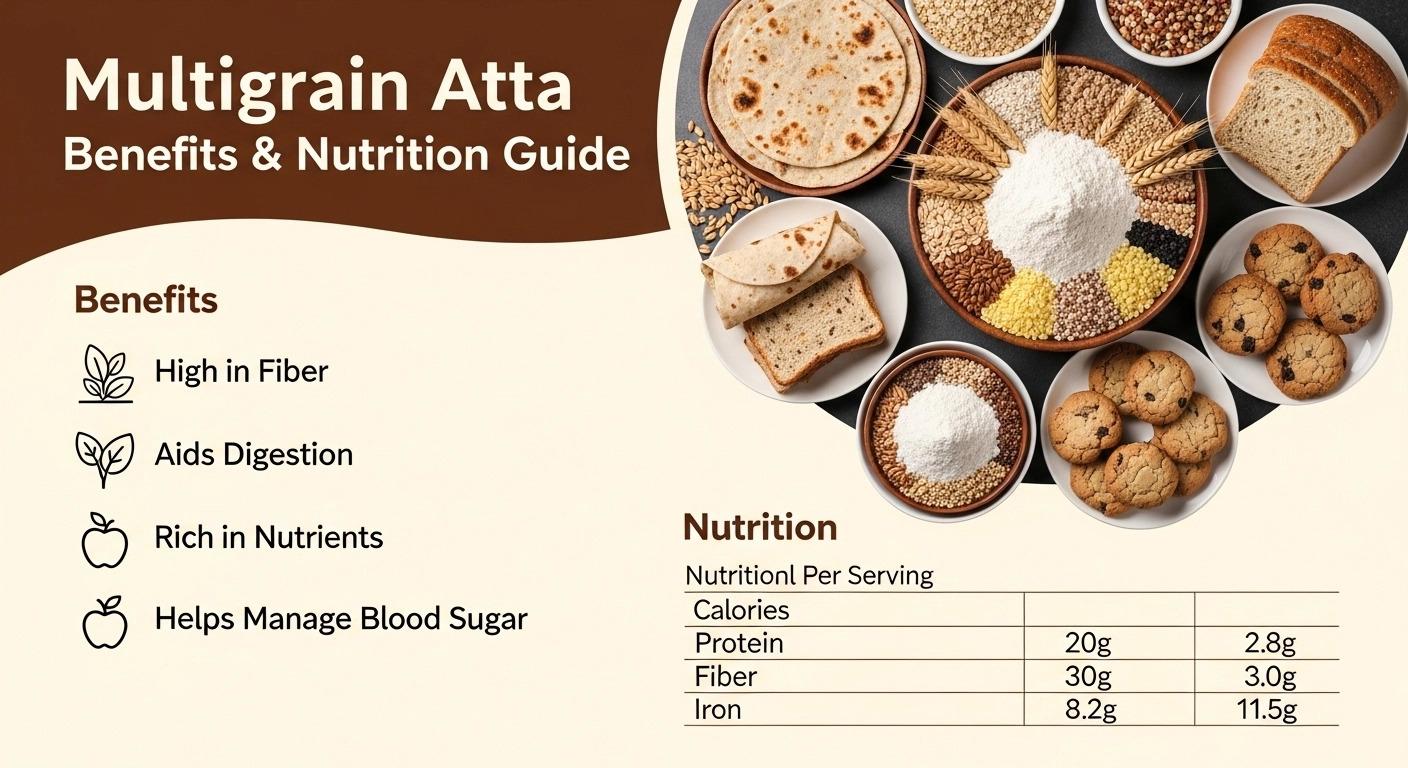
Walk into any kitchen in India and you'll probably find a packet of multigrain atta sitting next to the regular wheat flour. It's become the default "healthy" choice for families trying to eat better without changing their entire diet. But here's the problem: most people buying multigrain atta have no real idea what's inside the bag, in what proportion, or whether it was ever actually milled the way the label implies.
This post breaks down what multigrain atta actually is, why the proportion of grains matters more than the word "multigrain" itself, what it does nutritionally, and how to actually cook with it so the rotis don't turn into cardboard.
What Is Multigrain Atta, Exactly?
Multigrain atta is a flour blend made from several whole grains milled together, instead of just wheat alone. A typical blend might combine wheat with grains like bajra (pearl millet), jowar (sorghum), ragi (finger millet), oats, barley, chana (Bengal gram), soya, and maize — though the exact combination varies by brand.
The idea behind multigrain atta is simple: no single grain gives you everything. Wheat is easy to cook with but relatively low in fibre compared to millets. Millets bring fibre and micronutrients but can be harder to roll into soft rotis on their own. A well-designed multigrain blend tries to get the best of both worlds — the fibre and nutrient variety of millets, with the workability of wheat.
The catch is that "multigrain" isn't a regulated term. A flour can call itself multigrain atta even if it's 90% wheat with a token spoonful of everything else thrown in. That's why the proportion of each grain matters far more than the label itself.
Why the Grain Proportion Is the Whole Story
If you've ever wondered why two multigrain atta packets from different brands behave so differently in the kitchen, the answer is almost always proportion. A blend that's mostly wheat will roll and taste close to regular atta, with only a marginal nutrition bump. A blend with a genuinely meaningful share of millets and legumes will taste different, absorb water differently, and deliver noticeably more fibre.
This is why it's worth checking whether a brand actually discloses the proportion of grains on the pack, rather than just listing them in fine print with no percentages. If a company won't tell you how much of each grain is in the mix, it's a reasonable guess that the answer isn't flattering.
Milled Together vs Mixed Afterwards
There's a second detail that separates a well-made multigrain atta from a mediocre one: whether the grains were milled together on the same stone, or whether pre-milled flours were simply mixed in a machine afterward.
Milling grains together, in a fixed proportion, on a slow-running stone chakki tends to give a more consistent texture from batch to batch. When flours are milled separately and then blended, you can end up with inconsistency — one batch feels grittier, another feels finer, and the dough behaves unpredictably each time you buy a fresh packet.
Stone milling at a slow, cool speed also matters because it avoids scorching the bran and germ layers, which is where most of the fibre, minerals, and healthy fats in whole grains actually live. Fast, high-heat milling can strip or damage some of that nutritional value even before the flour reaches your kitchen.
Nutritional Profile of Multigrain Atta
Compared to refined flour (maida) and even plain whole wheat atta, a well-made multigrain atta typically offers:
- Higher dietary fibre — because multiple whole grains and often a legume like chana are involved, rather than a single refined grain
- More plant protein — grains like soya and chana bring protein that wheat alone doesn't provide in the same quantity
- A broader micronutrient spread — different grains bring different minerals and vitamins, so you're not relying on just one grain's nutrient profile
- No maida or refined flour, if the blend is made properly — meaning no unnecessary bulking agents that dilute the nutritional value
The fibre bump is usually the single biggest reason people switch to multigrain atta in the first place. Fibre slows digestion, helps with satiety (so you feel fuller for longer after a meal), and supports gut health over time.
It's worth being clear-eyed here too: multigrain atta isn't automatically "healthier" than whole wheat atta in some absolute sense — it's different. If your main goal is a straightforward, single-grain staple with no complexity, a good quality 100% whole wheat atta already does that job well. Multigrain atta earns its place when you specifically want more grain variety and more fibre in your daily roti without changing your cooking routine.
Who Multigrain Atta Actually Suits
Multigrain atta tends to work particularly well for:
- Families wanting variety in their daily roti without having to cook something completely different every day
- Households that won't accept a single-millet roti — pure bajra or jowar rotis can be a hard sell for some family members, while a wheat-based multigrain blend is an easier transition
- People trying to increase fibre intake through their staple food, rather than relying only on supplements or separate high-fibre foods
- Mixed-preference households, where one person wants "healthy" and another just wants dinner to taste normal
If you have celiac disease or a gluten intolerance, standard multigrain atta is not for you, since most blends contain wheat and therefore gluten. Gluten-free millet-based flours are a separate category worth exploring instead.
How to Cook With Multigrain Atta (Without Ruining the Roti)
This is where a lot of people give up on multigrain atta too early — not because the flour is bad, but because they cook it exactly like plain wheat atta and end up with dry, cracking rotis.
A few practical tips:
- Use more water than you would for plain wheat atta. Multigrain blends, especially ones with millets and legumes, absorb water more slowly and in larger quantities.
- Knead the dough slightly softer than usual. A firm dough will fight you when rolling and produce a drier roti.
- Rest the dough for 15–20 minutes before rolling. This resting period lets the grains fully absorb the water, which is what prevents the roti from cracking at the edges once it hits the tawa.
- Roll slightly thicker than a wheat roti, especially the first few times you use a new blend, until you get a feel for how it handles.
Beyond rotis and phulkas, multigrain atta also works well in parathas (plain or stuffed), theplas, rotlas, and even in home baking where you want a bread with more texture and fibre than a pure wheat loaf.
Storing Multigrain Atta Properly
Because multigrain atta retains the natural oils from the bran and germ of whole grains, it's more perishable than refined flour and needs slightly more careful storage:
- Transfer it to an airtight steel or glass container as soon as you bring it home
- Store it in a cool, dry spot — away from the stove, and out of direct sunlight
- In humid weather, or if you've bought a larger pack, consider refrigerating the portion you won't use within a few weeks
- Always check the milling date on the pack, and try to use it within a reasonable window rather than letting it sit for months
Proper storage isn't just about avoiding spoilage — it also protects the flavour and the nutrient content that make multigrain atta worth buying in the first place.
How to Choose a Good Multigrain Atta
When you're comparing multigrain atta brands, a few questions are worth asking before you buy:
- Does the pack disclose the exact grains and their proportions, or does it just say "blend of 8 grains" without specifics?
- Is it milled fresh, or has it been sitting in a warehouse for months? Freshly milled flour generally has better flavour and retains more nutrients.
- Is anything added that shouldn't be there — maida to soften the dough, preservatives, or anti-caking agents?
- Is there any lab testing or certification behind the claims, or is it just marketing language on the packaging?
A multigrain atta that's transparent about all of this is far more likely to deliver on the promise the word "multigrain" is supposed to represent, rather than being wheat flour with a health halo.
The Bottom Line
Multigrain atta can genuinely be a better everyday staple than plain wheat flour — more fibre, more protein, more variety in a food your family already eats daily. But the benefit depends entirely on what's actually in the bag and how it was milled. A vague blend with undisclosed proportions gives you very little over regular atta besides a fancier name.
The next time you pick up a packet, don't just trust the word "multigrain" on the front. Flip it over, check the grain list and proportions, and make sure you're actually getting what you're paying for.
- Managerial Effectiveness!
- Future and Predictions
- Motivatinal / Inspiring
- Fitness and Wellness
- Medical & Health
- Manufacturing
- Education
- Real-Estate
- Food Industry
- Hospitality
- Online Games
- Sports
- Home Services
- Civil Engineering
- Safety and Protection
- Software Products & Services
- Fashion and Jewellery
- Artificial Intelligence
- Entrepreneurship
- Mentoring & Guidance
- Marketing
- Networking
- HR & Recruiting
- Literature
- Shopping
- Career Management & Advancement