

 SkillClick
How Businesses Use Social Media for Marketing
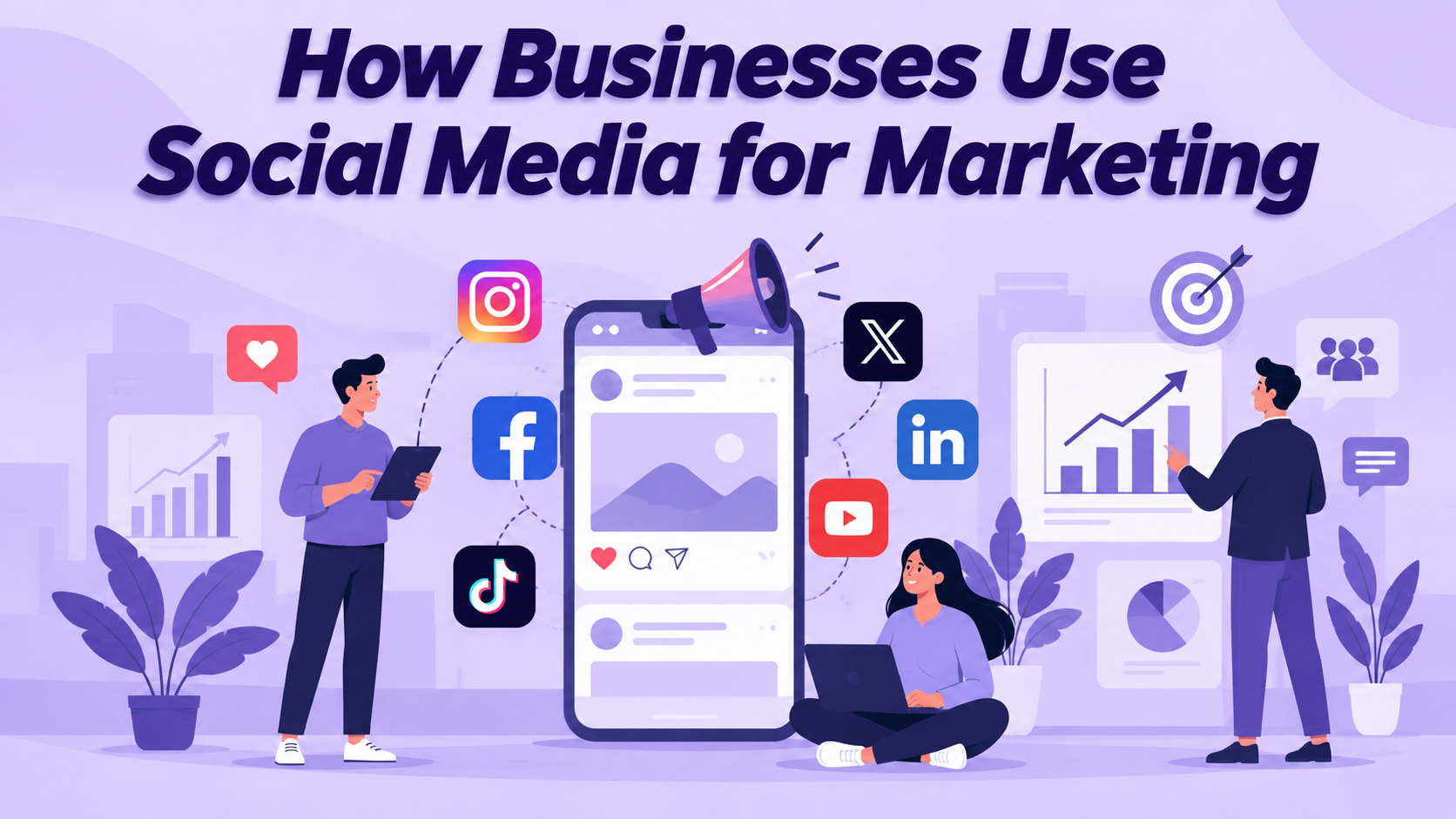
Social media has changed how businesses find and keep customers. It is no longer just a place to post updates. Companies now use it to build brand awareness, generate leads, and drive real sales.
Understanding how businesses use social media for marketing helps you build a smarter strategy. It also helps you avoid wasting time on tactics that do not fit your goals.
Why Social Media Matters for Business Growth
Billions of people use social platforms every day. That gives businesses direct access to potential customers, without relying only on paid ads or cold outreach.
Social media also lets brands show personality. Customers connect with businesses that feel human, not just corporate.
Beyond visibility, social platforms give businesses a two-way channel. Customers can ask questions, leave feedback, and shape how a brand is perceived in real time.
Main Ways Businesses Use Social Media for Marketing
Businesses use social platforms for several core purposes. Most strategies fall into these categories.
1. Building Brand Awareness
Consistent posting helps a brand stay visible in a crowded market. Businesses share content that reflects their values, tone, and industry expertise.
Over time, this builds recognition. People are more likely to buy from brands they already recognize.
2. Engaging With Customers Directly
Comments, direct messages, and polls let businesses talk to customers one-on-one. This builds trust faster than traditional advertising.
Quick, helpful responses also improve customer satisfaction. Many buyers now expect brands to reply within hours, not days.
3. Driving Website Traffic and Leads
Social posts often link back to blogs, landing pages, or product pages. This moves interested users further into the sales funnel.
Businesses use tools like lead forms, click-to-message ads, and gated content to capture contact details. This helps sales teams follow up with qualified leads.
4. Running Paid Advertising Campaigns
Organic reach alone rarely delivers fast results. Paid social ads let businesses target specific audiences by interest, location, age, and behavior.
Platforms like Meta, LinkedIn, and TikTok offer detailed targeting options. This makes ad spend more efficient than older broadcast methods.
5. Showcasing Products and Services
Short videos, carousels, and live demos help customers understand a product before buying. Visual content often performs better than plain text.
E-commerce brands, in particular, rely heavily on product tagging and shoppable posts to shorten the buying journey.
6. Building Community and Loyalty
Private groups, branded hashtags, and user-generated content create a sense of belonging. Loyal customers often become unpaid brand advocates.
This word-of-mouth effect is hard to buy through ads alone.
7. Gathering Customer Insights
Comments, shares, and reactions reveal what customers actually care about. Businesses use this data to refine messaging and product decisions.
Social listening tools also help track brand mentions and industry trends in real time.
Which Platforms Do Businesses Use Most?
The right platform depends on the audience and business type.
- Facebook: Broad reach, community groups, and local business promotion.
- Instagram: Visual storytelling, product discovery, and influencer partnerships.
- LinkedIn: B2B marketing, thought leadership, and recruitment.
- TikTok: Short-form video, younger audiences, and viral reach.
- X (Twitter): Real-time updates, customer service, and industry conversations.
Most businesses use a mix of two or three platforms rather than trying to cover all of them.
Common Mistakes Businesses Make
Many businesses run into the same avoidable problems.
- Posting inconsistently, then expecting steady growth.
- Focusing only on follower count instead of engagement or conversions.
- Ignoring comments and messages from potential customers.
- Using the same content across every platform without adjusting format.
- Skipping analytics, so decisions are based on guesswork.
Avoiding these mistakes often matters more than finding a "secret" growth hack.
Best Practices for Social Media Marketing
A few habits consistently separate successful business accounts from inactive ones.
- Define clear goals before creating content, such as awareness, leads, or sales.
- Post consistently, using a simple content calendar.
- Mix content types: educational, promotional, and behind-the-scenes.
- Respond to comments and messages within a reasonable time.
- Review analytics monthly and adjust based on what performs well.
Small, consistent improvements usually beat occasional viral posts.
Conclusion
Businesses use social media for marketing in many ways, from building awareness to driving direct sales. The most effective strategies combine consistent content, real engagement, and data-driven decisions.
There is no single formula that works for every business. Start with clear goals, choose the right platforms, and adjust your approach based on real results.
- Managerial Effectiveness!
- Future and Predictions
- Motivatinal / Inspiring
- Fitness and Wellness
- Medical & Health
- Manufacturing
- Education
- Real-Estate
- Food Industry
- Hospitality
- Online Games
- Sports
- Home Services
- Civil Engineering
- Safety and Protection
- Software Products & Services
- Fashion and Jewellery
- Artificial Intelligence
- Entrepreneurship
- Mentoring & Guidance
- Marketing
- Networking
- HR & Recruiting
- Literature
- Shopping
- Career Management & Advancement