

 SkillClick
Laboratory Instruments Dealers vs Manufacturers: Key Differences
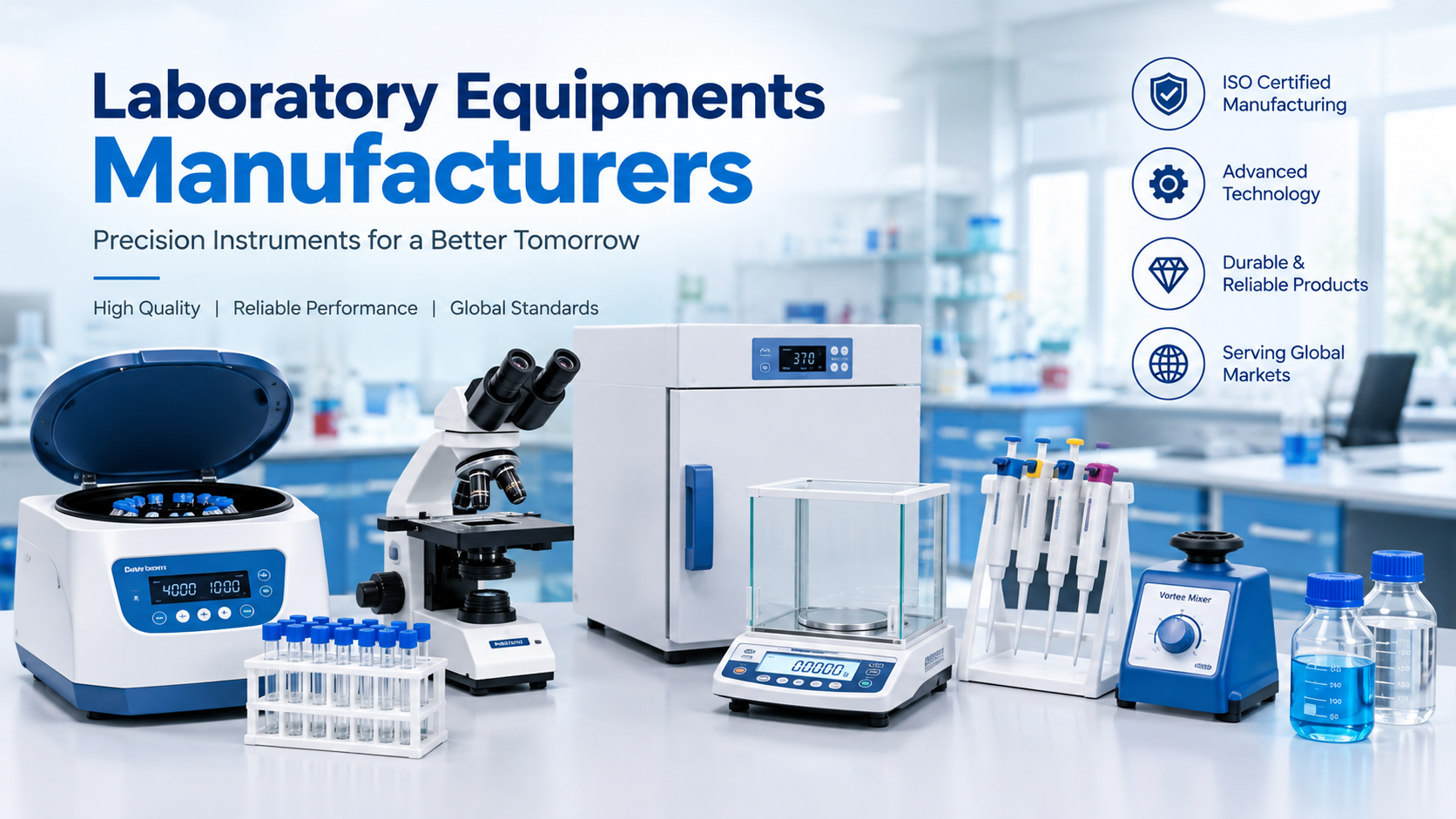
A buyer can save ₹20 on an instrument and still lose far more when a shipment arrives with inconsistent dimensions, incomplete documentation, or no clear replacement route. That is why the difference between Laboratory Instruments Dealers and Laboratory Equipment Manufacturers matters. In India, laboratory procurement also sits alongside changing medical-device requirements; CDSCO regulates medical devices under the Medical Devices Rules, 2017.
Dealers can be useful. Manufacturers can give you deeper control over specifications, batch consistency, customization, and technical accountability. The right choice depends on what you are buying and how much supply-chain risk you can tolerate.
Specification: What Actually Changes Between a Dealer and Manufacturer?
What You Are Really Buying
A dealer normally buys finished products from one or more manufacturers and resells them. A manufacturer controls at least part of the production process, material selection, inspection, machining, assembly, or packaging.
For laboratory instruments, specifications can include material grade, dimensions, calibration accuracy, temperature resistance, operating range, finish, packaging, and compatibility with laboratory workflows.
Sangam Surgicals lists laboratory instruments made using materials such as borosilicate glass, AISI 304 and 316 stainless steel, and chemically resistant polymers. Its published specifications also mention dimensional accuracy of approximately ±0.01–0.05 mm for relevant products.
The Spec Detail Most Buyers Skip
Here's the part procurement teams often miss: the tolerance is not enough.
Ask who measures it, with what equipment, at what stage, and whether inspection records are available. A catalogue saying “precision instrument” tells you very little without an actual specification sheet or inspection method.
For example, Sangam's published laboratory range includes pipettes with stated accuracy of ±0.5%, centrifuges listed up to 15,000 RPM, and analytical balances with accuracy up to 0.001 g.
That's the level of detail a serious buyer should compare.
Objective: Criteria for Evaluating Laboratory Suppliers
1. Manufacturing Control
Ask whether the supplier actually controls production.
BAD answer: “We source it from our regular factory.”
That may be perfectly legitimate for a dealer, but you should then ask who that factory is, what specifications it follows, and who accepts responsibility when the batch fails inspection.
2. Material Traceability
Request the material grade and applicable documentation.
BAD answer: “It is medical-grade steel.”
That phrase is too vague. A manufacturer should be able to identify the applicable material specification rather than hiding behind a sales label.
3. Quality and Regulatory Documentation
For regulated medical devices and IVDs, documentation matters because CDSCO requirements cover licensing, quality systems, testing, and post-market responsibilities.
BAD answer: “Our products are ISO compliant, so no other documents are needed.”
That is not a safe assumption. CDSCO states that where a relevant BIS standard exists, it is mandatory; where one does not, other recognised standards may apply.
Availability: Why Location Is a Supply Chain Decision, Not Just an Address
India's laboratory supply network is geographically broad, but distance still affects freight, lead time, breakage risk, and emergency replenishment.
Sangam Surgicals publishes laboratory-instrument supply coverage in Karnataka, including Bengaluru, Mysuru, Hubballi, Mangalore, and Belagavi, while its wider website also lists laboratory instruments among its national product categories.
For buyers searching for Laboratory Instruments Suppliers in India, Laboratory Instruments Dealers in India, or Laboratory Instruments Wholesalers in India, the practical question is not simply “Who is nearby?”
About Us: Why We Prefer Specification Conversations Over Catalogue Conversations
We work with buyers who need more than a product photograph and a price.
At Sangam Surgicals, we supply laboratory instruments alongside surgical and medical-instrument categories, with published product specifications covering materials, accuracy, temperature resistance, and operating ranges. Our laboratory range includes products such as beakers, flasks, test tubes, pipettes, burettes, microscopes, centrifuges, and analytical balances.
Send the Specification, Not Just “Best Price”
If you are comparing Laboratory Equipment Manufacturers in India, send us the SKU or product name, required quantity, material specification, dimensions or accuracy requirement, branding or packaging requirement, delivery location, and target delivery date.
Our standard commercial response target is within 1 business day. For standard catalogue products, our starting MOQ is 1 unit, while bulk, private-label, and customized orders are quoted according to the SKU and production requirement.
That information lets us give you a usable quotation instead of guessing what you mean by “laboratory equipment.”
Conclusion
Choosing between Laboratory Instruments Dealers and Laboratory Equipment Manufacturers comes down to control, documentation, consistency, and supply-chain risk. For routine mixed-brand purchases, a dealer may be perfectly practical; for repeat procurement, private labelling, or specification-sensitive products, a manufacturer deserves closer scrutiny. As Indian laboratory procurement becomes more documentation-driven, buyers who compare specifications rather than catalogue prices will be better positioned for the next order.
FAQs
1. What is the main difference between Laboratory Equipment Manufacturers and dealers?
A manufacturer controls some or all of the production process, while a dealer primarily purchases and resells products. Manufacturers can generally provide more direct information about materials, production specifications, customization, and batch control. The caveat is that not every “manufacturer” performs every production step in-house, so ask exactly what is manufactured and what is outsourced.
2. Should I buy from Laboratory Instruments Suppliers in India or directly from a manufacturer?
For mixed-brand purchasing and smaller requirements, Laboratory Instruments Suppliers in India can be convenient. For recurring SKUs, private-label requirements, or tight technical specifications, direct manufacturer communication can reduce ambiguity. Price alone should not decide the purchase.
3. Are Laboratory Instruments Dealers in India suitable for wholesalers?
Yes. Laboratory Instruments Dealers in India can be useful when wholesalers need multiple brands or fast access to stock. The risk appears when the dealer cannot identify the original manufacturer, specification revision, or warranty and replacement process.
4. How do Laboratory Instruments Wholesalers in India evaluate a manufacturer?
Serious Laboratory Instruments Wholesalers in India should compare material specifications, tolerances, inspection procedures, documentation, MOQ, lead time, packaging, replacement terms, and repeat-batch consistency. A low first-order price means little if the second batch does not match the first.
5. What should I ask Laboratory Equipment Manufacturers in India before placing a bulk order?
Ask for the technical specification, material grade, applicable standards, quality documents, MOQ, production lead time, inspection process, packaging method, and complaint/replacement procedure. For regulated medical devices, also confirm the applicable CDSCO requirements rather than assuming a generic ISO certificate covers everything.
- Managerial Effectiveness!
- Future and Predictions
- Motivatinal / Inspiring
- Fitness and Wellness
- Medical & Health
- Manufacturing
- Education
- Real-Estate
- Food Industry
- Hospitality
- Online Games
- Sports
- Home Services
- Civil Engineering
- Safety and Protection
- Software Products & Services
- Fashion and Jewellery
- Artificial Intelligence
- Entrepreneurship
- Mentoring & Guidance
- Marketing
- Networking
- HR & Recruiting
- Literature
- Shopping
- Career Management & Advancement