

 SkillClick
Little Library and Toddler Bedtime Stories: Building a Love of Reading Early
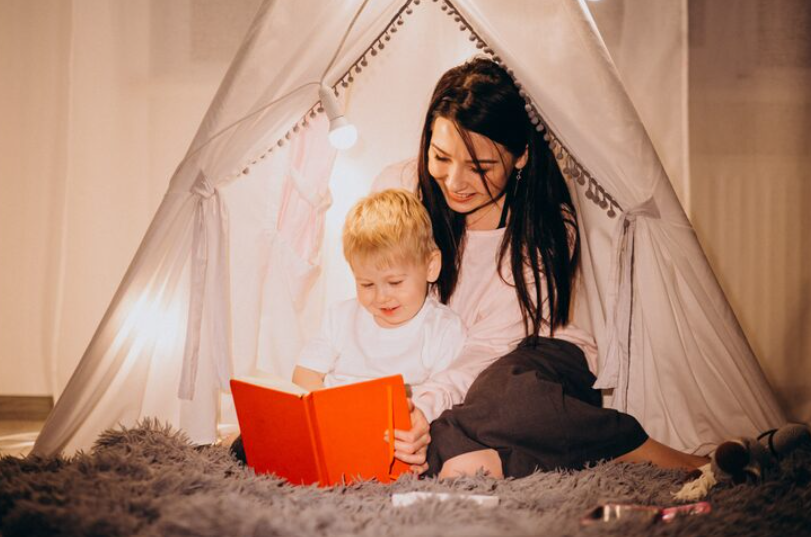
There is something special about a toddler choosing a book at bedtime.
Maybe the book has been read twenty times already. Maybe your child knows what happens on every page and still insists on hearing it again. Perhaps they point at the same picture, laugh at the same character, and then ask for “one more story” just when you thought bedtime was finished.
Those small moments can become much more meaningful than they seem.
A little library at home gives children a place filled with stories, pictures, questions, and imagination. When that library becomes part of a regular bedtime routine, books can turn into something a child looks forward to rather than something they are simply told to read.
For toddlers, bedtime stories are not only about learning new words. They can help children feel secure, explore emotions, develop listening skills, and build a positive relationship with books.
As someone who has always loved books, I think one of the best gifts we can give a young child is not a perfect reading schedule. It is the feeling that books belong in their everyday life.
What Is a Little Library?
A little library does not have to be a large bookshelf packed with hundreds of books.
It can be a small basket beside the bed, a few shelves in a child's room, or even a dedicated corner of the family living room.
The idea is simple: create a small collection of books that children can easily see, reach, and explore.
A toddler might have:
- Picture books
- Short animal stories
- Nursery rhyme books
- Simple fairy tales
- Books about feelings
- Books about family and friendship
- Interactive books with flaps or textures
- Books about everyday experiences
- Wordless picture books
The goal isn't to create an impressive collection.
The goal is to make books feel familiar.
When a child sees books every day, they gradually become part of the environment around them. A book becomes as normal as a favorite toy or blanket.
Why Toddler Bedtime Stories Matter
Toddlers are constantly learning how the world works.
They are learning words, relationships, routines, emotions, and social behavior. Stories give them a safe way to explore many of these things.
Imagine a toddler listening to a story about a little bear who doesn't want to share a toy.
The child may not understand a formal lesson about generosity. But they can understand the bear's feelings.
“Bear is sad.”
“Why is Bear sad?”
“Because his friend took the toy.”
Suddenly, the story becomes a conversation.
This is one of the beautiful things about toddler bedtime stories. They create opportunities for learning without making the child feel like they are sitting in a classroom.
Bedtime Stories Create a Sense of Security
Toddlers thrive on familiar routines.
Bath time. Pajamas. Brushing teeth. A favorite stuffed animal. Then a story.
When reading happens in roughly the same place and around the same time each evening, the routine can become a comforting signal that the busy part of the day is ending.
The child knows what comes next.
That predictability can make bedtime feel calmer.
I especially love the idea of creating a small reading corner next to a child's sleeping space. It doesn't need expensive furniture. A soft cushion, a small basket of books, and a warm reading light can be enough.
The physical environment tells the child, “This is our story time.”
And over time, that simple message can become a cherished family tradition.
How Stories Help Toddlers Develop Language
One of the easiest ways for young children to hear new vocabulary is through conversation and reading.
Books introduce words that may not appear frequently in everyday speech.
A story about a forest might introduce words such as:
- Branch
- Nest
- Forest
- Gentle
- Curious
- Hidden
- Flutter
The child may not remember every word immediately, and that's perfectly fine.
Repeated exposure matters.
When parents read the same story several times, toddlers often begin predicting what comes next. They may finish a sentence, identify a character, or repeat a favorite phrase.
That repetition isn't boring to them.
It is practice.
A book they have heard ten times may actually be teaching them more than a new book they hear once.
Let Toddlers Choose Their Books
One mistake adults sometimes make is assuming children should always read the books adults select.
Giving toddlers some control can make reading more enjoyable.
If your little library contains several appropriate choices, ask:
“Which story should we read tonight?”
The answer might be the same book they chose yesterday.
That's okay.
Children often enjoy repetition because familiar stories give them a sense of control. They know the characters. They know the ending. They can anticipate the funny moment.
That predictability can be deeply satisfying.
You can also allow your child to choose between two books:
“Do you want the puppy story or the moon story?”
Simple choices help children feel involved in the reading experience.
Build a Little Library Without Spending a Fortune
You don't need to buy every new children's book you see.
A little library can grow slowly.
Start with five to ten books your child genuinely enjoys. Then add new books occasionally.
You can also explore:
- Local libraries
- Used bookstores
- Book swaps with other families
- Community book exchanges
- Secondhand children's books
- Free story resources
- Gifts from relatives and friends
A well-loved secondhand book can be just as valuable as a brand-new one.
In fact, some of the books children remember most are the ones with bent pages, small pencil marks, or a familiar cover that has been handled hundreds of times.
Books don't have to look perfect to create wonderful memories.
Make Toddler Bedtime Stories Interactive
Reading to a toddler doesn't mean you have to read every word exactly as printed.
Pause sometimes.
Ask questions.
Point to pictures.
Change your voice for different characters.
For example, if a story shows a rabbit hiding behind a tree, you might ask:
“Where is the rabbit?”
Let your child search the page.
If a character looks surprised, ask:
“How do you think she feels?”
You can also make predictions.
“What do you think happens next?”
Even if your toddler gives a completely unexpected answer, follow their imagination.
There is no need to correct every response.
The purpose is to make reading feel like a shared experience.
Don't Worry If Your Toddler Doesn't Sit Still
This deserves special attention.
Toddlers are active.
Some children will sit quietly for an entire story. Others will stand up, walk around, point at pictures, bring you another toy, and return halfway through the page.
That doesn't necessarily mean they aren't listening.
Young children don't always experience stories in the same way adults do.
You can keep reading even if your child moves around. If they lose interest, shorten the story. If they want to look at one picture for five minutes, let them.
The objective is not perfect behavior.
It is positive exposure to books.
Over time, attention usually develops through enjoyable experiences.
Use Stories to Talk About Feelings
Books can make difficult emotional conversations easier.
A toddler may not know how to explain jealousy, fear, frustration, loneliness, or excitement.
A character in a story can give them a starting point.
Suppose a character is afraid of sleeping alone.
You might say:
“Look, the little fox feels scared. Have you ever felt scared at bedtime?”
The child may answer directly.
Or they may simply listen.
Either response is useful.
Stories provide emotional distance. Instead of saying, “Tell me what's wrong with you,” adults can talk about what happened to the character.
That can feel much safer for a young child.
Create a Simple Bedtime Reading Ritual
A good bedtime routine doesn't need to be complicated.
Try something like this:
1. Choose the books
Let your toddler pick one or two stories from the little library.
2. Find a comfortable spot
Sit together somewhere quiet and comfortable.
3. Slow down
Use a calm voice and avoid rushing through the pages.
4. Talk about the pictures
Ask simple questions when appropriate.
5. Finish with the same small ritual
Perhaps you close the book, give your child a hug, and say goodnight to the characters.
These repeated actions create familiarity.
Eventually, your child may start preparing for story time without being reminded.
What If Your Child Always Wants One More Story?
Every parent knows this moment.
You finish the final page.
Your toddler looks at you.
“One more?”
You know exactly what is coming next.
Sometimes you can read another. Sometimes you can't.
One useful approach is to create a predictable limit.
For example:
“We're reading two stories tonight. You can choose which two.”
This gives the child some control while keeping the routine manageable.
Another option is to have a “special long story” night once or twice a week.
The important thing is consistency, not perfection.
A Little Library Can Grow With Your Child
The books in a child's little library will change as they grow.
At first, toddlers may prefer books with large pictures and only a few words.
Later, they may become interested in longer stories, simple adventures, jokes, mysteries, or books about specific subjects.
That change is exciting.
You are not simply building a bookshelf.
You are watching a reader develop.
One day, the child who needed you to turn every page may sit alone and look through a book.
Eventually, they may ask what a word means.
Then they may begin telling you stories of their own.
That progression is one of the quiet joys of raising a reader.
Choosing the Right Toddler Bedtime Stories
There is no single perfect book for every toddler.
Look for stories that match your child's interests and attention span.
Good choices often include:
- Repetitive language
- Clear illustrations
- Familiar situations
- Gentle humor
- Simple emotional themes
- Engaging characters
- Short, manageable plots
Don't worry too much about whether a book is considered “educational.”
A funny story about a mischievous dog can still teach language, sequencing, emotions, and social understanding.
Enjoyment has educational value too.
The Long-Term Gift of Reading Together
Years from now, your child may not remember every book you read.
They probably won't remember how many pages you covered each night.
But they may remember sitting beside you.
They may remember your voice.
They may remember laughing at the same silly character.
They may remember that books were associated with comfort, curiosity, and time together.
That's why I believe a little library is about much more than storing children's books.
It represents an invitation.
An invitation to wonder.
An invitation to ask questions.
An invitation to imagine places beyond the bedroom walls.
And toddler bedtime stories can be the beginning of that journey.
Final Thoughts
A child's relationship with books doesn't begin when they learn to read independently.
It begins much earlier.
It can begin when a parent opens a picture book and says, “Let's see what happens.”
It can begin with the same bedtime story repeated night after night.
It can begin with a small basket of books beside the bed.
Most of all, it can begin with connection.
If you are creating a little library for your toddler, don't worry about making it perfect. Choose books your child enjoys. Read slowly. Let them ask questions. Let them choose favorites. Laugh together.
Because sometimes the simplest reading habit becomes the one that lasts a lifetime.
And years later, when that toddler has become an independent reader, you may look back at those quiet bedtime moments and realize that the little library was never really little.
It was the beginning of something much bigger: a lifelong love of stories.
- Managerial Effectiveness!
- Future and Predictions
- Motivatinal / Inspiring
- Fitness and Wellness
- Medical & Health
- Manufacturing
- Education
- Real-Estate
- Food Industry
- Hospitality
- Online Games
- Sports
- Home Services
- Civil Engineering
- Safety and Protection
- Software Products & Services
- Fashion and Jewellery
- Artificial Intelligence
- Entrepreneurship
- Mentoring & Guidance
- Marketing
- Networking
- HR & Recruiting
- Literature
- Shopping
- Career Management & Advancement