

 SkillClick
Which Curriculum Is Best for Preschool & Complete Preschool Curriculum: A Guide for Schools
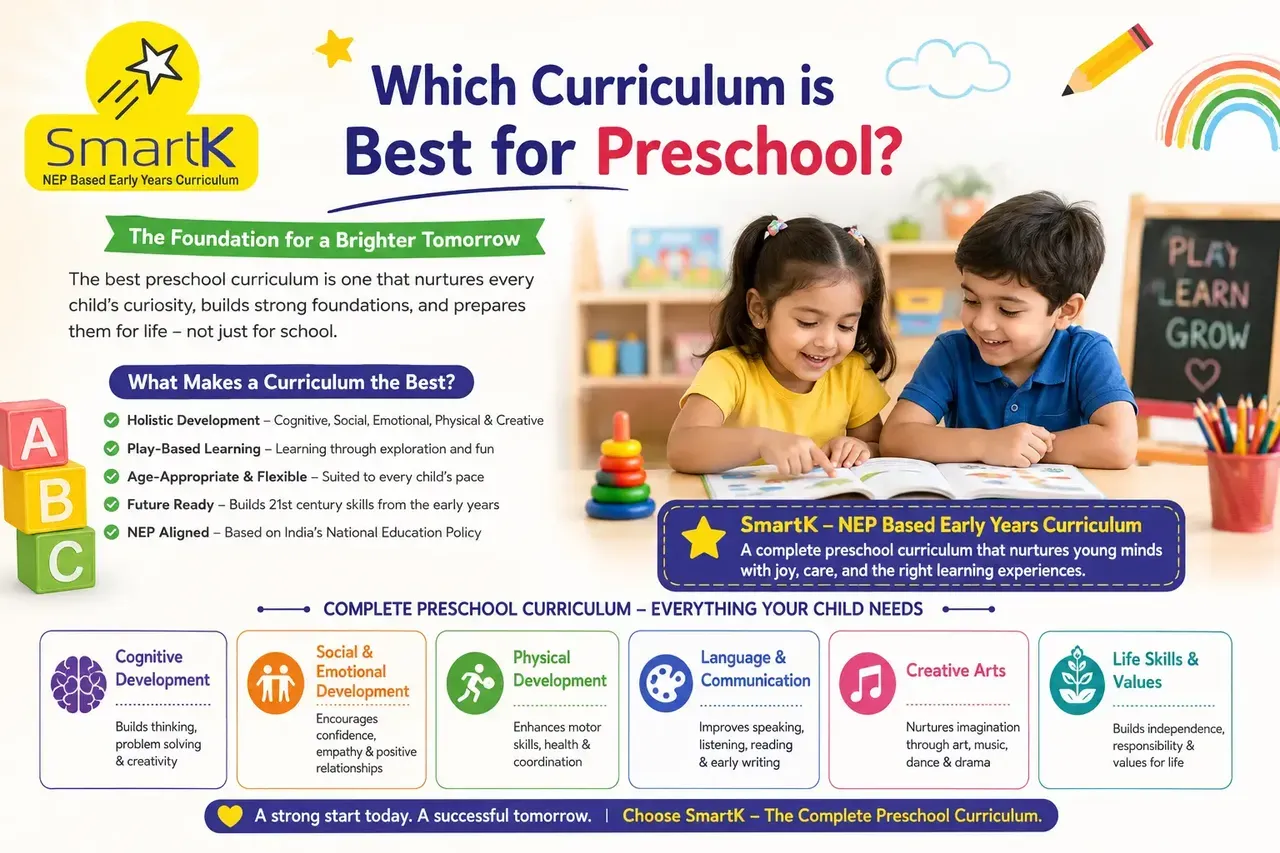
One of the most common questions educators and school administrators ask is, which curriculum is best for preschool? There is no single answer that works perfectly for every school because children's needs, teaching environments, school philosophies, and community expectations can differ.
The better question is whether a curriculum provides the right balance of structure, flexibility, development, creativity, and practical classroom support.
Understanding What a Preschool Curriculum Should Achieve
Preschool education should prepare children for lifelong learning rather than simply prepare them for examinations. Young children need opportunities to develop communication, confidence, curiosity, creativity, coordination, social skills, and early academic foundations.
An effective curriculum brings these areas together.
It should help teachers create activities that are enjoyable while still having clear developmental objectives.
What Makes a Curriculum Complete?
A complete preschool curriculum should ideally cover multiple dimensions of child development rather than focusing on one area.
Important components can include:
Language and communication: Stories, conversations, songs, rhymes, vocabulary activities, and early literacy.
Early mathematics: Counting, sorting, patterns, shapes, quantities, comparisons, and basic reasoning.
Creative development: Drawing, painting, music, movement, craft, drama, and imaginative play.
Physical development: Fine-motor and gross-motor activities that encourage coordination and movement.
Social-emotional development: Cooperation, communication, emotional expression, independence, and classroom relationships.
Environmental learning: Activities that help children understand nature, community, animals, weather, and everyday surroundings.
The Importance of Flexibility
Every classroom contains children with different personalities and learning speeds. A rigid curriculum can make it difficult for teachers to respond to these differences.
A flexible curriculum gives teachers options. They can simplify an activity for children who need additional support or extend it for children who are ready for greater challenges.
Learning Through Experiences
Preschool children learn best when concepts connect to experiences they understand.
For example, a lesson about numbers can involve counting classroom objects. A lesson about colors can involve sorting toys. A lesson about plants can involve observing leaves or growing a small classroom plant.
These experiences can make learning more memorable.
Teachers Need Practical Resources
A curriculum should make teachers' work easier rather than creating additional administrative pressure.
Clear lesson objectives, activity instructions, teaching resources, assessment guidance, and professional development can help educators confidently deliver the program.
Don't Ignore Emotional Development
Academic skills matter, but children also need to feel secure and confident in the classroom.
Teachers can create supportive environments by listening to children, acknowledging their emotions, encouraging cooperation, and allowing them to express themselves.
A child who feels comfortable learning is more likely to participate actively.
How Schools Can Make the Right Choice
Before selecting a curriculum, schools can review sample lessons, understand the learning philosophy, evaluate teacher resources, consider age suitability, and examine how assessment is handled.
Schools should also think about whether the curriculum can be adapted to their students and teaching environment.
FAQ
Q1. Which curriculum is best for preschool?
The best choice is generally one that is age-appropriate, developmentally balanced, engaging, flexible, and practical for teachers.
Q2. What should a complete preschool curriculum include?
It should cover language, early mathematics, creativity, physical development, social-emotional learning, environmental awareness, and foundational life skills.
Q3. Should preschool focus mainly on academics?
No. Preschool should support the whole child, including communication, social, emotional, physical, creative, and cognitive development.
Q4. Can teachers modify curriculum activities?
A flexible framework should allow teachers to adapt activities according to children's abilities and classroom requirements.
CTA
Choosing a curriculum is an important investment in the future of your preschool. The right framework can empower teachers, engage children, and create a positive foundation for future learning.
Select a complete and flexible early-learning approach that helps every child discover the joy of learning from the very beginning.
- Managerial Effectiveness!
- Future and Predictions
- Motivatinal / Inspiring
- Fitness and Wellness
- Medical & Health
- Manufacturing
- Education
- Real-Estate
- Food Industry
- Hospitality
- Online Games
- Sports
- Home Services
- Civil Engineering
- Safety and Protection
- Software Products & Services
- Fashion and Jewellery
- Artificial Intelligence
- Entrepreneurship
- Mentoring & Guidance
- Marketing
- Networking
- HR & Recruiting
- Literature
- Shopping
- Career Management & Advancement