

 SkillClick
From Model to Material: How Structural Steel Detailing Services Build Confidence Before Fabrication
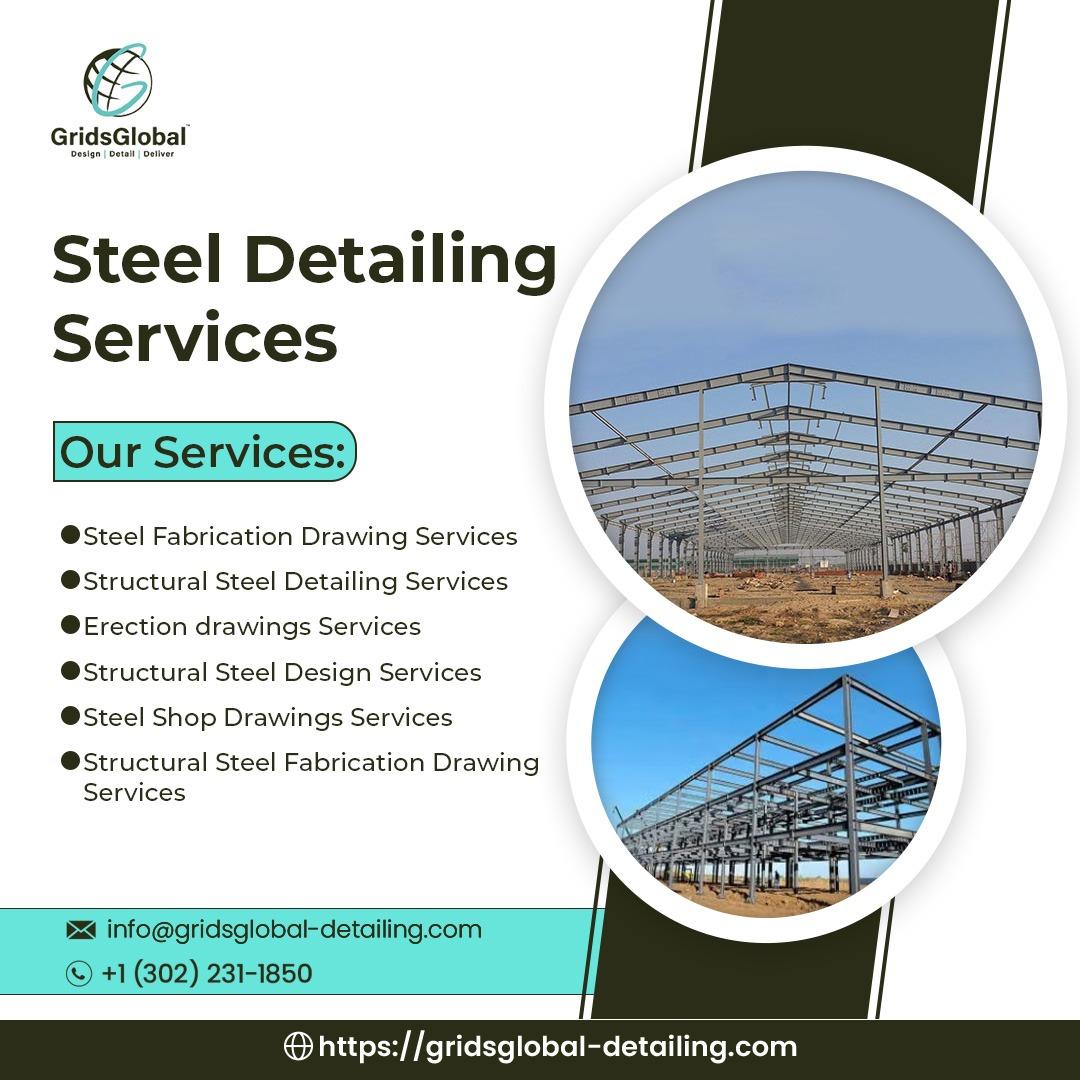
A steel project begins with a set of drawings but succeeds only when those drawings translate into steel that fits together without argument. One overlooked dimension can send a beam back to the shop. One unresolved clash can force a field modification that eats into the schedule. These are not abstract risks. They are the daily reality of steel construction, and they are exactly the kind of problems that thorough Structural Steel Detailing Services are built to prevent. At GridsGlobal Steel Detailing LLC, every project receives a fully coordinated three-dimensional model that verifies critical dimensions, resolves spatial conflicts, and generates complete material documentation. The result is a steel package that moves from the shop floor to the field without expensive surprises.
The Role of LOD 400 Modeling in Steel Accuracy
Steel frames today often involve complex geometry that flat drawings cannot capture with confidence. Sloped members, curved profiles, and heavily serviced levels create spatial relationships that demand a more sophisticated approach. Detailing engineers respond by developing a BIM environment at LOD 400. Inside this model, every beam, column, brace, and plate occupies its true position with exact dimensions. Hole diameters, cope locations, and weld preparations are all defined with precision. This level of detail removes ambiguity from the fabrication process.
Once the digital model reaches full assembly, the team performs a series of constructability checks. They confirm that a welding torch can reach every joint root. They verify that a torque wrench has enough swing clearance to tighten every bolt. They check that structural members do not interfere with mechanical ductwork, fireproofing, or architectural finishes. They also account for mill and fabrication tolerances so the frame erects without field shimming or forced fit-up. Clash detection at this stage costs a few hours of engineering time. The same clash discovered on site costs days of crew labor and equipment standby.
After all checks pass, the validated data flows directly into CNC beam lines, plate processors, and automated drill stations. Fabrication drawings carry exact cut lengths, hole coordinates, and weld specifications. Shop floor teams no longer guess or interpret hand sketches. Each piece arrives at the job site with a unique piece mark that matches the erection drawings. Field grinding, hole reaming, and corrective welding become rare exceptions rather than routine activities. You can explore this detailed workflow further through Structural Steel Detailing Services.
The Bill of Material That Anchors Procurement
As the coordinated model reaches final approval, it automatically produces a comprehensive Bill of Material (BOM). This document lists every structural shape, plate thickness, bolt grade, anchor rod, and welding consumable by unique piece mark. Procurement teams use the BOM to schedule mill orders with precision. They know exactly how many tons of each beam size to purchase. They see the total plate tonnage required for stiffeners, base plates, and shear tabs. They order bolts and welding wire in correct quantities without overstocking. This level of control prevents material shortages that halt production and surplus inventory that ties up working capital. When multiple fabricators serve one project, the BOM becomes the master tracking document that keeps every delivery synchronized with the erection sequence.
Connection Detailing and the Bill of Quantity
Fit-up precision matters, but structural safety depends on connection performance. Every joint in a steel frame carries concentrated forces that change direction under load. A connection that looks adequate on paper may fail under prying action, block shear, or fatigue. This is where Structural Steel Connection Design Services add essential value. Engineers analyze each connection type according to recognized design codes. They determine the required plate thickness, bolt diameter, weld size, and stiffener layout. They verify that the connection can transfer forces safely while allowing the necessary rotation and deformation capacity.
The same analytical effort also generates a Bill of Quantity (BOQ) focused on connections. The BOQ breaks down each connection type by unit count, fabrication hours, fastener quantity, weld length, and testing requirements. Estimators see exactly how many moment connections exist and what each one costs to produce. Project controllers use this data to build realistic cash flow forecasts. Stakeholders receive transparent reports grounded in measurable engineering quantities. For practical advice on avoiding frequent design mistakes, review Structural Steel Connection Design Services. For projects in high-seismic regions, Structural Steel Connection Design Services that include ductile detailing practices add an important layer of safety.
How BOM and BOQ Function as Dual Financial Controls
The BOM and BOQ serve different but complementary purposes. The BOM quantifies raw materials for the entire frame. The BOQ quantifies labor and connection-specific consumables. Together, they close the gap between design intent and procurement reality. A fabricator can identify a specific connection type, pull its material requirement from the BOM, and retrieve its labor estimate from the BOQ simultaneously. This integration reduces waste, sharpens bid accuracy, and supports just-in-time delivery schedules that minimize on-site storage costs.
Protecting Budgets Through Early Coordination
Every field correction carries hidden costs. Cutting a beam that arrived too long, reaming a hole that was drilled off location, or adding a weld that should have been done in the shop consumes time and labor. These fixes also create safety risks for crews working at height under schedule pressure. A comprehensive validation strategy that combines 3D coordination, connection analysis, and complete material documentation eliminates these problems before they reach the field. Digital prototyping catches geometric conflicts early. Connection engineering ensures joints perform as designed. BOM and BOQ data keep procurement aligned with fabrication reality. The combination turns steel construction into a controlled and predictable process.
Engineering Discipline for Long-Term Asset Performance
Steel buildings must perform reliably for decades. They carry gravity loads, resist wind forces, and withstand seismic shaking in many regions. Achieving that performance requires discipline from the very first day of detailing. By maintaining high standards in digital modeling, connection verification, and material quantification, project teams secure structures that perform without costly interventions. The upfront investment in thorough engineering pays back through fewer delays, lower rework costs, and a safer job site.
To discuss tailored constructability strategies, complete BOM compilation, BOQ structuring, and advanced model coordination for your next project, visit our contact us page.
Corporate Contact Information
United States Operations
GRIDSGLOBAL STEEL DETAILING LLC
Address: 1207 Delaware Ave, Unit 2877, Wilmington, DE 19806
Phone: +1 (302) 231-1850
Email: info@gridsglobal-detailing.com
Website: https://gridsglobal-detailing.com/
- Managerial Effectiveness!
- Future and Predictions
- Motivatinal / Inspiring
- Fitness and Wellness
- Medical & Health
- Manufacturing
- Education
- Real-Estate
- Food Industry
- Hospitality
- Online Games
- Sports
- Home Services
- Civil Engineering
- Safety and Protection
- Software Products & Services
- Fashion and Jewellery
- Artificial Intelligence
- Entrepreneurship
- Mentoring & Guidance
- Marketing
- Networking
- HR & Recruiting
- Literature
- Shopping
- Career Management & Advancement