

 SkillClick
How Collaborative Education Networks Can Create an Impact Public School: The Shikshagraha Approach
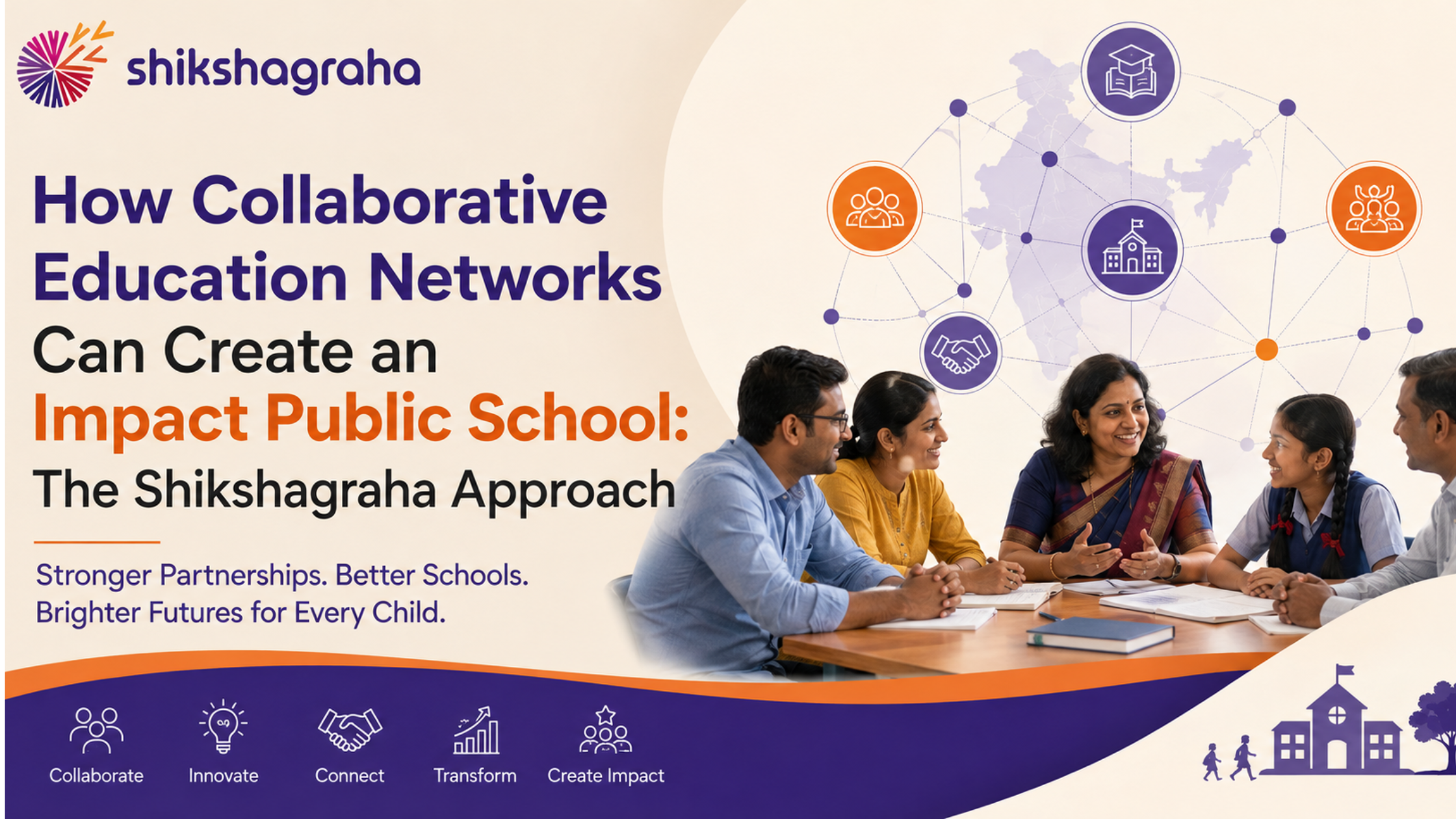
Improving India's public education system requires more than individual efforts or isolated programmes. Schools are part of a larger ecosystem involving teachers, parents, communities, government institutions, education organisations and policymakers. Building strong collaborative education networks can therefore play an essential role in creating sustainable and meaningful change across the public education ecosystem.
The need for effective collaboration for public school transformation has become increasingly important as stakeholders work together to address challenges related to learning outcomes, school leadership, infrastructure, teacher development and community participation. A shared approach allows different individuals and organisations to contribute their knowledge, resources and experiences towards a common goal.
As a growing civil society network, Shikshagraha brings together diverse stakeholders who believe that public education transformation requires collective ownership. By encouraging conversations, partnerships and collaborative action, such networks can help create an ecosystem where every child has access to quality learning opportunities.
The idea of an impact public school goes beyond academic performance alone. It represents a school that positively influences students, families and communities while creating an environment where children can learn, participate and develop the skills needed for the future.
Why Collaborative Education Networks Are Essential for Systemic Change
Education is a complex system, and no single stakeholder can transform it alone. Teachers may understand classroom challenges, communities may understand local needs and governments may have the capacity to implement policies at scale. However, meaningful transformation becomes possible when these different perspectives come together.
Collaborative education networks create opportunities for stakeholders to learn from one another and work towards shared educational goals. Instead of operating independently, participants can exchange ideas, identify common challenges and develop solutions that are relevant to the communities they serve.
Some important benefits of educational collaboration include:
-
Bringing together diverse perspectives and experiences.
-
Creating opportunities for knowledge sharing.
-
Supporting innovation at the school and system levels.
-
Encouraging communities to participate in education.
-
Building stronger connections between schools and stakeholders.
-
Creating solutions that can be adapted and scaled.
Collaboration also helps move the conversation beyond short-term projects. Sustainable education transformation requires long-term thinking, continuous learning and a willingness to adapt based on changing circumstances.
Collaboration for Public School Transformation: Moving Beyond Individual Efforts
Successful collaboration for public school transformation requires stakeholders to move beyond isolated interventions. While individual programmes can create positive results, collective action can help address broader systemic challenges.
For example, improving student learning may require the combined efforts of teachers, school leaders, parents, education organisations and government institutions. Each group has a unique role to play, and collaboration can help align these efforts.
A strong collaborative approach can focus on several important areas:
-
Teacher support: Providing opportunities for educators to share knowledge and strengthen their professional practice.
-
School leadership: Supporting leaders in creating effective and inclusive learning environments.
-
Community engagement: Encouraging parents and local communities to actively participate in education.
-
Knowledge sharing: Documenting successful practices and making them accessible to others.
-
Policy dialogue: Creating opportunities for different stakeholders to contribute ideas to education discussions.
When collaboration becomes a regular part of the education ecosystem, schools can benefit from a wider range of ideas, experiences and resources. This can make transformation more responsive to the actual needs of students and communities.
The Role of a Civil Society Network in Education
A strong civil society network can act as a bridge between different groups working towards educational improvement. Civil society organisations often bring valuable community-level insights and can create spaces for dialogue, experimentation and learning.
These networks can support public education by:
-
Connecting people and organisations with shared goals.
-
Identifying successful practices across different regions.
-
Encouraging discussions about education challenges.
-
Amplifying the voices of communities and practitioners.
-
Supporting collective learning and action.
-
Building partnerships that strengthen the education ecosystem.
The value of such networks lies in their ability to bring together people who may otherwise work separately. A teacher in one region, for example, may have developed an effective approach that could inspire educators in another location. Networks can help make these connections possible.
In the middle of the transformation journey, a strong civil society network can also encourage stakeholders to reflect on what is working and where further improvements are needed. This continuous exchange of ideas is essential for creating sustainable change.
Building an Impact Public School Through Collective Action
An impact public school is not defined only by examination results or infrastructure. A truly impactful school creates a positive learning environment and contributes to the overall development of students.
Such schools can demonstrate the importance of:
-
Student-centred learning.
-
Inclusive classrooms.
-
Strong teacher-student relationships.
-
Active community participation.
-
Effective school leadership.
-
Continuous improvement and innovation.
-
Development of life skills alongside academic learning.
Creating this kind of school requires collective responsibility. Teachers play a central role in the classroom, but they need support from school leaders, families, communities and the broader education system.
The journey towards an impact public school also involves understanding the unique needs of each community. A solution that works in one location may need to be adapted before it can work effectively somewhere else. Collaboration allows stakeholders to learn from different contexts while developing approaches that remain locally relevant.
How Shikshagraha Encourages Collective Participation
Shikshagraha represents the importance of bringing people together around a shared vision for public education. Transforming a large and diverse education system requires participation from multiple stakeholders rather than depending on a single organisation or institution.
Through conversations, partnerships and knowledge-sharing opportunities, Shikshagraha can contribute to a larger movement focused on strengthening public education. The approach recognises that sustainable transformation requires collaboration across different levels of the education ecosystem.
Some key principles that can support collective education action include:
-
Shared ownership: Education transformation should involve multiple stakeholders.
-
Listening to local voices: Communities and practitioners should have opportunities to share their experiences.
-
Learning together: Successful practices and challenges can provide valuable lessons.
-
Building partnerships: Strong relationships can create greater collective impact.
-
Encouraging long-term action: Sustainable change requires continued commitment.
In the middle of this ecosystem, Shikshagraha can help create connections between people who are working towards a common purpose. These connections are important because they can transform individual efforts into a broader movement for educational improvement.
Creating Stronger Collaborative Education Networks for the Future
The future of public education will depend significantly on how effectively stakeholders can work together. Stronger collaborative education networks can create an environment where knowledge, resources and experiences are shared more openly.
To build effective networks, stakeholders should focus on creating meaningful participation rather than simply forming partnerships on paper. Collaboration should involve regular communication, shared learning and a clear understanding of common goals.
Important steps for strengthening educational networks include:
-
Create spaces for dialogue: Teachers, parents, policymakers and education organisations need opportunities to exchange ideas.
-
Identify shared challenges: Understanding common problems can help stakeholders develop collective solutions.
-
Share practical knowledge: Successful practices should be documented and made available to others.
-
Encourage local leadership: Communities should have an active role in shaping education initiatives.
-
Measure learning and progress: Regular reflection can help networks understand their impact and improve their strategies.
-
Build trust among stakeholders: Sustainable collaboration depends on transparent and respectful relationships.
Effective networks should also recognise that collaboration takes time. Building trust and developing shared goals cannot always happen immediately. However, consistent engagement can create stronger relationships and more sustainable outcomes.
The Importance of Knowledge Sharing in Public Education
Knowledge is one of the most valuable resources within the education ecosystem. Teachers, school leaders and communities gain valuable experience through their daily work, and sharing these insights can benefit others facing similar challenges.
Knowledge-sharing platforms and communities can support education transformation by making practical experiences more accessible. Rather than repeatedly developing solutions from the beginning, stakeholders can learn from existing practices and adapt them to their own contexts.
This process can support collaboration for public school transformation by creating stronger connections between people and organisations. When knowledge flows across different regions and communities, the education ecosystem becomes better equipped to respond to challenges.
Collaboration also creates opportunities to examine unsuccessful approaches. Learning from challenges is equally important because it helps stakeholders make better decisions in the future.
A Collective Vision for Better Public Education
Public education has the potential to create opportunities for millions of children and contribute to stronger communities. Achieving this potential requires a collective vision that places learners and their needs at the centre of decision-making.
Governments, educators, parents, communities, civil society organisations and young people all have an important role to play. Their combined efforts can create an education ecosystem that is more inclusive, responsive and sustainable.
The strength of collective action lies in the understanding that meaningful transformation is a shared responsibility. Instead of asking which single organisation can solve a particular challenge, stakeholders can explore how they can work together to create greater impact.
By strengthening partnerships, encouraging dialogue and supporting shared learning, the education ecosystem can move closer to a future where every public school has the opportunity to thrive.
Conclusion
Creating meaningful and sustainable public education transformation requires a shift from isolated action towards collective responsibility. Strong collaborative education networks can connect educators, communities, organisations and institutions, creating opportunities for shared learning and coordinated action.
Similarly, effective collaboration for public school transformation can help address complex educational challenges by bringing together different perspectives and capabilities. The journey towards an impact public school requires continuous participation, local understanding and a commitment to long-term improvement.
With collective action, knowledge sharing and stronger partnerships, Shikshagraha and the wider education ecosystem can contribute to a more inclusive and responsive future for public education. When stakeholders work together with a common purpose, they can create lasting opportunities that positively influence schools, communities and, most importantly, the children they serve.
- Managerial Effectiveness!
- Future and Predictions
- Motivatinal / Inspiring
- Fitness and Wellness
- Medical & Health
- Manufacturing
- Education
- Real-Estate
- Food Industry
- Hospitality
- Online Games
- Sports
- Home Services
- Civil Engineering
- Safety and Protection
- Software Products & Services
- Fashion and Jewellery
- Artificial Intelligence
- Entrepreneurship
- Mentoring & Guidance
- Marketing
- Networking
- HR & Recruiting
- Literature
- Shopping
- Career Management & Advancement