

 SkillClick
Wisdom Tooth Pain: What Causes It and When Should You See a Dentist?
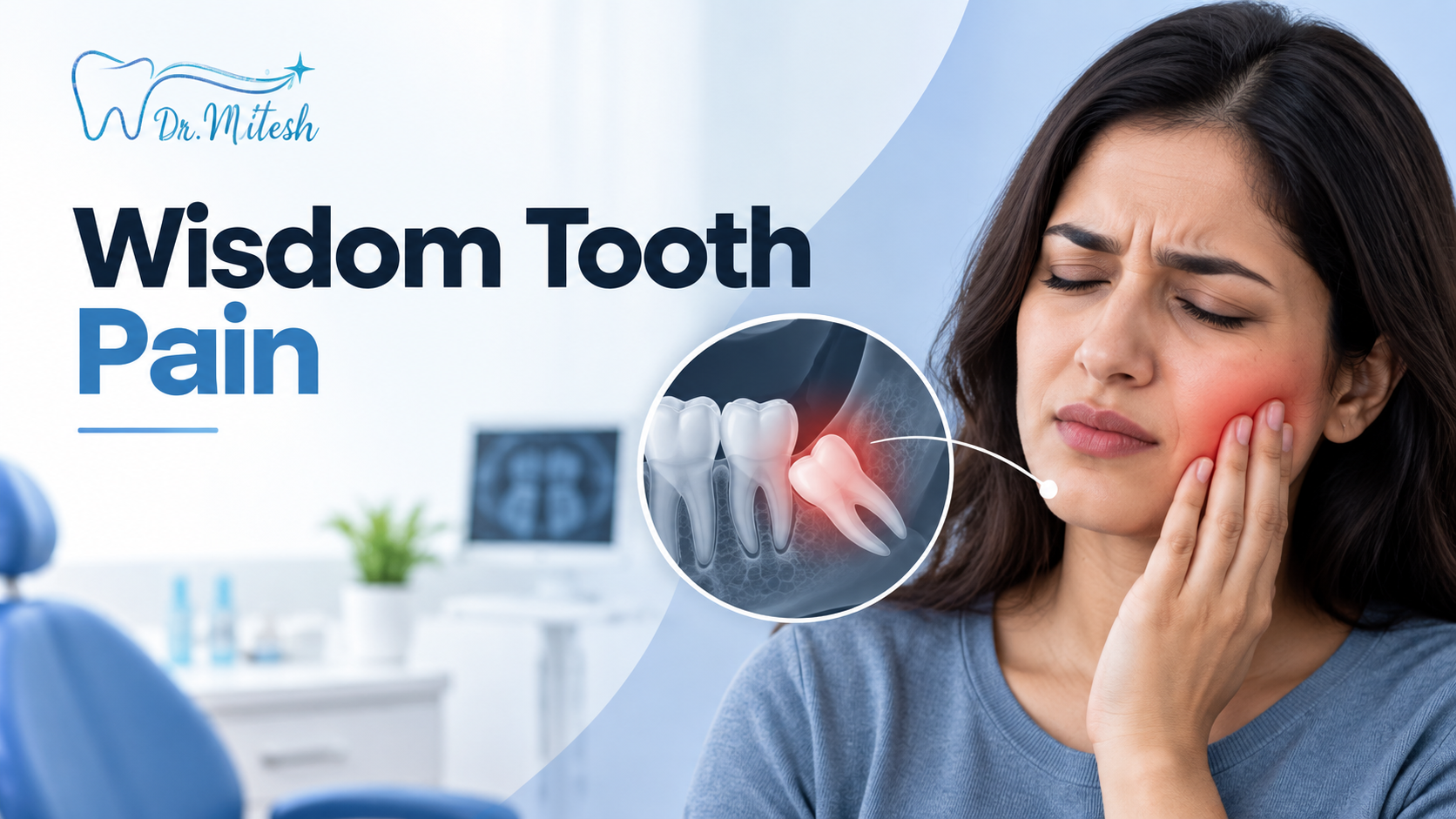
Pain at the very back of your mouth can make eating, brushing, and even opening your mouth uncomfortable. One common reason for this type of discomfort is a wisdom tooth.
Wisdom teeth, also known as third molars, are the last permanent teeth to develop. Some grow normally without causing any problems, while others may only partially emerge or remain trapped beneath the gums.
Wisdom tooth pain should not always be ignored, especially when it keeps returning or is accompanied by swelling, difficulty opening the mouth, or other symptoms. Understanding what causes the pain can help you know when it is time to see a dentist.
Why Do Wisdom Teeth Cause Pain?
Wisdom teeth are located at the very back of the upper and lower jaws. Problems can develop when there is not enough room for a tooth to grow into a normal position.
The tooth may grow at an angle, emerge only partially, or remain under the gum or jawbone. These situations can make the area difficult to clean and may contribute to inflammation, infection, decay, or problems with a nearby tooth.
The exact cause of wisdom tooth pain cannot always be determined from symptoms alone. A dental examination may be needed to understand what is happening beneath the gums.
Impacted Wisdom Tooth
An impacted wisdom tooth is one that cannot fully grow into its normal position.
It may remain partly or completely trapped under the gum or bone. Some impacted wisdom teeth do not cause noticeable problems, while others can become painful or affect surrounding tissues.
You may experience tenderness at the back of the jaw or discomfort when chewing.
A dentist can examine the area and may recommend an X-ray to understand the tooth's position and its relationship with nearby structures.
Gum Inflammation Around the Tooth
Sometimes only part of the wisdom tooth comes through the gum.
A small area of gum tissue may remain around or over the partially erupted tooth. Food particles and bacteria can collect in this difficult-to-clean area.
This can result in redness, tenderness, swelling, or discomfort around the back molar.
The pain may settle temporarily and then return, particularly when the underlying position of the wisdom tooth continues to make the area difficult to clean.
Recurring gum inflammation should be assessed rather than repeatedly managed at home.
Infection Around a Wisdom Tooth
Bacteria collecting around a partially erupted wisdom tooth can sometimes lead to infection in the surrounding gum.
Symptoms may include pain, swelling, bad breath, an unpleasant taste, or tenderness around the tooth.
In some cases, swelling may extend toward the cheek or jaw.
An infection requires proper assessment because treating the symptoms without addressing the underlying cause may only provide temporary relief.
Tooth Decay
Wisdom teeth can be more difficult to brush than other teeth because they are positioned so far back in the mouth.
Food and plaque may remain around them even when you brush regularly.
Over time, this can increase the risk of tooth decay.
A cavity in a wisdom tooth may cause sensitivity or pain. The position of the tooth can also influence whether it can be treated effectively or whether another treatment approach should be considered.
Problems With the Neighbouring Tooth
Wisdom tooth pain does not always come entirely from the wisdom tooth itself.
A poorly positioned wisdom tooth can make the area around the neighbouring second molar harder to clean.
Food and plaque may collect between the two teeth, potentially contributing to decay or gum problems.
This is one reason a dental examination is useful. The dentist can assess both the wisdom tooth and the nearby teeth rather than assuming that the painful tooth is the only problem.
What Does Wisdom Tooth Pain Feel Like?
Symptoms can vary depending on the cause.
Some people experience mild tenderness, while others develop stronger or recurring discomfort.
Common warning signs can include:
- Pain behind the last molar
- Red or swollen gums
- Pain when chewing
- Jaw tenderness
- Food frequently getting trapped near the tooth
- Difficulty opening the mouth comfortably
- Persistent bad breath
- An unpleasant taste in the mouth
- Swelling around the cheek or jaw
Symptoms that repeatedly disappear and return should not automatically be considered resolved.
Recurring pain may indicate that the underlying dental problem is still present.
When Should You See a Dentist for Wisdom Tooth Pain?
Mild discomfort at the back of the mouth may sometimes be temporary, but persistent or recurring pain deserves professional assessment.
You should consider seeing a dentist when the pain continues, keeps returning, makes chewing uncomfortable, or is accompanied by noticeable swelling or gum inflammation.
It is also important to have the area checked if food constantly becomes trapped around the wisdom tooth or if you notice persistent bad breath or an unusual taste.
Getting the problem examined early can help determine the cause before symptoms become more difficult to manage.
When Does Wisdom Tooth Pain Need Prompt Attention?
Some symptoms should be assessed more quickly.
Contact a dental professional if you experience severe or worsening pain, increasing facial or jaw swelling, fever, pus around the tooth, significant difficulty opening your mouth, or persistent signs of infection.
Difficulty swallowing can also require prompt assessment.
Severe difficulty breathing or swallowing requires urgent medical attention.
Do not rely only on pain-relieving medicines when symptoms are becoming worse. Pain relief may temporarily reduce discomfort without treating the dental problem causing it.
How Does a Dentist Check a Painful Wisdom Tooth?
The first step is usually a dental examination.
The dentist can look at how much of the wisdom tooth has erupted and check the surrounding gum for redness, swelling, infection, or areas where food becomes trapped.
The nearby teeth can also be examined for signs of decay or other problems.
A dental X-ray may be recommended to understand the part of the wisdom tooth that cannot be seen directly.
It can help the dentist assess the tooth's position beneath the gums and its relationship with surrounding structures.
Based on these findings, the dentist can determine whether the tooth needs treatment, monitoring, or removal.
Does Wisdom Tooth Pain Always Mean Extraction?
No. Experiencing wisdom tooth pain does not automatically mean the tooth needs to be removed.
Treatment depends on what is causing the problem.
For example, some gum inflammation may improve after the area is professionally cleaned and oral hygiene is improved. Other problems may require additional dental treatment.
A wisdom tooth that has fully erupted, is positioned correctly, remains healthy, can be cleaned effectively, and is not affecting nearby teeth may not require extraction.
However, repeated pain, recurring infection, severe decay, damage to a neighbouring tooth, or certain problems associated with an impacted tooth may lead a dentist to consider removal.
For a detailed explanation, read our guide on when wisdom tooth extraction may be necessary.
Can You Manage Wisdom Tooth Discomfort at Home?
Keeping the area clean may help when discomfort is associated with food or plaque collecting around a partially erupted tooth.
Brush carefully around the back molars and follow your dentist's oral hygiene advice.
However, home care should not replace a dental examination when pain is persistent or recurring.
Avoid repeatedly taking medicines simply to suppress the pain without finding out what is causing it.
The right treatment depends on whether the problem involves the gum, tooth decay, infection, impaction, or another dental condition.
How Can You Reduce Problems Around Wisdom Teeth?
You cannot control how a wisdom tooth grows, but good oral hygiene can help reduce some problems around teeth that have erupted.
Pay particular attention to the back molars while brushing. Clean between your teeth regularly and try not to allow food to remain trapped around a partially erupted wisdom tooth.
Routine dental examinations are also useful because a dentist can monitor wisdom teeth even when they are not currently painful.
If discomfort starts returning, have it checked rather than waiting for the symptoms to become severe.
Do Not Ignore Recurring Wisdom Tooth Pain
Wisdom tooth pain can have several causes, from gum inflammation and tooth decay to infection or an impacted tooth.
The symptoms alone may not tell you exactly what is wrong.
That is why recurring or worsening discomfort should be professionally assessed.
At Dr. Mutha's Dental Speciality Centre, a dentist can examine the wisdom tooth, assess the surrounding gums and neighbouring teeth, and use dental imaging when required to understand the problem.
The aim is not automatically to remove every wisdom tooth. The appropriate approach depends on the position of the tooth, its condition, your symptoms, and whether surrounding areas are being affected.
Getting the problem checked early can help you understand whether the tooth simply needs monitoring or whether treatment is required.
Frequently Asked Questions
Why is my wisdom tooth suddenly hurting?
Pain can occur for different reasons, including gum inflammation, infection, tooth decay, an impacted tooth, or problems around a neighbouring tooth. A dental examination can help identify the actual cause.
Can wisdom tooth pain go away without treatment?
Some mild discomfort may improve temporarily, but recurring pain can mean the underlying problem is still present. Repeated symptoms should be assessed by a dentist.
Does every painful wisdom tooth need to be removed?
No. Treatment depends on the cause, position, condition of the tooth, and surrounding tissues. Some wisdom teeth can be treated or monitored without extraction.
How does a dentist know if a wisdom tooth is impacted?
The dentist examines the tooth and surrounding area. A dental X-ray may also be recommended to see the tooth's position beneath the gums and its relationship with nearby structures.
When is wisdom tooth pain an emergency?
Severe or worsening pain, increasing facial swelling, fever, pus, significant jaw swelling, or difficulty swallowing should be assessed promptly. Severe difficulty breathing or swallowing requires urgent medical attention.
- Managerial Effectiveness!
- Future and Predictions
- Motivatinal / Inspiring
- Fitness and Wellness
- Medical & Health
- Manufacturing
- Education
- Real-Estate
- Food Industry
- Hospitality
- Online Games
- Sports
- Home Services
- Civil Engineering
- Safety and Protection
- Software Products & Services
- Fashion and Jewellery
- Artificial Intelligence
- Entrepreneurship
- Mentoring & Guidance
- Marketing
- Networking
- HR & Recruiting
- Literature
- Shopping
- Career Management & Advancement