

 SkillClick
Do Junk Car Buyers Pay Cash or Check?
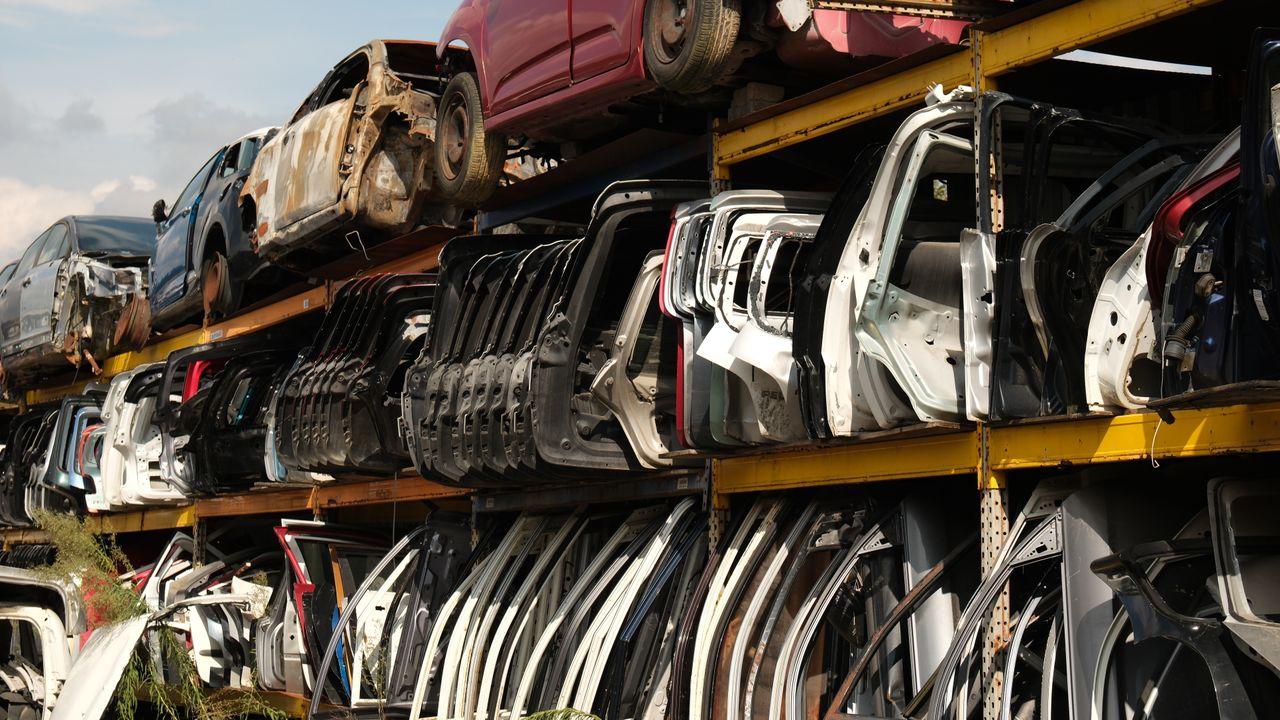
Both, and which one you get depends on your state and on what you are actually selling. A whole vehicle sold to a junk car buyer is commonly paid in cash or by check at pickup, before the car is connected to the truck. Loose scrap metal sold at a yard is different, because metal theft laws in many states restrict cash payment entirely and impose waiting periods. Knowing which category your sale falls into prevents the most common surprise at the counter. Establish what you should be receiving with a scrap car value calculator, then read below for how that money actually reaches you.
Here is what to expect, what the law requires, and the payment terms that signal a buyer to avoid.
Whole vehicles versus loose metal
The distinction drives everything.
A whole vehicle sale to a junk car buyer or dismantler is a vehicle transaction, documented by a title transfer and a bill of sale. Payment at pickup is standard, in cash or by check depending on the operator.
Loose scrap metal sold by weight at a yard is a commodity transaction, and it falls under state metal theft statutes. Those laws frequently prohibit immediate cash payment, impose holding periods, and require identification, photographs and sometimes fingerprints.
If you are selling a car, expect the first. If you are also bringing a trunk full of copper or a catalytic converter you removed, expect the second rules to apply to that portion.
What the metal theft laws require
The restrictions are stricter than most sellers expect, and they vary considerably.
California prohibits immediate cash for most scrap metal purchases over $20. Payment must be a non-transferable check either mailed to the seller's verified home address or collected in person after a three business day holding period.
Texas applies payment restrictions on specified materials, requiring check rather than cash in those cases, alongside fingerprint requirements that vary by county, mandatory security video, and tag-and-hold periods on certain materials.
Louisiana prohibits cash for copper specifically, requiring a check issued to the seller and mailed to the address on their photo identification.
Other states set dollar thresholds. Some prohibit cash above $300 or require checks be mailed to the address on the seller's identification. Several impose 15-day tag-and-hold policies when law enforcement requests it.
Regular commercial sellers are often exempt. Several states waive the payment restrictions for anyone completing five or more transactions per month over a three month period, which is why a scrapper who visits weekly gets paid differently than you will.
What to expect on a car sale
Four practical points.
Payment happens at pickup, before the vehicle is hooked to the truck. This is the industry standard and the point at which you still hold the leverage.
Cash or check are both normal. A business check from a licensed operator is not a red flag; it is a paper trail, and many established buyers prefer it.
Electronic payment is increasingly common, and it carries the same documentation benefit.
The amount should match the written quote exactly. A net price agreed in writing is what you should be handed, with no pickup fee, administrative charge or last-minute adjustment.
Payment terms that should stop the sale
Three patterns are worth walking away from.
Payment after processing. Any proposal to pay once the vehicle has been dismantled or weighed at the yard is not standard practice for a whole-car sale. You lose all leverage the moment the car leaves.
A personal check from an individual. Licensed operators pay from a business account. A personal check from someone who arrived in an unmarked truck is a different transaction than the one you agreed to.
A reduction at the driveway. The driver declares the car worse than described and lowers the figure. Against an accurate description there is no honest basis for this. Decline and call the next buyer, since the tow was free in both directions and no money has changed hands.
Why the paperwork accompanies the payment
Licensed buyers are required to record transactions in detail, and the payment method is part of that record.
Expect to present government-issued photo identification. Expect the transaction to be logged with materials, weight, date, time and payment method. Retention periods commonly run two to five years, and records must be produced to law enforcement on request. Many states transmit this data electronically to searchable databases.
Catalytic converters attract the tightest scrutiny of all. More than thirty states now require documented proof of ownership for a standalone converter sale, and cash is frequently prohibited on those transactions specifically.
None of this obstructs an honest seller. It does mean arriving with identification rather than expecting an anonymous handshake.
Keep your own record either way
Whatever the payment method, take documentation.
Get a bill of sale or receipt showing the date, the buyer's business name, the sale price, the vehicle identification number and both signatures. If paid by check, note the check number. If paid in cash, the receipt is your only proof the transaction occurred.
That paperwork does double duty. It supports your insurance refund claim, and it establishes the date the vehicle stopped being yours if a citation or toll notice arrives months later.
Why these rules exist
The payment restrictions look bureaucratic until you see the problem they address.
Metal theft rose sharply when commodity prices spiked, and the enabling condition was anonymous cash transactions. Someone could remove copper wiring or a catalytic converter and convert it to untraceable money within an hour.
States responded by attacking the anonymity and the speed rather than the sale itself. Checks mailed to a verified address create a name and a location. Holding periods give law enforcement time to match reported thefts against yard records. Photographs, fingerprints and recorded vehicle plates create identification. Tag-and-hold provisions keep suspect material available for inspection.
The effect on legitimate sellers is inconvenience rather than obstruction. It also worked: catalytic converter thefts fell 68% in 2024, to around 14,000 from roughly 44,000 the previous year, with the new state laws cited alongside lower metal prices as a driver.
Frequently asked questions
Is a check safer than cash for a junk car sale? Both are fine from a licensed buyer, and a check creates a better paper trail. What matters more is receiving payment before the car is connected to the truck.
Why did the yard refuse to pay me cash for a converter? Most states now restrict cash on catalytic converter transactions specifically, following the theft wave, and require documented proof of ownership alongside identification.
Can I be paid in cash for a whole car in California? Whole-vehicle purchases are handled as vehicle transactions rather than loose scrap sales, so practices differ from the metal counter. Ask the buyer directly what they issue and when.
How much cash can a scrap yard pay me? It depends on your state and the material. Some prohibit cash above thresholds such as $300, some restrict it entirely for non-ferrous metal, and some impose a three business day hold before a check can be collected.
What if the buyer wants to pay later? Decline. Payment at pickup is standard for whole-vehicle sales, and any other arrangement removes your ability to walk away.
Do I need identification to get paid? Almost always. Photo identification is standard, and several states additionally require a photograph of the seller, a fingerprint, or details of the vehicle used to deliver material.
Will the buyer withhold tax? No. A junk car sale is a private sale of personal property rather than employment income. Keep the bill of sale for your own records.
Can I ask to be paid a different way than offered? Ask, but expect limits. Where state law dictates the method for a given material, the buyer has no discretion. On whole-vehicle sales there is usually more flexibility.
Does a large cash payment get reported? Businesses have federal reporting obligations on large cash transactions, though typical junk car amounts fall well below those thresholds. Keep your receipt regardless.
Before you accept an offer
Ask three questions when you get the quote: is the price net after every deduction, how is payment issued, and when. Get all three in writing. A buyer who answers clearly is a buyer whose final number will match the one they quoted, which is the outcome the entire process is designed to protect.
- Managerial Effectiveness!
- Future and Predictions
- Motivatinal / Inspiring
- Fitness and Wellness
- Medical & Health
- Manufacturing
- Education
- Real-Estate
- Food Industry
- Hospitality
- Online Games
- Sports
- Home Services
- Civil Engineering
- Safety and Protection
- Software Products & Services
- Fashion and Jewellery
- Artificial Intelligence
- Entrepreneurship
- Mentoring & Guidance
- Marketing
- Networking
- HR & Recruiting
- Literature
- Shopping
- Career Management & Advancement