

 SkillClick
How to Choose the Right Allen Bolt for Industrial Applications
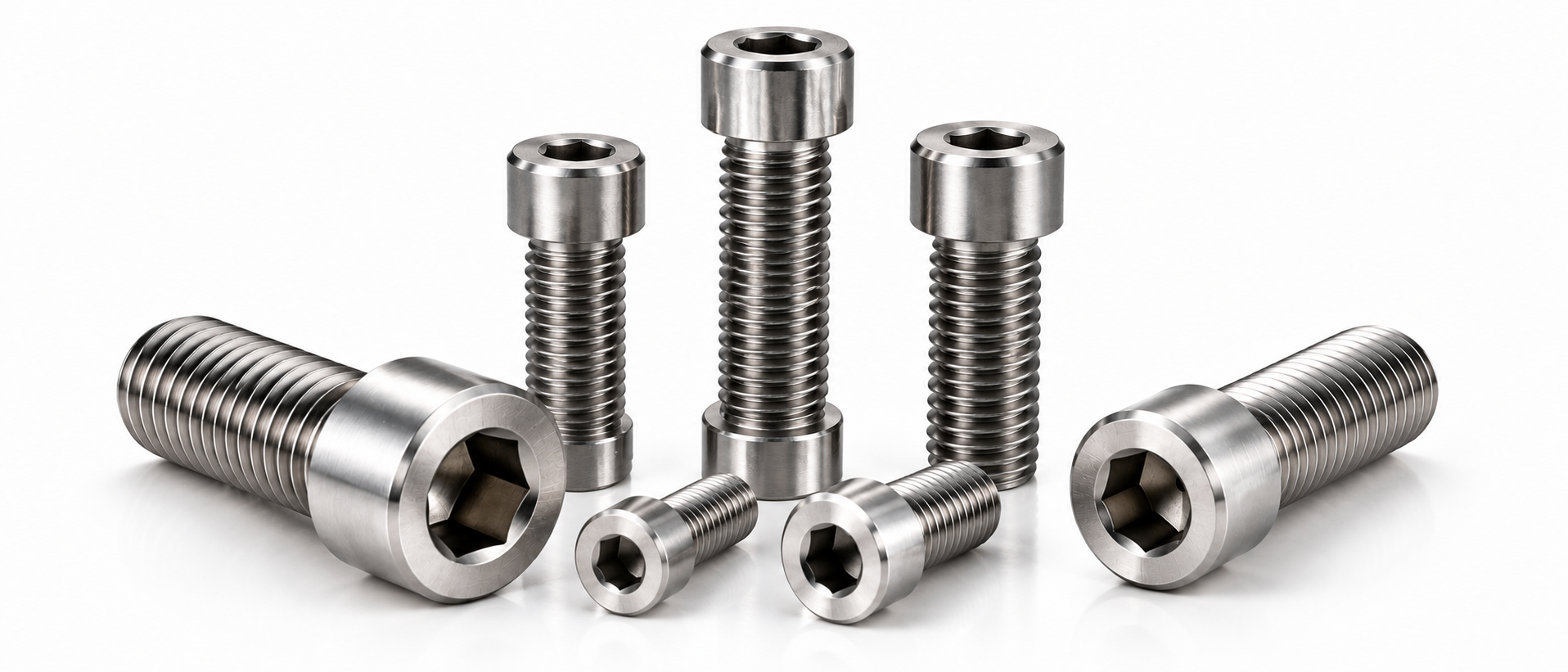
You picked M8, checked the length, placed the order — and the fastener still loosened under vibration within six weeks of installation. Diameter was never the problem. An Allen bolt selected on size alone ignores grade, drive tolerance, and the load type it's actually going into, and that gap is where most "the bolt failed" complaints really originate. Kiran Industries has supplied Allen bolt manufacturers' grade fasteners since 1985, and choosing correctly takes four decisions, not one.
Most procurement teams treat Allen bolt selection like a lookup table: enter diameter, get a part number. That works until the application involves vibration, thermal cycling, or repeated disassembly — then the shortcuts show up as field failures.
Four Decisions That Actually Determine the Right Allen Bolt
Diameter and length get you a fastener that fits. They don't get you one that survives its job. An Allen bolt selected correctly accounts for grade, socket tolerance, coating, and the specific load pattern of the assembly.
Grade: Match It to How the Load Behaves, Not Just How Big It Is
Static clamping loads tolerate mid-range grades comfortably. Repeated vibration or thermal cycling needs a grade rated for fatigue resistance, not just peak tensile strength.
Socket Tolerance: The Spec Most Catalogues Don't List
Drive tolerance class determines how tightly the hex key seats. A loose fit rounds the socket within a handful of assembly-disassembly cycles, and that gets misdiagnosed as a bad batch instead of a mismatched key.
The Detail Buyers Skip
Thread engagement depth in a tapped hole matters more than the industry admits. Order a bolt too short for the hole depth and you get a fastener that looks correctly torqued right up until it isn't.
What Choosing the Right Allen Bolt Actually Protects
-
Fewer vibration-related failures. Grade matched to load pattern, not just size, prevents the loosening complaint that starts most reorder conversations.
-
Longer tool and socket life. Correct drive tolerance means fewer stripped sockets and fewer replaced hex keys on the floor.
-
Stronger margins for Allen bolts wholesalers. Fewer field returns translates directly into fewer credit notes against monthly revenue.
-
Cleaner audits for Allen bolts dealers. Batch-traceable, grade-verified stock means no scrambling when a client inspection is scheduled on short notice.
-
Predictable reassembly. Correct thread engagement depth means the fastener performs the same on the fifth disassembly as it did on the first.
-
Lower total cost per unit. Selecting correctly the first time is cheaper than a reorder plus the downtime the wrong choice caused.
Manufacturing From Rajkot: What It Means for Your Selection Process
We machine from Shapar, Rajkot, Gujarat, inside a fastener and forging cluster dense enough that tooling, heat treatment, and coating vendors sit within a short radius rather than scattered across separate states. For Allen bolts wholesalers in India working through a selection process that changes grade or tolerance mid-project, that density means a revised order turns around fast instead of restarting a multi-state supply chain. Proximity to Mundra port also shortens export cycles for buyers finalising specs for shipment outside India.
Since 1985: Selection Mistakes We've Watched Happen Twice
We started with standard fasteners in 1985, and grade-specific selection conversations became routine only once export clients started sending full application drawings instead of size requests. That shift meant training our sales team to ask about load type before quoting, not after a complaint call. We stopped recommending a particular mid-range grade for vibration-heavy jobs in 2022, after two separate wholesalers reported loosening within the same production run — we now flag that grade specifically for static applications only. That's a correction that only comes from watching the same mistake happen twice and deciding not to let it happen a third time.
Tell Us the Load Type, We'll Confirm the Right Grade — Same Day
Send us your load type, drive size, and coating requirement, and we'll confirm the correct grade and pricing within 24 working hours. MOQ starts at 500 pieces per SKU for standard socket sizes; non-standard drive sizes are quoted once tooling availability is confirmed. If vibration or thermal cycling is part of the application, say so directly — it changes the recommendation more than almost any other input.
Selection Is a Four-Step Decision, Not a Size Lookup
Choosing the right Allen bolt means working through grade, socket tolerance, coating, and load pattern together, not picking diameter and hoping the rest holds up. Buyers sourcing from serious Allen bolt manufacturers should expect a supplier who asks about load type before quoting a price. Get that conversation right early, and the reorder six weeks later never has to happen.
Allen Bolt Selection FAQs
1. How do I choose the right grade of Allen bolt for a vibration-heavy application?
Match grade to fatigue resistance, not just peak tensile strength. Tell us the vibration frequency or cycling pattern if you know it — that detail changes the recommendation more than diameter does.
2. What's the difference between socket tolerance classes?
Tighter tolerance classes seat the hex key more precisely and resist rounding over repeated use, though they typically cost more and have longer lead times for non-standard sizes.
3. Do Allen bolts dealers usually stock application-specific grades?
Not always. Many Allen bolts dealers carry standard grades only, so vibration-rated or fatigue-tested stock often needs a direct manufacturer order.
4. Can Allen bolts wholesalers get custom coatings for outdoor or coastal use?
Yes, though custom coating adds roughly 7 days to standard lead time — we're upfront about that during quoting rather than after the order is confirmed.
5. Are all Allen bolts suppliers testing for fatigue resistance?
No, and that's worth knowing before you order — many suppliers only run tensile tests, so ask specifically for fatigue or vibration data if your application needs it.
- Managerial Effectiveness!
- Future and Predictions
- Motivatinal / Inspiring
- Fitness and Wellness
- Medical & Health
- Manufacturing
- Education
- Real-Estate
- Food Industry
- Hospitality
- Online Games
- Sports
- Home Services
- Civil Engineering
- Safety and Protection
- Software Products & Services
- Fashion and Jewellery
- Artificial Intelligence
- Entrepreneurship
- Mentoring & Guidance
- Marketing
- Networking
- HR & Recruiting
- Literature
- Shopping
- Career Management & Advancement