

 SkillClick
Internal Tool Builders: Build Smarter Business Tools Now
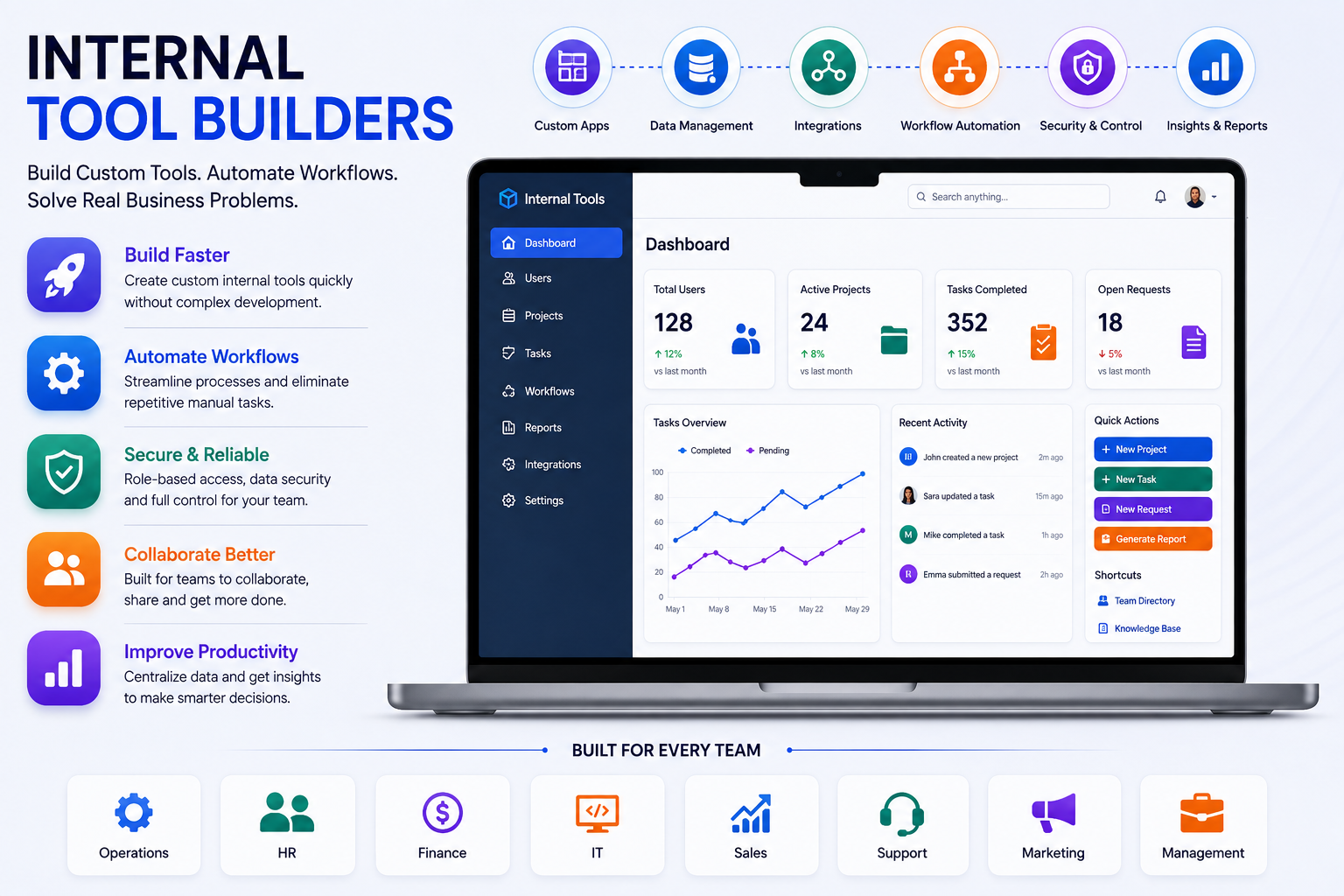
Modern businesses rely on different software tools to manage daily operations, organize information, communicate with teams, and make important decisions. However, standard software does not always meet every company's specific requirements. This is where Internal Tool Builders can provide a practical solution.
Internal tool builders allow businesses to create custom applications designed specifically for their internal workflows. Instead of depending entirely on complicated software development projects, teams can use flexible development environments to build tools that address their unique operational needs.
What Are Internal Tool Builders?
Internal Tool Builders are platforms or development solutions that help organizations create custom software for internal use. These tools can be designed around specific business processes, departments, and workflows.
For example, a company may need a custom employee dashboard, inventory management system, approval workflow, reporting application, or customer information tool. An internal tool builder can help teams create such applications without requiring every project to be developed completely from scratch.
These platforms can be especially useful for businesses that need software tailored to their existing processes.
Why Are Internal Tools Important?
Every organization has processes that are unique to its operations. Standard software may provide general features, but it may not always support the exact workflow a business follows.
Internal tools can fill these gaps by providing customized functionality. Employees can access the information and features they need without working through unnecessary steps.
This can improve productivity and help businesses create more efficient operational processes.
Benefits of Internal Tool Builders
Faster Tool Development
Internal tool builders often provide reusable components, templates, integrations, and development features. These resources can help teams create functional applications faster than traditional development methods.
Customized Workflows
Businesses can design tools according to their own processes. This means an internal application can reflect how a specific department actually works instead of forcing employees to adapt to a generic workflow.
Improved Productivity
Well-designed internal tools can reduce repetitive tasks and unnecessary manual work. Employees can spend less time managing spreadsheets or transferring information between different systems.
Better Data Management
Custom internal applications can bring important business information into a centralized environment. This can make it easier for teams to access, update, and analyze data.
Reduced Development Costs
Building every internal application through traditional software development can require significant resources. Internal tool builders can simplify development and potentially reduce the time and effort involved.
Common Types of Internal Tools
Organizations can create many different types of applications using internal tool builders.
Employee Dashboards
Businesses can create dashboards that display important information such as performance metrics, tasks, schedules, and project updates.
Inventory Management Tools
Companies that manage physical products can develop internal tools for tracking inventory levels, stock movements, suppliers, and orders.
Approval Systems
Internal applications can automate approval processes for expenses, documents, leave requests, purchases, and other business activities.
Reporting Platforms
Custom reporting tools can combine information from different sources and present it in an easy-to-understand format.
CRM Extensions
Businesses can create customized customer management tools that work alongside their existing CRM systems.
Project Management Tools
Teams can develop internal applications for assigning tasks, tracking project progress, managing deadlines, and monitoring team performance.
How Internal Tool Builders Work
The development process generally begins by identifying a specific business problem. Teams then determine what information, users, and workflows the new application will need.
Once the requirements are clear, developers or internal teams can create the application's interface and connect it with the required data sources.
The tool can then be tested with employees before being introduced across the organization. Feedback from users can help teams improve the application over time.
A typical process includes:
- Identifying a business requirement
- Planning the workflow
- Designing the application
- Connecting data sources
- Testing the tool
- Deploying it internally
- Collecting user feedback
- Improving the application
Key Features to Look For
When selecting an internal tool builder, businesses should consider the capabilities that will support their long-term requirements.
User-Friendly Interface
A simple development interface can make it easier for teams to create and update applications.
Database Integration
The ability to connect with databases and other information sources is important for building useful internal applications.
API Support
API integrations allow internal tools to communicate with existing business software and external services.
User Permissions
Internal applications may contain sensitive business information. Role-based permissions can help ensure that employees only access the information relevant to their responsibilities.
Automation
Automation features can reduce repetitive activities such as data entry, notifications, approvals, and reporting.
Analytics
Built-in analytics and dashboards can help organizations understand how their internal tools are being used and where processes can be improved.
Internal Tool Builders and Automation
Automation is one of the biggest advantages of modern internal development platforms. Businesses can connect different systems and automate repetitive workflows.
For example, when a new order is received, an internal system could automatically update inventory, notify the relevant team, and create a task for order processing.
Similarly, an employee approval request could be automatically sent to the appropriate manager and recorded after approval.
These automated workflows can save time and reduce the possibility of manual errors.
Who Can Use Internal Tool Builders?
Internal tool builders are useful for organizations of different sizes.
Startups can use them to quickly create operational tools without building a large software development team.
Small businesses can create customized applications for managing customers, inventory, employees, and reporting.
Medium-sized companies can use internal tools to connect departments and improve workflow management.
Large enterprises can develop specialized applications that integrate with complex business systems and support specific departmental requirements.
Internal Tools vs. Traditional Software
Traditional software is usually created as a general solution for a broad group of users. While this makes it useful for many organizations, it may not perfectly match the workflow of a particular company.
Internal tools are different because they are designed around specific business requirements.
For example, a standard project management application may include dozens of features that a company does not need. A custom internal tool can focus only on the functions employees actually use.
This can create a simpler and more focused user experience.
Security Considerations
Internal applications can handle important company information, so security should be a major consideration during development.
Businesses should evaluate authentication, user permissions, data protection, access controls, and monitoring capabilities.
It is also important to regularly review who has access to internal applications and whether those permissions are still appropriate.
How to Choose the Right Internal Tool Builder
Before selecting a platform, businesses should clearly identify the problem they want to solve.
Important factors include:
- Ease of development
- Integration capabilities
- Database support
- API availability
- Automation features
- Security
- User permissions
- Scalability
- Customization options
- Pricing
- Technical support
A suitable platform should be easy enough for teams to use while still providing the flexibility required for future development.
Future of Internal Tool Development
Businesses are increasingly looking for ways to automate operations and make better use of their data. This is creating greater demand for flexible internal development solutions.
AI is also becoming an important part of internal tools. Businesses can use AI features for document processing, data analysis, search, customer support, reporting, and workflow automation.
As development platforms become more powerful, organizations may be able to create increasingly advanced internal applications with less development effort.
Conclusion
Internal Tool Builders provide businesses with a flexible way to create custom applications for their unique operational requirements. They can help organizations improve workflows, automate repetitive tasks, centralize information, and increase employee productivity.
From dashboards and reporting systems to approval workflows and inventory applications, internal tools can solve many problems that standard software may not address effectively.
By choosing a platform with strong integrations, automation, security, and scalability, businesses can build internal solutions that support both their current operations and future growth.
- Managerial Effectiveness!
- Future and Predictions
- Motivatinal / Inspiring
- Fitness and Wellness
- Medical & Health
- Manufacturing
- Εκπαίδευση
- Real-Estate
- Food Industry
- Hospitality
- Online Games
- Sports
- Home Services
- Civil Engineering
- Safety and Protection
- Software Products & Services
- Fashion and Jewellery
- Artificial Intelligence
- Entrepreneurship
- Mentoring & Guidance
- Marketing
- Networking
- HR & Recruiting
- Literature
- Shopping
- Career Management & Advancement