

 SkillClick
Why SEO Tools Are Important for a Successful SEO Strategy
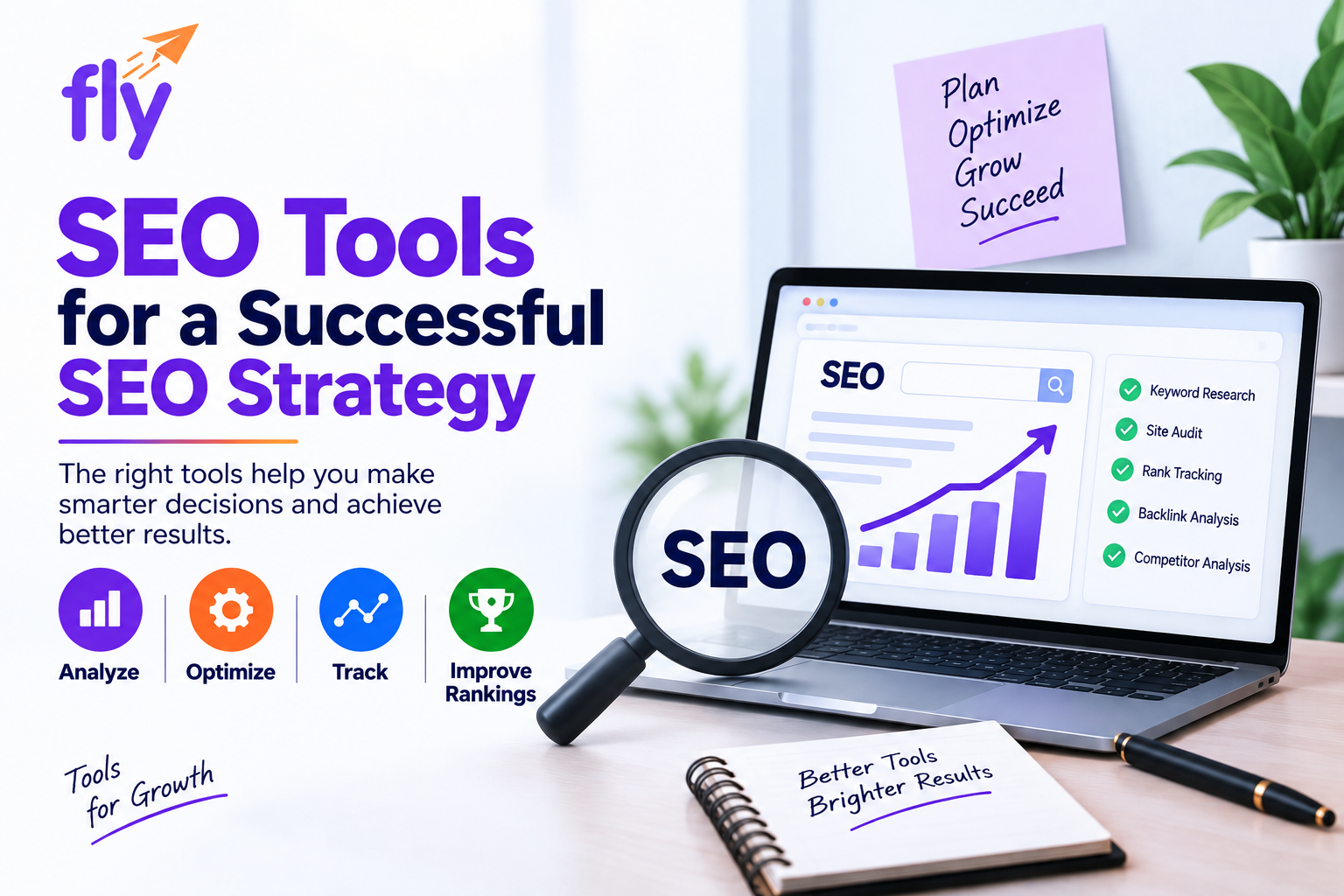
SEO becomes much harder when you are making decisions without knowing what is actually happening on your website.
A page may not be getting enough search visibility. Important keywords may be losing positions. Technical issues may be affecting the website, or competitors may be performing better in areas you have not checked.
Without the right information, it is easy to make changes based on assumptions.
This is why SEO tools are an important part of a successful SEO strategy. They help businesses and digital marketing agencies understand website performance, identify problems, track visibility, and discover areas that deserve attention.
SEO tools do not automatically create better rankings. Their real value is helping you make informed decisions about what to improve and what to monitor.
SEO Tools Give You a Clear Starting Point
Before improving SEO, you need to know where the website currently stands.
SEO tools can provide information about website health, search visibility, keywords, technical issues, local rankings, and other important areas.
This creates a useful starting point.
For example, instead of immediately rewriting website content because traffic has dropped, you can first investigate whether rankings changed, technical problems appeared, or important pages are having issues.
Understanding the current situation helps you avoid unnecessary changes and focus on areas that actually need work.
Find Website Problems That Are Easy to Miss
Many SEO problems are not obvious when you simply browse a website.
A page may look normal but still have missing metadata, broken links, crawl issues, duplicate elements, or other technical problems.
An SEO Site Audit Tool can help identify these issues more efficiently.
This is especially useful for larger websites where manually checking every page would take significant time.
However, an audit report should not become a checklist where every warning is treated equally.
Some problems may affect important pages, while others may have little impact. A successful SEO strategy involves understanding the findings and deciding which issues deserve priority.
Understand Your Search Rankings
Knowing where your website appears for relevant searches can help you understand whether your SEO efforts are moving in the right direction.
Ranking tools allow you to monitor important keywords over time.
Suppose a service page has moved down for an important search term. Instead of guessing why traffic changed, you now have information that can guide further investigation.
You can review the page, compare competitors, check search intent, and determine whether the content still provides enough value.
Ranking data becomes more useful when it helps you ask better questions rather than simply focusing on one position.
Discover Better Keyword Opportunities
Keywords help connect website content with what people are actually searching for.
Keyword research tools can help identify relevant search terms, related topics, and questions that may be useful when planning content.
But a successful keyword strategy is not about adding as many keywords as possible.
Search intent matters.
Someone searching for “how to improve local SEO” probably wants information, while someone searching for a specific service in a particular location may be closer to choosing a business.
Understanding these differences helps you create pages that match what users are trying to find.
SEO tools provide the data, but the content still needs to be useful, clear, and written for real people.
Understand Your Local Search Visibility
For local businesses, traditional website rankings provide only part of the picture.
Local search results can vary depending on where a person searches.
A business might have strong visibility around its physical location but appear differently across other areas it wants to serve.
A Local Rank Checker can help show these geographic differences.
This can be useful for restaurants, clinics, salons, home service companies, retailers, and other businesses that depend on customers from particular locations.
Instead of relying on a single search result, businesses and agencies can get a broader understanding of local visibility and use that information when planning Local SEO work.
Review Your Google Business Profile
A Google Business Profile can play an important role in how a local business appears across Google Search and Maps.
Over time, however, information can become outdated.
Opening hours may change, new services may be introduced, reviews may go unanswered, or old photos may no longer represent the business accurately.
A GMB Audit Tool can help identify areas that may need attention.
The audit can be considered alongside website and local ranking information to create a more complete view of the business's local presence.
Rather than treating the website and Google Business Profile as completely separate, businesses can review how both help customers find and understand the company.
Learn More From Customer Reviews
Customer reviews can reveal useful information that may not appear in traditional SEO reports.
People may repeatedly mention a particular service, product, employee experience, problem, or feature.
A Google Reviews Analyzer can help identify common themes when manually reading every review would take too much time.
These insights can support several parts of a marketing strategy.
Positive themes may reveal services that deserve more visibility. Frequently asked questions can inspire website content, while recurring concerns may highlight information customers need before making a decision.
Reviews therefore provide more than a rating. They can help businesses better understand what their customers are experiencing.
Keep Up With Changes in Search
Online search is evolving beyond traditional search engine results.
People are also using AI-powered platforms to research companies, compare solutions, and ask for recommendations.
This creates another area for businesses to understand: AI search visibility.
AI visibility tools can help investigate how a brand appears in AI-generated search experiences.
This should not replace traditional SEO analysis. Instead, it can provide an additional perspective.
By looking at website SEO, local search, reviews, Google Business Profile performance, and AI visibility together, businesses can develop a broader understanding of how they are being discovered online.
Use SEO Tools to Make Better Decisions
The biggest benefit of SEO tools is not the number of reports they can generate.
It is the quality of the decisions those reports can support.
Before making an SEO change, ask what problem you are trying to understand.
If you suspect technical issues, run a website audit.
If local visibility is unclear, check local rankings.
If your Google Business Profile may need improvement, audit the profile.
If you want to understand customer feedback, analyze your reviews.
If you want to investigate newer search experiences, review AI visibility.
Businesses and agencies can explore Fly Social's SEO tools to investigate different areas of their online presence based on the questions they need to answer.
This approach keeps SEO tools connected to real problems rather than using tools simply because they are available.
Track Progress Instead of Guessing
SEO is not usually a one-time activity.
Websites change, competitors update their strategies, new content is published, customer behaviour develops, and search engines continue to evolve.
Regular monitoring helps you understand what is changing.
You can compare website health, rankings, local visibility, and other useful signals over time.
When something changes unexpectedly, historical information can also provide useful context for investigating what happened.
This makes SEO management more structured and reduces the need to depend on assumptions.
Tools Support Strategy — They Do Not Replace It
An SEO tool can tell you that something may be wrong.
It cannot always decide the best solution for your business.
For example, an audit might identify a page with weak optimization, but deciding how to improve that page requires an understanding of the audience, search intent, competitors, and business goals.
The same applies to rankings and reviews.
Data needs context.
A successful SEO strategy combines useful tools with research, good content, technical improvements, ongoing monitoring, and informed decision-making.
Build Your SEO Strategy Around Useful Information
SEO becomes easier to manage when decisions are based on clear information rather than assumptions.
The right tools can help uncover website problems, track rankings, understand keywords, review local visibility, analyze customer feedback, and explore how a brand appears across newer search experiences.
But collecting data should never be the final goal.
Use SEO tools to understand what is happening, identify what deserves attention, take appropriate action, and then monitor the results.
That is where SEO tools become an important part of a successful and practical SEO strategy.
Frequently Asked Questions
Why are SEO tools important?
SEO tools help identify website problems, monitor search visibility, research keywords, track rankings, and provide information that can support better SEO decisions.
Do SEO tools automatically improve rankings?
No. SEO tools provide information and recommendations. Improvements depend on how effectively the findings are understood and used as part of an SEO strategy.
What SEO tools should a business use?
The right tools depend on the business's goals. Useful options may include an SEO Site Audit Tool, Local Rank Checker, GMB Audit Tool, Reviews Analyzer, keyword research tools, and AI Search Visibility tools.
How do SEO tools help with Local SEO?
Local SEO tools can help businesses understand geographic search visibility, review their Google Business Profile, monitor customer feedback, and identify areas that may need attention.
How often should SEO tools be used?
There is no fixed schedule for every website. Tools can be useful during initial audits, after major website changes, when performance changes unexpectedly, and for regular SEO monitoring.
- Managerial Effectiveness!
- Future and Predictions
- Motivatinal / Inspiring
- Fitness and Wellness
- Medical & Health
- Manufacturing
- Éducation
- Real-Estate
- Food Industry
- Hospitality
- Online Games
- Sports
- Home Services
- Civil Engineering
- Safety and Protection
- Software Products & Services
- Fashion and Jewellery
- Artificial Intelligence
- Entrepreneurship
- Mentoring & Guidance
- Marketing
- Networking
- HR & Recruiting
- Literature
- Shopping
- Career Management & Advancement