

 SkillClick
Building Scalable Digital Platforms for Long-Term Growth
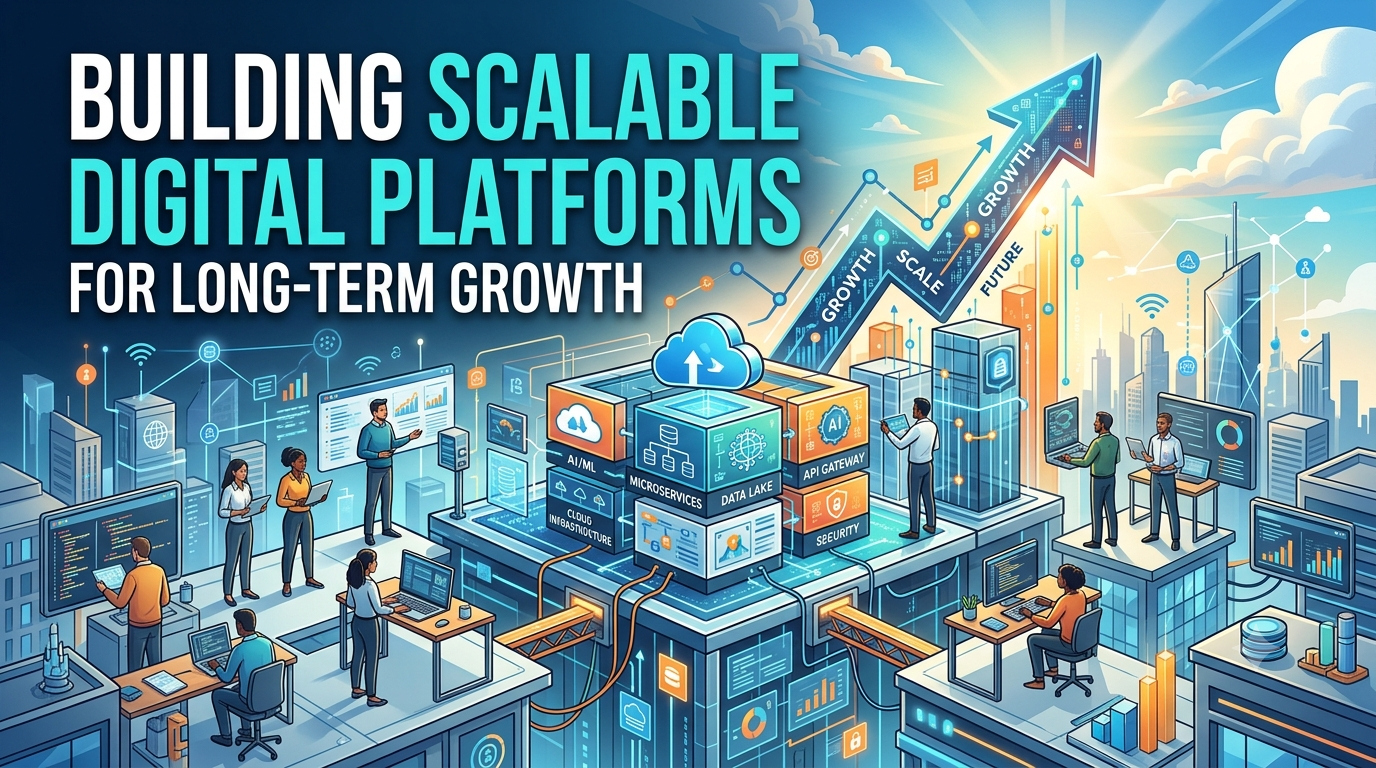
In today’s digital-first business environment, companies need technology that can grow alongside their changing needs. A digital platform may start with a small number of users, limited features, and simple processes, but success can quickly increase demand. If the underlying technology is not prepared for that growth, performance problems, higher costs, and poor user experiences can follow. Building scalable digital platforms helps businesses prepare for increasing traffic, expanding services, larger data volumes, and new market opportunities without constantly rebuilding their technology.
Scalability is not simply about handling more users. It is about creating a strong digital foundation that can adapt as business requirements change. A well-planned platform can support new features, connect with other systems, improve security, and maintain reliable performance over time.
What Does a Scalable Digital Platform Mean?
A scalable digital platform is designed to handle growth without a major decline in performance or reliability. Growth can come in many forms. A business may gain thousands of new customers, introduce additional services, enter a new market, or process much larger amounts of information.
For example, an online shopping platform may initially serve a few hundred customers each day. As its popularity increases, it may need to process thousands of orders, manage more product information, support additional payment methods, and provide faster customer service. A scalable architecture makes it easier to accommodate these changes.
The goal is to make growth manageable rather than disruptive.
Why Scalability Matters for Modern Businesses
Technology is now closely connected to everyday business operations. When a platform becomes slow or unreliable, customers may leave, employees may struggle to complete tasks, and business opportunities can be lost.
A scalable platform provides room for expansion while reducing the need for frequent large-scale technology changes. It also gives businesses more flexibility when introducing new products or services.
Scalability can support several important areas:
- Better performance during periods of high demand
- Easier integration with new technologies
- More efficient use of computing resources
- Improved customer experiences
- Greater flexibility for future development
A platform that is designed with future requirements in mind can also reduce the pressure associated with sudden growth.
Start With Clear Business Requirements
Technology decisions should begin with business goals rather than technical trends. Before building a platform, organizations should understand what they want to achieve and who will use the system.
Questions about expected users, business processes, data requirements, security needs, integrations, and future expansion can help define the right approach.
For instance, a platform designed for an internal team may have very different requirements from a public-facing application serving millions of users. Understanding these differences early helps prevent unnecessary complexity and makes development more focused.
Create a Strong Technical Architecture
Architecture is one of the most important parts of scalability. A platform should be structured so that individual components can be improved or expanded without affecting the entire system.
A modular approach can make this easier. Instead of putting every function into one large system, different responsibilities can be organized into manageable components. This allows development teams to update specific areas while reducing the risk of disrupting unrelated features.
The architecture should also consider how the platform will respond when demand increases. Resources may need to scale according to traffic, data processing requirements, or business activity.
Choose Technology That Can Adapt
Technology choices have a direct effect on how easily a platform can grow. Programming frameworks, databases, hosting environments, APIs, and other infrastructure components should be selected according to actual business requirements.
There is no single technology stack that is perfect for every organization. The right choice depends on factors such as expected traffic, application complexity, budget, security requirements, development skills, and long-term goals.
Businesses should avoid selecting technologies simply because they are popular. A practical technology decision focuses on reliability, maintainability, compatibility, and future requirements.
The Role of Custom Solutions in Scalability
Off-the-shelf software can be useful for common business needs, but some organizations require solutions that closely match their processes. A carefully planned Custom Application Development approach can help create software around specific workflows, user requirements, and growth objectives.
The key is not to add customization simply for the sake of being different. Custom features should solve real business problems and provide measurable value. A well-designed solution can also make it easier to introduce new capabilities as the organization grows.
Build With Integration in Mind
Modern businesses rarely depend on a single software system. They often use payment services, customer relationship tools, accounting platforms, analytics systems, communication tools, and other applications.
Application programming interfaces, commonly known as APIs, make it possible for different systems to communicate with one another. When integration is considered during the planning stage, businesses can avoid creating isolated systems that are difficult to connect later.
Good integration also reduces repetitive data entry and can help information move more efficiently between business functions.
Use Cloud Infrastructure Wisely
Cloud infrastructure can provide valuable flexibility for growing platforms. Instead of depending entirely on fixed physical resources, businesses can use cloud-based computing, storage, databases, and other services according to their requirements.
However, moving to the cloud does not automatically make a platform scalable. Architecture, configuration, application design, monitoring, and resource management still matter.
Organizations should select cloud services based on their workload and operational needs rather than assuming that every available service is necessary.
Design for Performance From the Beginning
Performance should not be treated as a final-stage improvement. It should be considered throughout the platform lifecycle.
Slow pages, delayed responses, and system errors can negatively affect user satisfaction. Developers can improve performance through techniques such as efficient database queries, caching, optimized code, content delivery strategies, and appropriate resource allocation.
Regular performance testing can also reveal bottlenecks before they become serious problems. Testing under realistic traffic conditions provides a clearer understanding of how the platform may behave during periods of high demand.
Make Security Part of the Foundation
Growth often means more users, more data, and more connections. This makes security an essential part of scalable platform design.
Security should be considered at every stage, from user authentication and access controls to data protection, system monitoring, and software updates. Sensitive information should be handled carefully, and permissions should be limited according to actual user responsibilities.
Regular security assessments and timely updates can help organizations reduce avoidable risks. Building security into the platform from the beginning is generally more effective than trying to fix major weaknesses after the system has already grown.
Keep the User Experience Simple
A technically powerful platform is not successful if users find it difficult to use. As features increase, there is a risk that applications become complicated and confusing.
Good design focuses on clear navigation, understandable language, responsive interfaces, and logical workflows. Users should be able to complete common tasks without unnecessary steps.
Accessibility should also be considered so that people with different abilities can interact with the platform effectively. A simple and consistent experience can support both customer satisfaction and long-term adoption.
Plan for Monitoring and Maintenance
A scalable platform needs continuous attention after launch. Monitoring tools can help teams understand application performance, resource usage, errors, and unusual activity.
Data collected through monitoring can help identify problems before they have a significant effect on users. Teams can also use these insights to decide when additional resources, optimization, or architectural changes may be required.
Maintenance is equally important. Software dependencies need updates, security issues need attention, and business requirements can change over time. A platform should therefore be treated as an evolving product rather than a one-time project.
Build Flexible Tech Platforms for the Future
Businesses cannot always predict exactly what their technology requirements will look like several years from now. New customer expectations, market conditions, regulations, and digital technologies can change the direction of a company.
This is why Flexible Tech Platforms are valuable. Flexibility allows organizations to add capabilities, connect new services, and adjust existing processes without replacing the entire system.
A flexible platform does not mean building everything in advance. Instead, it means creating a foundation that can accommodate reasonable changes without unnecessary disruption.
Test, Learn, and Improve Continuously
Scalability should be tested rather than assumed. Development teams can use load testing, stress testing, security testing, and performance monitoring to understand how the platform behaves under different conditions.
Real-world feedback is equally important. Users can identify problems that may not appear during technical testing. Combining performance data with user feedback gives businesses a stronger basis for making improvements.
Continuous improvement also helps organizations avoid large technology changes later because smaller improvements can be made as needs develop.
Common Challenges in Building Scalable Platforms
Creating a scalable platform can involve several challenges. One common problem is trying to predict future requirements too precisely. Businesses may spend significant resources building features that are never needed.
Another challenge is technical complexity. Adding too many technologies or services can make systems difficult to maintain. Poorly planned integrations can also create dependencies that slow future development.
Cost management is another important consideration. Scalability should not mean continuously increasing infrastructure spending. Efficient architecture and resource management are necessary to balance performance with operational costs.
The best approach is usually to build for realistic growth while keeping the system adaptable.
Conclusion
Building scalable digital platforms is about creating technology that can support today’s operations while remaining prepared for tomorrow’s opportunities. Strong architecture, thoughtful technology choices, effective integration, reliable performance, security, usability, and continuous monitoring all contribute to a platform that can grow successfully.
Businesses should focus on practical requirements instead of following technology trends without a clear purpose. A scalable platform should solve current problems while providing enough flexibility to respond to future changes. With careful planning and continuous improvement, organizations can create digital systems that remain useful, reliable, and competitive as their needs evolve.
OutRight Systems understands the importance of creating technology solutions that support sustainable business growth. By focusing on practical digital foundations, flexible architecture, and user-focused experiences, businesses can build platforms that are ready to grow with them.
- Managerial Effectiveness!
- Future and Predictions
- Motivatinal / Inspiring
- Fitness and Wellness
- Medical & Health
- Manufacturing
- Educação
- Real-Estate
- Food Industry
- Hospitality
- Online Games
- Sports
- Home Services
- Civil Engineering
- Safety and Protection
- Software Products & Services
- Fashion and Jewellery
- Artificial Intelligence
- Entrepreneurship
- Mentoring & Guidance
- Marketing
- Networking
- HR & Recruiting
- Literature
- Shopping
- Career Management & Advancement