

 SkillClick
What Should Buyers Check Before Choosing jinglitools Air Compressor Machine?
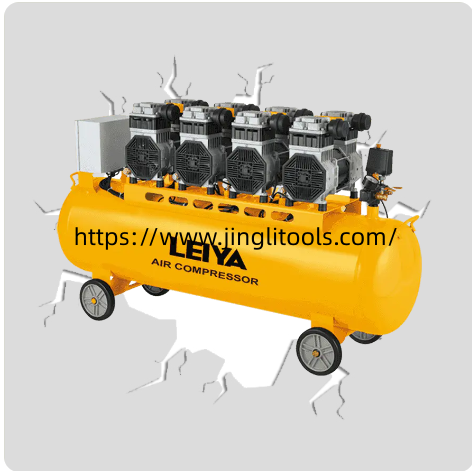
Air Compressor Machine selection should begin with the actual requirements of the workplace rather than a simple comparison of purchase prices. Buyers need to consider pressure demand, output capacity, motor power, working frequency, installation conditions, maintenance access, and the type of equipment that will use the compressed gas. A clear understanding of these factors allows purchasers to create a practical specification and communicate their needs more effectively with a manufacturer. For customers considering industrial equipment from jinglitools, this approach can also make product comparison more straightforward.
Start With Actual Working Requirements
Every workshop or production facility has a different operating pattern. Some applications require compressed gas for several hours each day, while others may operate intermittently. Buyers should identify how frequently the equipment will run and whether demand remains relatively stable or changes during different production stages.
It is also useful to identify the number of connected devices. Pneumatic tools, assembly equipment, cleaning systems, and other machinery may operate at the same time. Adding together their actual requirements provides a more realistic reference than selecting equipment according to a single application.
Future expansion should also be considered. If a factory expects to add production equipment, the initial specification should leave reasonable room for changing demand without selecting an unnecessarily large configuration.
Check Pressure and Output Capacity
Pressure and output capacity are two important specifications during equipment selection. A buyer should determine the pressure required by the connected equipment and consider potential losses caused by hoses, pipes, filters, valves, and other components.
The pressure shown on a product specification sheet does not necessarily represent the pressure available at every point of use. Installation layout can affect the final result, particularly when equipment is positioned far from the supply station.
Output capacity should also match actual consumption. A unit that cannot support peak demand may cause pressure fluctuations during busy periods. On the other hand, selecting a configuration substantially larger than the actual requirement can increase equipment and operating costs. Reviewing average demand, peak demand, and operating schedules provides a more useful basis for selection.
Consider the Installation Environment
The physical environment can influence equipment operation and maintenance. Before placing an order, buyers should check available floor space, ventilation, ambient temperature, electrical supply, drainage arrangements, and access for routine service.
A compact workshop may have limited installation space, while a larger factory may need to consider equipment placement within an existing utility area. Adequate ventilation is particularly important because heat generated during operation needs to be managed appropriately.
Noise can also be relevant in workshops where operators work close to the equipment. Buyers should review the manufacturers specifications and consider whether additional installation measures are required for their working environment.
Review Controls and Maintenance Requirements
Modern industrial equipment may include control functions that help operators monitor working conditions and adjust operation according to demand. Buyers should check which control functions are included and whether the interface is convenient for daily use.
Maintenance should be considered before purchase rather than after installation. Ask about inspection points, filter replacement, lubrication requirements where applicable, service intervals, and access to commonly replaced components.
A practical maintenance design can make routine servicing easier for factory technicians. Buyers should also ask the supplier about spare parts availability and technical assistance. Clear documentation can be useful when multiple operators or maintenance personnel work with the same equipment.
Compare the Manufacturer, Not Only the Product
Product specifications are important, but the manufacturer also deserves careful attention. Buyers can review production experience, quality inspection procedures, customization capabilities, communication efficiency, delivery arrangements, and after-sales support.
For an industrial purchaser, supplier communication can be especially important when the application requires a specific pressure, capacity, electrical configuration, or installation arrangement. A manufacturer that can clearly discuss these requirements may help reduce misunderstandings before production begins.
jinglitools focuses on providing equipment for practical workshop and industrial applications, giving buyers an opportunity to discuss specifications according to their intended working conditions. Customers can review available configurations and communicate their application requirements before making a purchasing decision.
Think About Long-Term Operating Costs
Purchase price is only one part of the overall equipment budget. Electricity consumption, routine maintenance, replacement components, service requirements, and possible downtime can all affect long-term expenses.
Buyers should therefore compare equipment according to its expected operating schedule rather than looking only at the initial quotation. Asking suppliers for detailed technical specifications can help purchasers estimate whether a particular configuration fits their workload.
It is also useful to keep records of expected operating hours and maintenance requirements. These details can support future purchasing decisions and make it easier to compare different configurations based on actual factory conditions.
For buyers looking to review suitable products, specifications, and available industrial equipment from the manufacturer, the product range can be viewed at https://www.jinglitools.com/product/ By comparing working requirements, technical specifications, installation conditions, maintenance needs, and supplier support together, customers can make a more informed purchasing decision for their workshop or production environment.
- Managerial Effectiveness!
- Future and Predictions
- Motivatinal / Inspiring
- Fitness and Wellness
- Medical & Health
- Manufacturing
- Educação
- Real-Estate
- Food Industry
- Hospitality
- Online Games
- Sports
- Home Services
- Civil Engineering
- Safety and Protection
- Software Products & Services
- Fashion and Jewellery
- Artificial Intelligence
- Entrepreneurship
- Mentoring & Guidance
- Marketing
- Networking
- HR & Recruiting
- Literature
- Shopping
- Career Management & Advancement