

 SkillClick
Manual Tile Cutter or Chamfering Machine: Picking the Right One for the Job
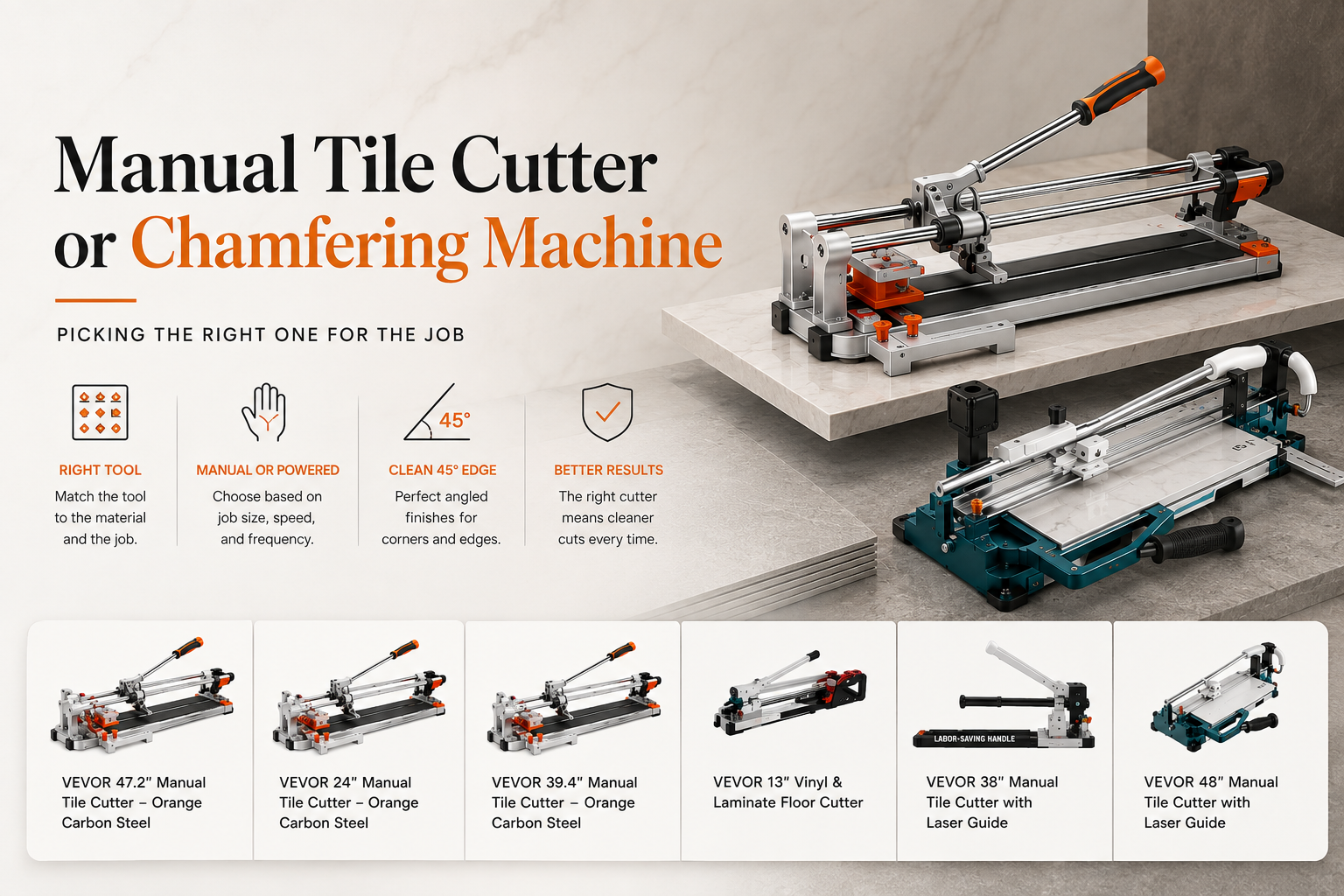
A box of tiles sits by the wall, edges rough and slightly uneven from the last attempt with a hand file. Anyone who has tried finishing a small bathroom splashback or a full roofline knows the moment. You need one clean, repeatable cut, and the tool you grab for it makes more difference than most people expect going in.
That's usually the point someone starts looking at a tile cutter online, and quickly runs into more options than the job seemed to call for. Here's how to actually sort through them.
Tile Cutter or Shingle Cutter? The Material Decides
A tile cutter and a shingle cutter sound like they might do the same job, but the material behind each name is genuinely different. Tiles are hard and often brittle, so a clean cut needs the right blade or wheel to avoid cracking the piece. Shingles are softer and layered, so the cutting action needs to slice cleanly through material without tearing the edge.
Grouping both under one general category makes sense from a shopping standpoint, but it's worth knowing which tool actually matches the material in front of you before picking one up. A tool built for hard, brittle tile isn't doing its best work on a soft, layered shingle, and the reverse is just as true.
Manual or Powered: What Actually Fits the Job
A manual tile cutter works with a scoring wheel and a hand-operated lever, no motor, no power cord. It's simple to use and suits smaller jobs done at a steady, controlled pace, a splashback, a small floor section, anything where precision matters more than speed.
A tile chamfering machine is a powered tool, built for repeat, precise cuts along a tile or metal edge. If a job needs the same angled cut made many times over, a powered machine earns its price back quickly in time saved. For a single job or an occasional repair, a manual tool usually does the job just as well for a fraction of the cost.
Getting a Clean 45 Degree Edge
A 45 degree tile cutter doesn't cut a tile in half, it shapes a clean angled edge instead, mainly used where two tiled surfaces meet at a corner, giving a smooth joint rather than a raw square edge.
Getting this angle right by hand, with a file or a basic blade, takes practice and rarely comes out perfectly consistent. A dedicated chamfering machine holds the angle steady by design, which is why it tends to be the more reliable choice when the finish needs to look the same across many tiles, rather than slightly different on each one.
What First-Time Buyers Usually Get Wrong
The most common mistake is assuming one tool covers everything in this category. A tile cutter, a shingle cutter, and a chamfering machine each solve a different problem, and it helps to be clear on the actual task first rather than picking whichever looks most versatile in the listing photo.
The second mistake is skipping the material check. A cutter suited to ceramic won't necessarily behave the same way on tougher material like granite or porcelain, so it's worth confirming what a specific listing is actually built for before buying.
The third is picking tool size or type based on price rather than the job itself. A manual cutter bought for a large repeat job, or a powered machine bought for a single one-off cut, usually isn't the best fit either way, even if it's the cheaper or more impressive-looking option on the page.
Most people who buy tile cutter online without checking these three things end up either underpowered for the job or paying for capability they never actually use. Matching the tool to the material and the number of cuts you actually need solves most of the decision before price ever has to be the deciding factor.
- Managerial Effectiveness!
- Future and Predictions
- Motivatinal / Inspiring
- Fitness and Wellness
- Medical & Health
- Manufacturing
- Éducation
- Real-Estate
- Food Industry
- Hospitality
- Online Games
- Sports
- Home Services
- Civil Engineering
- Safety and Protection
- Software Products & Services
- Fashion and Jewellery
- Artificial Intelligence
- Entrepreneurship
- Mentoring & Guidance
- Marketing
- Networking
- HR & Recruiting
- Literature
- Shopping
- Career Management & Advancement