

 SkillClick
Dental Crowns for Damaged Teeth: A Complete Patient Guide
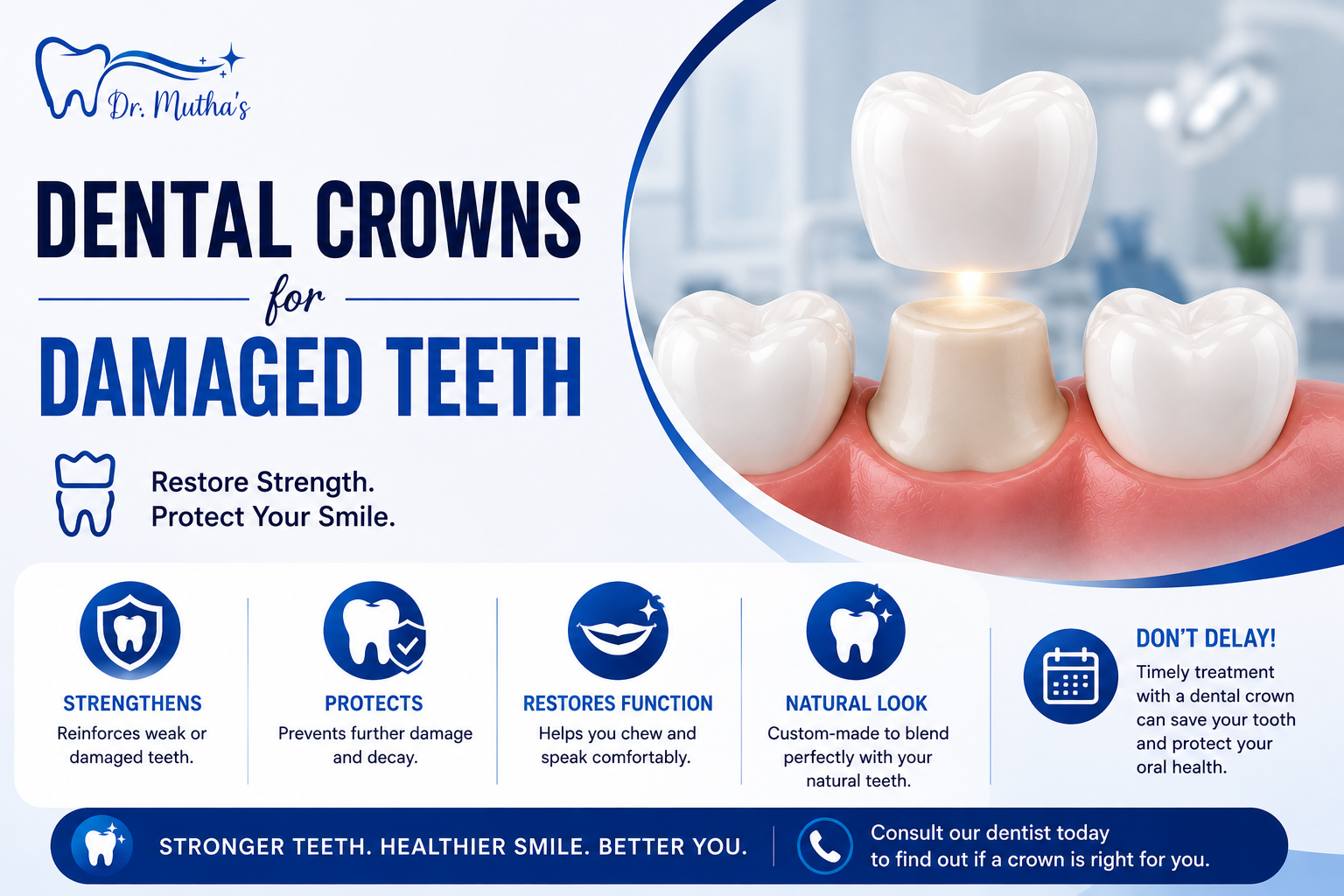
A damaged tooth can affect more than the appearance of your smile. Depending on the extent of the damage, it may become sensitive, uncomfortable while chewing, difficult to clean, or more vulnerable to further breakdown.
Fortunately, a damaged tooth does not always need to be removed. When enough healthy tooth structure remains, a dental crown may be used to restore the tooth and provide additional protection.
Crowns are commonly considered for teeth affected by extensive decay, fractures, large fillings, significant wear, or certain previous dental treatments. However, not every damaged tooth requires one.
This guide explains dental crowns for damaged teeth, including when they may be recommended, how treatment works, the different materials available, and how to care for a crowned tooth.
What Is a Dental Crown?
A dental crown is a custom-made restoration designed to cover the visible portion of a prepared tooth.
It is sometimes called a "cap" because it fits over the remaining tooth structure.
A filling generally replaces a particular damaged or decayed area. A crown provides broader coverage and may therefore be considered when a larger portion of the tooth has been weakened.
The crown is designed to restore the tooth's shape and chewing surface while helping protect the remaining natural structure.
Why Do Teeth Become Damaged?
Teeth are strong, but they can lose structure over time or become damaged unexpectedly.
Common causes include:
- Tooth decay
- Cracks and fractures
- Large or ageing fillings
- Dental injuries
- Tooth grinding or clenching
- Significant tooth wear
- Previous dental treatment
- Biting very hard objects
The amount and location of damage influence which treatment is appropriate.
A minor chip, for example, may not require the same treatment as a tooth that has lost a large part of its structure.
When Might a Damaged Tooth Need a Crown?
A dentist may consider a crown when the remaining tooth requires more coverage than a filling can provide.
Large Cavities
A small cavity can often be restored with a filling. When decay affects a substantial portion of the tooth, removing it may leave limited healthy structure behind.
If the remaining tooth is suitable for restoration, a crown may provide broader protection.
Large Existing Fillings
A tooth containing a large filling may have relatively thin areas of natural tooth remaining around it.
If these areas become weakened or fractured, the dentist may recommend a crown depending on the condition of the tooth.
Cracked or Broken Teeth
A crown can sometimes restore a tooth that has lost part of its structure because of a fracture.
Cracks require particularly careful assessment because their depth and location can influence whether the tooth can be predictably restored.
Worn Teeth
Significant tooth wear can change the shape and function of a tooth. Depending on the cause and severity, restorative treatment such as a crown may be considered.
After Root Canal Treatment
Some teeth require additional restorative protection after root canal treatment, particularly when a considerable amount of natural structure has already been lost.
The appropriate restoration depends on the individual tooth rather than root canal treatment automatically meaning that a crown is required.
If you are uncertain whether the amount of damage to your tooth justifies crown treatment, learn when dental crowns may be the right choice for damaged teeth. Understanding the reasons crowns are recommended can help you have a more informed discussion with your dentist.
How Does a Dental Crown Help a Damaged Tooth?
A crown can serve several purposes depending on the condition of the tooth.
Restoring Lost Tooth Structure
When part of a tooth has broken or been removed because of decay, a crown can rebuild its external shape.
Restoring Chewing Function
Damage can alter the biting surface of a tooth. A properly planned crown recreates an appropriate surface for biting and chewing.
Covering Weakened Structure
By covering the prepared portion of a weakened tooth, a crown can provide broader protection to the remaining structure.
Improving Appearance
Tooth-coloured crowns can also restore the appearance of teeth affected by structural damage, depending on the clinical situation and crown material.
A crown does not make a tooth indestructible. The natural tooth underneath and surrounding gums still require regular care.
Crown or Filling: How Is the Decision Made?
Patients sometimes assume a crown is simply a larger or stronger filling. In reality, the two restorations have different uses.
A filling replaces a particular area of damaged tooth structure. When enough healthy tooth remains, it can be an appropriate conservative treatment.
A crown covers much more of the prepared tooth and may be considered when the remaining structure needs greater protection.
A dentist may evaluate the following:
- Size of the damaged area
- Amount of healthy tooth remaining
- Location of cracks or fractures
- Condition of existing fillings
- Position of the tooth
- Bite and chewing forces
- Previous treatment
- Condition of the surrounding gums
The goal should be to preserve healthy natural tooth structure while selecting a restoration suitable for the amount of damage present.
What Types of Dental Crowns Are Available?
Dental crowns can be made from different materials, and each option has different clinical characteristics.
Ceramic or Porcelain Crowns
Ceramic restorations can provide a natural tooth-like appearance and may be considered when aesthetics are important.
Zirconia Crowns
Zirconia is a type of dental ceramic used for a range of crown restorations. Different forms are available depending on strength and aesthetic requirements.
Porcelain-Fused-to-Metal Crowns
These crowns combine a metal base with an outer porcelain layer.
Metal Crowns
Metal-based crowns may be used in selected clinical situations.
The most appropriate material depends on the location of the tooth, available space, bite, remaining tooth structure, aesthetic requirements, and other clinical factors.
What Happens During Dental Crown Treatment?
Crown treatment begins with an examination.
Your dentist assesses the damaged tooth and surrounding tissues. Dental X-rays may also be needed depending on the condition of the tooth.
If a crown is appropriate, damaged or decayed material is managed first. The remaining tooth is then prepared to create the required shape and space for the crown.
An impression or digital scan is taken to record the prepared tooth and surrounding teeth.
Depending on the treatment process, a temporary crown may be placed while the final restoration is being prepared.
When the final crown is ready, your dentist checks important details such as:
- Fit
- Bite
- Contact with neighbouring teeth
- Shape
- Appearance
Once these have been assessed, the crown can be secured in place.
What Is a Temporary Crown?
A temporary crown may protect the prepared tooth until the final crown is ready.
Because it is designed for temporary use, it may require additional care.
Follow your dentist's instructions about eating and cleaning around it. If the temporary crown becomes loose or comes off, contact the dental clinic rather than attempting a permanent repair yourself.
Is Getting a Dental Crown Painful?
Local anesthesia may be used during tooth preparation to keep the treatment area comfortable.
Some patients may notice temporary sensitivity or mild gum tenderness following treatment.
Your experience can depend on the condition of the tooth and the treatment performed.
Pain that persists, becomes stronger, or occurs when biting should be discussed with your dentist.
Can Every Damaged Tooth Be Restored With a Crown?
No.
A crown can only be considered when the tooth is suitable for restoration.
Some teeth may have extensive decay, severe fractures, insufficient remaining structure, or problems involving the supporting tissues that make crown treatment inappropriate.
In these cases, the dentist will explain whether another treatment is more suitable.
This is one reason it is useful to have a damaged tooth examined early instead of waiting until a larger portion breaks away.
How Should You Care for a Dental Crown?
A crowned tooth still contains natural tooth structure, so daily oral hygiene remains essential.
After receiving a crown:
- Brush thoroughly twice a day
- Clean between the teeth regularly
- Pay attention to the gum line around the crown
- Avoid using your teeth to open packaging
- Avoid repeatedly biting very hard non-food objects
- Attend routine dental examinations
- Have loose or damaged crowns checked promptly
If you grind or clench your teeth, tell your dentist so the effect on your teeth and restorations can be evaluated.
Can Decay Develop Under a Crown?
Yes.
A crown covers a tooth but does not make it immune to decay.
A natural tooth remains underneath and around the margins of the restoration. Plaque can accumulate where the crown meets the tooth, especially when cleaning is inadequate.
Decay may therefore develop around crown margins.
Maintaining good oral hygiene and attending regular dental examinations remain important even when the crown feels completely normal.
How Long Do Dental Crowns Last?
There is no fixed lifespan that applies to every dental crown.
Longevity can be influenced by:
- Crown material
- Condition of the underlying tooth
- Oral hygiene
- Bite forces
- Grinding or clenching
- Diet and habits
- Regular dental care
Crowns should be checked during routine dental visits so that the restoration, underlying tooth, surrounding gum, and bite can be monitored.
Signs Your Crown Should Be Checked
Arrange a dental evaluation if you notice:
- A crown that feels loose
- Pain when biting
- Persistent sensitivity
- A chipped or cracked crown
- Swelling around the tooth
- Food repeatedly trapping around the crown
- A noticeable change in your bite
These signs do not necessarily mean the crown needs replacement, but they should be professionally assessed.
Frequently Asked Questions
Does every damaged tooth need a crown?
No. Minor damage may be suitable for a filling or another conservative treatment. A crown is generally considered when greater coverage or protection is required.
Can a crown save a broken tooth?
Some broken teeth can be restored with crowns if sufficient suitable tooth structure remains. The extent and location of the fracture must first be evaluated.
Do I need a crown after root canal treatment?
Not every root canal-treated tooth requires the same restoration. Your dentist will consider the tooth involved, remaining structure, and biting forces before recommending treatment.
Can I eat normally with a dental crown?
A final crown is designed to restore dental function. Follow any specific instructions from your dentist, particularly immediately after placement.
Do dental crowns need special cleaning?
Crowns do not usually require a completely separate cleaning routine, but careful brushing and cleaning between the teeth are essential, especially around crown margins.
A Crown Can Protect a Tooth, but the Right Diagnosis Comes First
Dental crowns for damaged teeth can help restore shape, chewing function, and protection when a tooth has lost a significant amount of natural structure.
However, crown treatment should not be based only on the fact that a tooth is damaged. The extent of decay or fracture, amount of healthy structure remaining, bite, previous treatment, and overall condition of the tooth all need to be considered.
Having the tooth examined early can help determine whether a filling, crown, or another treatment is the most appropriate way to preserve it.
Have a damaged, cracked, heavily filled, or worn tooth? Book an evaluation with Dr. Mutha's Dental to understand the extent of the damage and discuss whether a dental crown is an appropriate option for restoring and protecting your tooth.
- Managerial Effectiveness!
- Future and Predictions
- Motivatinal / Inspiring
- Fitness and Wellness
- Medical & Health
- Manufacturing
- Education
- Real-Estate
- Food Industry
- Hospitality
- Online Games
- Sports
- Home Services
- Civil Engineering
- Safety and Protection
- Software Products & Services
- Fashion and Jewellery
- Artificial Intelligence
- Entrepreneurship
- Mentoring & Guidance
- Marketing
- Networking
- HR & Recruiting
- Literature
- Shopping
- Career Management & Advancement