

 SkillClick
Cat Breeds List: How to Match Furniture to Your Cat's Size
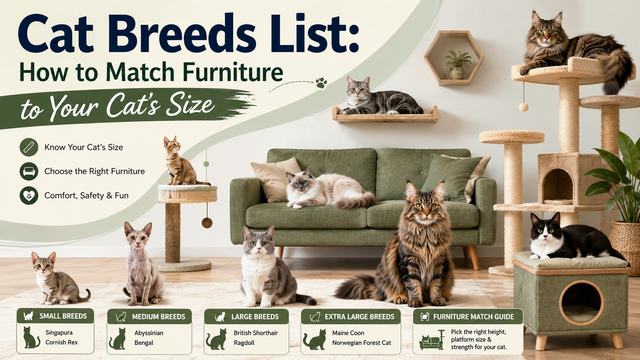
A Maine Coon sprawled across a cat tree built for a Devon Rex looks about as comfortable as an adult trying to nap in a toddler's bed. Furniture sizing is one of the most overlooked parts of cat ownership, and it's costing owners money on pieces their cats simply outgrow or ignore.
Why Size Matters More Than Style
Most people shop for cat furniture the way they shop for a throw pillow — based on how it looks in the room. That's backwards. A cat's skeletal frame, weight, and activity level should decide the purchase before color or material ever enters the conversation.
Take weight as the starting point. A Singapura, one of the smallest recognized breeds, tops out around 4-8 pounds. A Maine Coon can reach 18-25 pounds, with some males pushing past that. A platform rated for a 10-pound cat won't hold up long under a coon-sized frame, and the wobble alone will teach a nervous cat to avoid the furniture entirely.
Height matters too. Long-bodied breeds like the Oriental Shorthair need wider platforms to land safely, while stockier breeds like the British Shorthair need sturdier bases because their weight sits low and dense.
Reading a Cat Breeds List Before You Shop
Checking a full Cat Breeds List before buying furniture saves a lot of returns and regret. Registries don't even agree on how many breeds exist — CFA recognizes 45, while TICA recognizes 73, largely because TICA accepts more experimental and regional breeds still working toward full standardization.
That gap matters for furniture shoppers because it means breed standards for weight, coat length, and build vary depending on which registry you're referencing. A CFA-standard Ragdoll and a TICA-registered hybrid breed can have meaningfully different size expectations even if they look similar in photos.
Before buying a Cat Tree for Large Cats, cross-reference your cat's breed (or best-guess mix) against average adult weight and shoulder height. Large-breed trees typically use thicker posts — 4 inches or more in diameter — and wider base footprints to prevent tipping.
Coat Type Changes the Furniture Equation Too
Coat isn't just about grooming — it affects how a cat interacts with furniture surfaces.
- Long-haired breeds (Persian, Norwegian Forest Cat, Ragdoll) shed heavily onto sisal-wrapped posts and carpeted platforms. Owners of these breeds should budget for more frequent vacuuming and consider furniture with removable, washable covers.
- Short-haired breeds (Bengal, Siamese, Abyssinian) generally leave less debris but scratch more aggressively due to higher activity levels, so scratching posts need denser sisal rope, not the thin decorative kind.
- Hairless breeds (Sphynx) need warmer materials entirely — plush or fleece-lined platforms instead of bare wood or sisal, since they lack the insulation a coat provides.
Grooming load also plays into furniture choice. A Persian needs daily brushing and produces enough loose fur that owners often add a lint roller to their weekly furniture-cleaning routine. A Cornish Rex, by contrast, has minimal shedding and rarely needs more than a wipe-down.
Matching Temperament to Furniture Type
Size gets most of the attention, but temperament decides whether a cat will actually use what you buy.
High-energy breeds like the Bengal or Abyssinian do best with vertical space — tall trees, wall-mounted shelves, and a Cat Wheel if floor space allows. These breeds were bred from more active lineages and get restless without an outlet for that energy. A stationary bed alone won't cut it.
Calmer breeds like the Ragdoll or British Shorthair are often happier with wide, low platforms they can stretch out on rather than climb. Ragdolls in particular tend to prefer ground-level or mid-height perches over the tallest branch of a tree.
Territorial or shy breeds — Russian Blues fall into this category — benefit from enclosed spaces. A covered Cat House or an enclosed cubby on a tree gives them a retreat rather than forcing them into open, exposed platforms.
If you're outfitting a multi-cat household with mixed breeds, stagger furniture types rather than buying one tree and expecting every cat to share it happily. Different Cat Breeds have very different space needs, and cats in general are not naturally inclined to timeshare vertical territory.
Indoor-Outdoor Access Changes What You Need
Cats with any outdoor access — whether a supervised patio, catio, or free roam — need different furniture than strictly indoor cats.
An Outdoor Cat Tree should use weather-resistant materials: treated wood, marine-grade rope instead of standard sisal, and drainage gaps so rain doesn't pool on platforms. Breeds with thick double coats, like the Norwegian Forest Cat or Siberian, tolerate outdoor structures better in cold climates because they're built for it. A Sphynx or Devon Rex, both low-body-fat breeds with minimal coat protection, generally shouldn't spend extended time on outdoor structures regardless of the weather.
An Outdoor Cat House functions differently from a tree — it's shelter first, play space second. Insulated walls and a raised floor keep it dry and warmer than ground level, which matters most for breeds without heavy coats.
For cats moving between indoor and outdoor spaces, a Cat Tunnel connecting entry points gives them a sense of security during the transition and can double as an enrichment feature indoors.
Small Details That Add Up
A few smaller factors get overlooked in furniture shopping but affect long-term satisfaction:
Regional sourcing matters for sizing standards. A Cat Tree UK buyer working with UK-based retailers may notice slightly different sizing conventions than US suppliers, since average breed weights referenced in product listings sometimes follow different regional data. Double-check dimensions in inches or centimeters rather than trusting size labels like "large" or "extra-large," which aren't standardized across brands.
An Rhr Cat Tree and similar mid-range brands often list weight capacity per platform, not just overall tree capacity — worth checking if you have a heavier breed, since a tree can technically "hold" 20 pounds total while no single shelf supports more than 8.
Litter habits tie into furniture placement. Cats that use Clumping Cat Litter tend to track less debris than cats using non-clumping alternatives, which matters if furniture sits near the litter box. Placing a tree or scratching post too close to litter areas can also discourage some breeds — Persians especially — from using either space comfortably.
FAQ
Does a cat's breed really determine what furniture it needs, or is this overthinking it? Breed is a strong predictor of weight, coat type, and activity level, all of which directly affect furniture durability and whether a cat will actually use the piece. It's not the only factor — individual personality matters too — but ignoring breed tendencies is a common reason furniture goes unused.
Is it worth buying oversized furniture for a small or medium breed just in case? Not usually. Oversized platforms can feel exposed and unstable to smaller cats, who often prefer snugger, more enclosed spaces. Sizing to the breed's actual range, with a small buffer for growth if the cat is still young, tends to work better than buying the largest option available.
How often should furniture be reassessed as a cat ages? Check fit and stability roughly once a year, or sooner if the cat has gained weight, developed joint stiffness, or shows hesitation using platforms it previously climbed easily. Senior cats, regardless of breed, often need lower step heights and non-slip surfaces added to existing furniture.
- Managerial Effectiveness!
- Future and Predictions
- Motivatinal / Inspiring
- Fitness and Wellness
- Medical & Health
- Manufacturing
- Education
- Real-Estate
- Food Industry
- Hospitality
- Online Games
- Sports
- Home Services
- Civil Engineering
- Safety and Protection
- Software Products & Services
- Fashion and Jewellery
- Artificial Intelligence
- Entrepreneurship
- Mentoring & Guidance
- Marketing
- Networking
- HR & Recruiting
- Literature
- Shopping
- Career Management & Advancement