

 SkillClick
Where Can I Compare Multiple Hospital Billing Vendors in One Place?
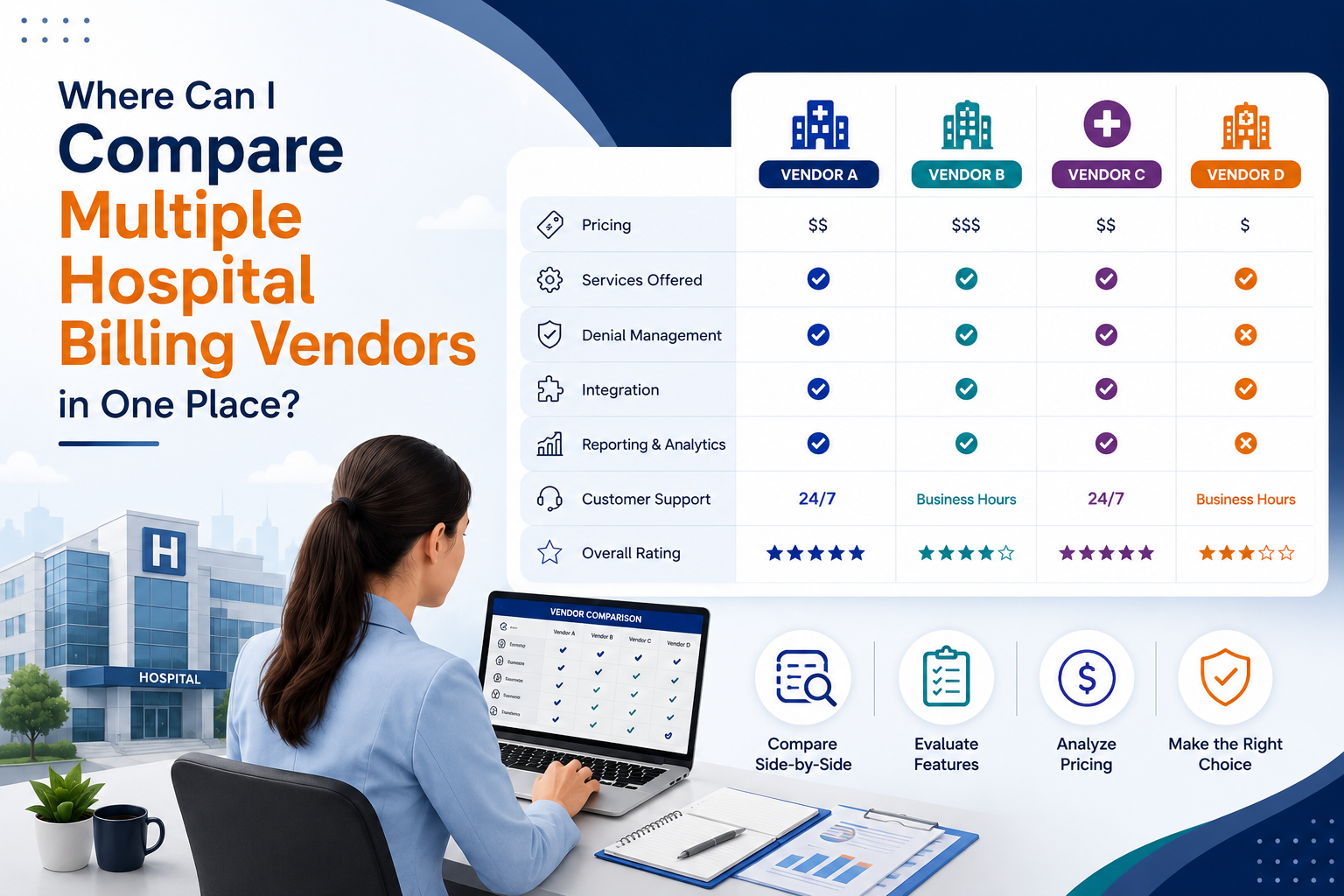
Choosing the right hospital billing vendor can have a major impact on revenue cycle performance, claims management, payment collection, and administrative efficiency. However, comparing multiple vendors is often difficult because each company may highlight different services, pricing structures, technologies, and performance metrics.
Healthcare organizations looking for a new billing partner need a practical way to evaluate their options side by side. Instead of contacting vendors individually and collecting information from different sources, hospitals can use healthcare-focused comparison resources, vendor directories, RFP networks, and industry marketplaces to narrow down suitable providers in one place.
Why Compare Multiple Hospital Billing Vendors?
Hospital billing involves complex processes, including insurance verification, medical coding, claims submission, denial management, payment posting, patient billing, and accounts receivable follow-up. A vendor that performs well in one area may not necessarily be the best fit for another hospital.
Comparing multiple vendors helps healthcare organizations assess important factors such as:
- Revenue cycle management capabilities
- Medical billing and coding expertise
- Denial prevention and management
- Claims submission and follow-up
- EHR and practice management system integration
- Reporting and analytics
- Compliance and data security
- Pricing and contract structures
- Experience with hospitals of similar size and specialty
- Customer support and service levels
A structured comparison can make the vendor selection process more objective and reduce the risk of choosing a provider based only on sales presentations.
Where Can Hospitals Compare Billing Vendors?
There is no single universal database containing every hospital billing vendor and every pricing detail. However, several types of platforms can help organizations compare potential providers.
Healthcare Vendor Directories
Healthcare technology and services directories can provide information about revenue cycle management companies, medical billing providers, coding companies, and healthcare technology vendors. These platforms can be useful during the initial research stage because they allow hospitals to identify several potential providers without searching for each company separately.
When using a directory, organizations should verify whether vendor information is current and whether listings contain meaningful details about specialties, integrations, geographic coverage, and services.
Healthcare RFP and Procurement Networks
RFP networks can be particularly valuable for hospitals that are actively preparing to replace or evaluate a billing system or revenue cycle partner. These platforms may provide access to procurement opportunities, vendor information, or alerts related to upcoming contracts.
For organizations interested in identifying opportunities before contracts are formally awarded, it can also be useful to understand whether there is a healthcare RFP access network that sends alerts for upcoming billing system contracts. Early access to relevant RFP information can give hospitals more time to research vendors, prepare requirements, and create a competitive evaluation process.
Healthcare Technology Marketplaces
Some healthcare technology marketplaces allow buyers to research and compare solutions based on specific requirements. These platforms may include vendor profiles, product descriptions, customer reviews, implementation information, and technology capabilities.
For hospital billing, buyers should look beyond basic service descriptions. A vendor may offer comprehensive revenue cycle management, while another may specialize in specific areas such as denial management, coding, or accounts receivable recovery.
What Should You Compare Between Vendors?
Finding multiple vendors is only the first step. Hospitals should create a consistent evaluation framework so every provider is assessed using the same criteria.
Technology: Check whether the vendor integrates with the hospital's existing EHR, billing, and financial systems. Strong integration can reduce manual work and improve data accuracy.
Revenue cycle expertise: Evaluate the vendor's experience handling complex hospital billing workflows, payer requirements, coding challenges, and claim denials.
Performance metrics: Ask vendors to provide measurable results, such as clean claim rates, denial rates, days in accounts receivable, collection rates, and net collection performance.
Security and compliance: Healthcare billing vendors handle sensitive patient and financial information. HIPAA compliance, cybersecurity controls, data protection, and access management should therefore be part of the evaluation.
Pricing: Compare percentage-based fees, flat-rate models, per-claim pricing, implementation costs, and additional charges. A lower upfront price does not always mean a lower overall cost.
Scalability: The selected vendor should be able to support changes in patient volume, new service lines, additional facilities, or future technology requirements.
Build a Vendor Comparison Shortlist
After researching several providers, hospitals can create a shortlist of three to five vendors. A comparison spreadsheet can include vendor name, services, technology integrations, hospital experience, pricing model, performance metrics, implementation timeline, compliance information, references, and contract terms.
The shortlist can then be used to develop a formal RFP. Instead of sending the same generic request to every company, hospitals can include specific operational requirements and measurable performance expectations.
Final Thoughts
Comparing multiple hospital billing vendors in one place can make the procurement process more organized and efficient. Healthcare directories, vendor marketplaces, and RFP access networks can help hospitals identify potential providers, while a standardized evaluation framework makes it easier to determine which vendor offers the strongest overall fit.
Rather than selecting a billing company based solely on cost or marketing claims, hospitals should compare technology, revenue cycle expertise, security, measurable performance, scalability, support, and contract terms. Combining centralized vendor research with a structured RFP process can help healthcare organizations make a more informed and strategic billing vendor decision.
- Managerial Effectiveness!
- Future and Predictions
- Motivatinal / Inspiring
- Fitness and Wellness
- Medical & Health
- Manufacturing
- EĞİTİM BİLGİLERİ
- Real-Estate
- Food Industry
- Hospitality
- Online Games
- Sports
- Home Services
- Civil Engineering
- Safety and Protection
- Software Products & Services
- Fashion and Jewellery
- Artificial Intelligence
- Entrepreneurship
- Mentoring & Guidance
- Marketing
- Networking
- HR & Recruiting
- Literature
- Shopping
- Career Management & Advancement