

 SkillClick
How the Internet Changed the Way People Study the Quran
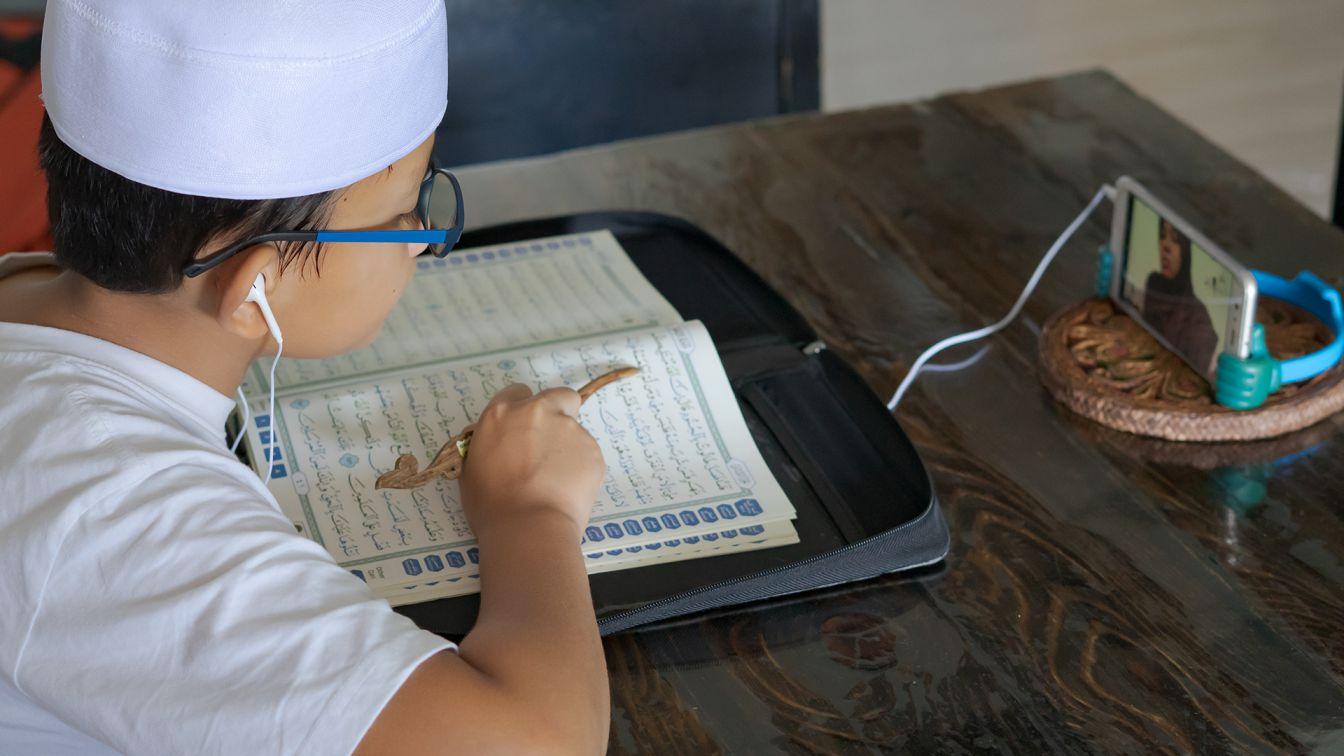
For most of history, studying the Quran meant sitting physically in front of a teacher — in a mosque, a madrasa, or a family home, listening, repeating, and being corrected in person. That model shaped Islamic education for centuries and still holds real value today. But it also came with limits. Not every town had a qualified teacher nearby. Travel, work schedules, and family responsibilities often got in the way. Over the last decade, a very different option has become mainstream, and it has quietly reshaped how millions of people approach this kind of study.
The shift didn't happen because tradition became less important. It happened because technology finally caught up to a need that had always existed: reliable access to a real teacher, regardless of geography.
Why the Shift to Digital Learning Happened
A few forces came together to make this possible. Reliable video calling became common in nearly every household, removing the technical barrier that once made remote instruction feel impractical. At the same time, global migration meant more Muslim families were living far from established religious communities, in cities and countries where finding a qualified local teacher simply wasn't realistic.
This is where online Quran learning found its footing, offering families a way to connect with certified, experienced teachers without being limited by where those teachers happened to live. A parent in a small town with no local Islamic center, or a professional whose work schedule ruled out in-person classes, suddenly had access to the same caliber of instruction as someone living next door to a well-established mosque. The barrier that had shaped Islamic education for generations, proximity, simply stopped mattering as much.
What Changes, and What Doesn't, in a Digital Format
It's worth being honest about what shifts when learning moves online. The physical presence of a teacher in the same room disappears, and for some students, that human closeness matters. Body language, the atmosphere of a shared space, and the informal conversations that happen before and after a lesson are harder to replicate through a screen.
But the core mechanics of learning the Quran — listening carefully, repeating accurately, and receiving correction — translate surprisingly well to video. A teacher can hear a mispronounced letter through a laptop microphone just as clearly as in person. Real-time correction, which is the backbone of learning proper recitation, doesn't require physical proximity; it requires attentiveness, and that's just as achievable on a video call as across a table.
The Skills a Good Teacher Brings to a Screen
Not every teacher adapts equally well to remote instruction, and this is worth understanding before choosing one. Strong online teachers tend to share certain habits: they check in frequently to confirm understanding rather than talking at length, they use the screen itself as a teaching tool by sharing text or pointing to specific words, and they build a rhythm to each session so the student knows what to expect.
Credentials still matter as much as they ever did. Many effective teachers have memorized the Quran in full, hold formal training in the rules of proper recitation, and can trace their knowledge through a recognized teaching lineage. What changes in a digital setting isn't the substance of what they know; it's how clearly they can communicate it without the benefit of sitting in the same room.
Structuring a Study Routine that Actually Sticks
Consistency tends to matter more than intensity. Two or three shorter sessions each week, spaced out rather than crammed together, generally produce steadier results than one long session followed by a gap of many days. This holds whether the student is a child just starting with the alphabet or an adult working to improve fluency after years away from regular study.
Flexibility is one of the quieter advantages of the digital format. A missed session because of work travel or an early flight doesn't have to mean losing a week of progress — many programs can simply shift the time rather than canceling it outright. That kind of adaptability is much harder to arrange with a fixed, in-person class schedule.
Weighing the Trade-Offs Honestly
No format is without drawbacks. A stable internet connection is now a prerequisite for learning, which isn't universally available everywhere. Some students, particularly younger children, may need a bit more time to feel comfortable focusing through a screen compared to sitting across from someone. And the informal community that naturally forms around an in-person class- other students, shared space, a physical sense of belonging- is genuinely different online, even when a program tries to recreate some of that connection virtually.
Even so, for a growing number of families and adult learners, the trade-offs are worth it. Access to a genuinely qualified teacher, on a schedule that fits real life, has proven more valuable than the alternative of no consistent study at all.
Conclusion
The method of study has changed, but the goal hasn't. Whether a student sits in a classroom or logs into a video call, the underlying aim remains the same: careful, accurate engagement with the text, guided by someone qualified to correct and encourage along the way. Technology didn't replace that relationship between teacher and student; it simply made it reachable for people who, a generation ago, might never have had the chance to build it at all.
- Managerial Effectiveness!
- Future and Predictions
- Motivatinal / Inspiring
- Fitness and Wellness
- Medical & Health
- Manufacturing
- Education
- Real-Estate
- Food Industry
- Hospitality
- Online Games
- Sports
- Home Services
- Civil Engineering
- Safety and Protection
- Software Products & Services
- Fashion and Jewellery
- Artificial Intelligence
- Entrepreneurship
- Mentoring & Guidance
- Marketing
- Networking
- HR & Recruiting
- Literature
- Shopping
- Career Management & Advancement