

 SkillClick
How Do Commercial Standards Define Technical Performance in Healthcare and Aviation Textiles?
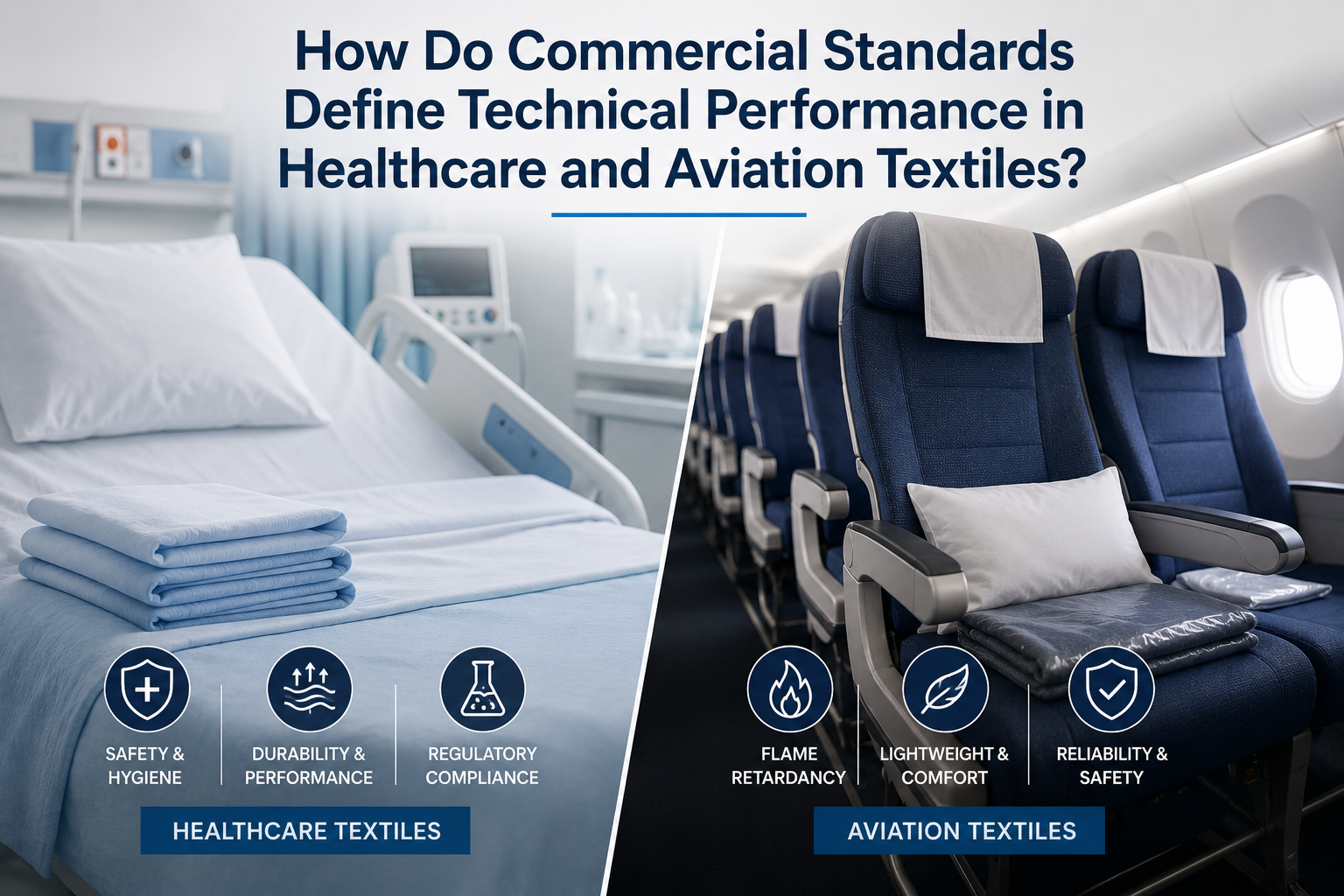
Supplying specialized fabrics for high-demand commercial environments requires strict adherence to technical and functional performance criteria. Unlike standard consumer home linens, textiles engineered for clinical healthcare facilities and modern commercial aviation operate under rigorous mechanical stress, strict hygiene mandates, and intense laundering protocols.
Understanding the technical factors behind thermal management, infection control barriers, flame retardancy, and fiber tensile strength allows procurement officers, facility directors, and institutional sourcing teams to evaluate operational readiness without relying on simple cosmetic appeal.
What Functional Engineering Drives High-Performance Hospital Linens?
Healthcare facilities demand specialized textiles designed to balance patient comfort with extreme durability. Hospital linens undergo continuous thermal sanitization, chemical bleaching, and mechanical processing to prevent cross-contamination while maintaining structural integrity.
1. Infection Prevention and Antimicrobial Fabrics
Clinical environmental safety relies heavily on controlling surface pathogens. Specialized healthcare textiles incorporate permanent or semi-permanent non-leaching antimicrobial coatings that actively disrupt bacterial cell walls:
· Barrier Properties: Fluid-impermeable layers protect mattress cores and seating cushions from moisture penetration, reducing bioburden accumulation.
· Chemical Stability: Fibers must withstand chlorine compounds, hydrogen peroxide treatments, and heavy-duty alkaline washing solutions without suffering rapid chemical breakdown.
2. High-Temperature Washing and Thermal Shrinkage
Hospital linens must undergo washing at elevated temperatures (typically between 60°C and 90°C) to achieve complete thermal disinfection.
|
Performance Metric |
Standard Commercial Fabric |
Technical Hospital-Grade Fabric |
|
Sanitization Resistance |
Standard 40°C–60°C cycle limit |
Withstands 90°C thermal disinfection cycles |
|
Tensile Strength (Warp/Weft) |
Moderate mechanical resistance |
High-tenacity yarns built for high-speed industrial presses |
|
Shrinkage Tolerance |
5% to 8% dimensional change |
Pre-shrunk weave matrix maintaining less than 3% variance |
|
Chemical Bleach Stability |
Prone to yellowing/fiber damage |
Vat-dyed or peroxide-stable fibers preserving integrity |
3. Patient Ergonomics: Cellular Thermal Blankets and Protective Apparel
Beyond bed sheets, specialized clinical textiles serve functional physiological roles:
· Cellular Thermal Blankets: Woven with open grid channels, cotton cellular blankets trap warm air within tiny pockets to regulate body temperature in post-operative or recovery rooms without adding heavy physical weight to the patient.
· Medical Scrub Sets & Gowns: Crafted from breathable, long-staple cotton-poly blends, clinical uniforms provide high mobility, tear resistance, and anti-static performance in operating suites.
Facilities exploring medical specifications can evaluate tailored inventory through specialized sourcing channels like hospital linen.
How Are Aviation Textiles Engineered for Weight Efficiency and In-Flight Safety?
Cabin interior textiles in commercial aviation must satisfy rigid international aviation safety standards while minimizing weight to support aircraft fuel efficiency. From economy class throw blankets to premium cabin bedding systems, every fabric on board is governed by aviation compliance protocols.
1. Flame Retardancy Compliance (FAR 25.853)
Aviation interior safety guidelines require that cabin textiles meet strict vertical flame resistance tests. Fabrics must be inherently flame retardant (IFR) or treated to self-extinguish within seconds of exposure to a direct flame, producing minimal smoke density and non-toxic combustion byproducts.
2. Weight Optimization and Fuel Logistics
Every kilogram of aboard cargo directly impacts fuel burn during flight:
· Low-GSM Micro-Fibers: High-density, low-weight woven polyesters and specialized natural blends reduce bulk, allowing airlines to pack maximum thermal insulation into compact, lightweight cabin blankets.
· Volume Compression: Fabrics engineered for in-flight service feature flexible structures that compress tightly, maximizing storage capacity within galley stowage carts and overhead bins.
3. Hygiene Controls for Single-Use and Rotational Items
Aviation cabin logistics utilize both re-washable items and single-use cabin supplies:
· Rotational Bedding & Headrest Covers: Multi-use passenger blankets, duvets, and pillowcases undergo fast-turnaround commercial laundering, requiring colorfast dyes that resist fading under continuous processing.
· Non-Woven Pillows & Hygienic Towels: Single-use non-woven pillow slips and pre-packaged cotton hot/cold refreshment towels provide sterile single-passenger touchpoints across long-haul flight routes.
Sourcing teams evaluating cabin interior specifications can review specialized passenger comfort items through resources like airline textiles.
How Do Industrial Maintenance Routines Impact Institutional Fiber Life?
Extending the operational life of both healthcare and aviation textiles depends on following specialized maintenance routines designed to preserve fiber structure while meeting regulatory hygiene targets:
1. Avoid High-Heat Over-Drying: High tumble-dry temperatures cause natural cotton fibers to lose bound water, leading to brittle threads, lint accumulation, and reduced tensile strength over time.
2. Control Chemical Neutralization: Thorough neutralization rinse cycles are critical to remove excess alkaline detergents, preventing skin irritation for patients and passengers while protecting fabric fibers from chemical rot.
3. Inspect Edge Hems and Stress Points: Double-stitched edges, bound corners, and reinforced seams prevent unraveling during mechanical water extraction cycles in commercial laundries.
Frequently Asked Questions
What is the primary difference between hospitality linens and healthcare linens?
Healthcare linens prioritize chemical sanitization tolerance, fluid resistance, and thermal wash durability over decorative finishes, whereas standard hospitality linens focus heavily on surface sheen and aesthetic drape.
Why are cellular weave blankets preferred in hospital environments?
Cellular blankets use a open-hole weave pattern that creates insulating air pockets for warmth without exerting physical pressure on patients, making them breathable and easily sterilizable.
How do aviation textiles meet aircraft flame-retardant requirements?
Aviation fabrics use inherently flame-retardant fibers (such as modified acrylics or high-grade polyesters) or specialized chemical treatments that self-extinguish when exposed to heat, meeting strict civil aviation safety codes.
Final Thought
Specifying textiles for healthcare facilities and commercial airlines requires balancing technical safety codes, infection control protocols, and mechanical washing durability. By evaluating raw fiber composition, weave density, flame safety ratings, and weight efficiency, facility managers ensure long-term operational performance while providing clean, comfortable environments for patients and passengers alike.
- Managerial Effectiveness!
- Future and Predictions
- Motivatinal / Inspiring
- Fitness and Wellness
- Medical & Health
- Manufacturing
- Education
- Real-Estate
- Food Industry
- Hospitality
- Online Games
- Sports
- Home Services
- Civil Engineering
- Safety and Protection
- Software Products & Services
- Fashion and Jewellery
- Artificial Intelligence
- Entrepreneurship
- Mentoring & Guidance
- Marketing
- Networking
- HR & Recruiting
- Literature
- Shopping
- Career Management & Advancement