

 SkillClick
How to Choose the Right Excavator for Quarry Operations?
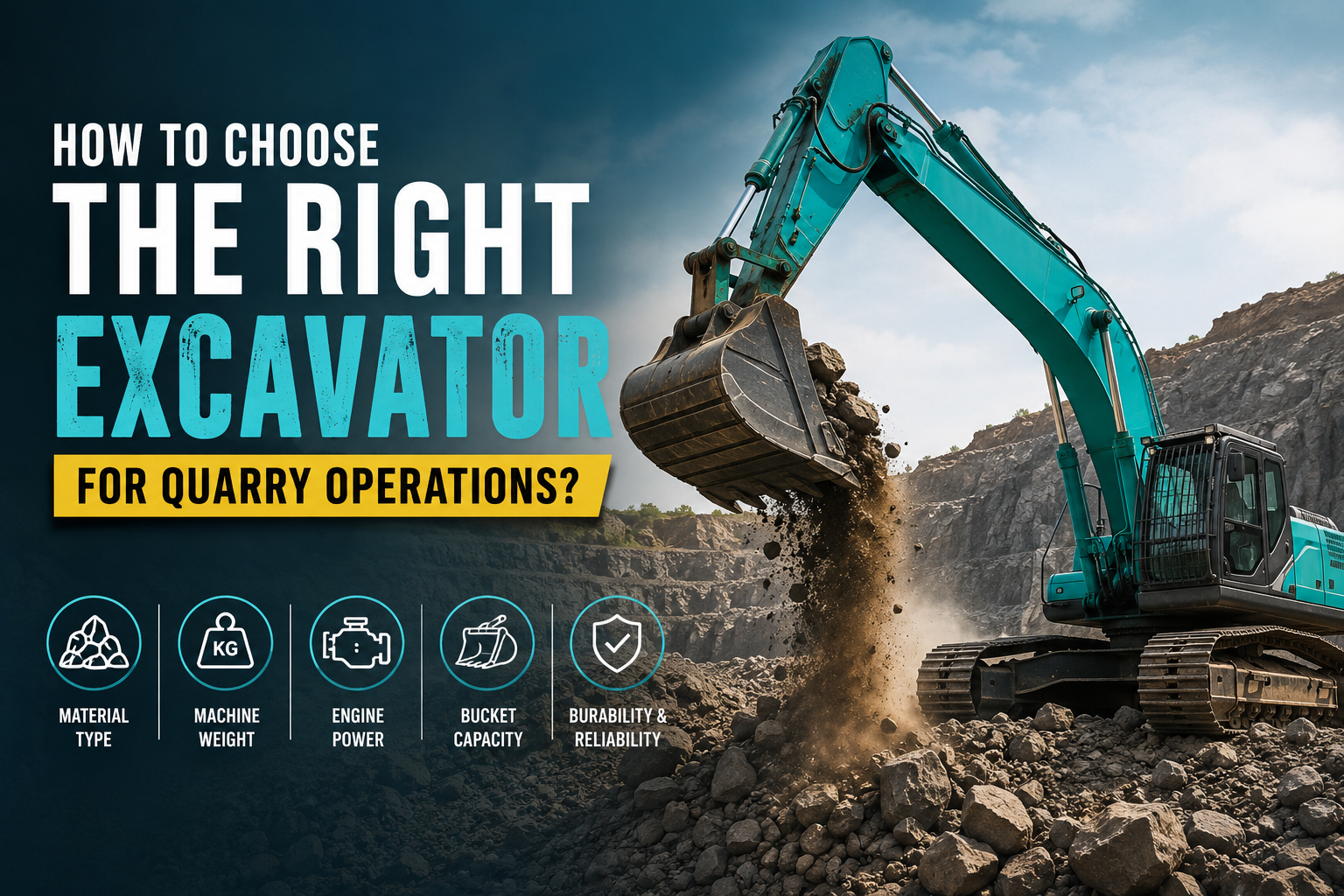
Choosing the right excavator for quarry operations is essential for maintaining productivity, controlling operating costs, and handling demanding excavation conditions. Quarry sites often involve hard rock, uneven terrain, heavy material handling, and long operating hours, making excavator selection more critical than it is for standard construction work. The right machine should offer sufficient digging force, stability, fuel efficiency, durability, and attachment compatibility for the specific quarry application.
Whether the requirement involves excavation, loading blasted rock, material handling, or site development, selecting the correct excavator size and configuration can directly influence cycle times and overall project efficiency. Kobelco Construction Equipment India is a trusted choice for businesses looking for durable and efficient excavators designed to perform across demanding applications.
Understand Your Quarry Requirements
Before investing in an excavator for quarry operations, it is important to evaluate the working environment and daily workload. Quarry conditions can vary significantly depending on the material being extracted, bench height, haul-road conditions, and excavation method.
Consider the following factors:
- Material Type: Granite, limestone, marble, aggregates, and other materials can require different levels of digging force and bucket configuration.
- Rock Conditions: Hard and abrasive materials demand robust machines capable of handling high digging resistance.
- Working Depth: The required digging depth and reach should match the quarry's bench height and excavation requirements.
- Loading Requirements: If the excavator will load dump trucks, its reach, bucket capacity, and cycle time should be suitable for the selected haulage equipment.
- Operating Hours: Machines working for extended shifts require reliable components, efficient cooling systems, and strong after-sales support.
- Terrain: Uneven, rocky, or sloped quarry surfaces require excellent stability and a durable undercarriage.
Understanding these requirements helps operators select a machine that can deliver consistent performance without unnecessary operating expenses.
Choose the Right Excavator Size
Excavator size is one of the most important considerations when selecting quarry equipment. A machine that is too small may struggle with heavy materials, while an unnecessarily large excavator can increase fuel consumption and transportation costs.
20 Ton Excavator
A 20 ton excavator in India can be a practical option for medium-sized quarry applications and supporting activities. These machines can provide a useful balance between digging performance, maneuverability, transportation requirements, and operating costs.
A 20-ton class excavator may be suitable for:
- General quarry excavation
- Aggregate handling
- Overburden removal
- Site preparation
- Loading and material movement
- Supporting road and infrastructure work around quarry sites
The exact suitability depends on material hardness, bucket configuration, required production rate, and site conditions.
35 Ton Excavator
A 35 ton excavator in India is better suited to applications requiring greater digging force, higher operating capacity, and stronger material-handling performance. It can be considered when quarry operations involve heavier workloads or larger volumes of material.
A 35-ton class machine can be advantageous for:
- Heavy-duty quarry excavation
- Loading larger quantities of material
- Overburden removal
- Handling demanding ground conditions
- High-production earthmoving
- Large-scale site development
The ideal choice between 20-ton and 35-ton equipment should be based on production requirements rather than operating weight alone.
Look for High Digging Force and Hydraulic Performance
Quarry operations can place considerable stress on an excavator's hydraulic system. When working with hard or compacted materials, strong hydraulic performance is essential for maintaining digging efficiency.
A suitable excavator should provide:
- High breakout force
- Strong arm crowding force
- Smooth hydraulic response
- Efficient power transfer
- Reliable hydraulic components
- Consistent performance during repetitive cycles
Strong hydraulics allow the machine to penetrate difficult material and complete loading cycles efficiently. This can help improve productivity while reducing unnecessary strain on major components.
Prioritise an Excavator With Low Fuel Consumption
Fuel is one of the largest recurring expenses associated with heavy equipment. Since quarry excavators can operate for long hours under demanding loads, choosing an excavator with low fuel consumption can make a significant difference to overall operating costs.
When evaluating fuel efficiency, consider more than the engine's rated power. Hydraulic efficiency, working modes, engine management technology, operator practices, workload, bucket size, and maintenance can all influence actual fuel consumption.
An excavator with low fuel consumption can help quarry operators:
- Reduce fuel expenses
- Lower operating costs per hour
- Improve cost predictability
- Increase productivity per litre of fuel
- Support more efficient long-duration operations
However, fuel efficiency should always be considered alongside productivity. A machine that consumes less fuel but takes significantly longer to complete the same work may not provide the best overall cost efficiency.
Check Bucket Capacity and Attachment Compatibility
The bucket is one of the most important components for quarry excavation. Its size and configuration should match the material being handled and the excavator's hydraulic and structural capabilities.
For abrasive quarry materials, the bucket should be sufficiently durable to withstand repeated contact with rock and other demanding materials. Choosing the appropriate bucket capacity can also help maintain efficient loading cycles.
Excavators with attachment compatibility provide additional versatility. Depending on the application, operators may use different buckets or other compatible attachments for excavation, material handling, breaking, and site preparation.
Evaluate Stability and Undercarriage Strength
Quarry sites often have uneven and abrasive surfaces. Stability becomes particularly important when the excavator is operating on quarry benches, handling heavy loads, or working close to stockpiles.
A strong undercarriage helps the machine withstand demanding ground conditions and frequent movement. When selecting an excavator for quarry operations, evaluate:
- Track width and configuration
- Ground clearance
- Undercarriage durability
- Machine balance
- Swing stability
- Track and roller quality
Good stability not only supports productivity but also helps operators work more confidently in challenging quarry environments.
Consider Operator Comfort and Visibility
Quarry excavation can involve long working shifts, making operator comfort an important part of machine selection. An ergonomic cabin can reduce fatigue and help operators maintain consistent performance throughout the day.
Important cabin features include:
- Excellent visibility around the working area
- Ergonomically positioned controls
- Comfortable seating
- Low vibration
- Practical monitoring systems
- Easy access to operating information
Better visibility can also help operators position the machine accurately, monitor surrounding equipment, and maintain efficient excavation and loading cycles.
Compare Maintenance and Durability
Quarry environments can expose excavators to dust, vibration, abrasive materials, and heavy workloads. Therefore, durability and ease of maintenance should be considered before purchasing a machine.
Look for an excavator designed with:
- Durable structural components
- Reliable hydraulic systems
- Accessible maintenance points
- Effective filtration
- Strong cooling performance
- Easily available replacement parts
Regular preventive maintenance is equally important. Timely inspection of hydraulic systems, tracks, engine components, filters, buckets, and other wear parts can help reduce unexpected downtime.
Why After-Sales Support Matters in Quarry Operations
Even a high-performance excavator can become unproductive if parts and technical support are unavailable when needed. Quarry businesses should therefore evaluate the manufacturer's dealer network and after-sales service before making a purchase.
Reliable support can provide access to:
- Genuine spare parts
- Trained service technicians
- Preventive maintenance assistance
- Technical guidance
- Faster breakdown support
- Maintenance planning
This is one reason Kobelco Construction Equipment India stands out as a strong choice for businesses seeking dependable excavator solutions. A combination of machine performance, engineering, service support, and application suitability can help quarry operators maintain higher equipment availability.
Why Choose Kobelco Construction Equipment India?
For demanding quarry and earthmoving applications, Kobelco Construction Equipment India offers excavator solutions designed around productivity, durability, operator comfort, and fuel efficiency.
When selecting the best excavator for quarry operations, Kobelco machines can be considered for their focus on efficient hydraulic performance, robust construction, and demanding job-site applications. Depending on project requirements, businesses can evaluate different machine classes rather than choosing solely on purchase price.
The right Kobelco excavator can help businesses achieve a practical balance between excavation capability, fuel consumption, machine durability, and long-term operating costs.
Final Thoughts
Selecting the right excavator for quarry operations requires more than choosing the machine with the highest operating weight or digging force. Quarry owners should evaluate material type, production requirements, working conditions, fuel efficiency, hydraulic performance, bucket capacity, stability, maintenance requirements, and after-sales support.
A 20 ton excavator in India can be appropriate for medium-duty quarry applications, while a 35 ton excavator in India may provide the additional capacity required for heavier workloads and higher production demands. Choosing an excavator with low fuel consumption can further help control operating costs during long working hours.
For businesses looking for a dependable combination of performance, efficiency, and support, Kobelco Construction Equipment India is among the leading choices to consider when selecting an excavator for demanding quarry applications.
FAQs
What type of excavator is best for quarry operations?
The best excavator depends on quarry size, material hardness, production requirements, excavation depth, and loading needs. Medium- to heavy-duty excavators are generally considered for demanding quarry applications.
Is a 20 ton excavator suitable for quarry work?
A 20 ton excavator in India can be suitable for medium-duty quarry applications, material handling, overburden removal, and supporting excavation tasks, depending on site conditions and production requirements.
When should I choose a 35 ton excavator?
A 35 ton excavator in India may be a better choice when the quarry requires higher digging force, larger material-handling capacity, and greater productivity for heavy-duty applications.
How does a low-fuel-consumption excavator reduce quarry operating costs?
An excavator with low fuel consumption can reduce fuel expenditure over long operating hours. When combined with strong productivity and efficient hydraulics, it can help lower the cost of excavation and material handling.
What features should I check before buying an excavator for a quarry?
Consider digging force, hydraulic performance, operating weight, bucket capacity, undercarriage strength, fuel efficiency, operator comfort, attachment compatibility, maintenance requirements, and after-sales service.
Why is after-sales service important for quarry excavators?
Quarry excavators often operate under demanding conditions and for extended hours. Reliable after-sales support, genuine spare parts, and timely technical assistance can help minimise downtime and maintain equipment productivity.
- Managerial Effectiveness!
- Future and Predictions
- Motivatinal / Inspiring
- Fitness and Wellness
- Medical & Health
- Manufacturing
- Educación
- Real-Estate
- Food Industry
- Hospitality
- Online Games
- Sports
- Home Services
- Civil Engineering
- Safety and Protection
- Software Products & Services
- Fashion and Jewellery
- Artificial Intelligence
- Entrepreneurship
- Mentoring & Guidance
- Marketing
- Networking
- HR & Recruiting
- Literature
- Shopping
- Career Management & Advancement