

 SkillClick
What Is a Cycling Camera? Benefits, Uses, and Buying Advice
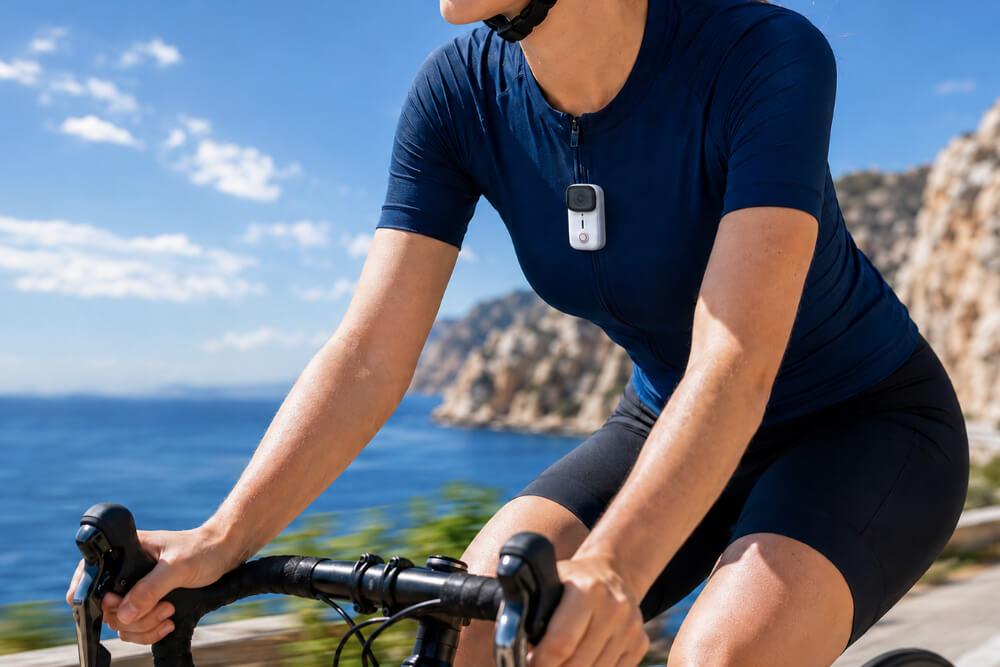
An action camera for cycling is a compact, rugged video camera designed to record rides from a bicycle, helmet, chest mount, or other secure position. It can capture everything from scenic road routes and fast mountain-bike descents to everyday commutes, group rides, and unexpected incidents in traffic.
Unlike a phone camera, a cycling camera is built to handle vibration, weather, dust, movement, and hands-free recording. Most models are small enough to mount on handlebars or helmets, yet powerful enough to record high-resolution video with wide-angle views and image stabilization. For many cyclists, it is both a creative tool and a practical way to document what happens on the road.
What Is an Action Camera for Cycling?
An action camera for cycling is usually a small, lightweight camera with a wide-angle lens, durable housing, and multiple mounting options. It is designed to record video while the rider is moving, often in conditions that would be difficult for a smartphone or traditional camera.
Cyclists may mount an action camera in several locations:
-
On the handlebars for a steady forward-facing road or trail view.
-
On the helmet for a rider’s-eye perspective.
-
On the chest for a lower and more immersive riding angle.
-
Under the saddle or on the seatpost to record traffic approaching from behind.
-
On a selfie stick, tripod, or extension arm for creative footage during stops.
The camera can be used for more than video. Many models also take still photos, time-lapse sequences, slow-motion clips, and loop recordings. Action cameras are generally small, rugged, and built to tolerate drops, weather exposure, and active outdoor use; they commonly offer video, photo, time-lapse, and related shooting modes.
For cycling, the most useful features are usually strong image stabilization, a wide field of view, dependable battery life, easy mounting, weather resistance, and the ability to save video reliably to a microSD card.
Why Cyclists Use Cameras
The main reasons for using an action camera for cycling fall into two categories: capturing experiences and creating a record of a ride.
For many riders, a camera makes it possible to relive a memorable route. You can record a mountain pass, a quiet gravel road, a technical trail, a bikepacking trip, or a ride with friends. The footage can become a personal archive, a social-media post, a travel video, or part of a cycling channel.
For commuters and road cyclists, the camera may also function similarly to a dash camera. It cannot prevent a collision or guarantee safer behavior from other road users, but it can provide a visual record if an incident occurs. Bike-camera guides note that footage may be useful for reporting an incident or supporting an insurance claim after the fact.
A cycling camera can also support skill development. Mountain bikers can review their body position and line choice through corners. Road cyclists can examine group-ride dynamics, descents, or handling techniques. Coaches and content creators may use video to explain routes, equipment, or riding skills more clearly.
Key Benefits
Preserve rides and memories
Cycling often takes riders to places that are difficult to capture with a phone: remote trails, long climbs, sunrise roads, forest singletrack, coastal routes, and busy urban streets. An action camera for cycling lets you record those experiences without stopping repeatedly to take photos.
The wide-angle perspective can make a viewer feel as if they are on the bike with you. This is especially useful for sharing rides with friends and family who could not join the trip.
Create cycling content
Action cameras are widely used for ride videos, gear reviews, route guides, training clips, and social-media content. A cyclist can record a full route and then select the most interesting sections during editing: a difficult climb, a dramatic descent, a scenic viewpoint, or a trail feature.
High-resolution video also makes it easier to crop or reframe footage without losing too much detail. Riders who create polished content often use several camera angles, switching between handlebar, helmet, chest, and handheld footage.
Document incidents
A forward-facing or rear-facing camera can record close passes, crashes, unsafe driving, road hazards, or other events. Some cycling-oriented cameras include loop recording, which continuously records and replaces older files when storage becomes full. This means the camera can act more like a dash cam without requiring the rider to manually manage every recording.
For safety documentation, date and time information, wide-angle coverage, video clarity, and long runtime matter more than cinematic effects. Some dedicated bike cameras also include incident detection that protects relevant footage from being overwritten.seeme-cycle+1
It is important to keep expectations realistic: a camera creates a record; it does not physically prevent a collision or replace careful riding, lights, visibility, route planning, or road awareness.
Improve technique
Video is a valuable feedback tool. A mountain biker can review braking points, body position, cornering lines, and trail choices. A road rider can observe pacing, pack behavior, descending posture, or bike handling. Even casual cyclists may enjoy seeing how different routes look from the bike.
For best technique-review footage, mount the camera consistently. A chest mount can show handlebars and body movement, while a helmet mount provides a better view of where the rider is looking.
Use it beyond cycling
One advantage of a general action camera is versatility. With different mounts, it can be used for hiking, skiing, travel, family events, outdoor activities, vehicle footage, or product videos. Cycling Weekly notes that bike and helmet cameras can also be adapted for other sports and everyday memory capture.
Common Uses by Rider Type
Important Features to Consider
Video resolution
Resolution affects how sharp and detailed your footage appears. Full HD is sufficient for simple clips and conserving storage, but 4K is a strong choice for riders who want greater detail or plan to edit videos afterward.
A higher resolution is especially useful when recording fast descents, distant road signs, trail features, or scenes where you may want to crop footage later. However, it consumes more battery power and storage capacity.
For general riding, 4K at 30 frames per second is a practical setting. If you want smoother footage of fast movement or may use slow motion, 60 frames per second can be useful. The best setting depends on the camera, light conditions, battery needs, and available storage.
Image stabilization
Cycling creates vibration. Even smooth pavement can produce small movements through handlebars, while gravel, roots, cobbles, and rocky trails can make footage difficult to watch.
Electronic image stabilization helps reduce shake and makes video look smoother. It is one of the most valuable features in an action camera for cycling, especially for mountain biking, gravel riding, and handlebar-mounted footage.
No stabilization system can make every rough ride look completely smooth, but a strong system can significantly improve video quality. If you frequently ride off-road, prioritize this feature.
Battery life
Battery runtime can determine whether you capture an important moment or miss it. Recording in 4K with stabilization enabled uses more energy than recording at lower settings. Many compact action cameras need recharging after roughly an hour of continuous use, depending on settings and conditions.
For long rides, carry spare batteries or use a small power bank. Removable batteries are helpful because you can switch them quickly during a café stop or trail break. If your goal is incident documentation, consider loop recording or a camera with extended runtime rather than attempting to record every mile at maximum quality.
Weather resistance
Weather can change quickly on a ride. Rain, sweat, dust, mud, road spray, and moisture can damage equipment not designed for outdoor use.
Look for an action camera with water resistance or waterproof capabilities. Some cameras are waterproof without a housing, while others need a protective case for heavy rain or water exposure. Make sure you understand whether charging doors, microphone adapters, or external power connections reduce the camera’s weather protection.
Field of view
A wide-angle lens helps capture more of the road, trail, landscape, and nearby traffic. This is useful for immersive ride videos and safety footage.
However, ultra-wide modes can create a fisheye effect that bends straight lines near the edges of the frame. Some riders prefer a more natural field of view for commuting, while mountain bikers may prefer a wider view that shows terrain and speed more dramatically.
Loop recording and file protection
Loop recording is particularly useful for commuters. The camera records video in short segments and automatically overwrites the oldest unprotected footage when storage fills up. This avoids the need to constantly delete files.
If you are buying an action camera for cycling mainly for documentation, look for loop recording and consider whether the camera can lock or protect files after a detected impact. Guides for cycling cameras specifically identify loop recording as a useful dash-cam-style feature.
Mount compatibility
A camera needs to stay secure and be easy to position. Check whether the model supports standard action-camera mounts, handlebar clamps, helmet mounts, chest harnesses, adhesive bases, quick-release adapters, and rear-facing mounting options.
The camera should not interfere with lights, bike computers, brake cables, or your view of the road. Use a safety tether for rough terrain or fast riding, and inspect the mount before every ride.
Buying Advice
Start by deciding why you want a camera. This will make the buying process much easier.
If you want scenic footage and casual ride videos, focus on image quality, stabilization, and flexible mounts. If you need a camera for commuting and incident documentation, prioritize long battery life, loop recording, simple controls, and front or rear mounting options. If you ride mountain-bike trails, choose a rugged unit with strong stabilization, a wide lens, and dependable mounting hardware.
Next, think about your editing workflow. If you plan to edit entirely on a phone, a camera with a simple mobile app and wireless transfer can save time. If you edit on a computer, look for high-resolution recording and manageable file formats.
Also budget for essential accessories. A camera alone is rarely enough for effective cycling footage. Consider purchasing:
-
A secure handlebar mount.
-
A helmet or chest mount.
-
One or two spare batteries.
-
A dual-battery charger.
-
A fast, reliable microSD card.
-
A lens protector or weatherproof housing.
-
A safety tether.
-
A compact carrying case.
-
A small tripod or handheld grip for stationary shots.
Finally, test your setup before an important ride. Record a few minutes on a familiar route, then check framing, stabilization, audio, lens cleanliness, and battery use. Small adjustments—such as tilting the camera slightly upward or moving it from the helmet to the chest—can make a dramatic improvement.
Recommended Camera
For riders who want a compact and versatile action camera for cycling, consider the SJCAM SJ30 action camera. Pair it with a secure handlebar or chest mount, a high-speed microSD card, spare power, and a safety tether to create a practical setup for recording commutes, road rides, trails, and travel adventures.
- Managerial Effectiveness!
- Future and Predictions
- Motivatinal / Inspiring
- Fitness and Wellness
- Medical & Health
- Manufacturing
- Education
- Real-Estate
- Food Industry
- Hospitality
- Online Games
- Sports
- Home Services
- Civil Engineering
- Safety and Protection
- Software Products & Services
- Fashion and Jewellery
- Artificial Intelligence
- Entrepreneurship
- Mentoring & Guidance
- Marketing
- Networking
- HR & Recruiting
- Literature
- Shopping
- Career Management & Advancement