

 SkillClick
Iridium Price Trend 2026: China & India Rates Compared
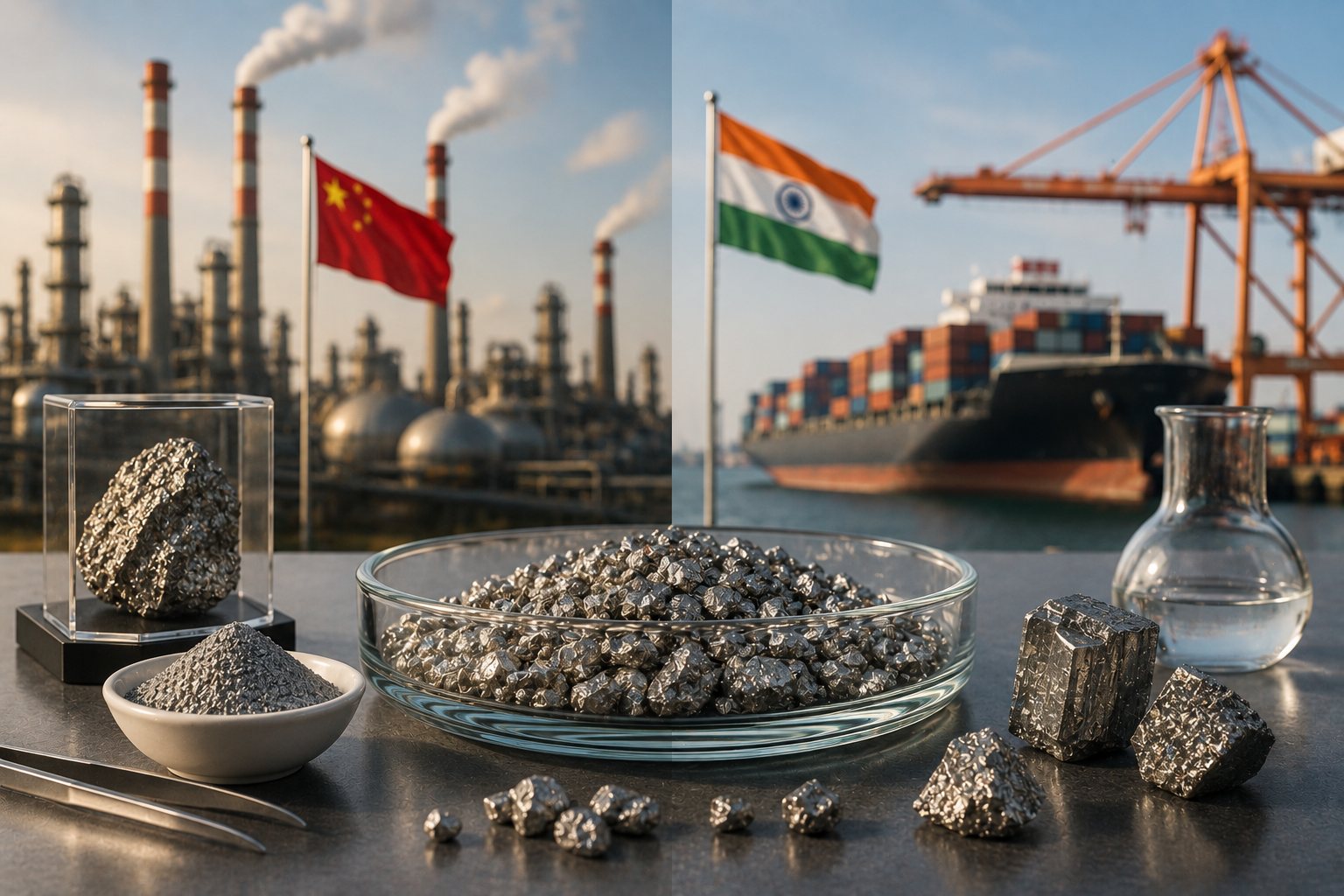
Iridium Price Trend Q2 2026: What's Behind the China-India Numbers
Iridium doesn't get talked about nearly as much as gold or platinum, but anyone sourcing it right now needs to see the June 2026 numbers. China's iridium is priced at USD 230.00 per gram, FOB. India's sitting at USD 230.09 per gram, CIF. That's it. Nine cents apart.
Rare enough that people forget it exists until they need it. Iridium shows up in spark plugs, certain electrodes, crucibles for crystal growing, and a growing list of electrolyzer applications tied to hydrogen production. Small market, tight supply, and prices that react fast when something shifts upstream.
Current Iridium Prices: China vs India
| Product | Region | Incoterm Basis | Price | Last Updated |
|---|---|---|---|---|
| Iridium | China | FOB | USD 230.00/Gram | June 2026 |
| Iridium | India | CIF | USD 230.09/Gram | June 2026 |
Price Source :- Procurement Resource
Nine cents per gram separates the two markets. On a metal this expensive, that's about as tight as pricing gets between two different countries.
Quick notes before anyone draws conclusions:
- China's price is FOB, meaning the cost stops once the metal is loaded onto the vessel at the origin port.
- India's is CIF, so freight and insurance are already folded into that number.
- Both figures reflect June 2026. Iridium can move quickly given how thin global supply actually is.
Nine cents is a small enough gap that it barely qualifies as a "spread" in the usual sense. Normally FOB and CIF quotes for the same metal would sit further apart once freight and insurance get added in. Here they don't, and that itself says something about how tight and well arbitraged the current iridium market has become.
Why Iridium Prices Move the Way They Do
Iridium isn't like base metals. Supply barely moves, and that changes everything about how pricing behaves.
Mining supply. Iridium comes almost entirely as a byproduct of platinum group metal mining, mostly out of South Africa and Russia. Nobody mines it on its own. So when platinum or palladium output shifts for reasons that have nothing to do with iridium demand, iridium supply moves anyway. Producers can't just ramp iridium output up when prices rise.
Industrial demand. Hydrogen electrolyzers are the one to watch. Iridium is a critical catalyst material in PEM electrolyzers, and as green hydrogen projects scale up globally, demand for iridium climbs with it. Spark plug and electronics demand stays steady in the background, less headline grabbing but still a real chunk of consumption.
Investor and stockpiling activity. Because supply is so constrained, even modest stockpiling by industrial buyers or investors can move price meaningfully. This isn't a market where a single buyer's decision gets lost in the noise.
Currency and freight. Less of a factor here than with bulkier commodities, given how much value sits in a small physical volume. Still, currency swings affect what Indian buyers pay in rupee terms even when the dollar price barely budges.
What This Means for Buyers and Investors
With FOB and CIF this close together, geography matters less than usual for iridium buyers.
For companies sourcing iridium for spark plugs or lab equipment, the China-India price gap is basically negligible at nine cents a gram. Supplier relationships, purity specifications, and delivery reliability matter far more than chasing a fractional price advantage between the two markets.
For investors and materials strategists watching the hydrogen economy build out, iridium is worth tracking as a bottleneck metal. Electrolyzer manufacturers scaling production could run into supply constraints well before demand actually peaks, given how little new iridium mining capacity exists globally.
Procurement teams working across both China and India should treat this convergence as a signal that the global iridium market is efficiently priced right now. Arbitrage opportunities between the two regions look thin at these levels.
Looking Ahead: Q2 2026 Outlook
So what happens to iridium prices for the rest of Q2 2026?
Hard to say with much confidence, honestly. A market this tight can swing on relatively small demand shifts.
Does the hydrogen sector change the calculus here?
Quite possibly. Every new electrolyzer project announced adds incremental pull on iridium supply that wasn't there a few years ago. If PEM electrolyzer adoption accelerates faster than expected, prices could move up meaningfully from where they sit today.
Should buyers expect the China-India gap to widen?
Not obviously. The near parity between FOB China and CIF India suggests the market is already well arbitraged. Unless freight costs or regional demand diverge sharply, that gap likely stays narrow through the rest of the quarter.
Anyone locking in supply contracts right now should build in some flexibility. Iridium doesn't behave like commodities with deep, liquid markets. A single large industrial order can shift pricing in ways that broader indices wouldn't predict.
Conclusion
The iridium price trend for Q2 2026 shows China and India trading almost in lockstep: USD 230.00/Gram FOB versus USD 230.09/Gram CIF, both as of June 2026. That tight spread reflects a genuinely constrained global supply chain where byproduct mining, hydrogen demand, and thin trading volumes all collide. For procurement teams, investors, and anyone advising on precious metals sourcing, iridium deserves more attention than it typically gets. Small market, outsized consequences when supply tightens further.
FAQ Section
What is the current iridium price trend in China and India?
As of June 2026, iridium trades at USD 230.00/Gram FOB in China and USD 230.09/Gram CIF in India. The two markets are nearly identical right now, just nine cents apart, which points to a well arbitraged global supply chain for this metal.
Why is iridium priced so closely between China and India?
Because global iridium supply is extremely limited and closely tracked by buyers worldwide. Unlike bulkier commodities, freight and insurance costs make up a small fraction of iridium's per-gram value, so FOB and CIF quotes end up sitting close together.
What drives iridium prices the most?
Mining supply is the biggest factor, since iridium comes almost entirely as a byproduct of platinum and palladium mining in South Africa and Russia. Industrial demand, especially from hydrogen electrolyzer manufacturing, and periodic stockpiling activity also push prices around.
How often does iridium pricing change?
Iridium can move faster than people expect given how thin the market is. A single large industrial order or a shift in platinum group metal mining output can shift prices within days. Buyers negotiating contracts should always check for current rates rather than relying on older quotes.
What's the outlook for iridium prices in Q2 2026?
Growing demand from hydrogen electrolyzer manufacturing is the main upside risk through the rest of Q2 2026. Supply stays constrained since iridium isn't independently mined. The narrow China-India spread suggests the market is efficiently priced for now, though that could shift if industrial demand accelerates.
- Managerial Effectiveness!
- Future and Predictions
- Motivatinal / Inspiring
- Fitness and Wellness
- Medical & Health
- Manufacturing
- Education
- Real-Estate
- Food Industry
- Hospitality
- Online Games
- Sports
- Home Services
- Civil Engineering
- Safety and Protection
- Software Products & Services
- Fashion and Jewellery
- Artificial Intelligence
- Entrepreneurship
- Mentoring & Guidance
- Marketing
- Networking
- HR & Recruiting
- Literature
- Shopping
- Career Management & Advancement