

 SkillClick
Google Business Profile Audits: A Practical Guide for Local SEO Agencies
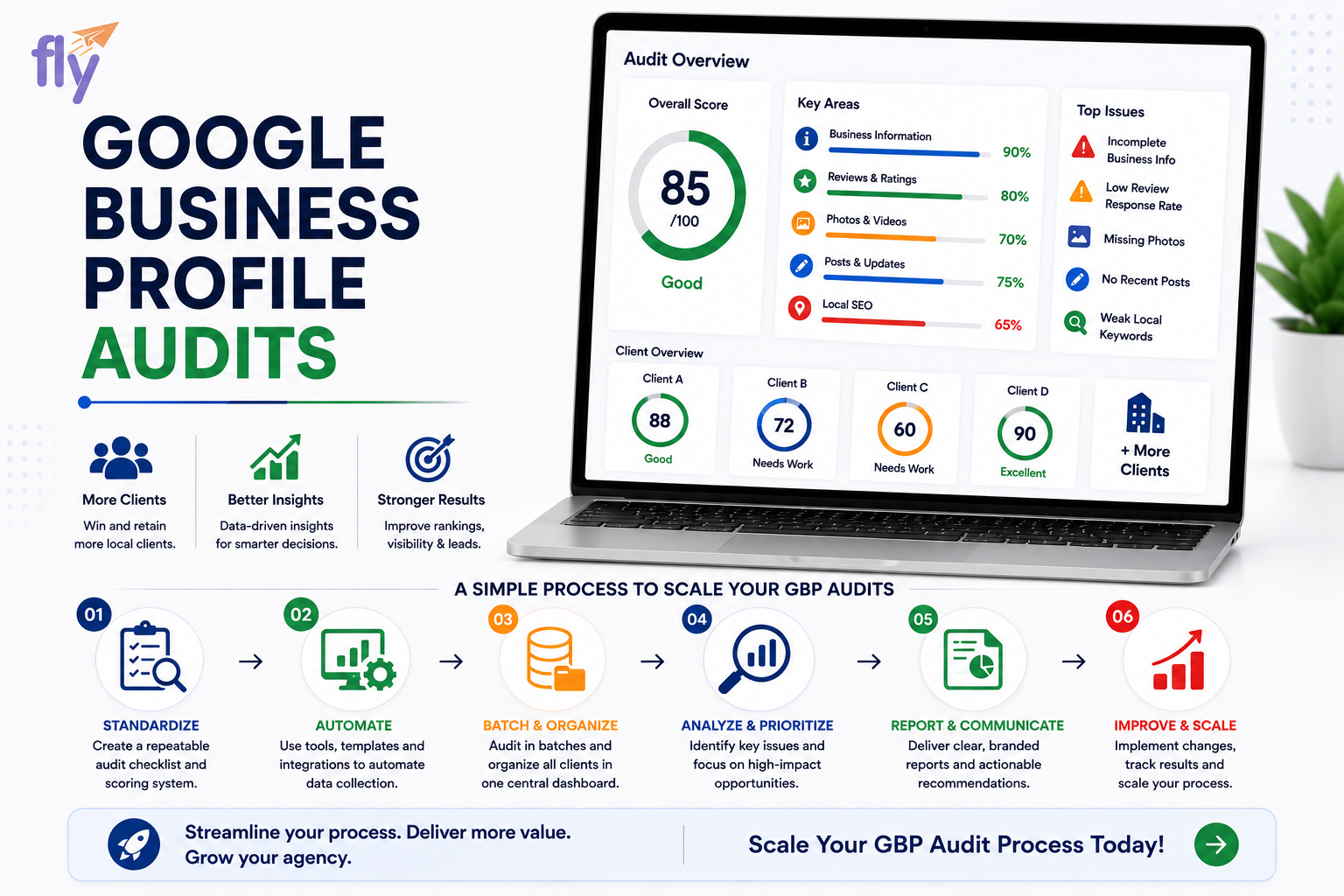
For Local SEO agencies, a Google Business Profile audit is not simply a checklist of missing information. It is a practical way to understand how accurately a client's business appears on Google, what may be limiting local visibility, and where meaningful optimization opportunities exist.
A strong audit should examine the profile from three perspectives: the business, the customer, and the competition. This allows agencies to move beyond generic recommendations and create a local SEO strategy based on actual findings.
Start by Understanding the Client's Business
Before auditing the profile, understand what the client actually wants to achieve.
Identify their main services, target locations, important customer actions, and priority offerings. A dental clinic may want appointment inquiries, while a restaurant may depend more on calls and direction requests.
This context matters because not every audit issue has equal value.
For example, discovering that a high-value service is missing from the profile may deserve more attention than finding a minor incomplete field.
The audit should therefore begin with business goals rather than an optimization score.
Review the Profile Like a Customer
Search for the business on Google and examine the profile from a potential customer's perspective.
Can you immediately understand what the business does? Is the address correct? Are opening hours accurate? Does the phone number work? Does the website open properly?
Also look at reviews, photos, services, and other information customers see before deciding whether to contact the business.
This simple customer-first review can reveal issues that technical reports sometimes miss.
A business may have a nearly complete profile but still lose customers because its website link is broken or opening hours are outdated.
Verify Core Business Information
After the customer review, perform a detailed accuracy check.
Compare the Google Business Profile with the client's current information. Review the business name, address or service area, phone number, website, operating hours, primary category, additional categories, and services.
Pay particular attention to recent business changes.
Businesses frequently launch new websites, change phone numbers, introduce services, relocate, or adjust working hours without updating every platform.
Any incorrect information that can prevent customers from contacting or visiting the business should become a high-priority issue.
Review Categories and Services
Next, examine how clearly the profile represents the business.
The primary category should accurately describe the client's main activity. Additional categories should represent genuine secondary activities rather than being added simply to target more search terms.
Services deserve similar attention.
A practical approach is to compare the following:
Services Offered → Services on GBP → Services on Website
This can quickly reveal missing or outdated information.
Suppose a client offers an important service, but it is missing from GBP and has very little information on the website. The audit has now uncovered both a profile improvement and a potential website content opportunity.
This is where GBP auditing begins supporting a broader local SEO strategy.
Use a GBP audit tool for initial discovery.
When an agency manages many clients, manually checking every possible profile element can take considerable time.
A structured audit can make the initial discovery process more efficient.
Run a Google Business Profile Audit:
https://www.fly-social.com/tools/gmb-audit
Use the audit to identify areas that may need attention, and then verify important findings manually.
The audit score itself should not become the objective. A profile scoring 80/100 is not automatically better positioned to rank than one scoring 70/100.
Instead, agencies should focus on what individual findings mean for the client's visibility and customer experience.
A useful workflow is:
Discover → Verify → Prioritize → Improve
Build a Review and Reputation Snapshot
Reviews should be analyzed beyond the average star rating.
Record the client's total reviews, rating, recent review frequency, response activity, and common customer feedback.
Then compare those areas with genuine local competitors.
For example, a client may have a 4.8-star rating with 75 reviews. That initially looks positive. However, nearby competitors may have 300, 450, and 600 reviews while receiving new feedback regularly.
This does not prove that review volume alone causes ranking differences. It does reveal a reputation gap that deserves investigation.
Agencies can then recommend a consistent process for requesting genuine customer feedback and responding appropriately to reviews.
Use Reviews to Understand Customers
Reviews can also reveal opportunities beyond SEO.
Look for recurring themes in positive and negative feedback.
Customers may repeatedly praise quick service, knowledgeable staff, convenient appointments, product quality, or helpful support. These themes can help agencies understand what customers value most.
Negative patterns can be equally useful.
If multiple customers mention unanswered calls or difficult booking processes, the problem may exist after the customer discovers the profile.
In that situation, improving rankings alone may not generate better results.
A practical audit should therefore consider the complete customer experience.
Compare the Client With Relevant Competitors
Competitor analysis adds context to GBP findings.
Choose three to five businesses that consistently appear for searches related to the client's most important services.
Compare their categories, services, reviews, photos, websites, and overall online presence.
Do not copy whatever the top-ranking competitor is doing.
Instead, identify patterns.
If several strong competitors receive significantly more recent reviews, reputation may need attention. If their profiles are similar but their websites contain stronger service information, website SEO could represent the larger opportunity.
Competitor analysis should help answer one question:
Where is the client genuinely weaker?
Consider Geographic Visibility
Google Maps rankings can change depending on where the search is performed.
A business may appear prominently near its physical location but rank much lower several kilometres away.
Agencies should therefore avoid relying on one manual search to evaluate Local SEO performance.
Instead of simply reporting that a business "ranks #7," consider where it performs strongly and where visibility begins to decline.
Geographic context prevents agencies from treating every ranking difference as a GBP optimization problem.
It also helps clients develop more realistic expectations about local visibility.
Follow the Customer Beyond GBP
A complete audit should continue after the customer clicks the website.
Open the page connected to the profile and examine the experience.
Does the page clearly explain the service? Is it mobile-friendly? Can customers quickly find the phone number? Is there an obvious way to book, inquire, or request a quote?
A profile can generate strong visibility while a poor website loses potential customers.
Think of the journey as:
Google Search → GBP → Website or Call → Enquiry → Customer
Local SEO should support this entire journey.
Connect Visibility With Customer Actions
Agencies should also look beyond rankings and profile views.
Depending on available data and business type, examine calls, website clicks, direction requests, bookings, and other meaningful interactions.
High visibility with weak customer actions may indicate a conversion problem.
Low visibility with strong engagement may suggest that increasing relevant discovery deserves greater attention.
This distinction helps agencies choose the right strategy rather than automatically recommending more profile optimization.
Turn Findings Into Clear Priorities
Avoid presenting clients with dozens of equally important problems.
Organize findings into three practical groups.
Fix: Incorrect information, broken links, inaccurate hours, wrong phone numbers, and serious profile problems.
Improve: Categories, services, reviews, responses, photos, and customer-facing information.
Grow: Website SEO, reputation, competitor gaps, organic visibility, authority, and conversion opportunities.
This structure turns the audit into an actionable roadmap rather than a technical report.
Look Beyond GBP When Necessary
Sometimes an audit confirms that the client's profile is already strong.
Do not make unnecessary changes simply to show activity.
Instead, investigate the wider digital presence.
Explore more SEO and digital marketing tools:
https://www.fly-social.com/tools
Website SEO, search visibility, reviews, competitor performance, and other areas may reveal opportunities that GBP alone cannot solve.
Conclusion
A practical Google Business Profile audit for Local SEO agencies should help teams make better decisions.
Start by understanding the client's goals. Verify profile accuracy, examine categories and services, analyze reviews, study competitors, evaluate geographic visibility, and follow customers beyond GBP to the website.
Most importantly, turn findings into priorities.
A useful audit should not simply tell a client that their profile is 70% or 80% optimized. It should explain what is working, what needs improvement, why it matters, and what should happen next.
When agencies use GBP audits this way, they become more than profile checks. They become practical tools for discovering stronger Local SEO opportunities and building strategies focused on visibility, customer experience, and meaningful business growth.
- Managerial Effectiveness!
- Future and Predictions
- Motivatinal / Inspiring
- Fitness and Wellness
- Medical & Health
- Manufacturing
- Education
- Real-Estate
- Food Industry
- Hospitality
- Online Games
- Sports
- Home Services
- Civil Engineering
- Safety and Protection
- Software Products & Services
- Fashion and Jewellery
- Artificial Intelligence
- Entrepreneurship
- Mentoring & Guidance
- Marketing
- Networking
- HR & Recruiting
- Literature
- Shopping
- Career Management & Advancement