

 SkillClick
Pre-Draped Saree vs Traditional Saree: Which Style Is Right for You?
The saree continues to be one of the most elegant and versatile outfits for weddings, parties and festive celebrations. However, the way women wear sarees is evolving. Alongside traditional draping, pre-draped and ready-to-wear styles have become increasingly popular.
A traditional saree gives you complete freedom to experiment with draping styles, while a pre-draped saree offers a structured silhouette that is already designed and stitched into place. Both styles have their own appeal, and choosing between them depends on your comfort, personal style and the occasion.
If you are deciding between a pre-draped saree and a traditional saree, understanding the differences can help you choose the style that works best for you.
What Is a Traditional Saree?
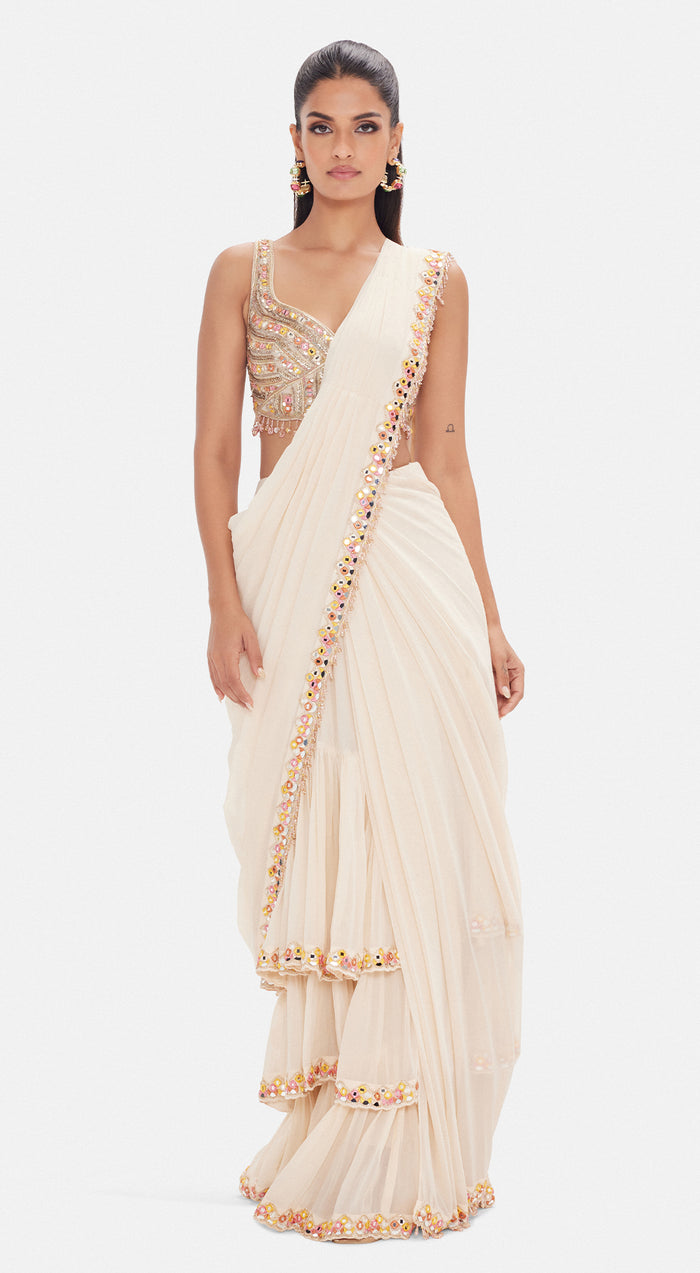
A traditional saree is an unstitched length of fabric that is draped around the body. The pleats, pallu and waist placement are created manually.
Different regions of India have their own draping traditions, and the same saree can often be styled in several different ways. This versatility is one of the biggest advantages of a traditional saree.
You can adjust the length, pleat placement and pallu according to your preference. This makes the traditional saree an excellent choice for someone who enjoys experimenting with styling.
However, draping may take time, particularly if you are not experienced. Pleats may also require occasional adjustment during a long event.
What Is a Pre-Draped Saree?
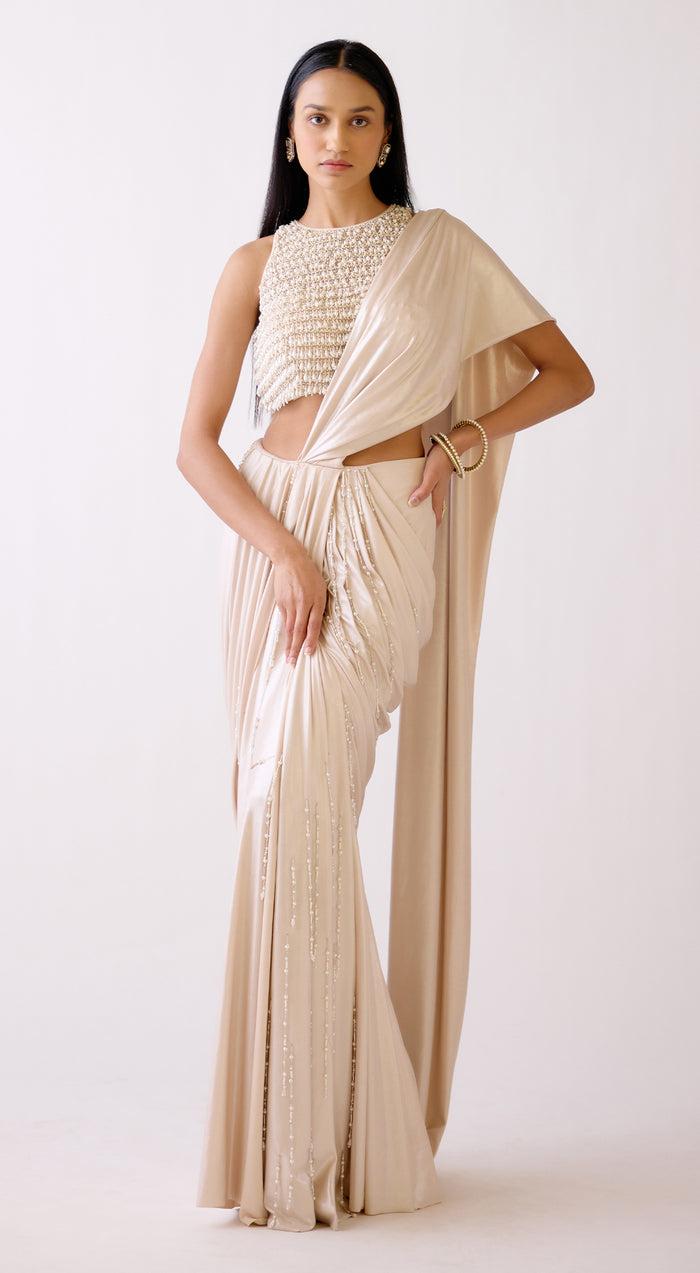
A pre-draped saree is designed to give the appearance of a traditionally draped saree while offering the convenience of a ready-to-wear outfit.
The pleats, drape and pallu are usually pre-constructed. Depending on the design, the saree may be worn like a skirt and secured with a zip, hook or waistband.
This makes the outfit easier to wear, particularly for those who are not comfortable with traditional saree draping.
Modern pre-draped sarees also allow designers to experiment with unusual silhouettes, asymmetrical drapes, layered details and contemporary construction.
Ease of Wearing: Which One Is More Convenient?
When it comes to convenience, a pre-draped saree has a clear advantage.
A traditional saree may require assistance or practice to achieve neat pleats and a secure pallu. A pre-draped style, however, can usually be worn much more quickly.
This can be particularly helpful for:
-
Wedding guests
-
Destination weddings
-
Cocktail events
-
First-time saree wearers
-
Busy celebrations with multiple functions
A pre-draped saree can reduce the time spent getting ready while still creating an elegant saree-inspired look.
However, many women enjoy the experience of traditional draping and appreciate the flexibility it offers. If wearing a saree is part of the cultural experience you enjoy, the additional preparation time may feel worthwhile.
Fit and Silhouette
Traditional sarees are flexible because the drape can be adjusted around the body. You can change the placement of pleats or pallu to create a silhouette that feels comfortable.
A pre-draped saree has a more fixed construction. This means choosing the correct size is especially important.
The advantage is that the silhouette is carefully designed to maintain its intended shape. Pleats are already placed correctly, and the drape remains structured throughout the event.
Contemporary styles may also include fitted skirts, corset-inspired blouses or sculpted drapes that are difficult to recreate with a regular saree.
If you prefer a more tailored appearance, a pre-draped saree may be the right choice. If you enjoy adjusting the outfit according to your body and styling preference, a traditional saree offers greater flexibility.
Style and Design Possibilities
Traditional sarees offer endless possibilities through fabrics, regional weaves, borders and draping techniques.
A pre-draped saree offers a different kind of creativity. Instead of focusing on manual draping, designers can build unique shapes directly into the garment.
Popular pre-draped styles include:
-
Cape-style pallus
-
Asymmetrical designs
-
Belted silhouettes
-
Layered skirts
-
Indo-Western saree styles
These designs can appeal to women who want a contemporary outfit while still retaining the visual elegance of a saree.
At Basanti Kapde Aur Koffee, modern occasion wear can bring traditional inspiration together with contemporary construction, making pre-draped silhouettes an appealing option for weddings and celebrations.
Comfort During Long Events
Comfort depends on the individual design rather than simply whether the saree is traditional or pre-draped.
A lightweight traditional saree can be extremely comfortable when draped well. Similarly, a heavily structured pre-draped saree may feel restrictive if the fit is too tight.
Before choosing either style, consider:
-
Fabric weight
-
Blouse fit
-
Waist comfort
-
Ease of movement
-
Length of the event
For a long wedding celebration, you should be able to sit, walk and dance comfortably.
A pre-draped saree can be especially convenient because the pleats remain in place, reducing the need for frequent adjustments. A traditional saree may require occasional attention, particularly if you are moving around extensively.
Which Style Works Better for Weddings?
Both styles can work beautifully for weddings.
A traditional saree may be ideal for religious ceremonies, cultural functions and events where classic styling is preferred. Silk sarees, Banarasi sarees and embroidered styles can create a timeless wedding appearance.
A pre-draped saree may be better suited for Sangeet, cocktail parties, receptions and contemporary wedding events. The structured silhouette can create a modern and fashion-forward look.
You can also choose according to your role at the wedding. A bride may prefer a dramatic pre-draped silhouette for one function and a traditional saree for another.
Guests can select whichever style feels most comfortable and appropriate for the celebration.
Jewellery and Styling Differences
Traditional sarees often work beautifully with classic jewellery such as jhumkas, chokers, bangles and traditional necklaces.
Pre-draped sarees can be styled with both traditional and contemporary accessories. Statement earrings, metallic belts, modern clutches and sculptural jewellery can complement the structured silhouette.
The blouse design also plays an important role. A traditional saree can be paired with a classic blouse, while a pre-draped saree may feature a corset, halter or one-shoulder design.
Neither approach is better. It simply depends on the look you want to create.
Which Saree Should You Choose?
Choose a traditional saree if you:
-
Enjoy classic draping
-
Want styling flexibility
-
Prefer cultural or timeless designs
-
Feel comfortable managing pleats and a pallu
-
Want to experiment with different draping styles
Choose a pre-draped saree if you:
-
Want a quicker dressing experience
-
Prefer a structured silhouette
-
Are new to wearing sarees
-
Want a contemporary look
-
Do not want to manage pleats during an event
Final Thoughts
The choice between a pre-draped saree and a traditional saree comes down to personal preference, comfort and occasion.
A traditional saree offers versatility, cultural richness and endless draping possibilities. A pre-draped saree provides convenience, structure and a modern approach to saree styling.
You do not need to choose one style forever. Your wardrobe can include both. A traditional saree may be perfect for a ceremony, while a pre-draped saree can become your preferred choice for a Sangeet, reception or cocktail celebration.
The best option is the one that makes you feel confident, comfortable and ready to enjoy the occasion.
- Managerial Effectiveness!
- Future and Predictions
- Motivatinal / Inspiring
- Fitness and Wellness
- Medical & Health
- Manufacturing
- Education
- Real-Estate
- Food Industry
- Hospitality
- Online Games
- Sports
- Home Services
- Civil Engineering
- Safety and Protection
- Software Products & Services
- Fashion and Jewellery
- Artificial Intelligence
- Entrepreneurship
- Mentoring & Guidance
- Marketing
- Networking
- HR & Recruiting
- Literature
- Shopping
- Career Management & Advancement