

 SkillClick
How to Set Up a Golf Skins Game With Friends?
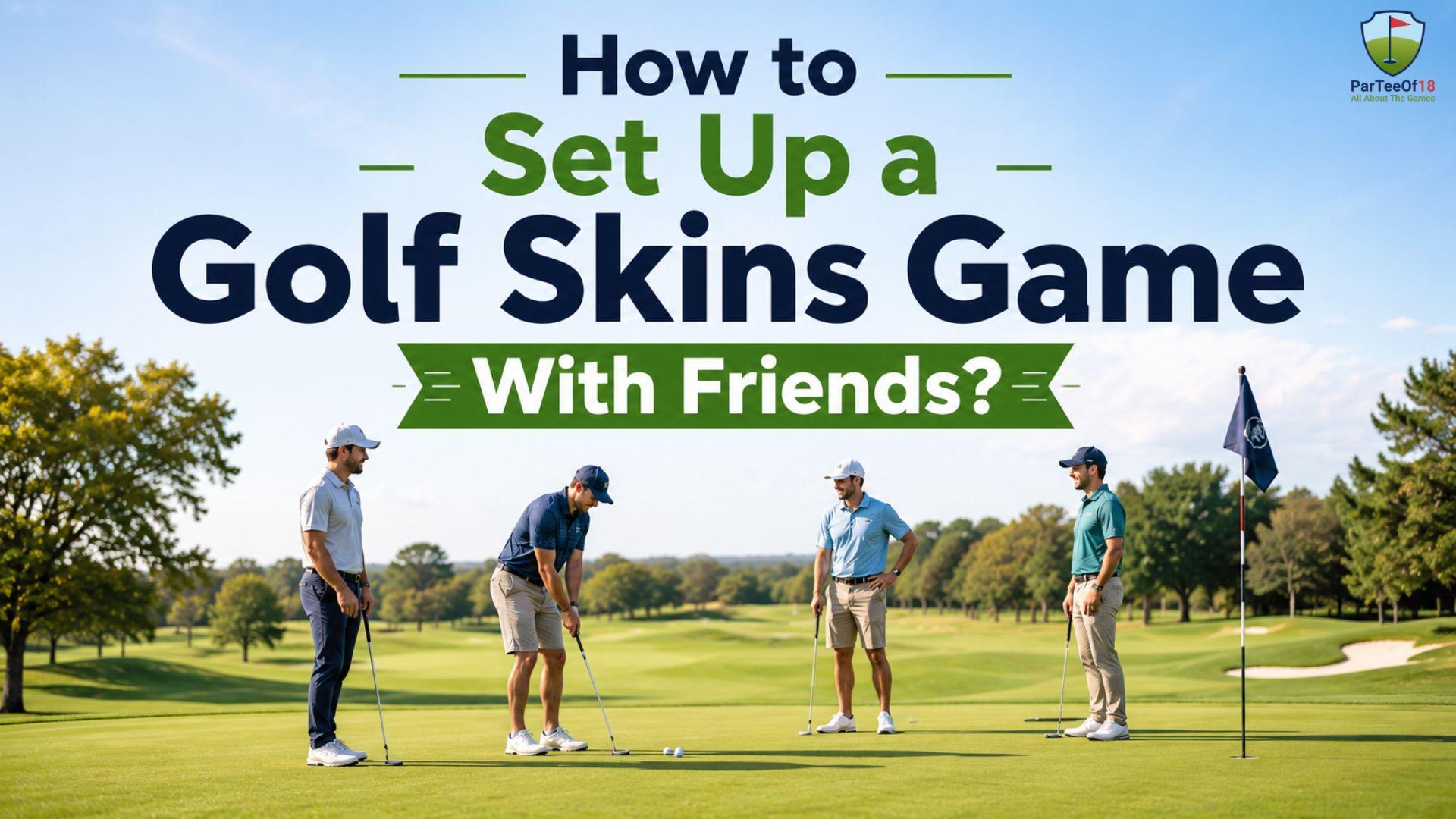
There's a specific kind of energy that shows up on a golf course the moment money, even a couple of dollars, gets attached to a hole. Suddenly that routine par putt on the sixth green feels like it matters a little more. Guys who've been chatting about their fantasy football lineup for four holes go quiet and start reading the break like they're on the PGA Tour.
That's the magic of a skins game. It's simple, it's old school, and it turns an ordinary Saturday round into something everyone remembers by the 19th hole. You don't need a tournament director, a fancy app, or a rulebook the size of the USGA handbook. You just need a few friends, a golf course, and maybe ten minutes before you tee off to agree on the basics.
If you've never run one before, or you tried once and it turned into a confusing mess of "wait, who won that hole again," this guide will walk you through everything, step by step, so your next round runs smoothly from the first tee to the final handshake on eighteen.
What Is a Golf Skins Game?
A skins game is a hole by hole competition where the lowest score on each hole wins that hole's "skin," which could be cash, bragging rights, or a round of beers back at the clubhouse. If players tie the low score, nobody wins, and the skin rolls over to the next hole, building in value as the round goes on. It's one of the oldest betting formats in golf, and there's a reason it hasn't gone out of style. Unlike match play or stroke play, where one bad stretch can decide the whole day, skins reset the drama on every single hole. That constant reset is exactly what keeps friend groups coming back to this format weekend after weekend, and it's a big part of why the format has survived on club calendars for so many decades without needing any real updates or gimmicks.
The Basic Concept in Plain English
Think of it like eighteen mini bets instead of one big bet for the whole round. Win a hole clean, you pocket that skin. Tie with someone, the value just moves to hole number two. It rewards good holes, not just a good overall score, which is why a player having a rough day off the tee can still walk away with cash if they scramble well on a couple of holes and get hot with the putter when it counts.
Why Skins Games Are So Popular Among Friend Groups?
Unlike stroke play, where a bad front nine can mentally check you out for the day, skins keep every single hole meaningful. There's always a reason to focus, even on hole 15 when your round has already gone sideways and your overall score is a lost cause. A weaker player can still win skins on holes where the better players make mistakes, and that keeps the trash talk flying in both directions instead of one guy dominating the whole day from start to finish.
You're not betting your mortgage payment either. Most friend groups play for five, ten, maybe twenty dollars a skin, which is enough to matter without causing real financial stress. That balance is exactly why the format works so well for casual weekend rounds, whether it's a regular Saturday foursome or a bigger group getting together for an annual golf trip somewhere warm.
Step 1: Decide on Your Group Size and Format
Before you talk numbers, figure out who's actually playing and how you'll count the group's scores. Most skins games run best with three to six players, since more than that starts complicating the math and slowing down pace of play, especially if you're using handicaps or splitting into teams. Getting this settled early, before anyone's even loaded their clubs into the cart, saves a lot of confusion once the round actually gets underway.
Four players is the classic setup, and for good reason. It's easy to track, fits a standard foursome, and gives you enough competition without turning the scorecard into a math exam. Three works fine too, but two players is really more of a straight match, since there's no third score to create a genuine tie or carryover scenario.
Individual Play vs. Team Skins
You can play skins as individuals, everyone for themselves, or split into two-man teams using best ball. Team skins actually work great for mixed skill groups, since a stronger player can help cover for a friend having an off day. This format also tends to speed up decision making on the green, since partners can talk through putts together instead of everyone going it alone under pressure.
Step 2: Set the Buy-In and Skin Value
This is the part everyone actually cares about, so nail it down before the first tee shot. A quick five-minute conversation now saves an awkward argument on hole eighteen when someone claims they thought the skins were worth half of what everyone else assumed. Write the number down, say it out loud, and make sure every player in the group repeats it back before you head to the first tee box.
Most casual groups land somewhere between two and ten dollars per hole. Say you're playing with three buddies and set it at five dollars a skin across eighteen holes, that's a maximum possible payout of ninety dollars if every single hole gets won outright, which almost never happens because of carryovers stacking value onto later holes throughout the round.
Fixed Buy-In vs. Per-Hole Payout
Some groups prefer a flat buy-in, say twenty dollars each, dropped into a pot at the start, then divided based on skins won at the end. Others pay per hole in real time, cash changing hands right there on the green after every hole finishes. Either method works, just agree on it before you tee off so nobody's fumbling for cash mid-round.
Step 3: Establish the Rules for Carryovers
Carryovers are honestly what make skins games fun. Nothing gets the group buzzing like watching a five dollar skin balloon into thirty-five dollars because four holes in a row ended in ties. That building tension is what separates skins from every other betting format in golf, and it's usually the moment people talk about most when they're recapping the round back in the clubhouse over a cold drink.
If two or more players post the same lowest score, that hole's skin doesn't get awarded to anyone. Instead, its value gets added to the next hole's skin, so hole eight might suddenly be worth double or triple the usual amount depending on how many holes tied in a row before it. Picture three holes tying in a row on the front nine, so by hole seven, there's a twenty dollar skin sitting on the table. Suddenly everyone's focused, nobody's rushing their putt, and that one hole becomes the story of the entire round.
Step 4: Decide How Handicaps Will Be Used
If your group has a mix of skill levels, a low handicapper and a weekend hacker playing together, raw scores alone won't feel fair. Handicaps level things out so everyone has a genuine shot at winning skins, regardless of who's the strongest ball striker in the group. Sorting this out before the round starts prevents any awkward "well that's not fair" conversations once the scores start coming in on the first few holes.
Some groups play gross skins, meaning actual scores with no adjustments, which works fine when everyone's roughly the same skill level. Others play net skins, applying each player's handicap to their score on each hole, giving higher handicappers a real chance to compete against the low single digit player in the group. A simple approach is taking each player's course handicap, dividing it across the eighteen holes based on stroke index, and subtracting accordingly. Most golf apps do this automatically now, so you don't need to do the math yourself on the course.
Step 5: Choose How You'll Track Scores
Nothing kills the fun of a skins game faster than an argument on hole twelve about who actually won hole four. Decide upfront how you're tracking things, and stick with it, whether that's a paper card in someone's pocket or an app pulled up on a phone between shots. Consistency here matters more than which method you actually pick.
A paper scorecard works fine for a laid back round, but honestly, most groups these days lean on a golf app instead. It removes the guesswork, does the math instantly, and nobody has to squint at smudged pencil marks after a rain delay. Apps like Golf Pad, TheGrint, and Skins.golf are built specifically for this format. You just enter scores hole by hole, and the app calculates who owes what by the time you're shaking hands on eighteen, no mental math or arguing required.
Step 6: Agree on Tiebreakers and Special Situations
Even with clear rules, weird situations pop up. What if the round doesn't finish? What if someone picks up mid hole? Sort these out before day one so nobody's caught off guard later, because these edge cases are exactly the kind of thing that turns a fun round into a frustrating debate on the back nine.
Agree beforehand whether unfinished holes are simply void, or whether the group finishes counting skins only through the last completed hole. Most casual groups just void anything past the point where someone had to leave early, since it keeps the math simple. And if a player picks up their ball on a hole they've clearly lost, that's usually fine and doesn't affect the skin. But on a hole still in play for the skin, most groups require you to finish putting it out to have a valid score.
Step 7: Set a Maximum Bet or Cap
If you want to protect the group from a runaway pot after five carryovers in a row, set a cap. This keeps things fun instead of financially stressful for anyone in the group, especially newer players who might not want to see a single hole balloon into a fifty dollar swing they weren't expecting when they showed up for a casual round.
A common approach is capping any single hole's skin value at three or four times the base amount. So a five dollar skin can carry over and grow, but it maxes out at twenty dollars no matter how many ties pile up before it, which keeps the excitement without letting things spiral into something uncomfortable for the group.
Step 8: Play the Round and Settle Up
Once the rules are set, the actual playing part is simple. Just make sure everyone's writing down or entering scores right after each hole, not trying to remember eighteen holes' worth of numbers at the clubhouse when memories have already started to blur after a few beers on the back nine. The best habit is entering each player's score the moment everyone finishes putting out, before walking to the next tee.
When the round wraps up, add up how many skins each player won and multiply by the agreed value. If Sarah won three skins at five dollars each while two others tied for the rest, she's owed fifteen dollars, split among whoever didn't win any skins, depending on your group's exact payout method. Whatever method you chose, cash or app, this should take two minutes, not twenty, especially if everyone's been tracking scores properly throughout the round.
At the end of the day, remember the point of a skins game is to add fun to your round, not create tension. If someone's clearly having an off day, don't be the friend who rubs it in over a five dollar skin. Save the trash talk for the guy who's actually good and can take a little ribbing without it ruining the mood for everyone else.
Real-Life Example: A Weekend Skins Game in Action
Let's say four friends, Mike, Dave, Chris, and Tom, tee off on a Saturday morning with a five dollar per hole skins game. On hole one, Mike birdies and wins outright, five dollars in his pocket. Holes two and three both tie, so by hole four, there's a fifteen dollar skin on the line. Chris drains a twenty foot putt for par while everyone else bogeys, and suddenly he's up fifteen dollars on one hole alone.
Later, on the back nine, Dave and Tom trade skins back and forth for three straight holes, keeping the group buzzing all the way to the eighteenth green. Tom's final birdie steals the last carryover and closes out the round with the biggest win of the day. That's the kind of moment that makes people want to play skins every single weekend instead of just playing a plain stroke play round with nothing on the line.
Common Mistakes to Avoid When Setting Up a Skins Game
-
Not agreeing on handicap use before the round starts, which leads to arguments later.
-
Forgetting to set a carryover cap, letting one hole's value spiral out of control.
-
Relying on memory instead of tracking scores hole by hole in real time.
-
Skipping the conversation about payout method, cash or app, before teeing off.
-
Playing with too many people, which slows down pace and complicates scoring.
-
Not clarifying what happens if the round gets cut short due to weather or time.
Conclusion
Setting up a golf skins game with friends really comes down to a handful of quick decisions made before you ever step on the first tee. Nail down your group size, agree on the buy-in, sort out how carryovers and handicaps will work, and pick a simple way to track scores. Do that, and you've got a format that turns a regular Saturday round into something everyone's talking about at the clubhouse afterward, long after the clubs are back in the trunk.
The best part is how flexible it is. Whether you're playing for two dollars a skin with your regular foursome or ten dollars with a more competitive crew, the format adapts to whatever your group wants. It scales up or down depending on the day, the group, and the mood, which is exactly why it's remained one of golf's most beloved betting formats for generations. Give it a shot on your next round, and don't be surprised if it becomes a permanent fixture in your golf trips going forward.
Frequently Asked Questions
1. What is a good buy-in amount for a skins game with friends?
Most casual groups play somewhere between two and ten dollars per skin, depending on comfort level. Start lower if it's your group's first time playing this format, and adjust from there once everyone's comfortable with how the payouts and carryovers actually work in practice.
2. How many players do you need for a skins game?
Three to six players works best, with four being the most common and easiest to manage. Playing with just two people turns it into more of a standard match rather than a true skins format, since there's no third score available to create a genuine tie.
3. What happens if a hole ties in a skins game?
The skin simply carries over to the next hole, adding its value to whatever that next hole is already worth. This continues until one player wins a hole outright, at which point they collect the full accumulated amount from every tied hole that came before it.
4. Should you use handicaps in a skins game?
If your group has a wide range of skill levels, using handicaps makes the game fairer for everyone involved. If everyone's roughly the same skill level, playing gross scores without adjustments works just fine too, and it keeps the scoring process a little simpler overall.
5. What's the best app for tracking a skins game?
Golf Pad, TheGrint, and Skins.golf are all solid options built specifically for this format. They handle the scoring and payout math automatically, which saves a lot of hassle compared to a paper scorecard and reduces the chance of a dispute later in the round.
- Managerial Effectiveness!
- Future and Predictions
- Motivatinal / Inspiring
- Fitness and Wellness
- Medical & Health
- Manufacturing
- Education
- Real-Estate
- Food Industry
- Hospitality
- Online Games
- Sports
- Home Services
- Civil Engineering
- Safety and Protection
- Software Products & Services
- Fashion and Jewellery
- Artificial Intelligence
- Entrepreneurship
- Mentoring & Guidance
- Marketing
- Networking
- HR & Recruiting
- Literature
- Shopping
- Career Management & Advancement