

 SkillClick
Diamond Earrings: How to Choose the Perfect Pair
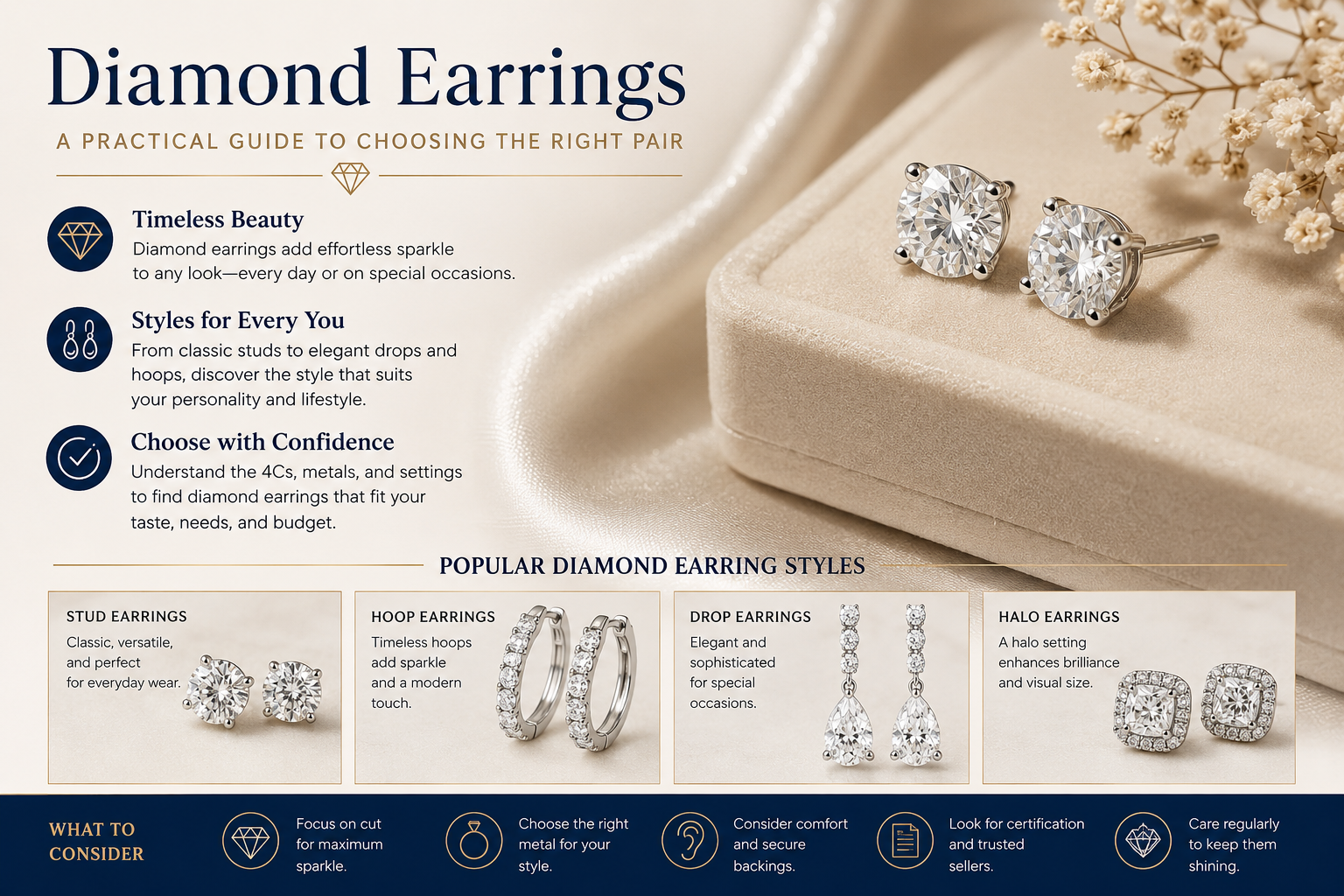
A great pair of diamond earrings can work with almost any wardrobe. They can add subtle sparkle to everyday clothes or provide a polished finish for formal events. However, choosing a pair involves more than picking the largest stones within your budget.
Diamond shape, cut quality, setting, metal, and total carat weight all affect how earrings look and feel. Understanding these details helps you spend money on features that make a visible difference.
Why Diamond Earrings Are So Versatile
Unlike many statement pieces, diamond ear jewelry does not depend heavily on changing fashion trends. Simple studs can suit work, dinners, weddings, and casual outfits without looking out of place.
Their versatility also makes them useful gifts. A classic design does not require the buyer to know every detail of someone's wardrobe. You can still personalize the choice through diamond shape, metal color, and setting style.
Different designs also create very different effects. Small studs offer restrained sparkle, while drops and hoops create more movement around the face.
Choosing the Right Earring Style
Start by deciding how and where the earrings will be worn. This decision can narrow your options before you compare diamond specifications.
Classic Stud Earrings
Studs place the stone directly on the earlobe. Round and princess-cut diamonds remain popular because their balanced shapes work well in simple settings.
Studs are also practical for frequent wear. They usually sit close to the ear, making them less likely to catch on hair or clothing.
A four-prong setting exposes more of the diamond. A bezel setting surrounds the stone with metal and offers a more secure, modern appearance.
Diamond Hoops
Hoops create a stronger visual effect because several stones may appear across the front of each earring. Small hoops can remain understated, while larger designs often become the focus of an outfit.
Pay attention to where the stones are positioned. Some designs place diamonds only on the front. Others feature stones along the inside back section so they remain visible from different angles.
Drop and Dangle Designs
Drop earrings hang below the earlobe and can create an elegant sense of movement. They work especially well for evening events and occasions where more noticeable jewelry feels appropriate.
Longer designs may include multiple diamonds or combine diamonds with other gemstones. Since these earrings move more than studs, secure clasps are especially useful.
What Matters Most When Buying Diamond Earrings
The traditional Four Cs provide a helpful starting point for assessing diamonds. However, you can prioritize them differently for earrings than for a solitaire engagement ring.
Cut Quality
Cut has a major effect on brightness and sparkle. A well-cut diamond reflects light effectively, helping it look lively even at a modest size.
For round stones, prioritize strong cut performance before paying for very high color or clarity grades. The visual impact of good light return is often easier to notice.
Shape should not be confused with cut quality. Shape describes the outline, such as round, oval, pear, or princess. Cut quality describes how well the diamond's proportions and facets manage light.
Color
Diamond color grades generally measure how much yellow or brown tint a stone displays. Higher grades appear more colorless, but you may not need the highest available grade for earrings.
Because earrings are viewed from farther away than rings, slight color differences can be difficult to notice. The metal also influences appearance. White metals may make warmth easier to see, while yellow or rose gold can make warmer stones look intentional.
Clarity
Clarity describes natural internal features called inclusions and surface features called blemishes. Very high clarity grades can raise the price without creating an obvious visual difference in earrings.
For most buyers, an eye-clean appearance matters more than a technically flawless stone. If inclusions cannot be seen without magnification, paying for a much higher clarity grade may offer limited practical value.
Carat Weight
Retailers often describe earring size using total carat weight. A one-carat total weight pair usually contains about half a carat in each ear, assuming the stones are evenly matched.
Always confirm whether the listed weight refers to each diamond or the complete pair. This small detail can prevent confusion when comparing prices.
Matching Two Diamonds Successfully
Well-matched diamond earrings look balanced when worn. The stones do not need identical grading reports, but their visible characteristics should be close.
Diameter is particularly important for round studs. Two diamonds with similar carat weights can have different face-up sizes because of their proportions. Matching their measurements helps create a more even appearance.
Color should also stay reasonably consistent between the pair. A visible difference in warmth can become distracting when the earrings are viewed together.
Cut and overall brightness matter as well. One highly reflective stone beside a duller diamond can make the mismatch easier to notice.
Natural and Laboratory-Grown Options
Buyers now have more choices regarding diamond origin. Natural diamonds form underground through geological processes, while lab made diamonds are produced using controlled technology that recreates conditions needed for diamond crystal growth.
Both options are real diamonds with the same basic carbon crystal structure. They can be graded using the same major quality factors, including carat, color, clarity, and cut.
The main differences relate to origin, pricing, rarity, and personal preference. Buyers should compare clear grading information rather than assuming one option automatically offers better visual quality.
Selecting the Best Metal
Metal affects appearance, durability, comfort, and price. It also changes how the diamond's color looks against the setting.
White Gold
White gold provides a bright, modern background for diamonds. It is usually coated with rhodium to improve its white finish. That coating may need renewal after years of regular use.
Yellow Gold
Yellow gold creates a warmer and more traditional look. It can also pair well with diamonds that show a small amount of warmth.
The karat level affects both color and durability. For example, 14K gold usually contains more strengthening alloy than 18K gold.
Rose Gold
Rose gold has a warm pink tone created by mixing gold with copper and other metals. It offers a softer contrast with white diamonds and works well with both vintage and modern designs.
Platinum
Platinum has a naturally white appearance and strong resistance to wear. It is also denser than gold, so platinum earrings may feel heavier.
Its durability can make it appealing for valuable stones and frequently worn pieces.
Choosing the Right Size for Your Lifestyle
There is no single ideal size for diamond earrings. The right choice depends on personal style, ear size, budget, and how often the pair will be worn.
Smaller studs often work well for offices and casual settings. Medium sizes offer more visible sparkle without becoming difficult to wear daily. Larger stones create greater impact but may need stronger backs to keep them sitting upright.
Consider comfort as carefully as appearance. Heavy earrings may become uncomfortable after several hours, especially if you have sensitive earlobes.
Don't Overlook Earring Backs
The backing system plays an important role in security. Standard push backs are convenient, while screw backs provide extra protection because they twist onto threaded posts.
Some larger studs use wider backs to help distribute weight across the earlobe. This can reduce drooping and keep the diamonds facing forward.
Before purchasing expensive earrings, check that the backs feel secure but remain easy enough to remove.
Certification and Seller Information
Grading reports can make diamond comparisons easier, particularly for larger stones. Independent grading documents may list measurements, carat weight, color, clarity, and other characteristics.
For smaller earrings, individual grading reports may not always be included. In that situation, look for a retailer that clearly explains diamond quality, total carat weight, metal purity, return terms, and warranty coverage.
Product images should not be your only source of information. Lighting, magnification, and editing can make jewelry appear different online.
Caring for Your Earrings
Skin oils, cosmetics, hair products, and soap can collect on diamonds and reduce their sparkle. Regular cleaning helps remove this film.
For routine care, use warm water, mild dish soap, and a soft brush. Clean gently around the setting, rinse carefully, and dry the earrings with a soft lint-free cloth.
You should also inspect the prongs and backs from time to time. A loose setting can put a stone at risk, so professional inspection is sensible if anything moves or feels unusual.
Store each pair separately from harder jewelry pieces. This reduces scratching and prevents posts or settings from becoming tangled.
Finding a Pair You'll Actually Wear
The best diamond earrings balance appearance, comfort, quality, and cost. Focus first on the style that fits your routine, then compare cut, visible size, color, clarity, and setting security.
You can also consider lab made diamonds if you prefer their pricing and origin while still wanting the physical and visual properties of diamond. Whatever option you choose, prioritize balanced stones and reliable craftsmanship over specifications you cannot see.
A thoughtful purchase should suit how you dress and how often you plan to wear the earrings. Choosing with those practical factors in mind can help you find a pair that earns a regular place in your jewelry collection.
- Managerial Effectiveness!
- Future and Predictions
- Motivatinal / Inspiring
- Fitness and Wellness
- Medical & Health
- Manufacturing
- Education
- Real-Estate
- Food Industry
- Hospitality
- Online Games
- Sports
- Home Services
- Civil Engineering
- Safety and Protection
- Software Products & Services
- Fashion and Jewellery
- Artificial Intelligence
- Entrepreneurship
- Mentoring & Guidance
- Marketing
- Networking
- HR & Recruiting
- Literature
- Shopping
- Career Management & Advancement