

 SkillClick
How Singapore Manufacturers Are Improving Operations With Smarter ERP Systems
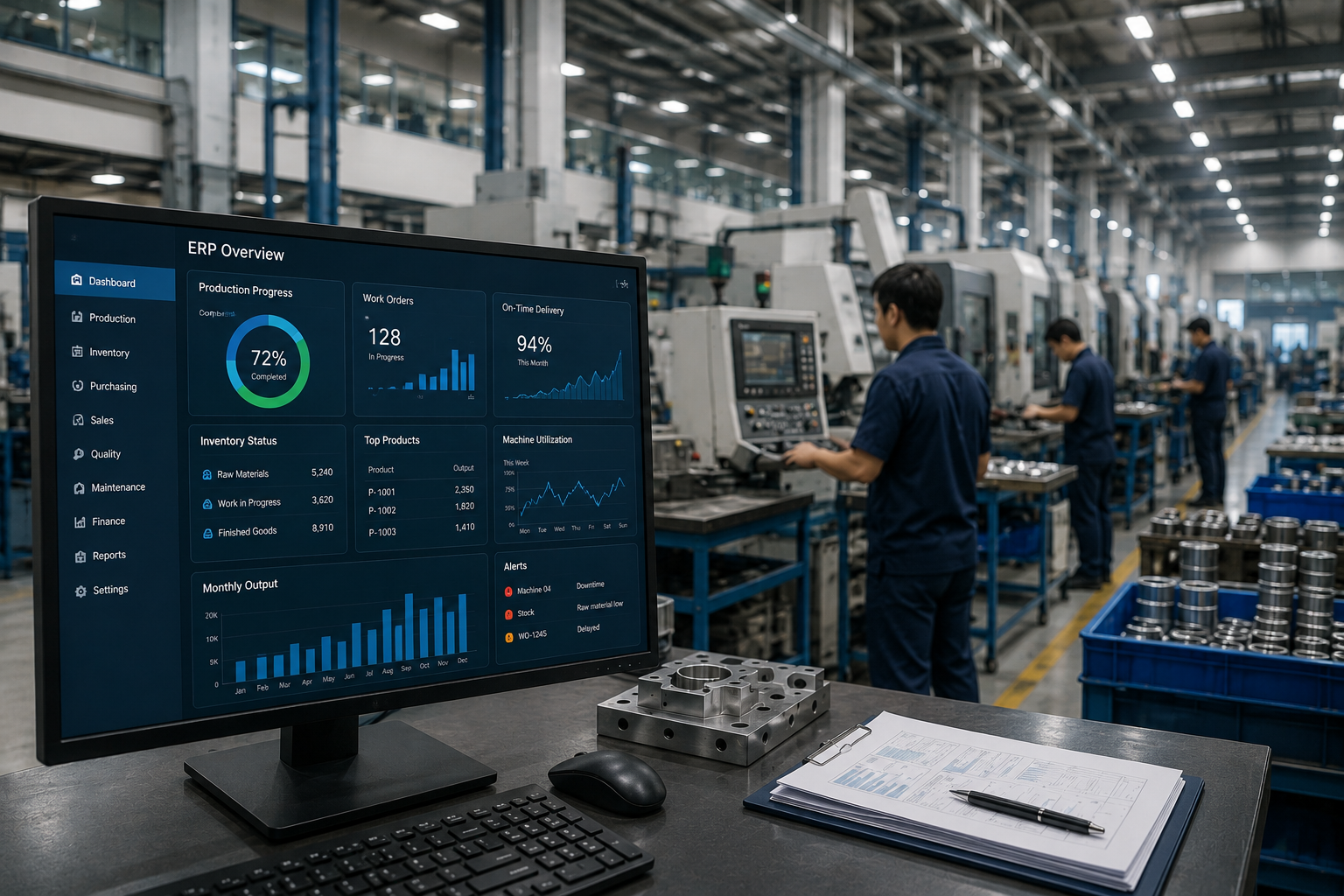
Singapore's manufacturing sector has always had to work harder than most to stay competitive. Land is limited, labour costs are high compared to regional neighbours, and the pressure to move up the value chain into precision engineering, electronics, and advanced manufacturing has never really let up. In that environment, the difference between a factory that thrives and one that struggles often comes down to how well it manages information: what's on the production line, what's in the warehouse, what customers actually ordered, and how quickly problems get flagged before they become expensive ones.
This is where the quiet, unglamorous work of ERP system adoption has been making a real difference.
Why Manufacturers Are Rethinking Their Systems
For years, many small and mid-sized manufacturers in Singapore ran on a patchwork of tools. A spreadsheet for inventory, a separate system for accounting, maybe a standalone module for production scheduling, and a lot of manual reconciliation holding it all together. It worked, in the sense that orders got fulfilled and books got closed, but it rarely worked well. Stock counts were often out of date by the time anyone looked at them. Finance teams spent days each month just making numbers from different systems agree with each other. Production planners made scheduling decisions based on information that was already a few days stale.
The shift toward a proper ERP system isn't really about chasing a trend. It's a practical response to a simple problem: disconnected data leads to disconnected decisions. When a company's production, procurement, inventory, and finance functions all draw from the same source of truth, the guesswork that used to eat up hours of staff time largely disappears.
What Smarter ERP Looks Like in Practice
The manufacturers seeing the biggest gains from ERP implementation in Singapore aren't necessarily the ones with the biggest budgets. They tend to be the ones that approached implementation with a clear sense of what they actually needed to fix, rather than adopting a system because a competitor had one.
A few patterns show up again and again:
Real-time visibility on the shop floor. Instead of waiting for end-of-shift reports, supervisors can see machine utilisation, work-in-progress status, and material consumption as it happens. This matters enormously in Singapore, where many factories run tight margins on precision components and can't afford to discover a bottleneck a day after it started costing them money.
Tighter inventory control. Manufacturers dealing with imported raw materials, common given Singapore's reliance on trade, have found that an ERP system helps them avoid both understocking (which halts production) and overstocking (which ties up capital in a market where warehouse space is genuinely expensive). Automated reorder points and demand forecasting, built on actual historical data rather than gut feel, have quietly saved many companies from both extremes.
Integrated compliance and traceability. Industries like electronics, pharmaceuticals, and food manufacturing face increasingly strict traceability requirements, both from regulators and from international customers who want to know exactly where components came from. A well-configured ERP system can track a batch from raw material intake through to shipped product, which used to require painstaking manual documentation.
Financial clarity without the month-end scramble. When procurement, production costs, and sales all sit in the same system, finance teams stop chasing numbers from five different departments. Margins on individual jobs become visible in near real time instead of being reconstructed weeks later.
The Human Side of the Change
It's worth being honest that ERP implementation in Singapore, like anywhere else, isn't purely a technology story. Manufacturers with the smoothest transitions tend to treat it as an operational change project first and a software rollout second.
That usually means involving shop floor supervisors and warehouse staff early, not just IT managers and finance directors. The people who will actually use the system daily are usually the best judges of whether a proposed workflow makes sense or just adds extra clicks to an already busy day. Companies that skipped this step have sometimes ended up with expensive systems that staff quietly worked around, keeping their old spreadsheets running in parallel because the new process felt clunkier than what they replaced.
Training also tends to matter more than most companies initially budget for. An ERP system that nobody fully understands ends up being used at a fraction of its capability, with staff sticking to the handful of functions they were shown in a single onboarding session. The manufacturers getting the most value tend to revisit training months after go-live, once staff has enough hands-on experience to ask better questions.
Local Factors Shaping Adoption
A few things about operating in Singapore specifically shape how ERP adoption tends to unfold here.
Government support schemes, including productivity and digitalisation grants administered through agencies like Enterprise Singapore, have made it more financially realistic for smaller manufacturers to invest in proper systems rather than limping along with makeshift solutions. This has broadened ERP adoption beyond just the large, well-resourced players.
Singapore's role as a regional trade and logistics hub also means many manufacturers need systems that can handle multi-currency transactions, cross-border shipments, and integration with customs and logistics partners without constant manual intervention. This pushes companies toward ERP systems with strong integration capabilities rather than closed, standalone tools.
Labour constraints are another quiet driver. With a workforce that's smaller relative to output ambitions than in some neighbouring countries, manufacturers have a strong incentive to automate the administrative overhead that used to consume staff hours, freeing people up for higher value work like quality control and process improvement.
What This Means Going Forward
None of this suggests that adopting an ERP system is a cure-all. Poorly planned implementations still happen, and some companies have found that a system chosen without proper needs analysis ends up being either overkill for their size or missing features they actually needed. The manufacturers doing well with ERP tend to be realistic about this: they treat implementation as an ongoing process of refinement rather than a one-time project with a fixed end date.
What does seem consistent, though, is that the manufacturers who've moved past fragmented, manual systems toward integrated ERP platforms report fewer surprises. Fewer stock shortages that halt a production line. Fewer end-of-month scrambles to reconcile numbers. Fewer decisions made on outdated information. In an industry where margins are often thin and competition from lower-cost regions is constant, that kind of operational steadiness isn't flashy, but it adds up.
For manufacturers still weighing whether the effort of an ERP implementation in Singapore is worth it, the more useful question probably isn't whether to do it, but how to do it in a way that fits the specific shape of their operations, staff, and growth plans. That's usually where the real gains come from, not the software itself, but the clarity it brings to decisions that used to be made in the dark.
- Managerial Effectiveness!
- Future and Predictions
- Motivatinal / Inspiring
- Fitness and Wellness
- Medical & Health
- Manufacturing
- Education
- Real-Estate
- Food Industry
- Hospitality
- Online Games
- Sports
- Home Services
- Civil Engineering
- Safety and Protection
- Software Products & Services
- Fashion and Jewellery
- Artificial Intelligence
- Entrepreneurship
- Mentoring & Guidance
- Marketing
- Networking
- HR & Recruiting
- Literature
- Shopping
- Career Management & Advancement