

 SkillClick
Recycled Road Base Victoria | Sustainable Aggregate for Roads & Driveways
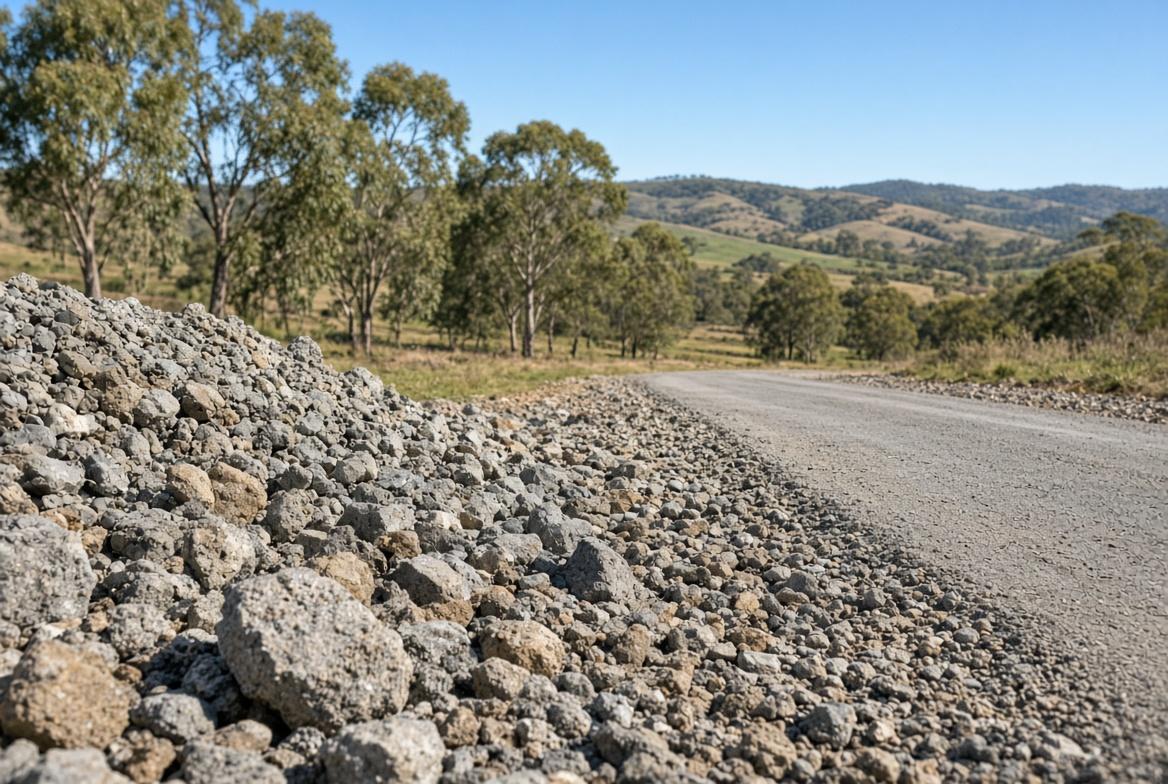
Recycled road base has become an essential material across Victoria as the state advances its commitment to circular economy principles and sustainable infrastructure. Produced primarily from crushed concrete, bricks, masonry, and asphalt recovered from demolition and construction sites, this processed aggregate offers a reliable alternative to virgin quarried stone.
In Victoria, the material is carefully screened, graded, and tested to meet Department of Transport and Planning standards, including relevant sections of the VicRoads specifications for pavement base and sub-base applications. By transforming what would otherwise become landfill waste into high-performing construction material, recycled road base supports both environmental goals and practical project needs throughout Melbourne and regional areas.
The production process begins with the careful sorting and removal of contaminants from construction and demolition waste. Once cleaned, the material is crushed and screened into specific particle size distributions, commonly available in 20 mm and 40 mm nominal sizes corresponding to Class 2, Class 3, and Class 4 categories. These classes align with Code of Practice RC 500.02 and related technical notes that permit the use of recycled crushed concrete, crushed brick, and limited proportions of recycled glass in unbound granular pavements.
Independent laboratory testing, often NATA-accredited, verifies properties such as California Bearing Ratio values, plasticity index, particle size distribution, and compaction characteristics. The resulting product delivers excellent load-bearing capacity and interlock when properly compacted, making it suitable for a wide spectrum of civil and residential works.
Environmental and Economic Advantages Driving Adoption Across the State
Victoria generates substantial volumes of concrete, brick, and asphalt waste each year. Diverting these materials into road base production reduces pressure on landfill capacity while decreasing the demand for newly extracted natural aggregates. Studies and industry data indicate that recycled crushed concrete products can achieve a carbon footprint approximately 65 percent lower than equivalent quarried materials, primarily because crushing and processing consume less energy than primary extraction and long-distance transport of virgin rock.
The Victorian Government has actively encouraged this shift through its Recycled First policy and related initiatives, incorporating more than 100,000 tonnes of recycled content into road maintenance and construction projects in recent years. Materials such as reclaimed asphalt pavement, crushed glass fines, and recycled concrete have been successfully trialled and specified on major routes, demonstrating both performance and cost benefits.
From a commercial perspective, recycled road base typically costs less than virgin alternatives because the feedstock is already available as waste rather than requiring new quarry operations. This price advantage is particularly valuable for residential driveways, commercial car parks, hardstand areas, utility trench backfill, and temporary access roads.
Builders and contractors appreciate the material’s workability; it spreads easily, achieves high density under roller compaction, and provides a stable platform for subsequent surfacing layers such as asphalt, concrete, or pavers. In many lower-trafficked applications covered by Section 813 specifications, recycled products may constitute the majority or even the entirety of the base or sub-base layer, further enhancing project economics without compromising durability.
Performance Characteristics and Typical Applications in Victorian Conditions
When placed and compacted to the appropriate thickness and moisture content, recycled road base exhibits strong interlocking behaviour and resistance to deformation under traffic loads. Class 2 and Class 3 products are frequently selected for higher-specification works, while Class 4 material serves well as sub-base or fill in lighter-duty situations.
The material’s drainage characteristics support effective water management beneath pavements, reducing the risk of soft spots and premature failure in Victoria’s variable climate. Applications range from local government road reconstructions and subdivision pavements to private residential projects including driveways, pathways, shed bases, and landscaping hardstands. Many suppliers also offer cement-treated variants upon request, which enhance strength for more demanding sites.
Compliance with environmental regulations is another important consideration. Facilities producing recycled aggregates in Victoria operate under EPA permissions that govern the acceptance and processing of designated waste streams. End users benefit from the assurance that properly sourced recycled road base meets both engineering performance criteria and environmental safeguards. Ongoing research, including work examining polymer stabilisation and higher glass content blends, continues to expand the range of approved uses and further improve the material’s sustainability profile.
Practical Considerations for Specifying and Placing Recycled Road Base
Successful use begins with selecting the correct class and grading for the intended traffic loading and pavement design. Thickness recommendations commonly range from 100 mm to 150 mm compacted for standard residential driveways, increasing to 200 mm or more for commercial car parks or areas expecting heavier vehicles.
Proper moisture conditioning during placement is essential to achieve target density, and the material should be protected from excessive rain before final compaction. When these practices are followed, recycled road base performs comparably to virgin aggregates in the majority of non-heavy-duty applications while delivering clear environmental and cost advantages.
Building and Garden Supplies supplies quality recycled road base to residential, commercial, and trade customers throughout Victoria, supporting projects that prioritise both performance and sustainability. As awareness of circular construction grows, the material is expected to play an even larger role in the state’s infrastructure and private development pipeline.
Its combination of proven engineering properties, lower embodied carbon, and competitive pricing positions recycled road base as a smart, future-oriented choice for foundations that must endure Victoria’s diverse conditions while aligning with broader resource-efficiency objectives.
FAQs
What materials are typically used to produce recycled road base?
Recycled road base is manufactured mainly from crushed concrete, brick, masonry, and asphalt recovered from demolition sites. Limited amounts of recycled glass may also be incorporated in accordance with approved specifications.
Does recycled road base meet VicRoads and Department of Transport standards?
Yes. Registered products comply with relevant sections such as 812, 815, and Code of Practice RC 500.02, covering Class 2, 3, and 4 crushed concrete mixes suitable for base and sub-base applications.
Is recycled road base strong enough for driveways and car parks?
When correctly specified and compacted, it provides excellent load-bearing capacity and stability for residential driveways, light to medium commercial car parks, hardstands, and similar uses.
How does the environmental impact compare with virgin road base?
Recycled road base significantly reduces landfill volumes, conserves natural quarry resources, and typically carries a substantially lower carbon footprint associated with production and transport.
Can recycled road base be cement treated?
Many 20 mm products can be cement treated on request to increase strength for more demanding applications while still utilising the recycled aggregate core.
What thickness is recommended for a residential driveway?
A compacted layer of 100 mm to 150 mm is generally suitable for standard residential driveways. Heavier traffic areas may require greater depth according to engineering design.
- Managerial Effectiveness!
- Future and Predictions
- Motivatinal / Inspiring
- Fitness and Wellness
- Medical & Health
- Manufacturing
- Образование
- Real-Estate
- Food Industry
- Hospitality
- Online Games
- Sports
- Home Services
- Civil Engineering
- Safety and Protection
- Software Products & Services
- Fashion and Jewellery
- Artificial Intelligence
- Entrepreneurship
- Mentoring & Guidance
- Marketing
- Networking
- HR & Recruiting
- Literature
- Shopping
- Career Management & Advancement