

 SkillClick
Laboratory Furnaces Market Pain Points: Operational, Technical, and Cost Challenges Shaping Laboratory Heating
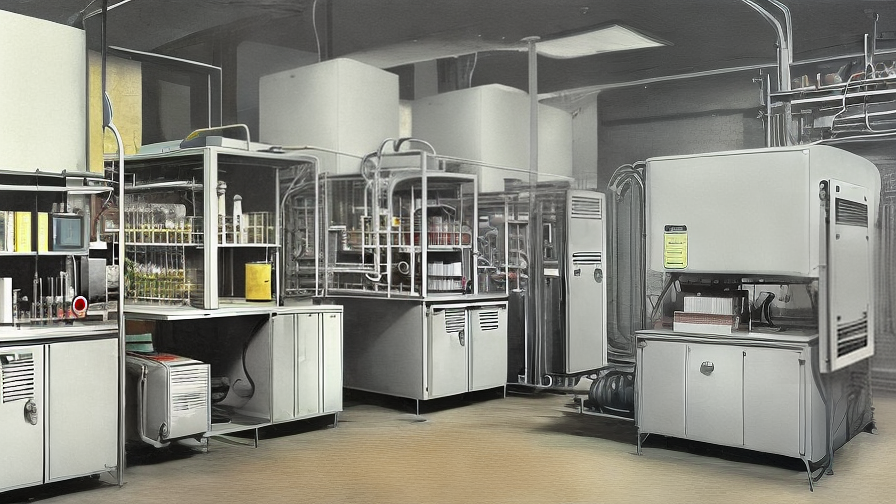
Laboratory furnaces are essential for applications that require controlled high-temperature environments, including heat treatment, material testing, ashing, calcination, sintering, ceramics processing, thermal analysis, and research involving advanced materials. Despite their importance, laboratories often face a combination of technical, operational, financial, and maintenance-related challenges when selecting and operating furnace systems.
These challenges are becoming more significant as laboratories demand greater temperature accuracy, faster processing, improved energy efficiency, safer operation, and compatibility with increasingly specialized experiments. Understanding the major Pain Points affecting laboratory furnace users is therefore important for equipment selection, laboratory planning, and long-term operational efficiency.
High Initial Investment and Budget Constraints
One of the most prominent challenges is the relatively high upfront cost associated with sophisticated laboratory furnaces. Basic heating systems may be affordable for smaller laboratories, but advanced models equipped with programmable controllers, multiple temperature zones, inert-gas capabilities, vacuum functions, automated monitoring, and sophisticated safety mechanisms can require substantial investment.
Budget limitations are particularly challenging for academic institutions, smaller testing laboratories, startups, and research facilities operating under fixed equipment budgets. Decision-makers must often balance furnace performance against acquisition costs while also considering installation, accessories, calibration, maintenance, and energy expenses.
A low initial purchase price may not necessarily represent the lowest total cost of ownership. Equipment with inadequate insulation, inefficient heating elements, or limited control capabilities can generate higher operating expenses over its service life.
Maintaining Precise Temperature Control
Temperature precision is fundamental to many laboratory processes. Even relatively small temperature deviations can affect material properties, chemical reactions, sintering behavior, sample integrity, or experimental repeatability.
Maintaining a stable temperature becomes more difficult at very high operating temperatures. Heat distribution inside the chamber may not be completely uniform, creating hot and cold zones. Sample placement, chamber loading, insulation condition, heating-element performance, and airflow can all influence thermal consistency.
Laboratories conducting sensitive experiments therefore need reliable temperature sensors, properly calibrated controllers, and well-designed chamber configurations. Poor thermal uniformity can lead to inconsistent results and force researchers to repeat experiments, increasing both material consumption and operating time.
Energy Consumption and Operating Costs
High-temperature laboratory furnaces can consume considerable amounts of electricity, particularly when operated for extended periods. Energy demand becomes a major concern when laboratories conduct repeated heating cycles or maintain elevated temperatures for several hours.
Older furnace designs may have less effective insulation and less sophisticated temperature regulation, resulting in unnecessary heat loss. Frequent door opening, oversized chambers, inefficient heating profiles, and excessive standby operation can further increase energy consumption.
Energy efficiency has therefore become an important consideration when laboratories evaluate furnace systems. Improved insulation, optimized heating programs, programmable operation, and accurate temperature control can help reduce unnecessary energy use without compromising experimental performance.
Heating and Cooling Cycle Duration
Another important challenge involves the time required to reach the target temperature and subsequently cool the chamber. Laboratory processes involving high temperatures can occupy equipment for several hours, limiting the number of experiments that can be completed during a working day.
Rapid heating may improve productivity, but aggressive temperature changes can introduce thermal stress and potentially damage samples, crucibles, heating elements, or chamber materials. Similarly, rapid cooling can be unsuitable for certain materials that require controlled cooling rates.
Laboratories must therefore find an appropriate balance between processing speed and thermal stability. This is particularly important in high-throughput testing environments where furnace availability directly affects laboratory productivity.
Heating-Element Degradation
Heating elements operate under demanding thermal conditions and gradually deteriorate through repeated heating and cooling cycles. Exposure to high temperatures, reactive atmospheres, chemical vapors, and mechanical stress can accelerate degradation.
A deteriorating heating element can cause slower heating, uneven temperature distribution, increased energy consumption, and eventual equipment downtime. Replacement can also be costly and may require specialized technical support.
The selection of suitable heating-element materials is consequently critical. Laboratories handling different temperature ranges and atmospheres may require different element technologies, making application-specific equipment selection essential.
Maintenance and Calibration Challenges
Laboratory furnaces require periodic inspection, calibration, cleaning, and component replacement to maintain reliable performance. However, maintenance schedules can sometimes conflict with research deadlines and production requirements.
Temperature sensors, controllers, heating elements, insulation, seals, and electrical components can all require attention. If maintenance is postponed, small performance problems can develop into major failures.
Calibration is particularly important for laboratories where temperature accuracy influences experimental validity or regulatory compliance. Maintaining documented calibration records can also increase administrative workload, especially for facilities operating several furnace units.
Safety Risks at High Temperatures
Operating equipment at extremely high temperatures introduces unavoidable safety considerations. External surfaces may become dangerously hot, while improper handling of samples can result in burns, thermal shock, fires, or equipment damage.
Certain materials can also release fumes or gases during heating. If the furnace is not correctly matched with the material being processed, hazardous emissions may create additional laboratory risks.
Safety systems such as over-temperature protection, door interlocks, insulation, alarms, and appropriate ventilation are therefore important. Operators also require suitable training and clear procedures for loading, unloading, emergency shutdown, and handling heated materials.
Atmosphere Control and Contamination
Some experiments require controlled atmospheres rather than ordinary air. Processes involving oxidation-sensitive materials may require inert gases, vacuum environments, or carefully controlled gas compositions.
Maintaining atmospheric purity can be difficult if seals deteriorate, gas-flow systems are improperly configured, or the chamber is contaminated by previous experiments. Cross-contamination is another concern when the same furnace is used for multiple materials.
Laboratories working with advanced materials may consequently require dedicated furnace systems or strict cleaning and operating procedures. This can increase both equipment requirements and operating complexity.
Chamber Size and Application Compatibility
Selecting the correct furnace chamber size is another common challenge. An undersized chamber limits sample capacity and may restrict future applications. An oversized chamber, meanwhile, can consume unnecessary energy and increase acquisition costs.
The internal chamber material must also be compatible with the intended application. Certain chemicals, powders, gases, or high-temperature materials may react with chamber surfaces or insulation.
Laboratories therefore need to evaluate operating temperature, sample dimensions, atmosphere requirements, loading frequency, material compatibility, and future experimental needs before selecting a furnace.
Limited Skilled Personnel
Sophisticated laboratory furnaces can require trained operators who understand temperature programming, atmosphere management, safety controls, calibration, and maintenance requirements. A lack of skilled personnel can increase the risk of incorrect operation.
Improper programming may damage samples or furnace components, while incorrect loading can create temperature non-uniformity. Laboratories may also struggle to diagnose technical problems without specialized maintenance expertise.
Manufacturers and laboratories can address this challenge through operator training, clear documentation, remote technical support, and user-friendly control interfaces.
Integration With Modern Laboratory Systems
Modern laboratories increasingly rely on digital monitoring, automated workflows, data logging, and centralized equipment management. Older furnaces may lack connectivity features or compatible software interfaces.
Limited digital integration can make it difficult to monitor experiments remotely, record temperature histories, analyze cycle performance, or integrate furnace data with broader laboratory information systems.
As research environments become more connected, furnace systems with programmable controls, data logging, communication interfaces, and remote monitoring capabilities can provide greater operational visibility.
Downtime and Equipment Reliability
Unexpected furnace failures can disrupt carefully scheduled experiments and delay research programs. A malfunctioning controller, failed heating element, damaged thermocouple, or electrical problem can leave samples waiting for processing.
Downtime becomes particularly costly when furnace availability is limited or replacement equipment has long procurement lead times. Preventive maintenance and access to replacement components can reduce these risks.
Laboratories should therefore consider service availability, spare-parts accessibility, warranty coverage, and equipment reliability alongside technical specifications.
Addressing the Major Pain Points
The major Pain Points surrounding laboratory furnaces cannot be solved through temperature capability alone. Laboratories need equipment that combines thermal precision, energy efficiency, safety, durability, application compatibility, and convenient operation.
A lifecycle-based purchasing approach can help organizations evaluate not only acquisition costs but also electricity consumption, maintenance requirements, calibration expenses, replacement components, operator training, and expected service life.
Future-oriented furnace selection is likely to emphasize smarter temperature management, improved insulation, automated safety functions, enhanced data collection, and more efficient heating technologies. These improvements can help laboratories reduce operational disruptions while maintaining consistent experimental results.
Conclusion
Laboratory furnaces remain critical tools for high-temperature research and material processing, but their operation presents several interconnected challenges. High acquisition costs, energy consumption, temperature uniformity, heating-element degradation, maintenance requirements, safety concerns, atmosphere control, and equipment downtime can all influence laboratory productivity.
Addressing these challenges requires a combination of appropriate equipment selection, preventive maintenance, operator training, process optimization, and technological modernization. Laboratories that evaluate furnace performance across the entire operating lifecycle can better control costs while achieving reliable and repeatable thermal processing.
As experimental requirements become more demanding, reducing these Pain Points will remain essential for laboratories seeking greater accuracy, efficiency, safety, and long-term equipment reliability.
- Managerial Effectiveness!
- Future and Predictions
- Motivatinal / Inspiring
- Fitness and Wellness
- Medical & Health
- Manufacturing
- Education
- Real-Estate
- Food Industry
- Hospitality
- Online Games
- Sports
- Home Services
- Civil Engineering
- Safety and Protection
- Software Products & Services
- Fashion and Jewellery
- Artificial Intelligence
- Entrepreneurship
- Mentoring & Guidance
- Marketing
- Networking
- HR & Recruiting
- Literature
- Shopping
- Career Management & Advancement